It used to be cheap. It no longer is, but I don’t care. I’ve enjoyed every day I’ve spent in Greece. Having just come back from a fortnight in my favourite country, I’m waxing lyrical yet again.
The day we left Herne Hill began rather strangely. While waiting for our train to Victoria we started chatting to the only other person on the platform (it was very early). “Where are you off to?” I enquired, all small-talk-like. “You don’t want to know,” she replied. I raised an eyebrow. “St Petersburg, to see my mother. Via Helsinki. Let’s hope that maniac doesn’t do anything even more stupid.” I don’t imagine even Putin is insane enough to invade Finland, but…
***
We have heard a great deal about chaos at the airports: “holiday misery”, as the newspapers are apt to describe it. Do you want my advice? You’re going to get it. Fly from Heathrow Terminal 5 (preferably not to Spain) and, very importantly, do not check in any luggage. If you travel with British Airways you can take sufficient clothes for at least a week in your hand luggage, and wash things as the need arises. You will save money and a lot of time waiting for your suitcases to turn up (assuming they do). It worked for us… but maybe we were just lucky.
Far be it from me to boast, but let me tell you about our latest holiday. This is the first instalment of a two-part blog.
Beginning with the Mani
Mani is the middle peninsula of the southern Peloponnese. It is an area Anne and I know well, and this holiday was in some respects a sentimental journey. From 1997 to 2000… back in the days of the drachma… we went year after year, always exploring a little further.
Fly to Kalamata and hire a car; choose a small one like a Fiat Panda, because you will be driving south along hairpin bends, across the Taygetos mountains, to little resorts such as the fishing village of Agios Nikolaos. As with so many of Europe’s fishing villages, there is not as much fishing as there used to be. It is sad to see the tiny quantity of fish that is unloaded each morning. It used to be much more, 25 years ago. Cuttlefish, that ubiquitous Greek dish, is almost always described as frozen on a Greek menu, so it may have come from as far away as the South Atlantic. Of course it may still taste good. There is often fresh gilthead bream, bass and red mullet to be had, if you don’t mind paying the going rate.
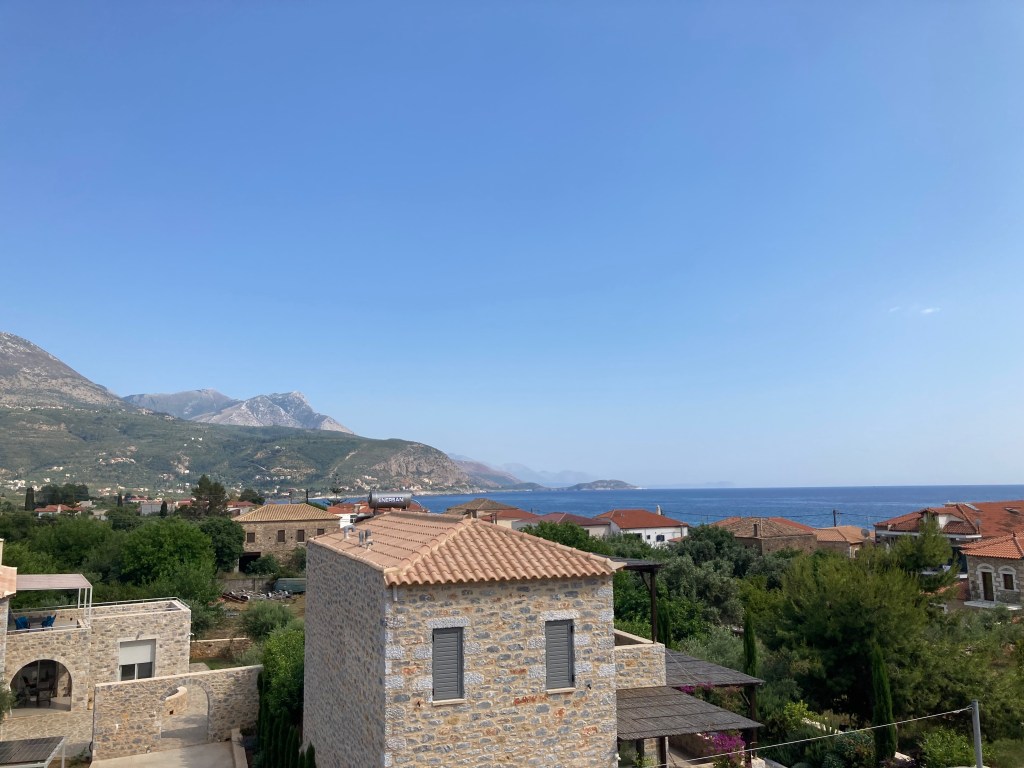
Fish or no fish, Agios Nikolaos has a palpable community atmosphere, with tourists and locals sitting, eating and drinking side by side in or outside the harbour tavernas – though the tourists have more money to spend.
We stayed in a well-appointed studio room with a terrace, owned by a lovely woman (Eleni Vrachos), for less than £50 a night. No sandy beach here, but a short walk to a sheltered cove known as Gnospi, where you can swim in calm, clean water.
There are sandy beaches a few kilometres south at Stoupa. Although this little town has changed a bit since our last visit 25 years ago, those changes seem to have been gradual. The food is still very good, the people friendly and easy-going, and the beaches are not crowded in mid-June.
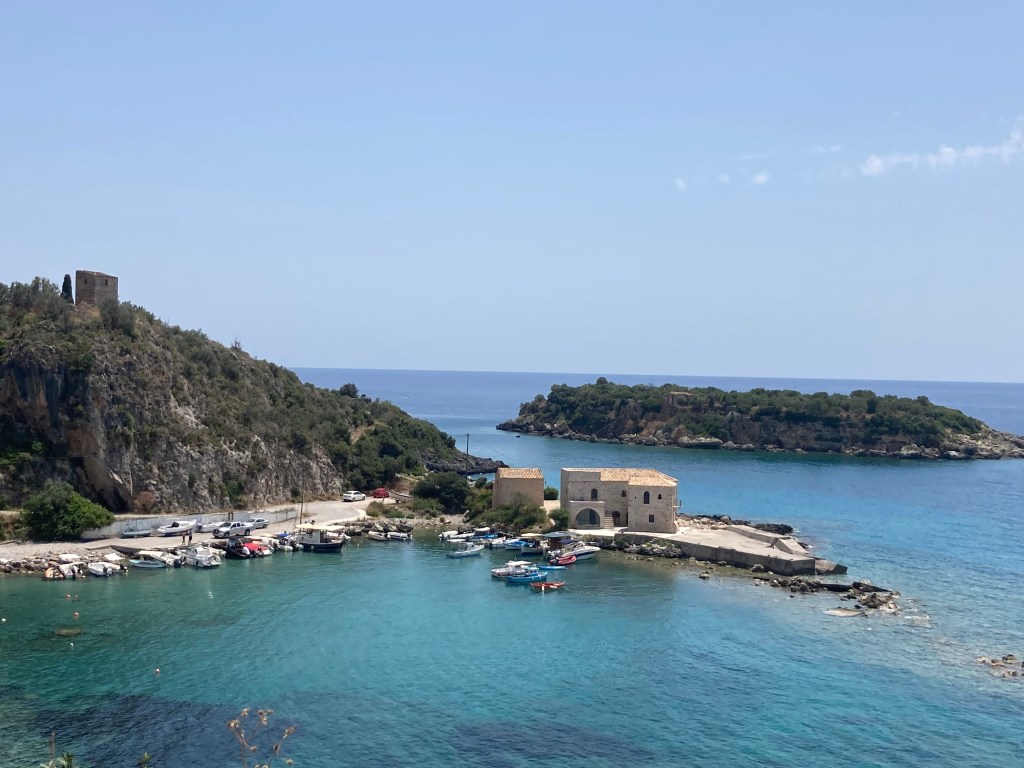
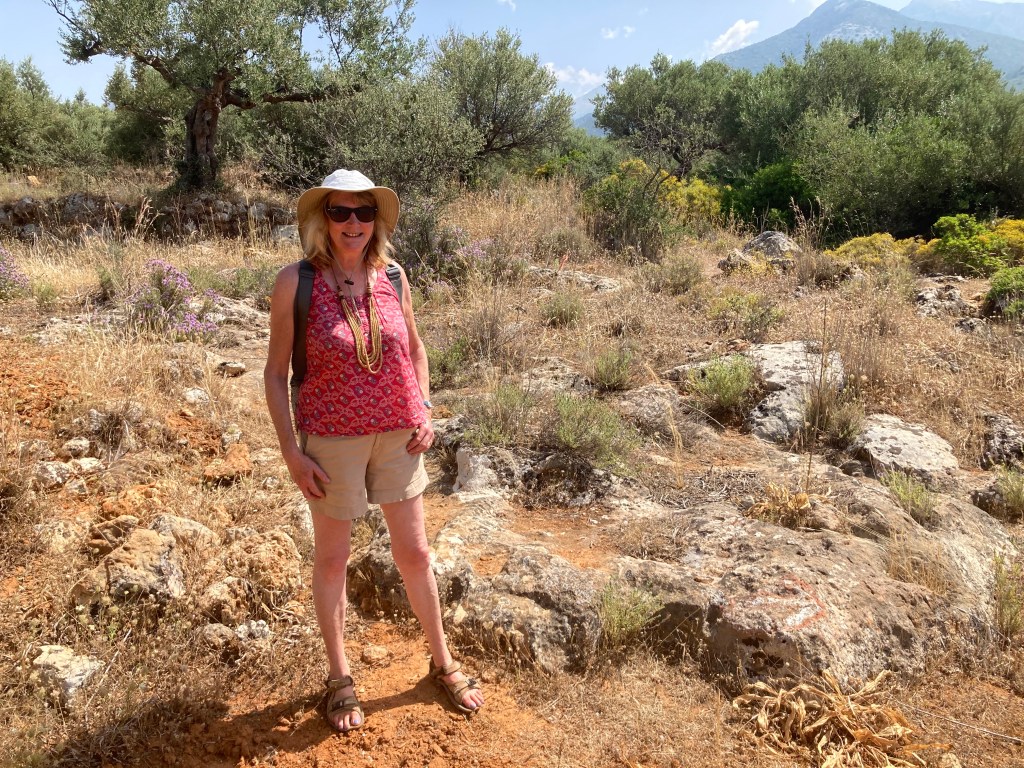
After four nights we moved on to Kardamyli. This ancient village, mentioned in The Iliad, has gone from strength to strength. The medieval castle (Mourtzinos) has been renovated and there are now some impressive modern restaurants, though the traditional tavernas are still going strong. Again, you can jump off the rocks into clear water, with the additional attraction of being able to hike through the old village and into the hills. It’s hard going at first but you are rewarded with views of the coast, the perfume of wild herbs and the sound of birds and cicadas as you make your way along shepherds’ paths and kalderimia, and through the woods to discover springs and streams frequented by flocks. Quite wonderful. You would have no idea from the village below you of how revealing such a walk could be.
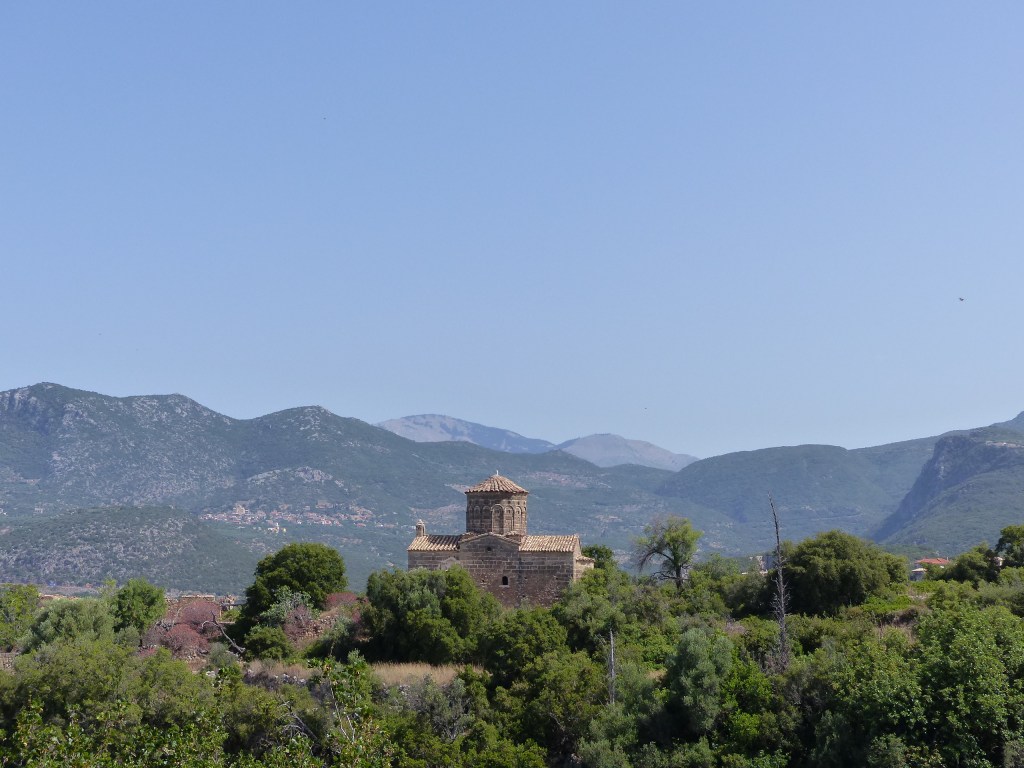
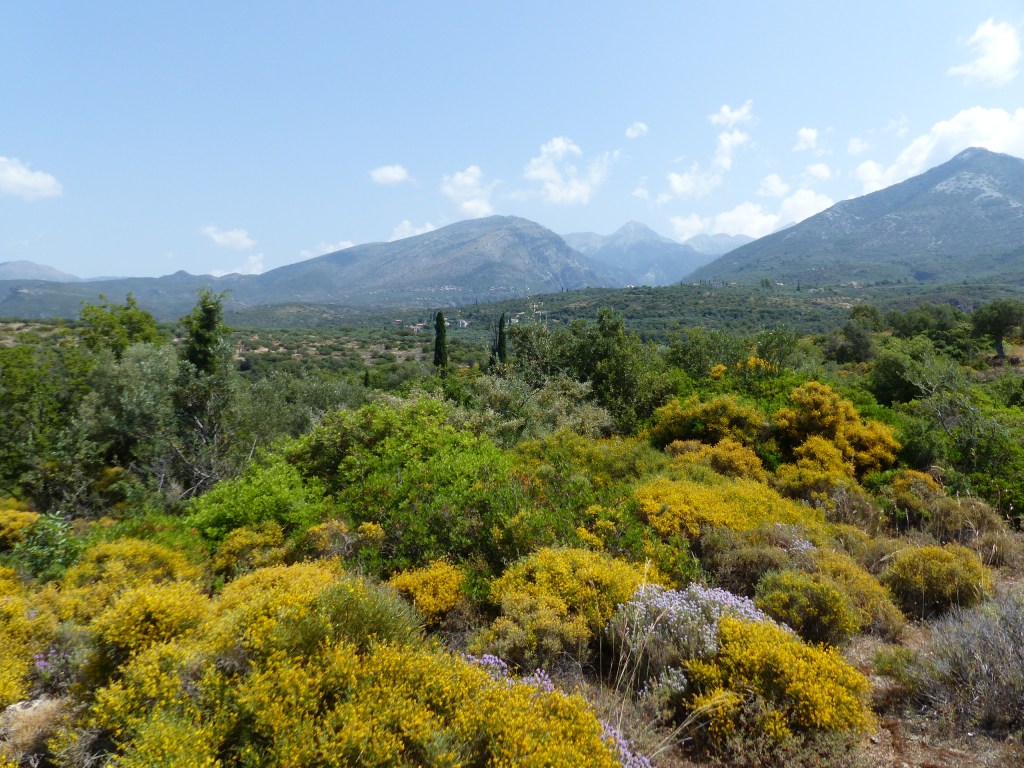
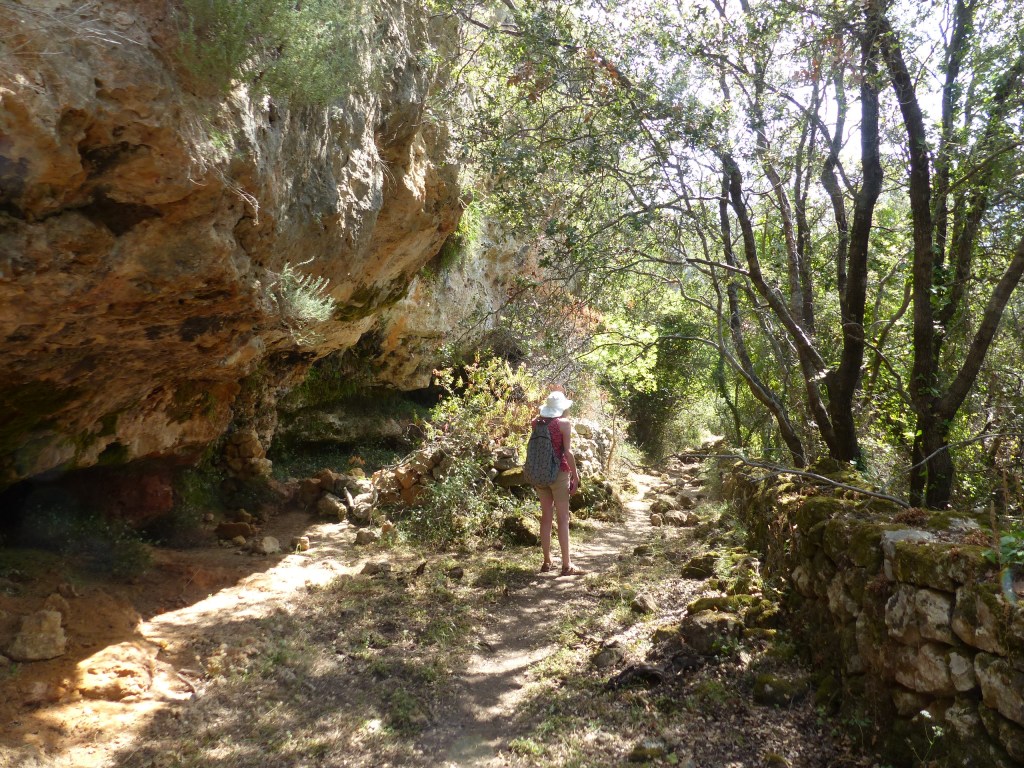
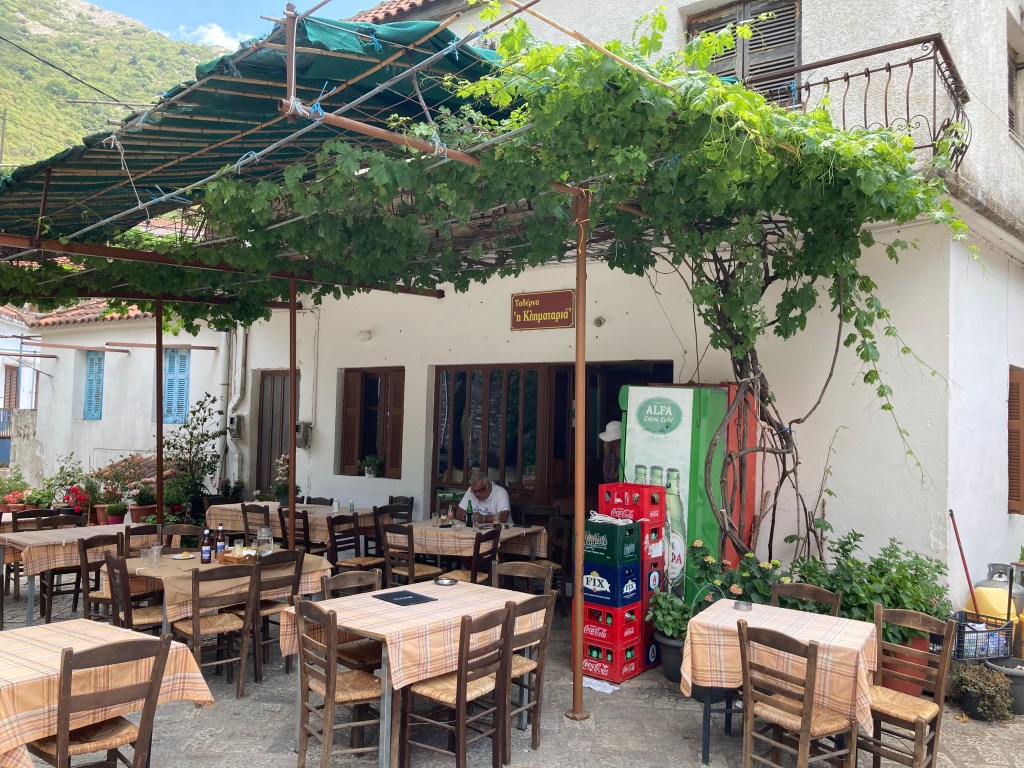
There are mountain villages, such as Kastania, with tiny fresco-painted churches (at least some of which are open) and traditional kafenia where not much goes on, which offer delicious home-made food. You would not know that the seaside villages existed, though they are only a few kilometres away.
Near Kardamyli is the former home of soldier, spy and travel writer Patrick Leigh Fermor, now a museum maintained by Benaki Foundation but unfortunately closed when we visited! We managed to peer over the garden wall. We stayed at Lela’s Rooms, above the taverna. Lela used to cook for Patrick and Joan Fermor.
***
After a night in the pleasant town of Kalamata, we took the three-hour bus journey to Athens via Corinth, followed by a very good lunch in Piraeus. In the taxi to the port I had one of those bizarre conversations that I only seemsto have with taxi drivers.
For some reason we got talking about British rock music (the driver was a massive fan), and I told him that my first ever rock concert was Deep Purple in 1970. He was more than enthusiastic; he had an encyclopaedic knowledge of British bands, their line-up changes and their albums. We rambled on for what seemed like hours about Uriah Heep, Wishbone Ash, Jethro Tull, ELP, etc. Then he said he was a fan of Subbuteo, to the extent that he had acquired 150 teams! Mostly English ones, but also Celtic, Rangers, Hibernian and Aberdeen. I sensed that Anne was getting a bit bored, but finally we arrived at the quayside, searching for our catamaran to Hydra.
Two hours later we reached the island

Despite its watery name, Hydra’s freshwater wells dried up long ago and drinking water now has to be brought from the mainland. It is shocking to see thousands of plastic bottles of mineral water being unloaded at the quayside every morning. It was not yet high season but visitors already easily outnumbered the local population, and almost everything has to be imported by ship. Greece has about 80 inhabited islands, with perhaps 30 welcoming tourists all summer long. The environmental impact is horrendous – and yet the local people depend on it for their livelihood. In any case we know that our individual actions won’t make a measurable difference. But it is alarming to be faced with the consequences of our addiction to foreign travel.
But are we ready to alter our behaviour?
Hydra was discovered, as the cliché has it, by an arty-farty coterie in the 1960s that, famously, included miserabilist Canadian singer-songwriter Leonard Cohen. One must steel oneself against the superannuated groupies that infest the town. And thereby hangs a tale.
One evening, having shuffled round the island with an all-day hangover, we were heading back to our room when I spotted an outdoor cinema up a side road from the harbour (there are no major roads, apart from along the coast, because the island is closed to motor traffic). We entered out of idle curiosity and met the owner/manager/curator – I never found out which. I told her that I vividly remembered visiting a cinema just like that in Loutraki, on an infamous school trip 51 years ago. They were showing that stop-motion classic, Jason and the Argonauts. (I had the privilege of meeting director Ray Harryhausen, by then a resident of London, many years later when working at the British Library.) She lamented the decline of the “summer cinema”, where you could watch a film al fresco, order a drink and a snack, then get terrorised by the dreaded mosquitoes. Was there a film showing that night? Unfortunately not, but the venue had been hired by Dutch enthusiasts for a Cohen memorial gig.
We were invited to stay
While waiting for the main act to appear (we heard from his sound check that he was German), an English amateur musician by the name of Trevor took his opportunity to play a few of Cohen’s songs. A few songs turned into 40 minutes’ worth, by which time we had heard more than enough about Suzanne and Marianne.
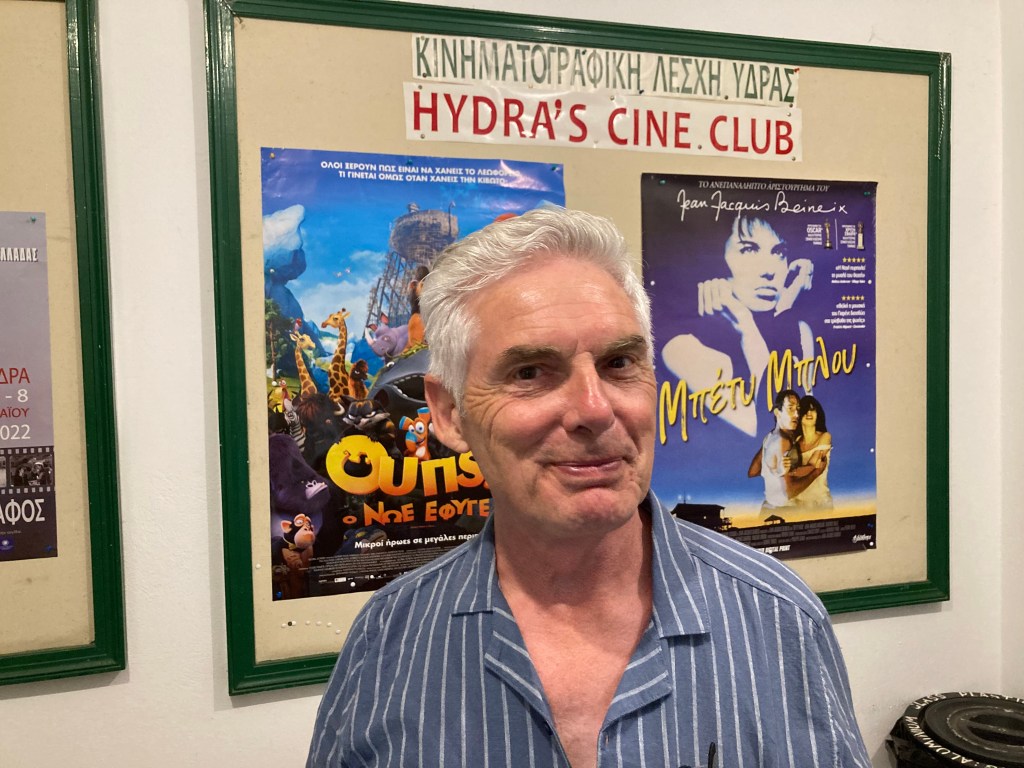
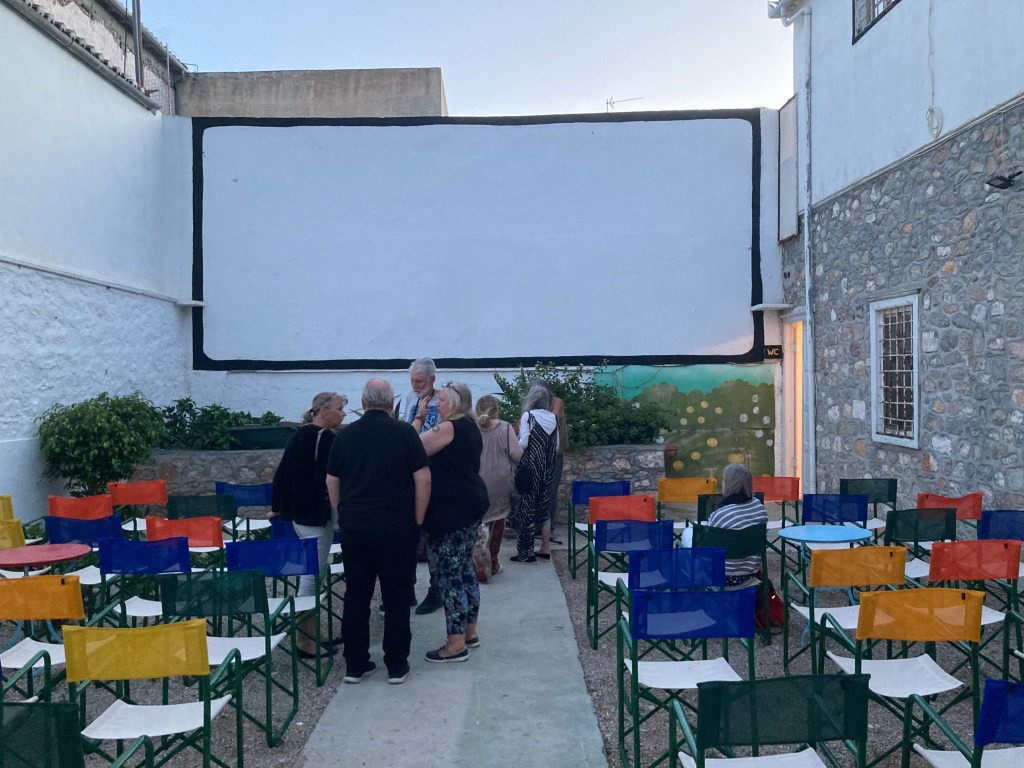
I thought I recognised the performer’s accent, and indeed he turned out to be a fellow Birkonian. More than that, he had been also been a pupil at Birkenhead School – albeit he is three years younger than me, so we did not recognise each other. We swapped phone numbers and agreed to meet at the “Shrew” in Oxton in a month or so.
***
Hydra is far from undiscovered. It has always been wealthy, and played a star role in the War of Independence. But, being Greek, it has a charm that many other Mediterranean islands have lost (attractive as Capri, for example, is). As I said, Greece is no longer a cheap destination, and the fact that islands such as Hydra receive daily visits from billionaires in superyachts hardly helps. But we found bars and restaurants that were pretty good value for money (recommendation: I Oraia, on the waterfront). And we had excellent and inexpensive accommodation, a large bedroom with an equally large terrace, at the Alkionides Pension (Alcoholidays, as I misnamed it).
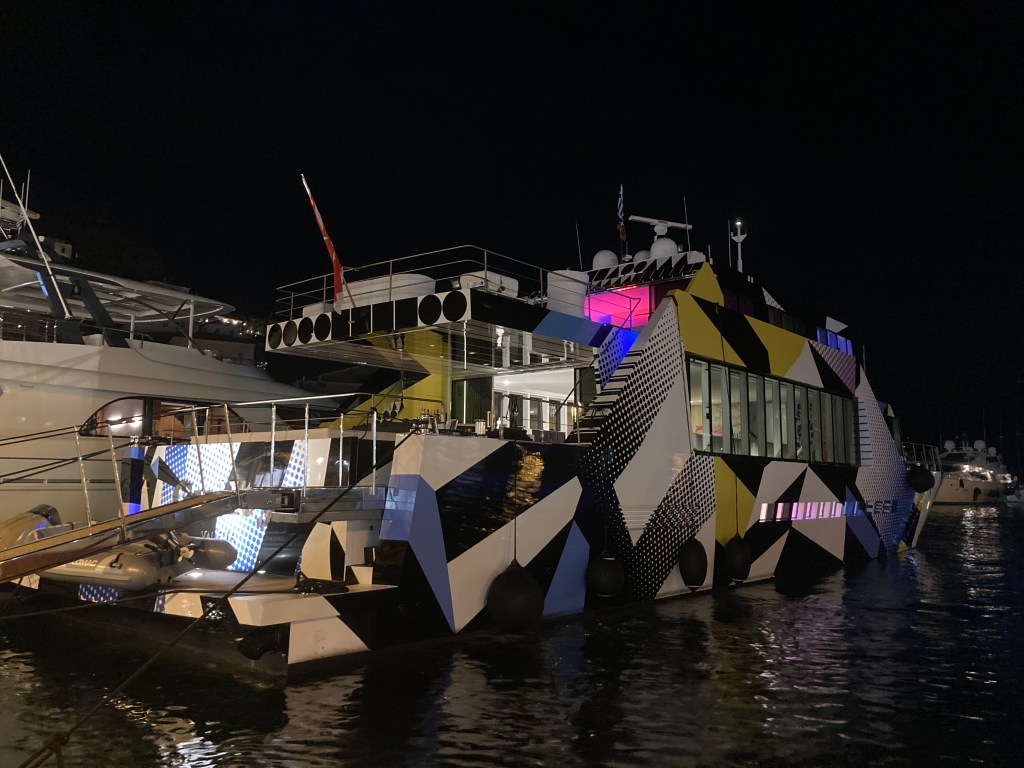
After five days of swimming and eating, with the occasional cultural interlude (Hydra has no ancient sites to visit) we took the catamaran back to Piraeus.
More about Athens and Delphi next time
 The Wight Stuff