No Flixbus today Our first Italian train of this trip would be the 09:39 Frecciarossa (red arrow) from Trieste to Milan.
Friday 21 June
The first-class seats were comfortable, though when the brakes were applied it was a bit scary. The complimentary “meal” consisted of a stupid cardboard box containing two biscuits and a tiny bottle of water, though free coffee and wine were available on request.
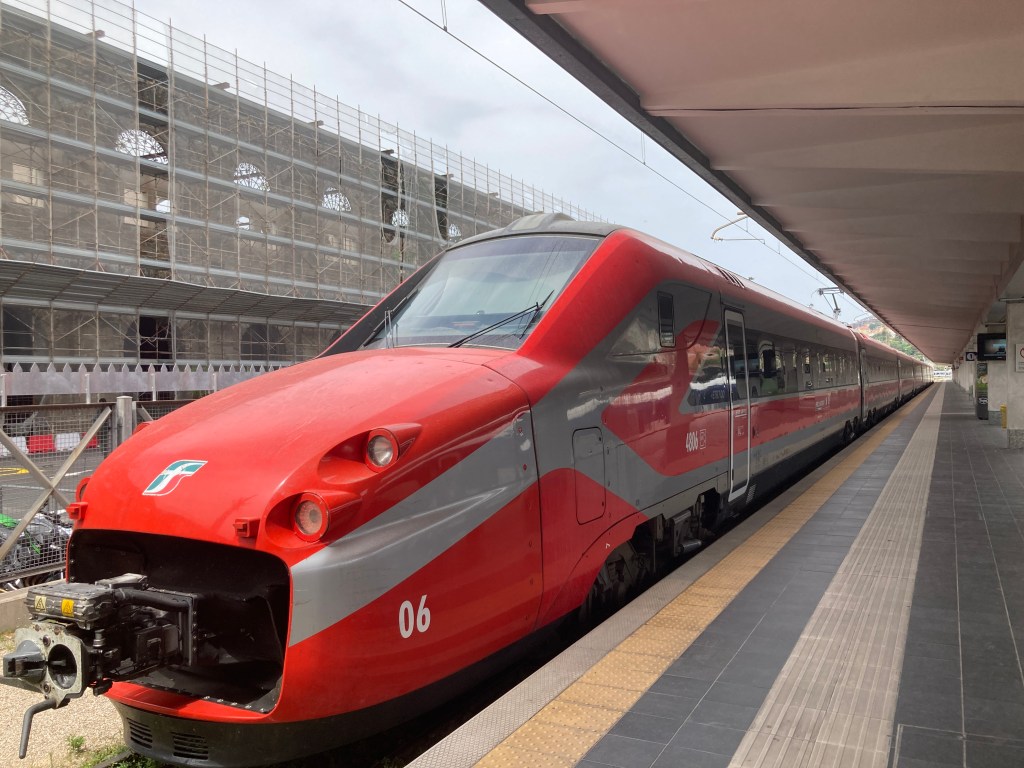
We stopped at Venice, Padua, Vicenza, Verona, Lake Garda and Brescia but without seeing much of note out of the window. With each stop came an announcement explaining how to make a written complaint. I resisted the temptation to complain about the excessive packaging of my minuscule snack box.
Four hours after departing Trieste – and on time – we pulled into Milano Centrale.
***
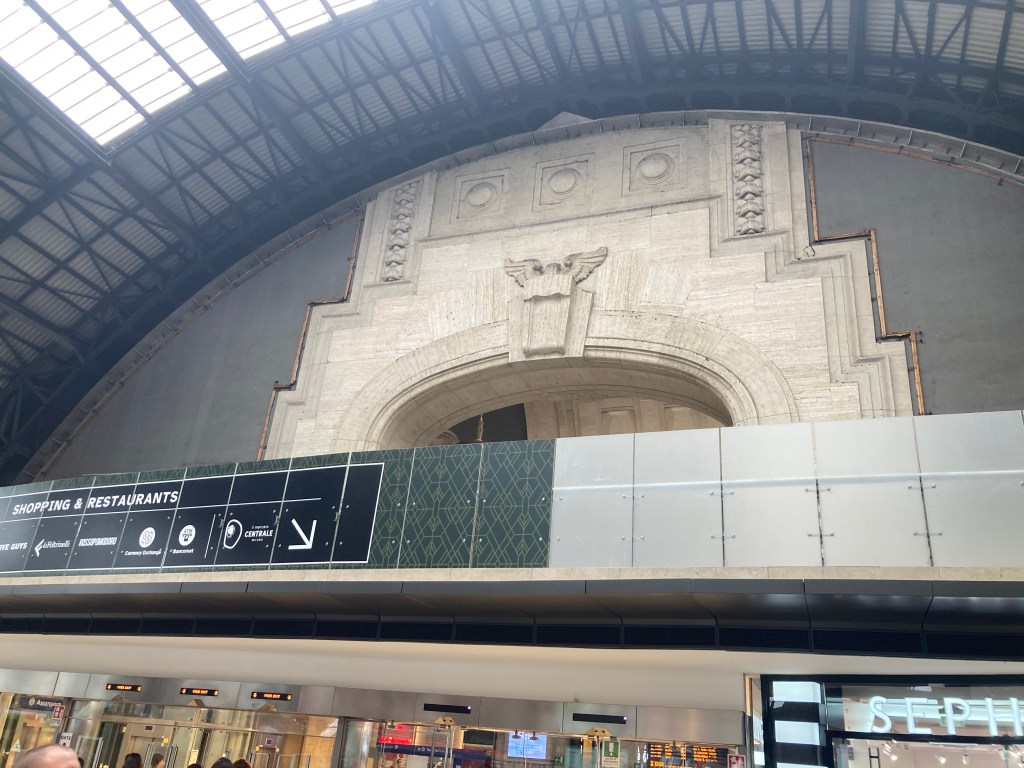
It was the third or fourth time I had seen this impressive station (the first was at age of 16, en route to Athens). We had considered a quick visit to the Duomo but, what with our luggage and a desire to get a long journey over with, we waited on the platform for the train to Varenna-Esino Perledo, an hour distant on the eastern shore of Lago di Como.
Misty views
It was not the weather we’d hoped for, but I knew from previous visits to Garda and Maggiore that conditions can change very quickly.
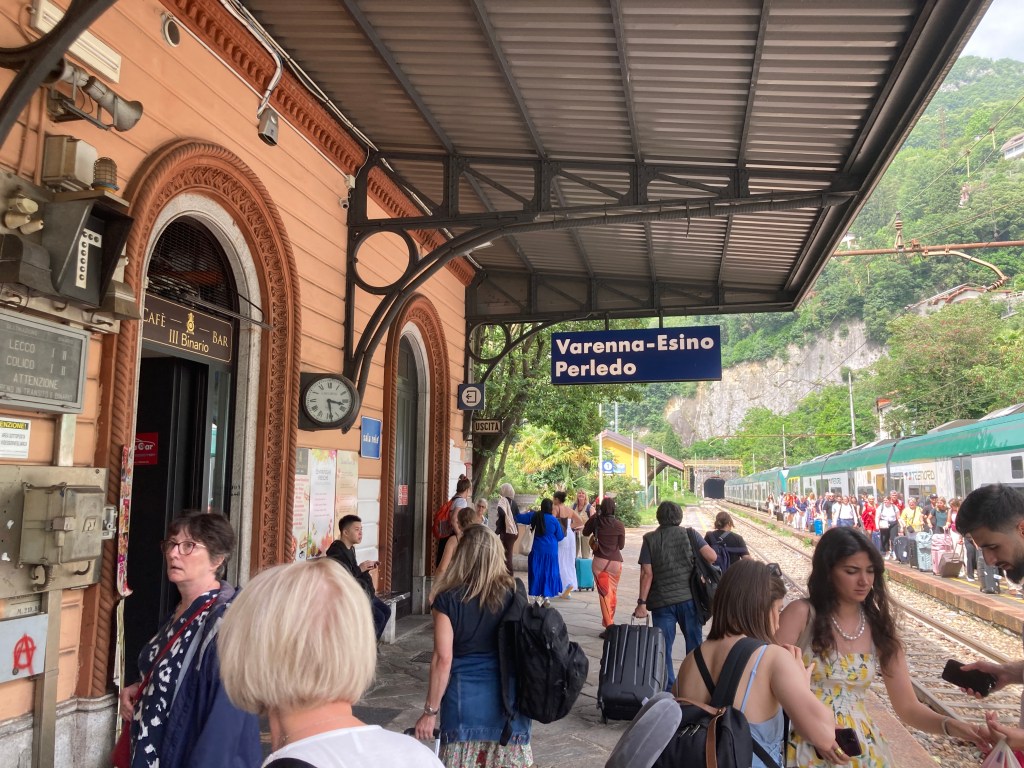
We called Rita’s taxis. She took us up to Agriturismo Conca Sandra in Perledo where we were met by our hostess, Serena. The skies looked threatening but we took a stroll up to the village centre, from where there were views across the lake towards Switzerland.
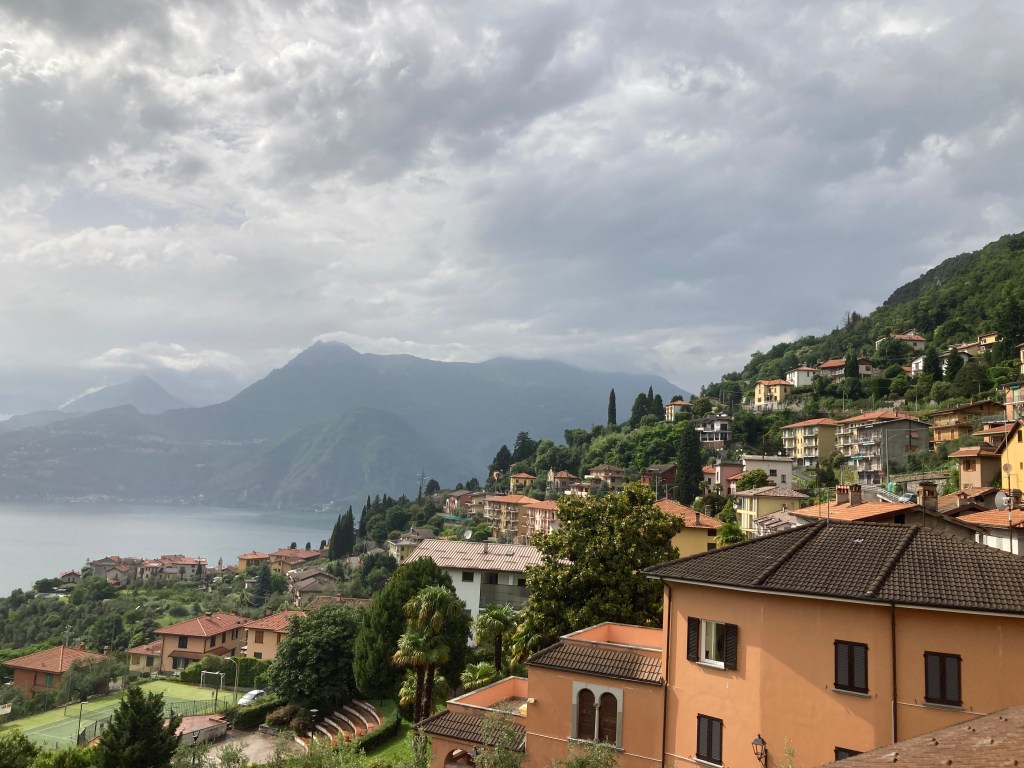
We bought supplies from the shop then returned to our two-storey apartment, arriving just before a violent thunderstorm.
Hailstones as big as grapes
We were assured that tomorrow would be a beautiful day.
Saturday 22 June
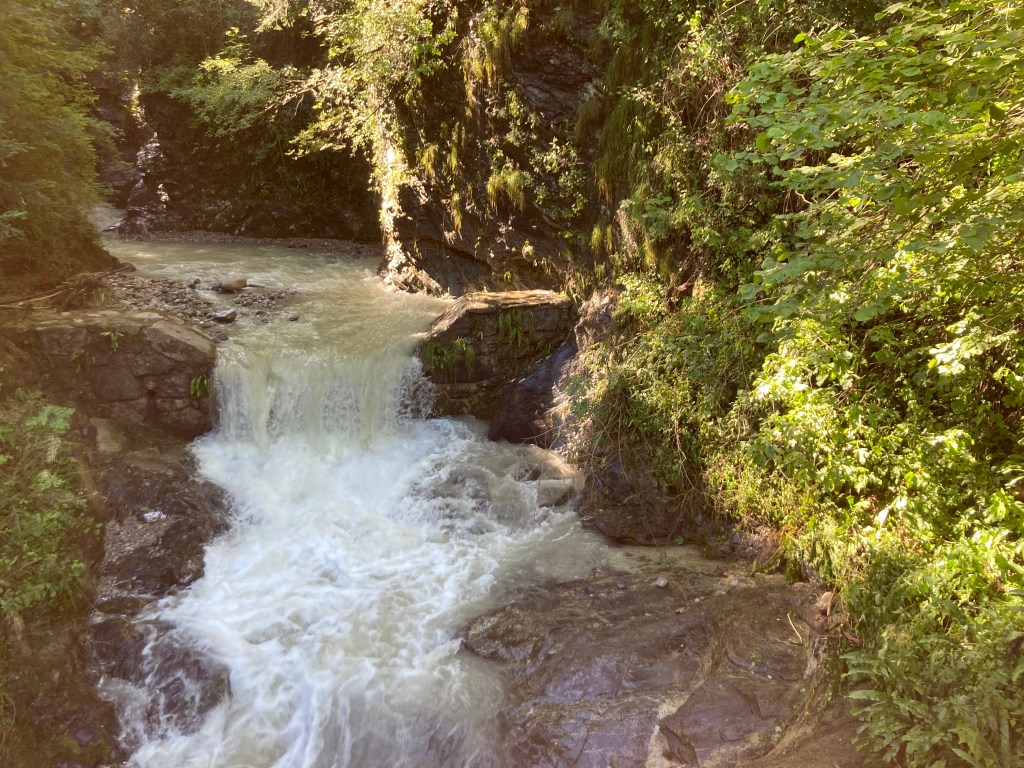
And it was. We awoke to a clear blue sky and made an early start on the Sentiero del Viandante to Vezio in the cool morning air. On the way we passed a river in full spate, with signs of damage to the footpath.
After half an hour of walking downhill, then back up again, we reached Castello di Vezio, from where there were memorable views across to Bellagio. It brought to mind the postcards my parents had brought back in the 1980s; the same almost unreal blues and greens.
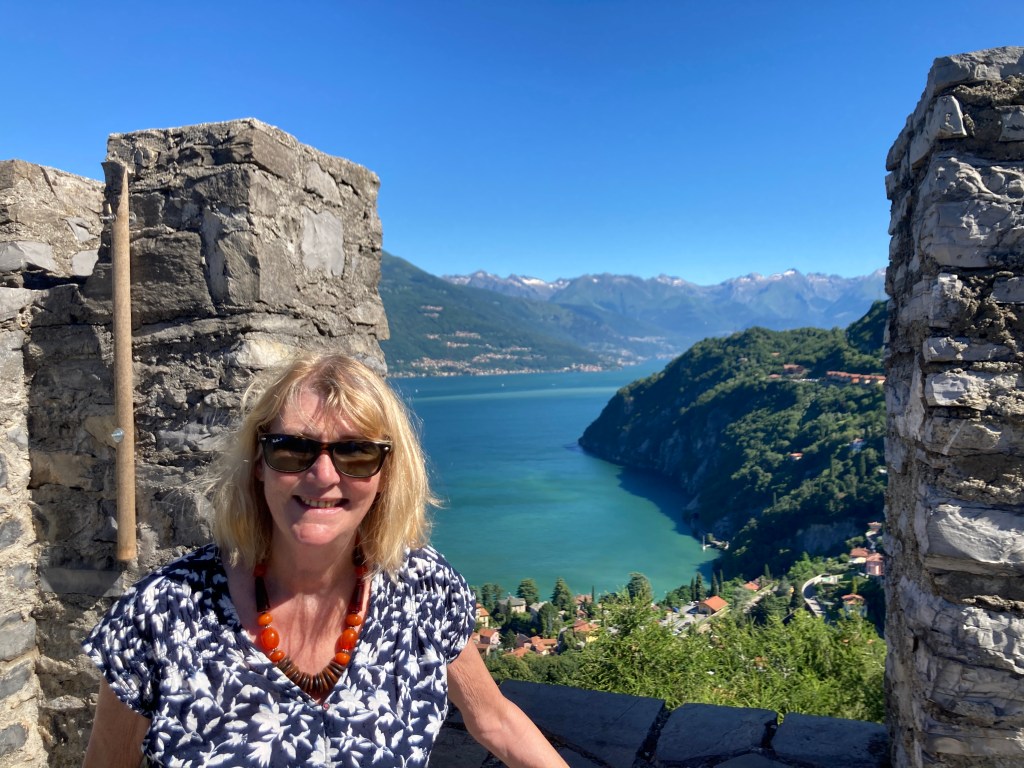
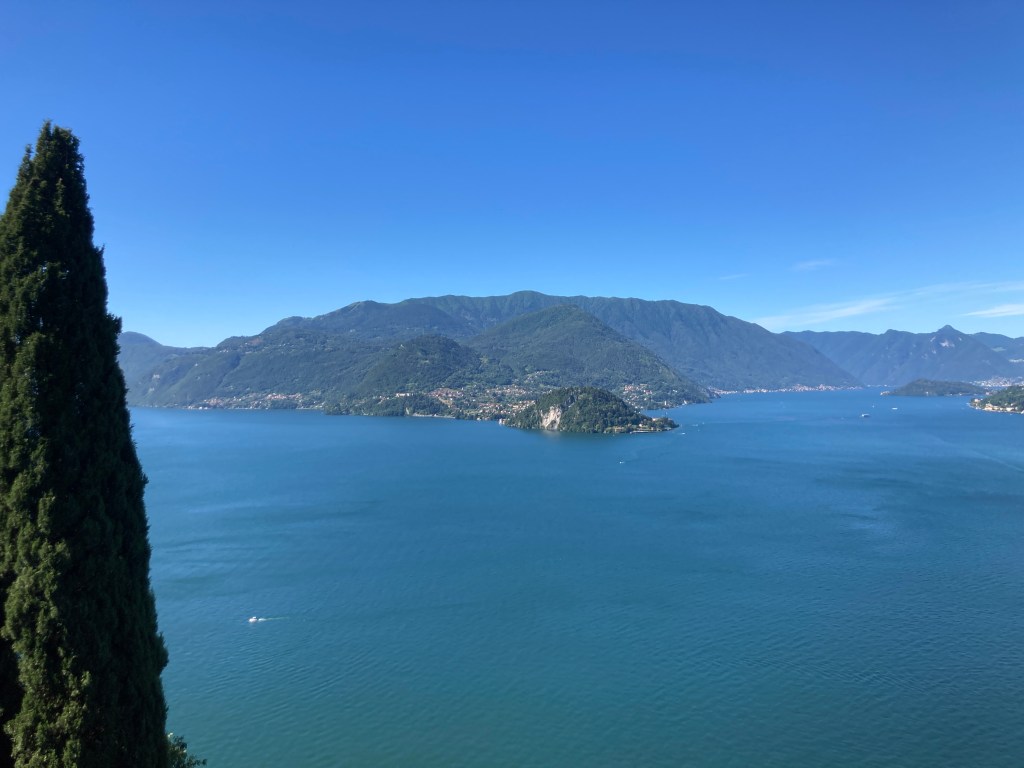
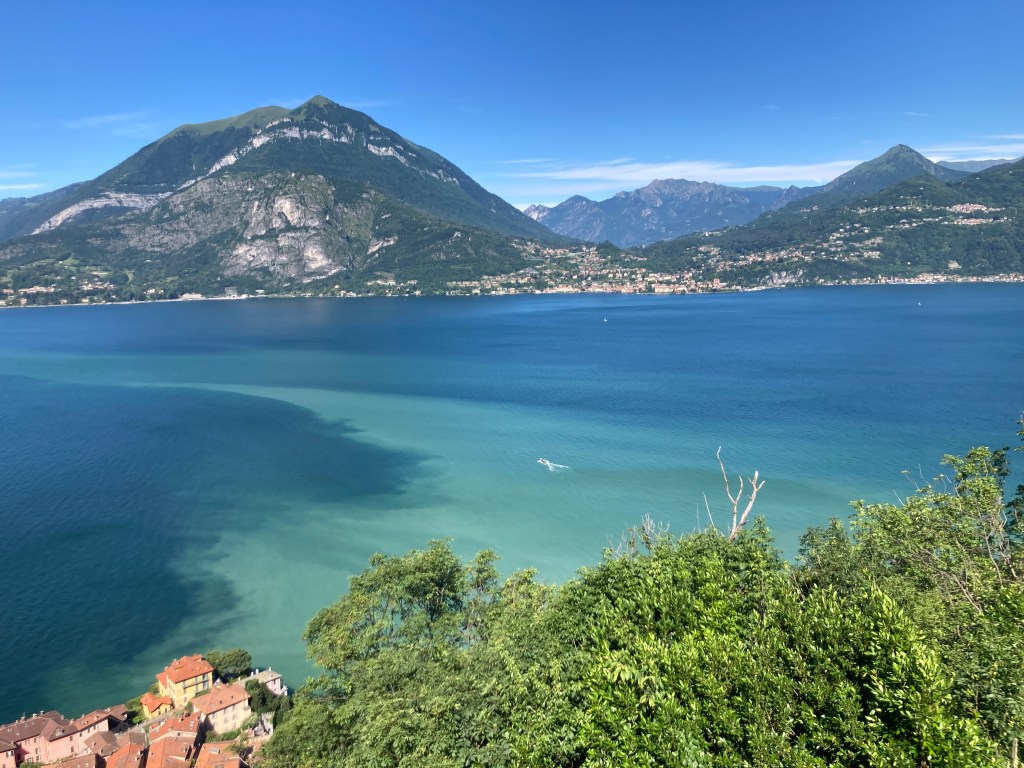
We walked back past a church, a shrine and a cemetery, before taking a steep and stony path down to Varenna on the lakeside.
Varenna was packed
Not that we were expecting anything different; the rich and famous, including George Clooney and his missus, have homes in the area.
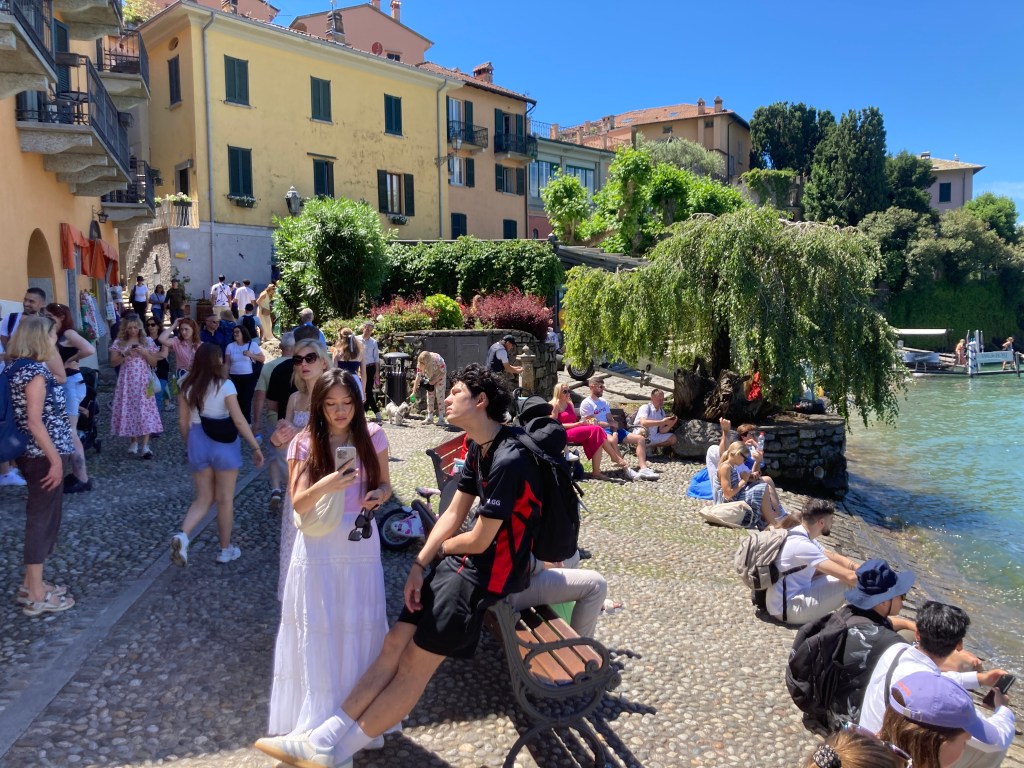
It was clear that we were right not to have taken a morning ferry to Bellagio: it was now very hot; Bellagio would be even busier, with all restaurants fully booked; and the queue for the ferry there and back would have been long and tedious. And it was only June; forget about visiting in August!
We strolled along the lakeside passerelle with its little shops, hotels and ice-cream parlours. It was busy, but absolutely gorgeous. Further round the bay is the Villa Monastero with its famous botanical gardens. As with so many of Europe’s beauty spots (and elsewhere, I suppose), it is now infested with preening Instagrammers seeking that perfect flattering photo. To some extent it looks like a return to a previous age, with all those long, floaty dresses and extravagant hats.
Here’s the best we could do
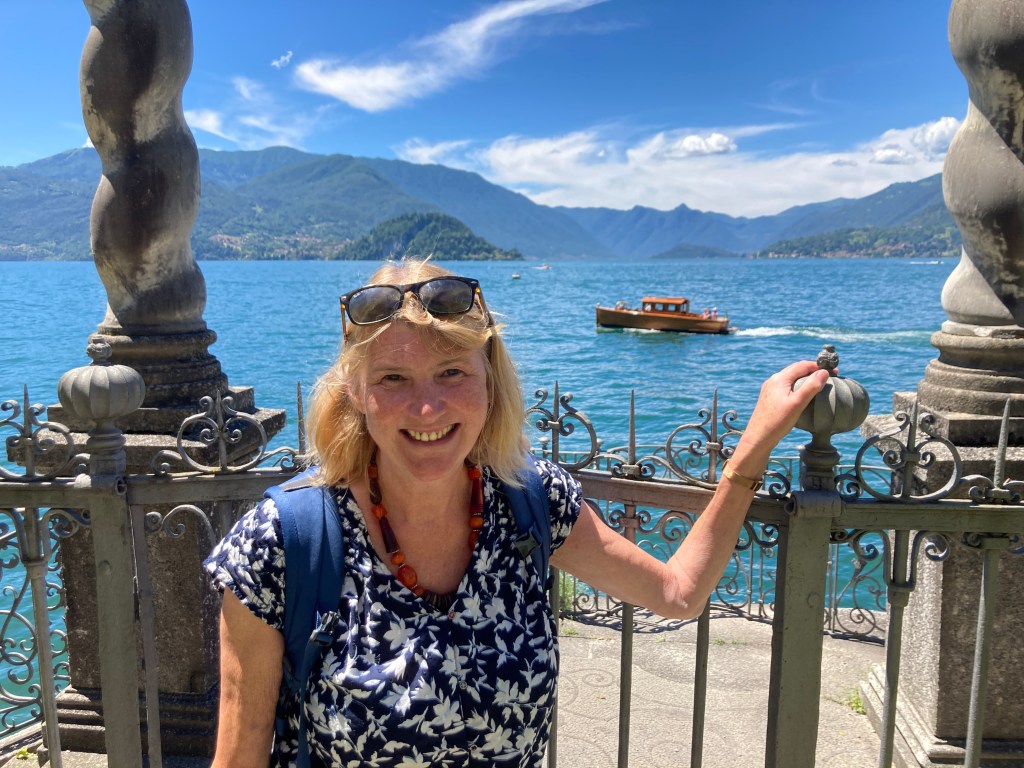
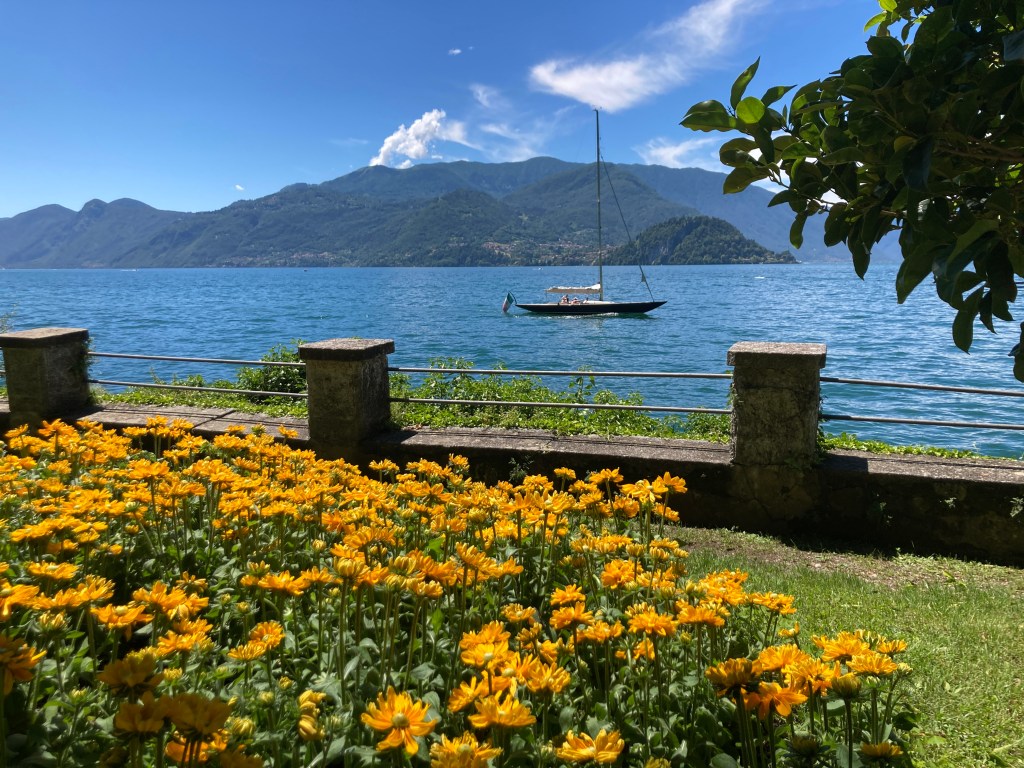
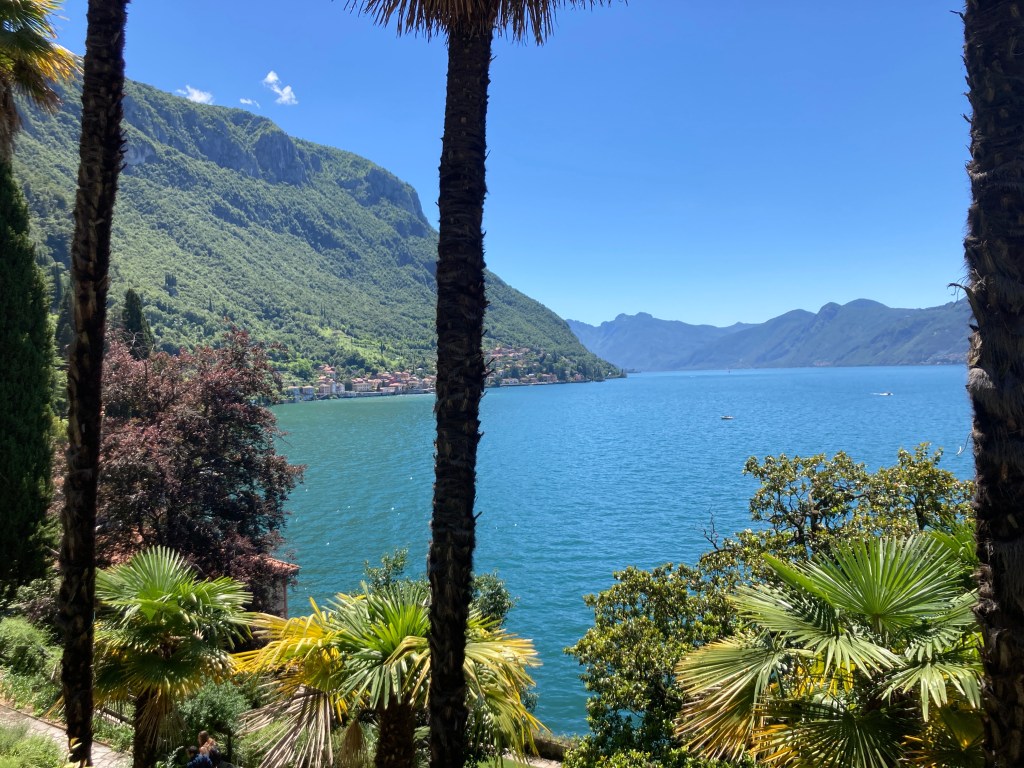

But it was well worth the trip to the gardens.
Returning to the town, we sat down to a late lunch of anonymous “lake fish” ceviche, steak tartare and tagliatelle at Locanda Cavallino (as recommended by Serena). Then we considered a quick swim at the lido, but decided to take the bus back to Perledo and relax in the garden with a glass of prosecco, while listening to the cuckoos in the hills above.

A grand day out
***
We had read on the internet about serious flooding in Zermatt following the previous day’s storm. And we were heading in that direction…
Sunday 23 June
The day started cold and drizzly. Rita whisked us down for the local train which would link up at Tirano with the Bernina Express, planned to be one of the highlights of the whole trip. The Bernina travels through 55 tunnels and over 196 bridges and viaducts from Tirano to its destinations at St Moritz and Chur.
But our local train only made it as far as Colico at the north end of the lake, from where we took a replacement bus along the valley to the border town of Tirano. It rained heavily the whole way and the rivers and side roads were flooded.
Things improved at Tirano, though we were warned of further disruption to come.
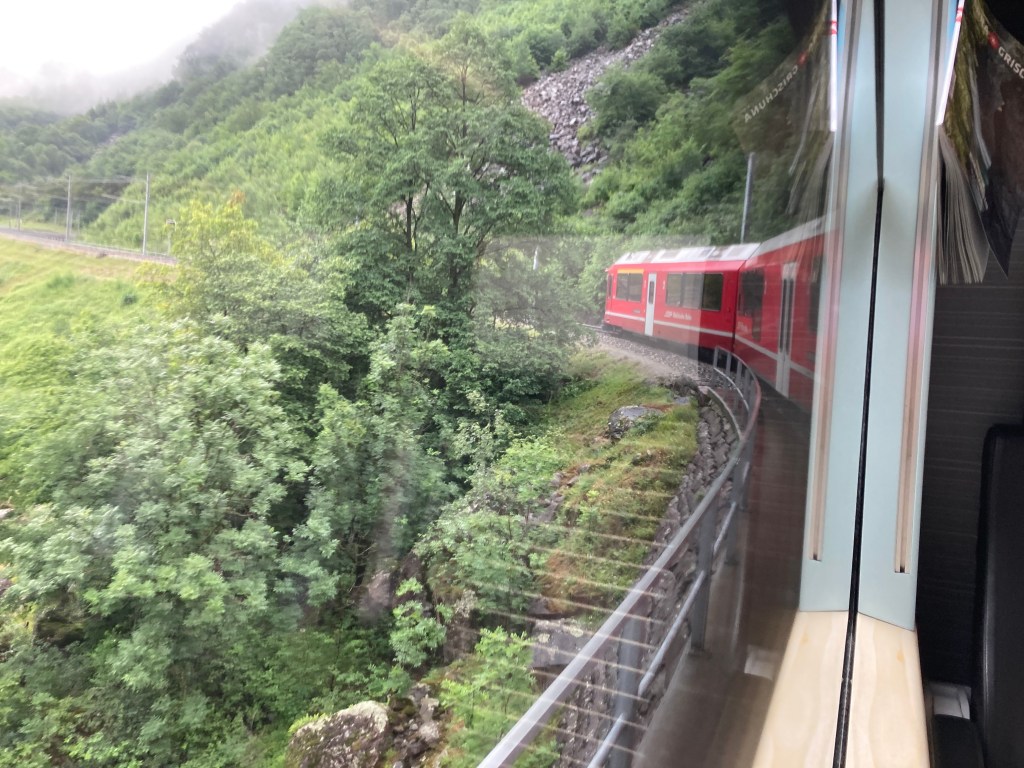
We boarded our beautiful red train and started to climb through the clouds towards snow-topped mountains.
Calling it an express is a Swiss joke. The train crossed the border into Switzerland and painstakingly crawled into the mountains. It was very exciting.
Davos, St Moritz, Klosters…
The names sounded romantic and expensive, but we never got that far. Our intention had been to stop for lunch at Ristorante Alp Grüm – over 2,000 metres above sea level and with a panoramic view of the Bernina massif – but it was not to be, because of storm damage to the track.
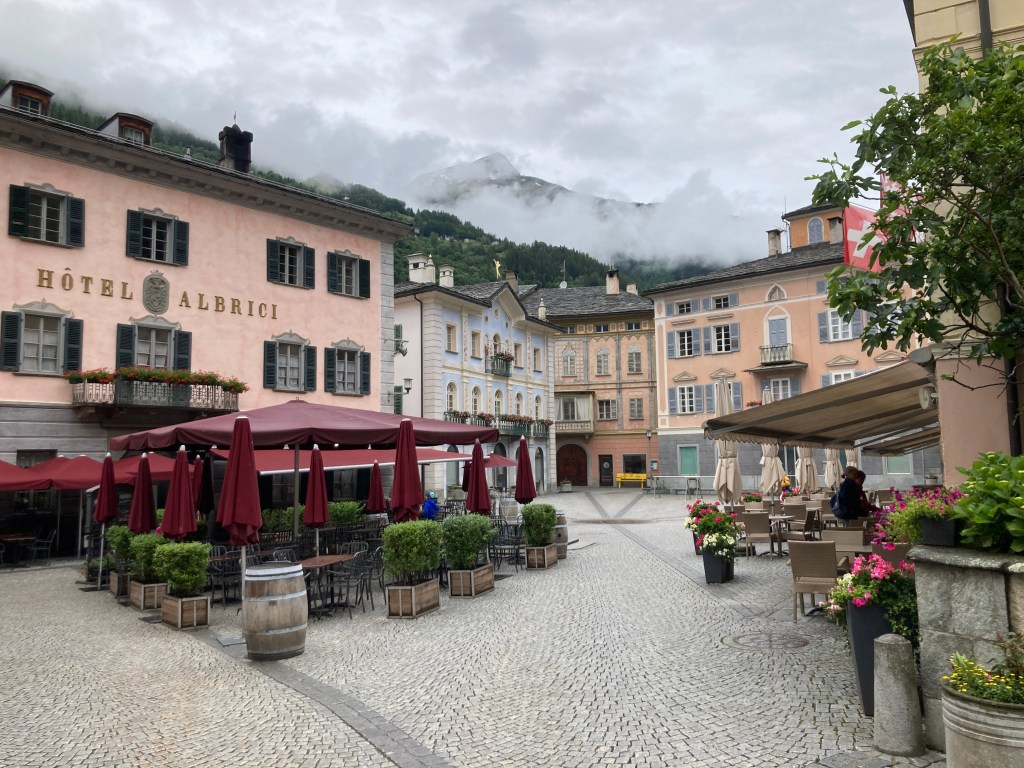
We were advised to alight at Poschiavo in the Italian-speaking canton of Grisons, where, with a bit of luck, we might find something to eat.
Switzerland is shut on Sunday
Perhaps even quieter than Austria… but after a fruitless walk through this prosperous-looking little town we finally came across a restaurant that was open. It was a relief to escape the rain. The staff at Bistro Semadeni were helpful and welcoming, and we enjoyed delicious minestrone and spaghetti carbonara while charging our phones (note: Swiss electrical sockets are not the same as in France or Italy).
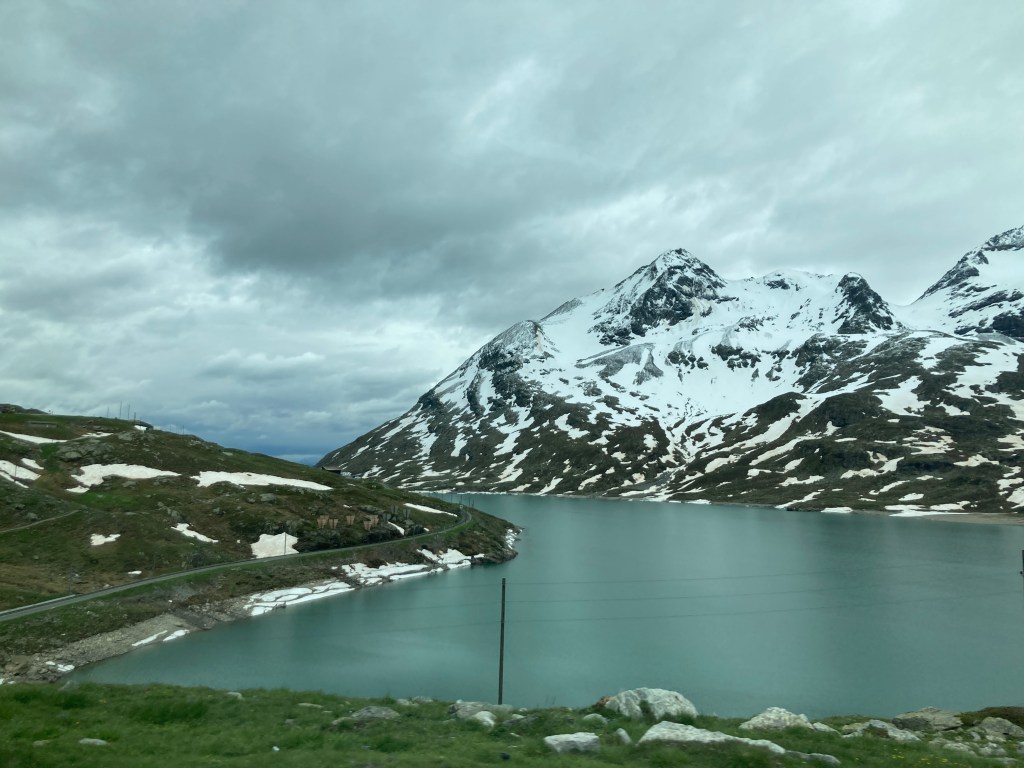
Back at the station we had to take another replacement bus. We climbed on a good road over enormous mountains and past chilly lakes. The views were astounding, although travelling by train is much more relaxing.
At Pontresina we all re-joined the train. We chatted to a friendly Brazilian couple who had left their phone on a previous train (slight panic) and, after another four hours, reached Chur, the oldest city in Switzerland. It seemed even sleepier than we were.
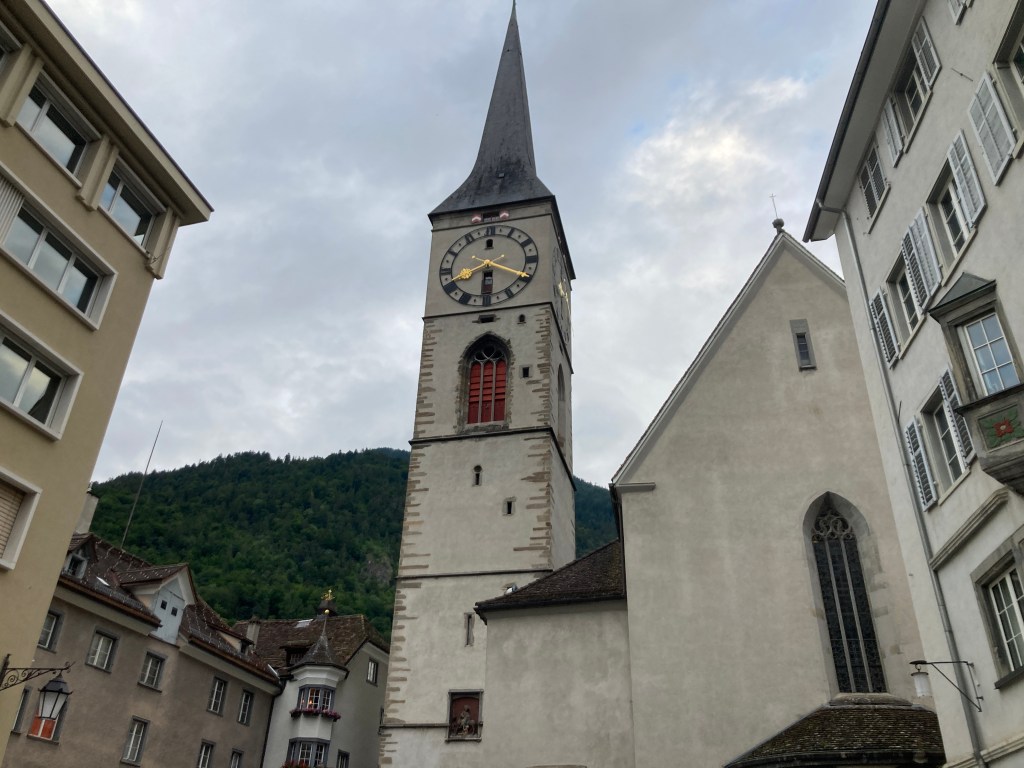
We found an open sushi restaurant that was acceptable but soon seemed keen for us to eat up, pay up and leave. Then we watched Scotland lose to Hungary 1-0.
Predictable, but somehow unfair
Monday 24 June
Another change in the weather: a clear, sunny day. After a tour of the old town we walked to the Brambrüesch cable-car. The second part of the ascent is in a scary, and rather old, little gondola. A fellow passenger was nearly sick when we set off.
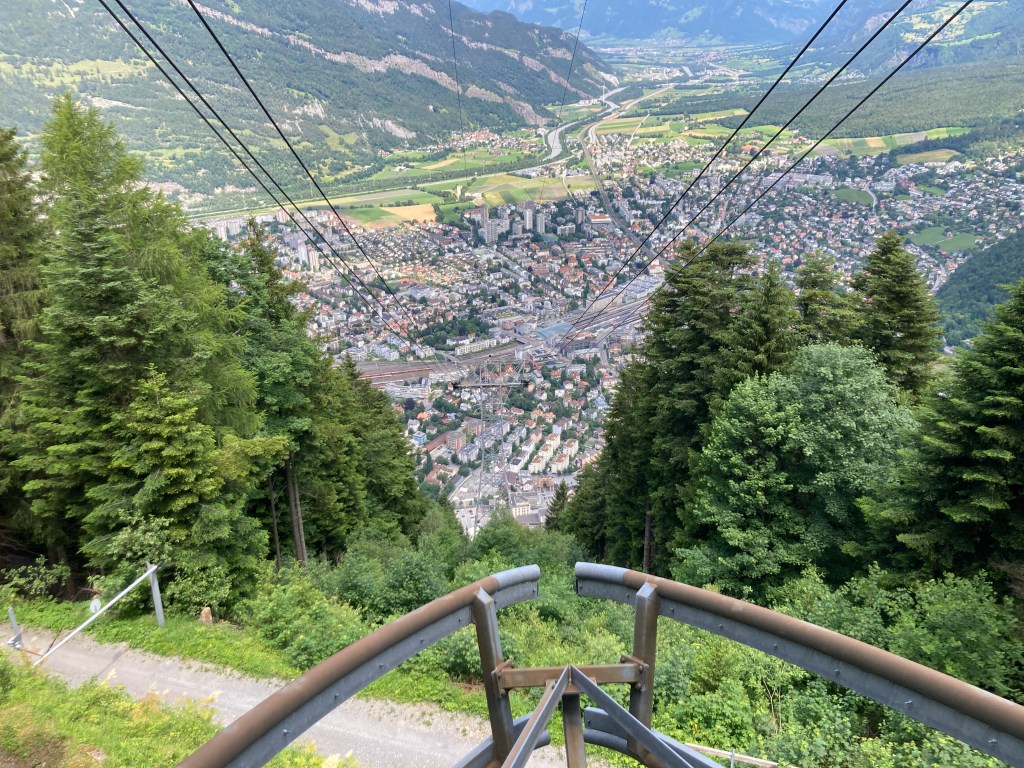
Up above the town I could hear cowbells. The views were glorious, the meadows vibrant with wild flowers. I suppressed an urge to break into “the hills are alive.”

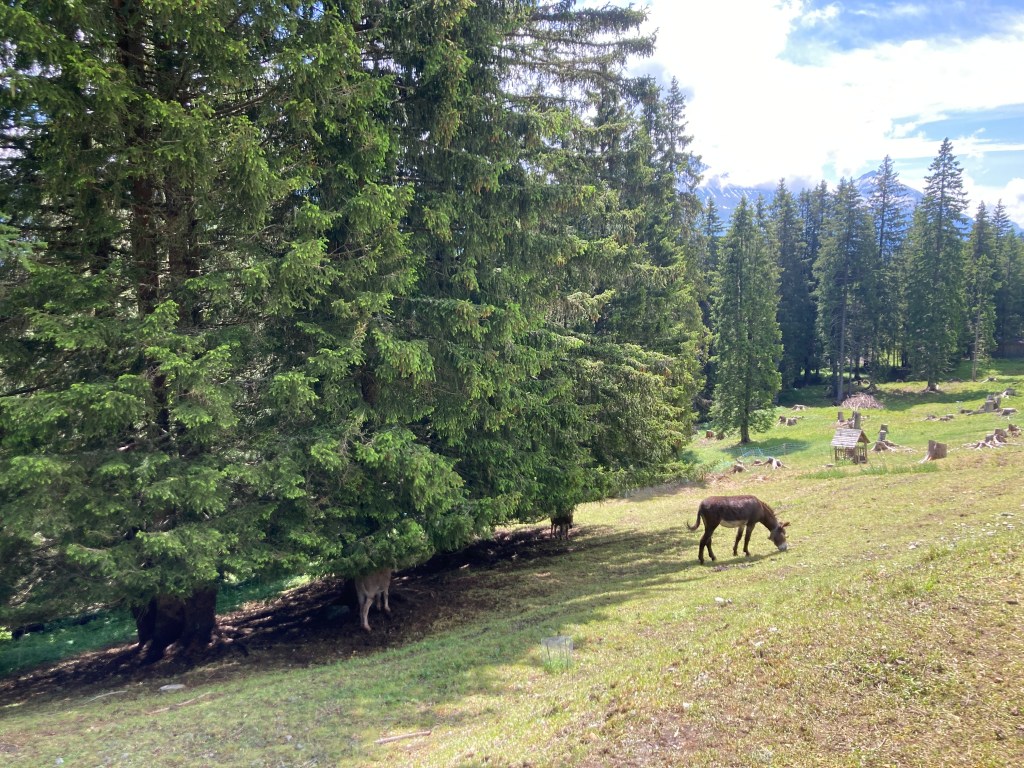
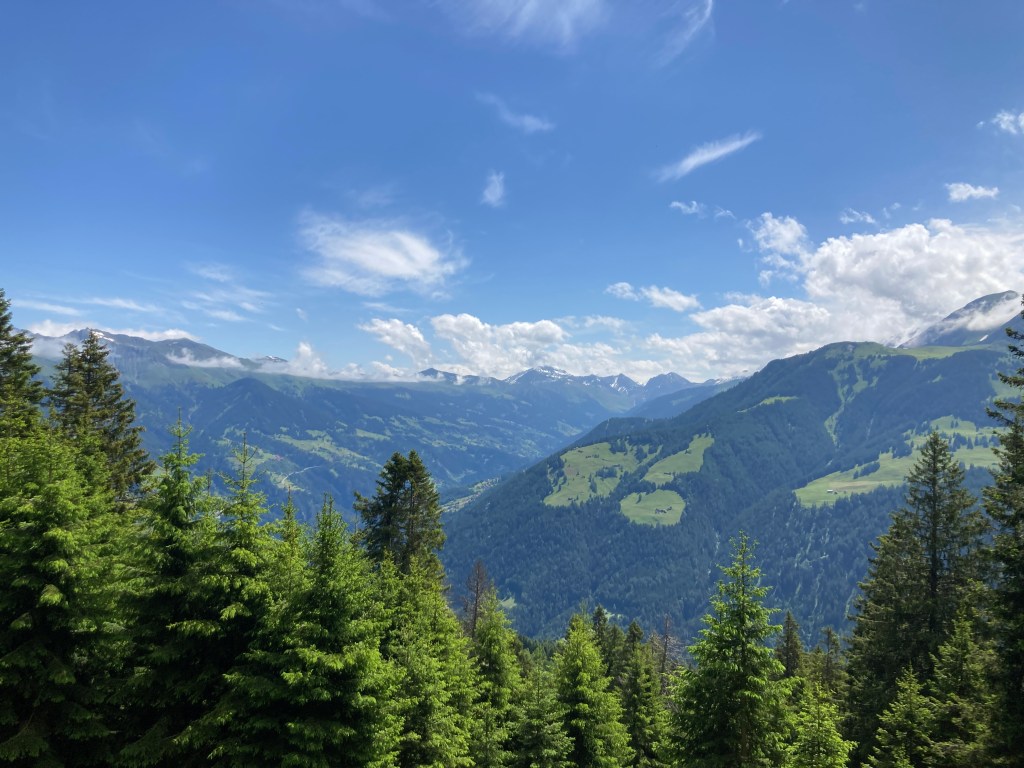
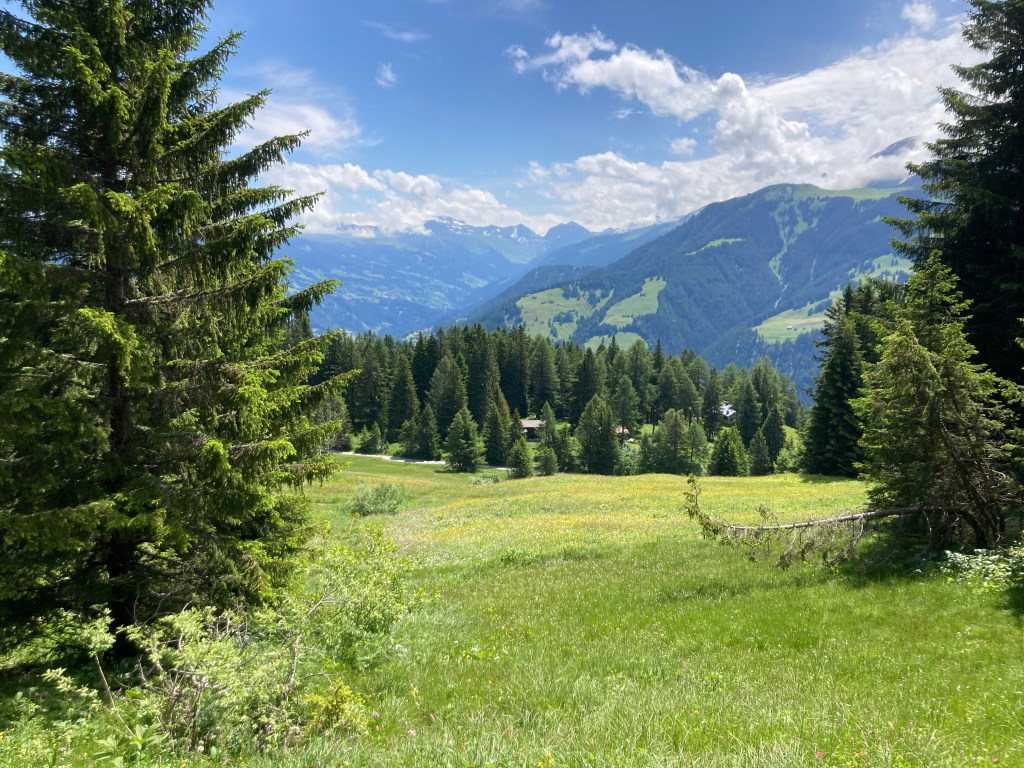
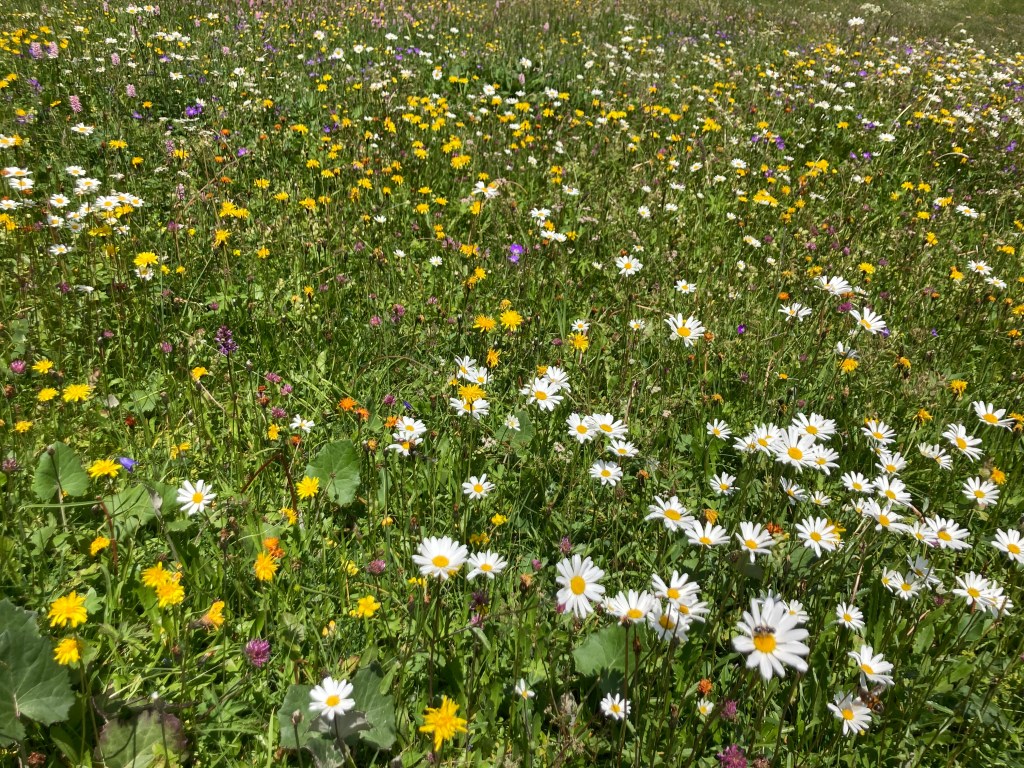
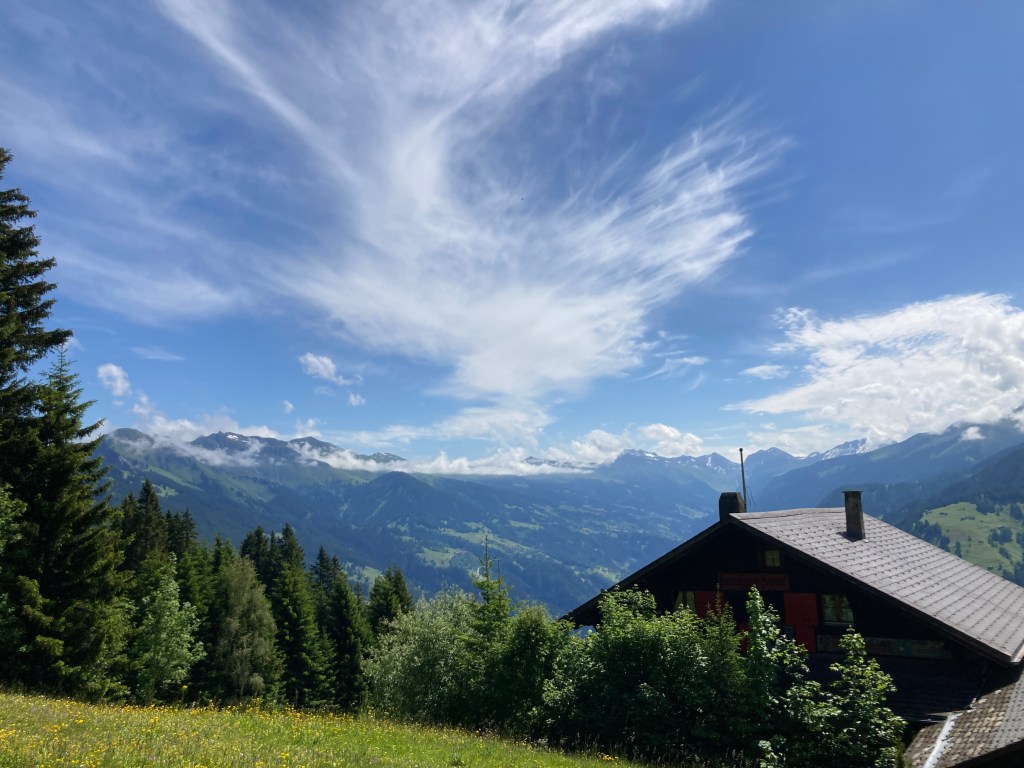
We walked uphill for a couple of hours, stopped at a chalet for a just affordable beer, then made our way back down to Chur station to catch the narrow-gauge Glacier Express to Zermatt. This is perhaps the most scenic of all Swiss railways, and even slower than the Bernina.
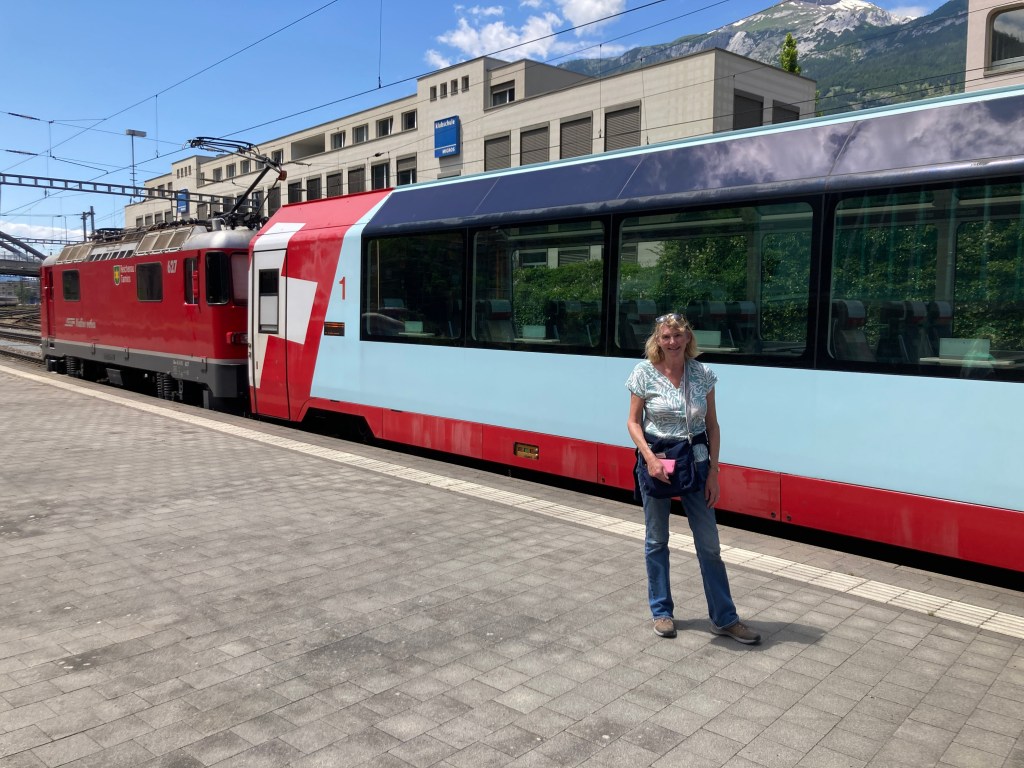
The fine weather held as we followed the course of the Rhine, its swollen waters thundering beside us, then headed into the Alps.
Lunch was a chicken curry, of sorts (which seemed to be acceptable to the Indian couple opposite). We relaxed, chatted and enjoyed the incomparable scenery as we raced along at 25 miles an hour.
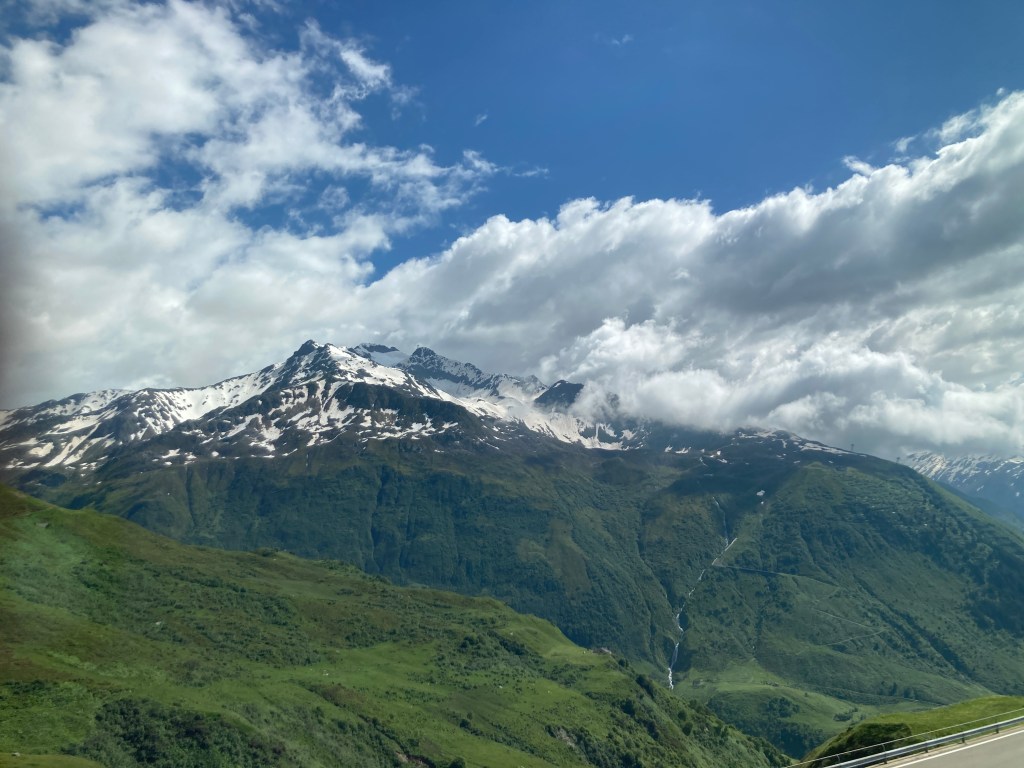
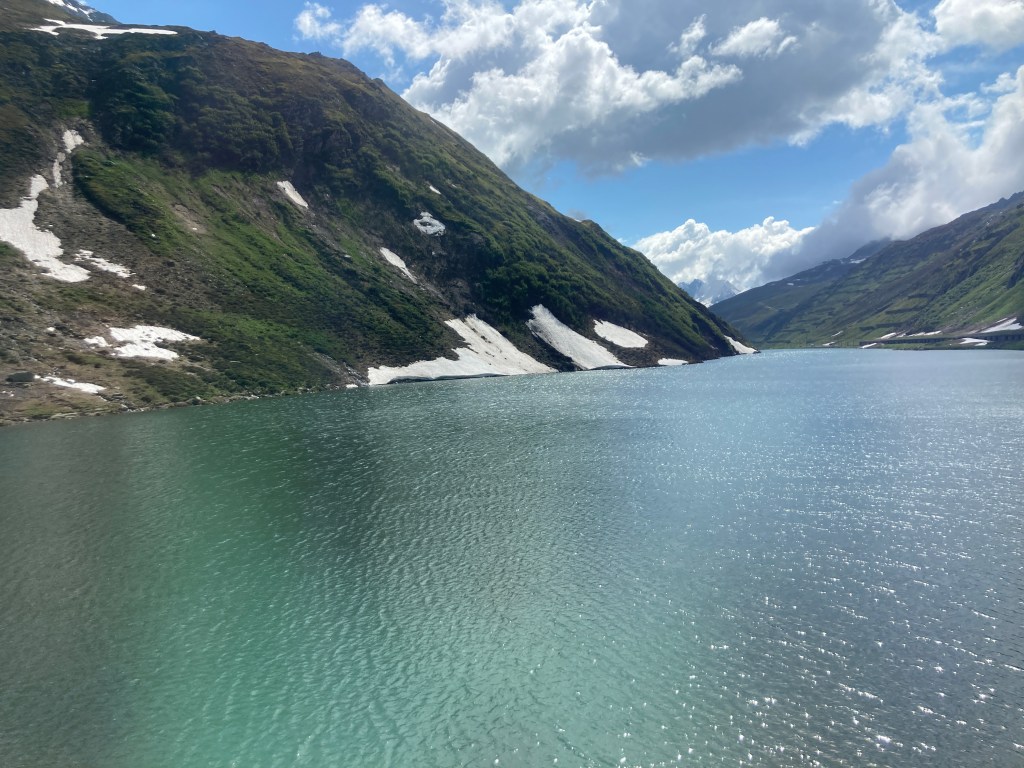
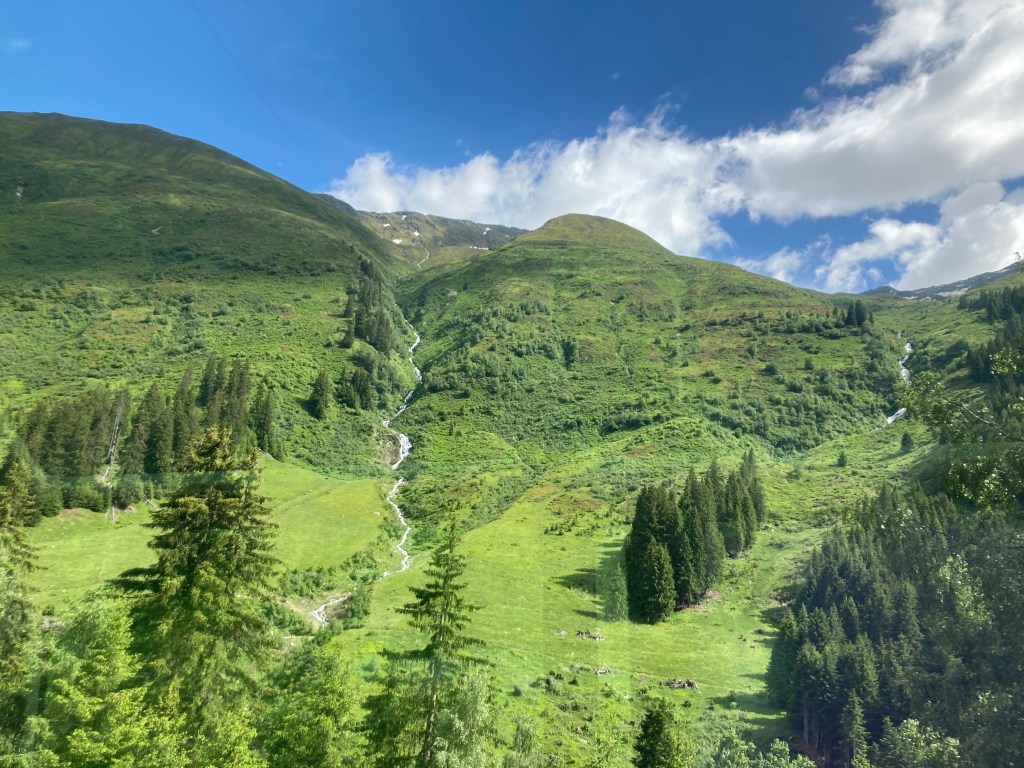
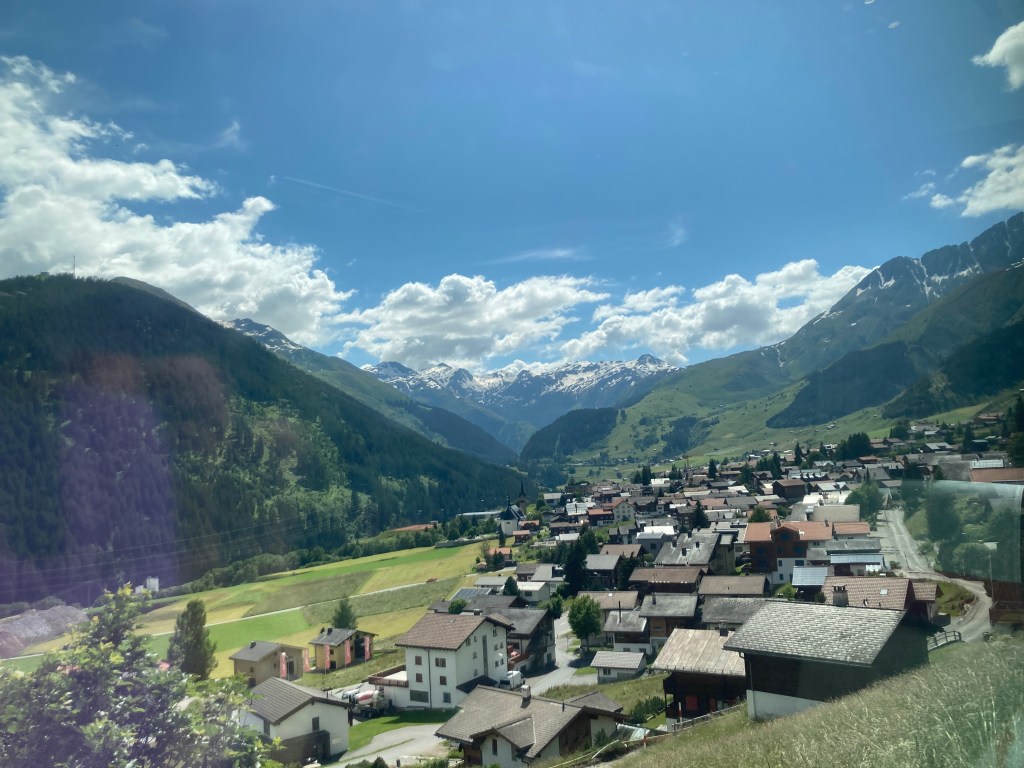
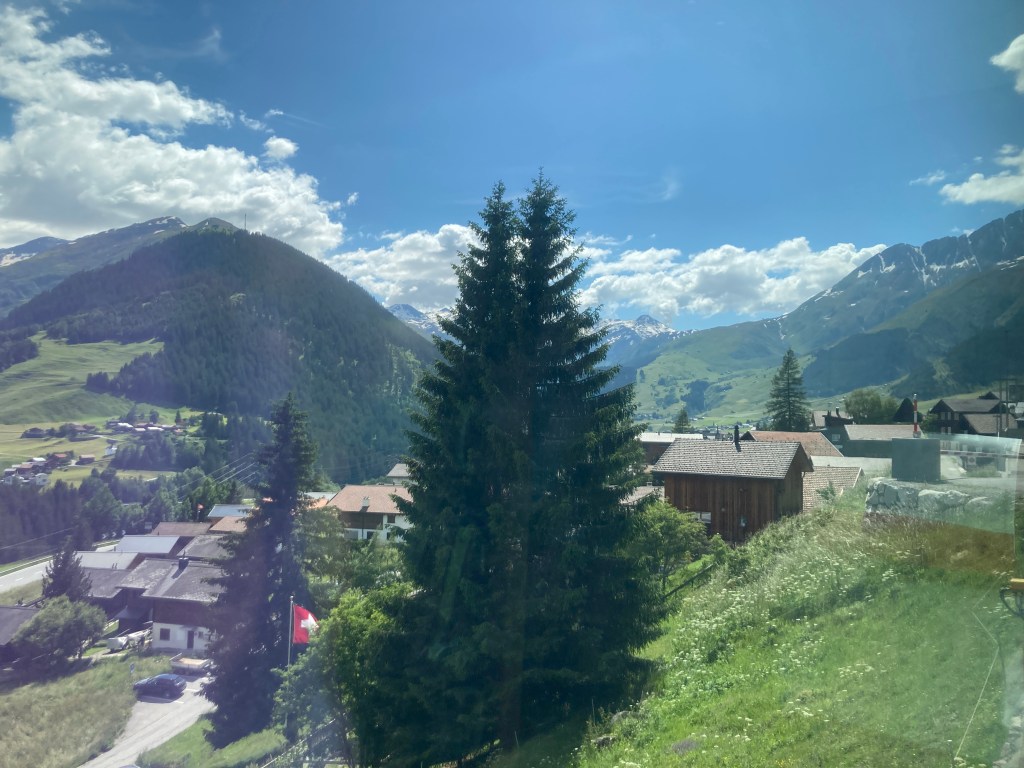
But once more, flood damage to the track necessitated a change of itinerary. We left the train at Brig and took a replacement bus to Täsch before getting back on the train for the final half an hour or so. Despite all the disruption, we arrived at Zermatt ahead of schedule.
***
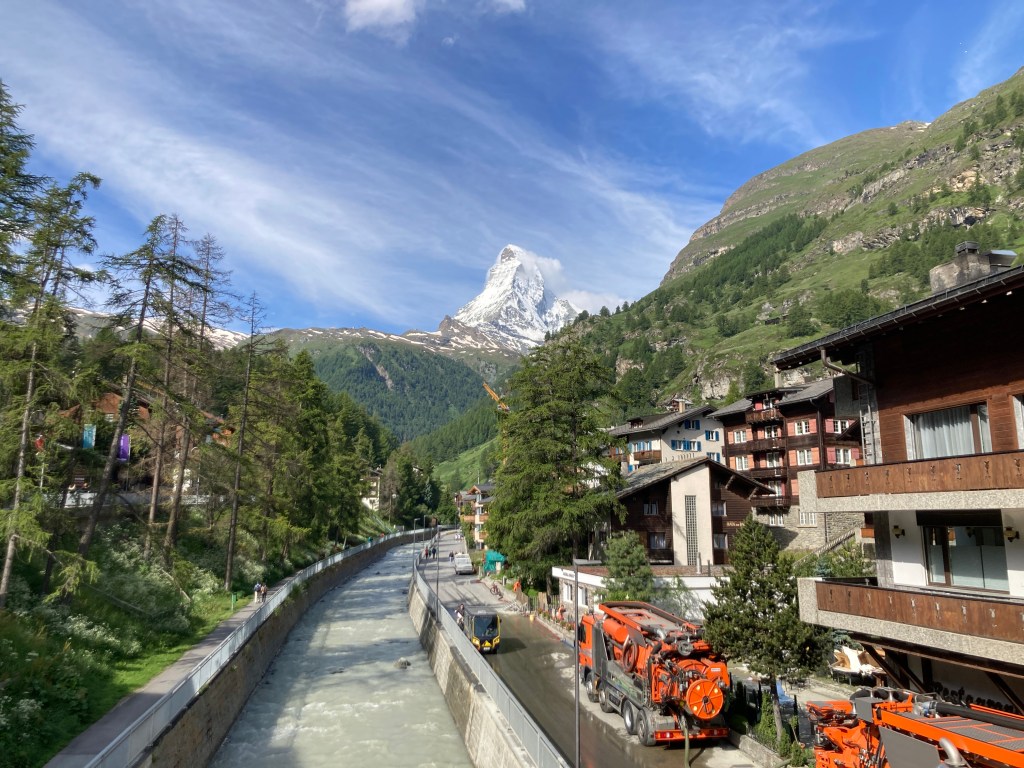
Our hotel, the Bahnhof in Bahnhofstrsse, was opposite the railway station, would you believe? Really it is more a hostel than a hotel, but that suited us. It had a huge kitchen and washing machines. From our third-floor balcony we had our first sighting of the thing.
World’s most recognisable mountain
 The Wight Stuff
One thought on “Europe from Z to Z, part VII”