You can never have too many holidays. Or perhaps you can? I’l ponder that fascinating question on another occasion. Be that as it may, we decided to take a short autumn break in Cyprus. I’d never been before, but I knew there was a lot to see and October seemed to be the best time to visit as it would have been far too hot for me in summer.
We weren’t disappointed
We flew from Gatwick to Paphos and spent our first three nights at Casa Mespilea, a small, nicely situated hotel in the upper part of the town. It was already hot when we ventured out for breakfast the next morning, and the sun shone out of an almost cloudless sky for the rest of our stay.
***
Paphos is a prosperous-looking town whose visitors come principally from Britain, although you can hear a variety of other languages (notably, Russian) as you pass through the streets around the clothes and crafts market.
After a certain amount of dithering we took a taxi down to the Archaeological Park, a complex of impressive Greco-Roman ruins. Chief amongst them are famous Roman mosaics from four villas dated to the 3rd – 5th century AD.
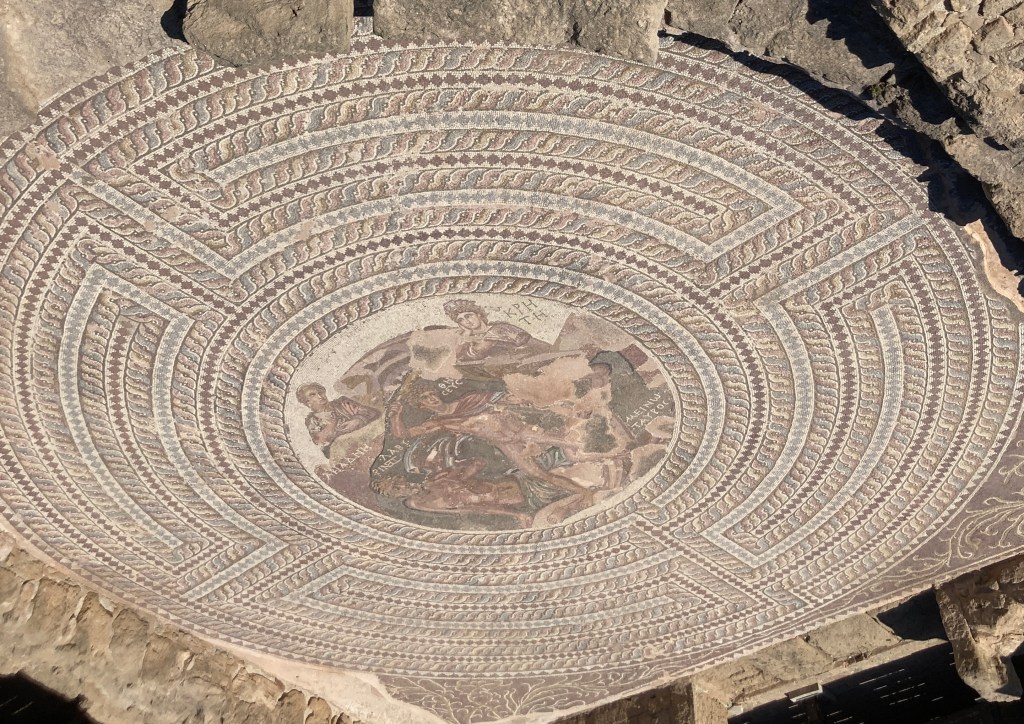
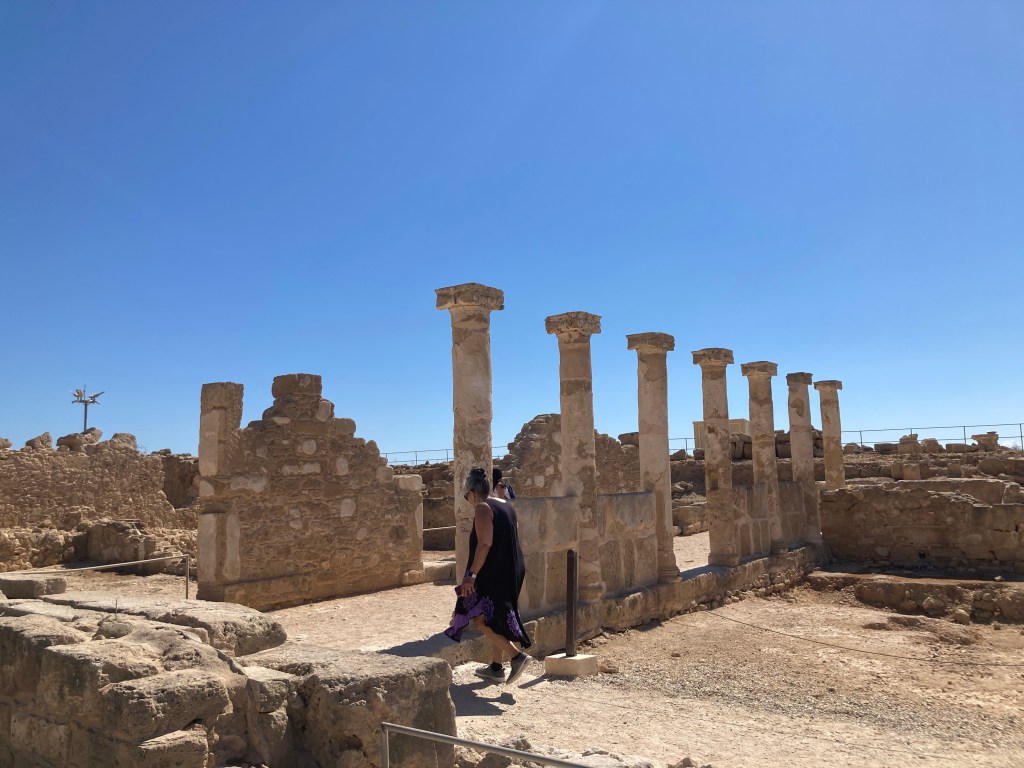
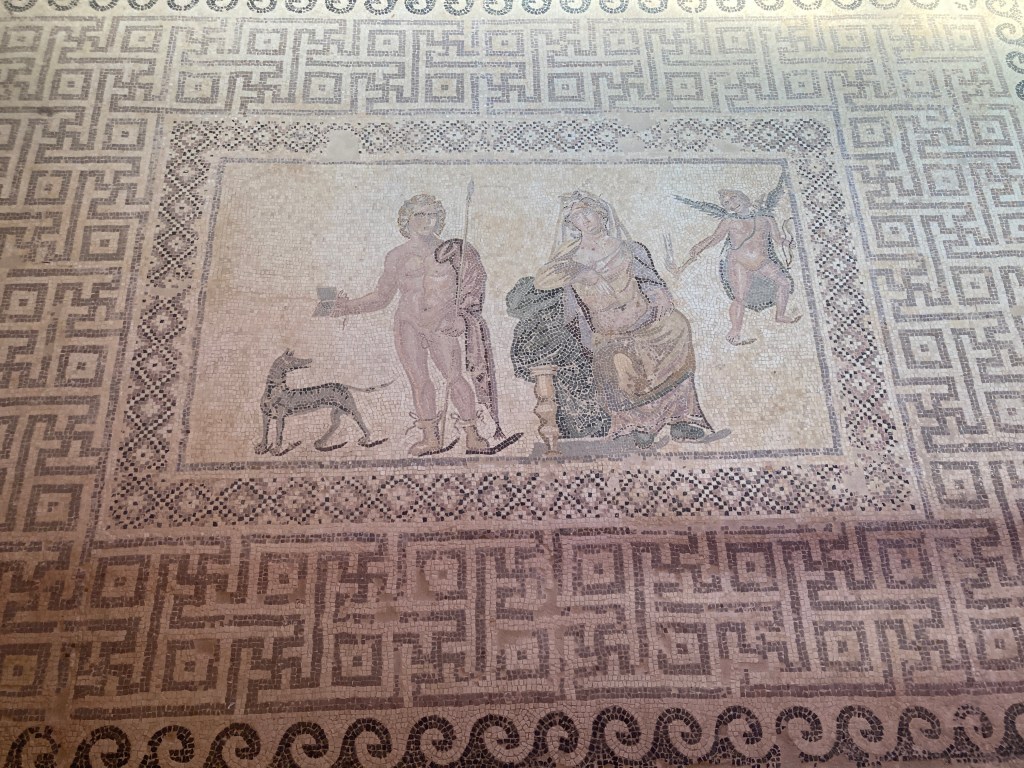
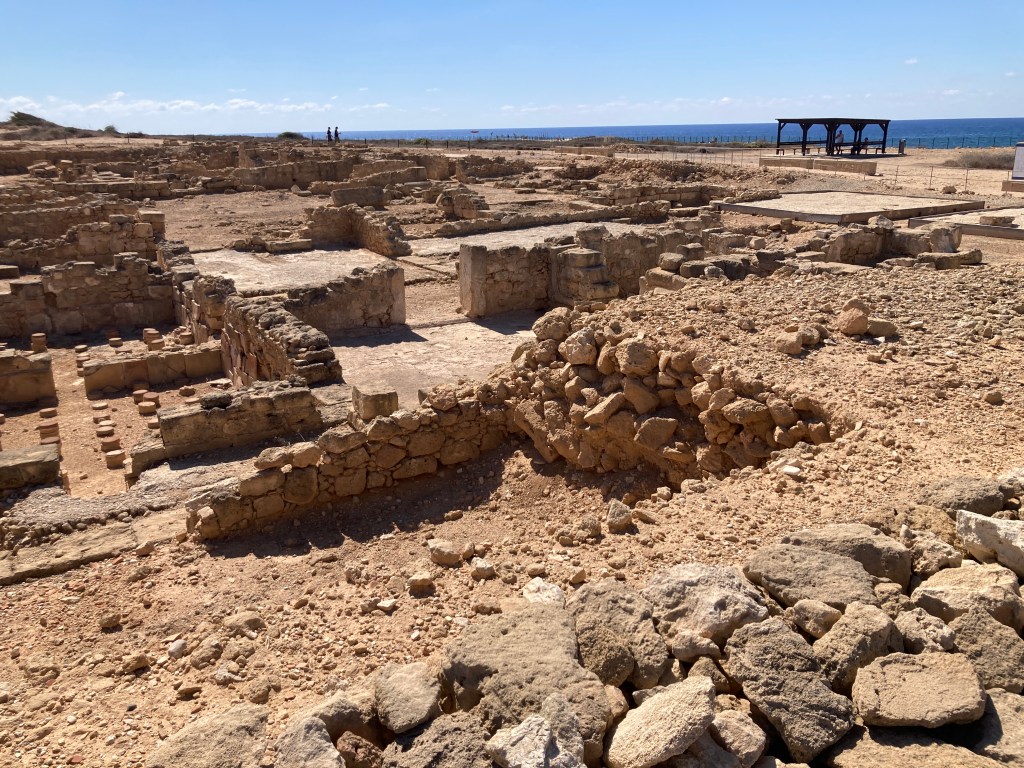
Some are in excellent condition, and it is exciting to see them in situ.
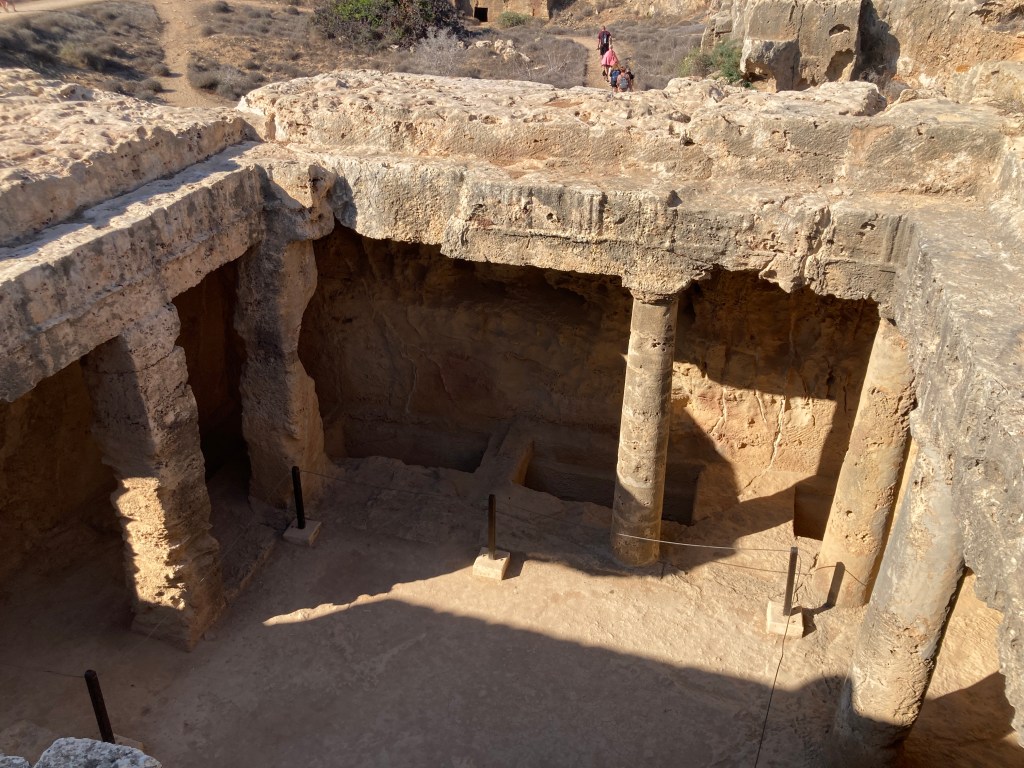
Nearby are the so-called Tombs of the Kings, some of which are more than 2,000 years old; we walked to them, but began to wish we had waited for the bus after half an hour in roasting 35c heat.
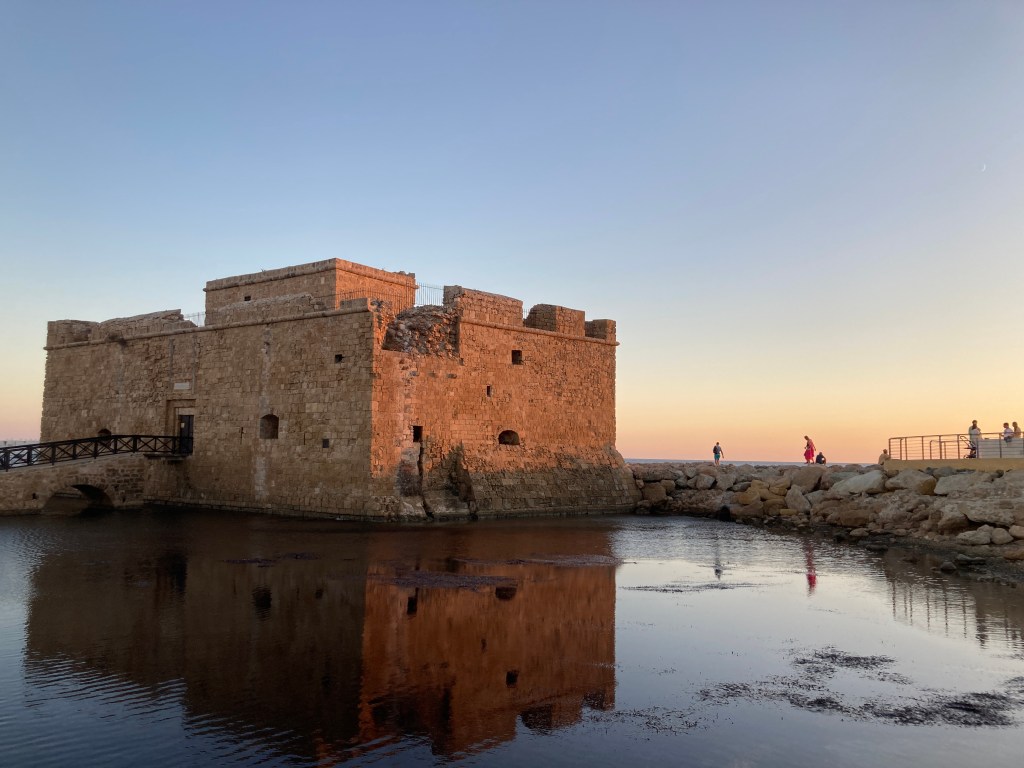
The harbour itself is an attractive area with seafood restaurants and a castle, from where there are sunset views.
We both love Greek cuisine
But you have to search out places that offer more than the standard souvlaki/kebab/burger with salad and chips. The best restaurant we found during our stay in Cyprus was Honey, a few minutes from our hotel: not cheap – and nor is Cyprus in general. Prices are generally on a par with Athens. There is also a family-run taverna called Laona, where I enjoyed a delicious rabbit stifado in a sweet-and-sour sauce of onions, peppercorns, wine and vinegar.
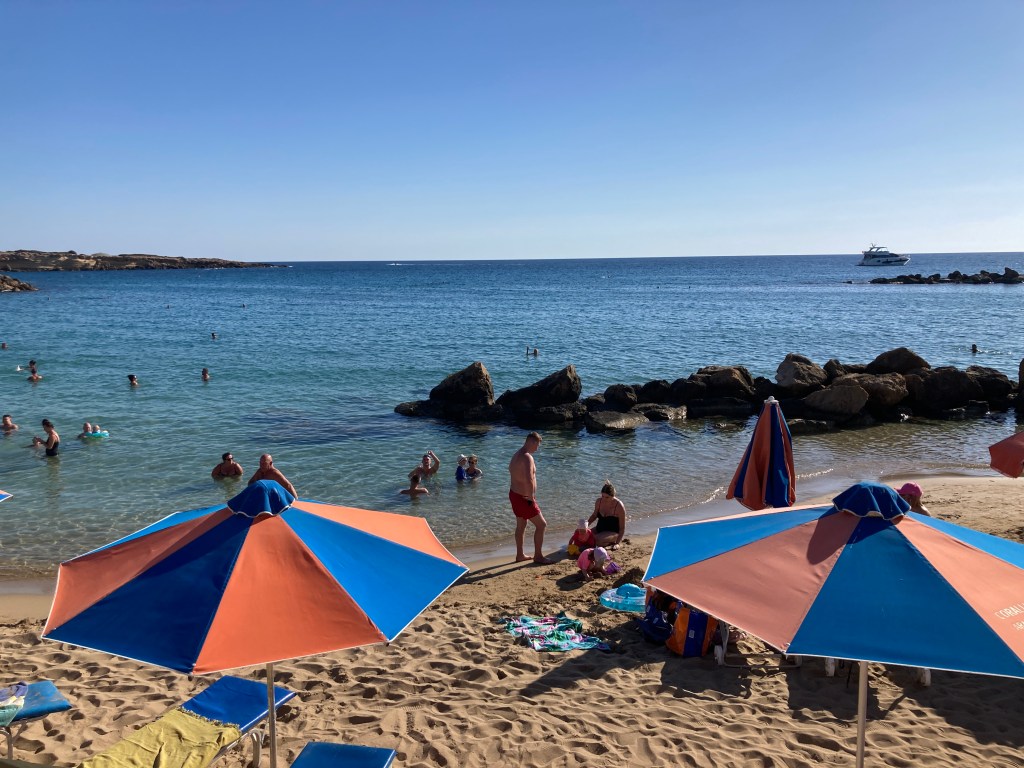
Paphos also has excellent beaches, the best of which is known as Coral Bay.
***
We had decided to spend part of our time in the Turkish-speaking half of Cyprus; it is much simpler to visit than you might be led to believe. The bus to Lefkosia (AKA Nicosia) from Paphos took two hours and cost just €7. From Lefkosia bus station we walked north along Ledra Street for 10-15 minutes until we came to the UN-patrolled Green Line, where we presented our passports to the “Greek” authorities; then a few minutes later did the same on the “Turkish” side, where there was a tourist information booth with a cheerful woman handing out leaflets.
***
There’s much of interest in Turkish Lefkoşa, but we saved the sights for our return journey (as recounted in the next blog post).
Another 10-15 minute walk took us through town to the bus station (i.e. a line of minibuses next to the park). Euros are accepted nearly everywhere, although as a back-up we withdrew some Turkish lire from an ATM. A shared dolmuş to Cirne (Kyrenia) costs just 100TL each.
In general, North Cyprus is not so slick or wealthy as the Greek side, and a bit down at heel in places. But it’s hardly third-world. Everything works well enough and English is widely spoken in the towns.
The boutique Hotel Sofia on Atilla Sokak near the harbour was comfortable and friendly, with a refreshingly cold plunge pool. Sitting on our balcony in the evening was a noisy but fascinating experience. Every night, an interminable procession of flash Beemers and Mercs would crawl round the little square, music blaring. Rich Turks, Russians, or both? Probably both. As they were mostly open-topped models, I fantasised about obtaining a box of hand grenades, or even fireworks, and casually dropping them off the balcony as the cars passed below us.
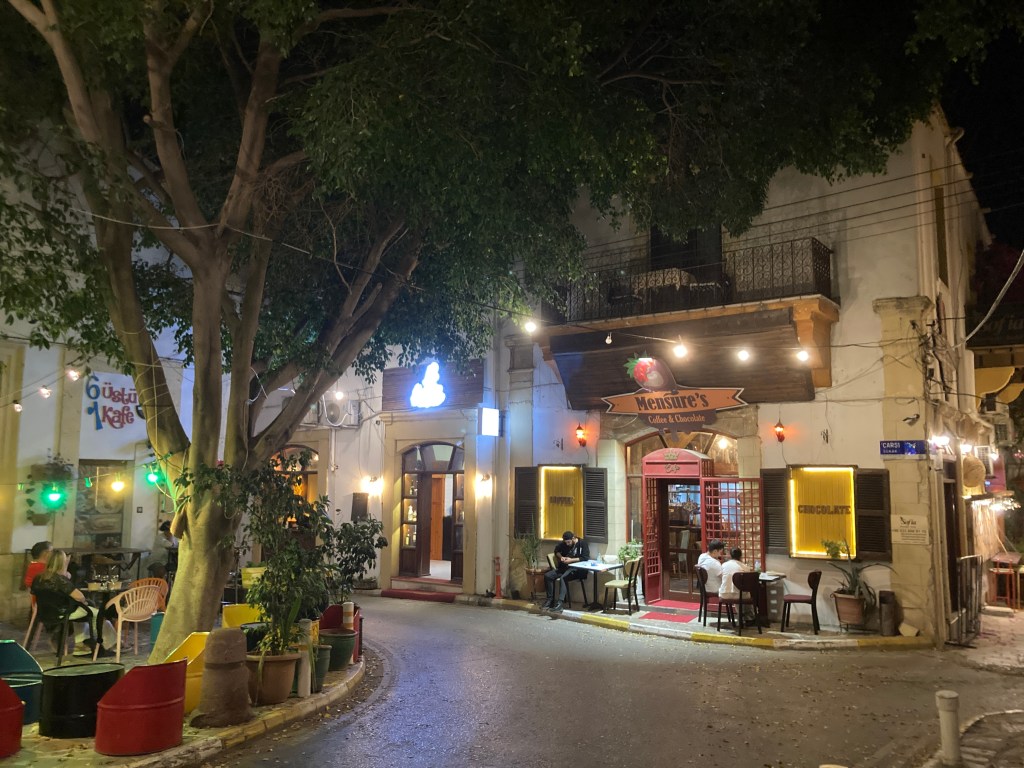
The old town itself has its attractions. but you need a car or taxi to visit two of the best in the locality. Car hire (Ford Fiesta) from “Pacific” was easy and inexpensive.
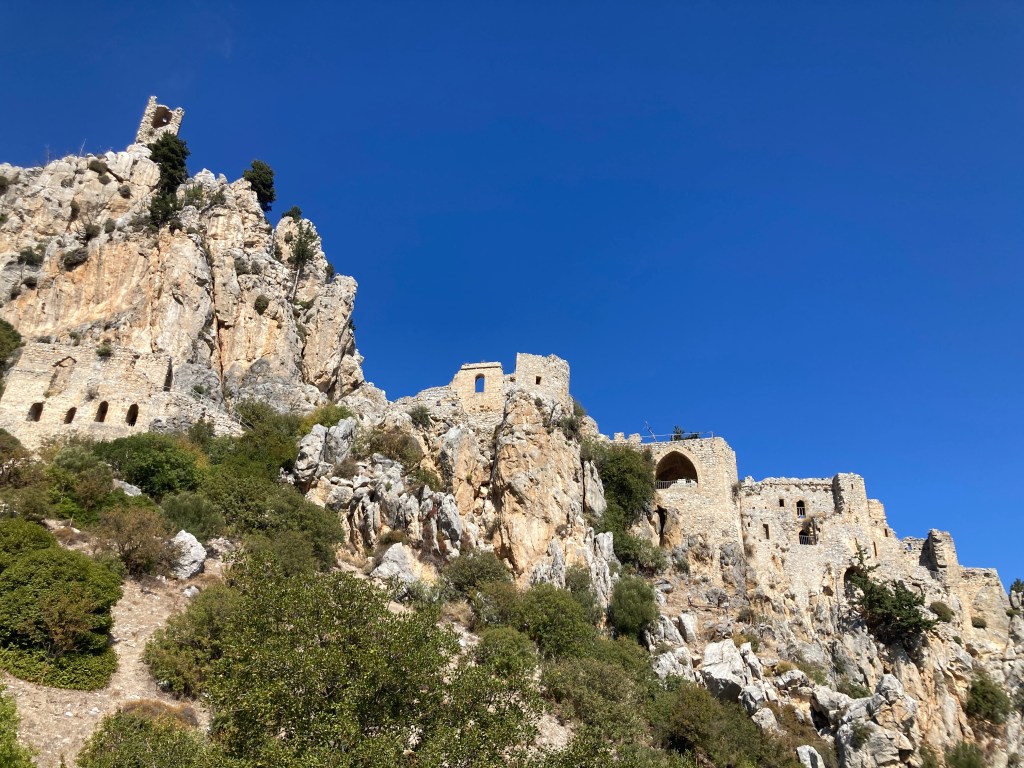
The ruined Crusader castle of Saint Hilarion can be reached in 20 minutes by a dual carriageway south over the mountains (with a rather scary right turn across the oncoming traffic). It was busy with Dutch and German tour groups and it is a long walk to the top, but it is worth exploring and there is a superb view down to the coast. Note that you have to drive through an army shooting range to get there! Don’t stop to take photos.
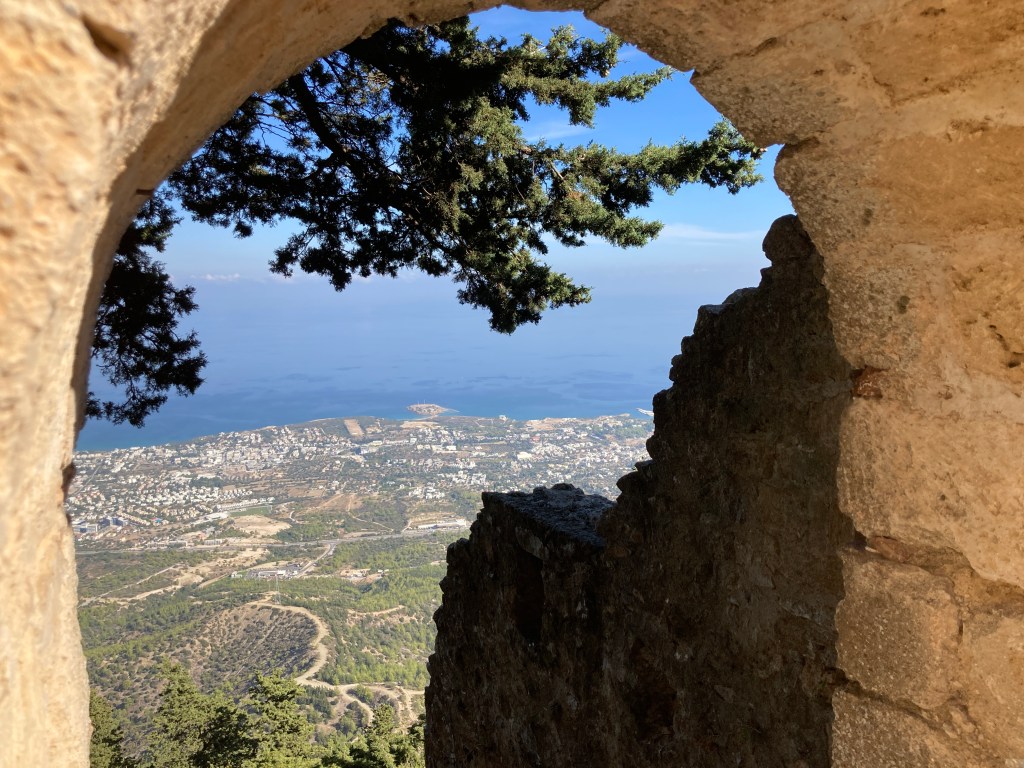
There are two other castles in the Kyrenia mountain range but with even trickier (i.e. dangerous) access routes, so we left it at that.
***
The coast road east from Cirne takes you gradually uphill to the medieval French (Lusignan) abbey of Bellapais. Having been warned that the road was poorly sign-posted and easy to miss we opted to take a minibus.
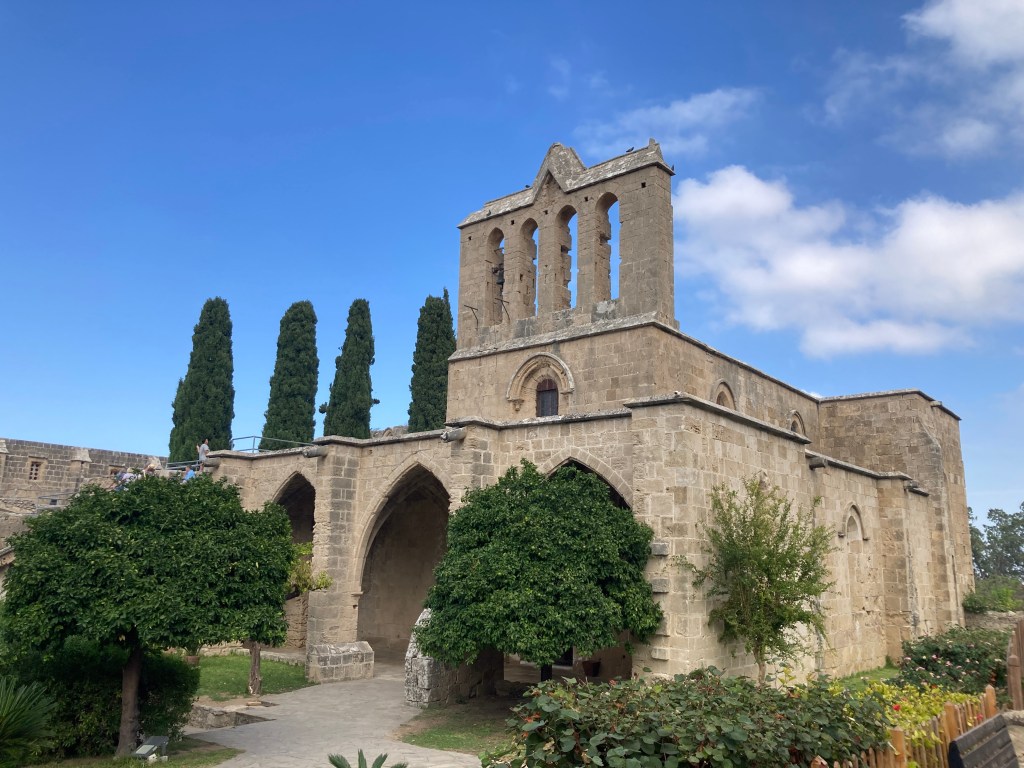
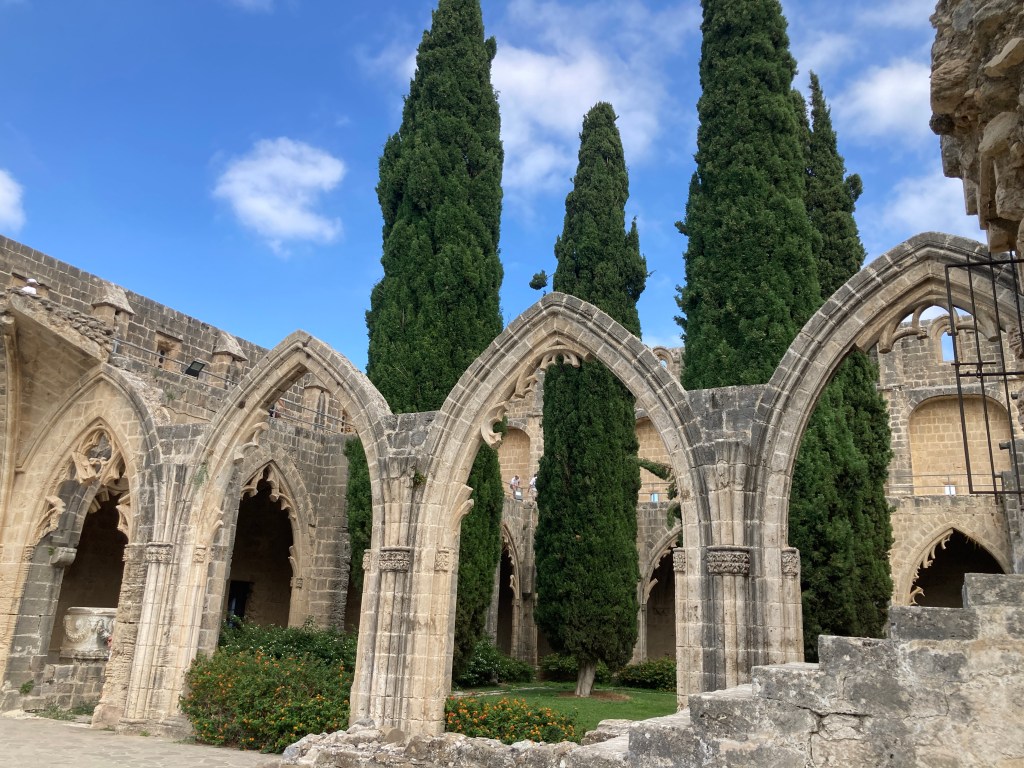
As so often these days, the ruins were hogged by Instagramming young women seeking that perfect shot. I waited, as patiently as I could, for a few minutes then ventured, “Hello! Excuse me, may I take a picture?” I had to repeat the question. The response eventually came, “No, thank you.” I had to clarify, through gritted teeth, “No, not of you, of the abbey.”
After a decent lunch of lamb chops and köfte washed down with Italian soave at The Tree of Idleness, we strolled around the village with the intention of visiting Lawrence Durrell’s house, as described in his memoir Bitter Lemons. We laboured up the steep and narrow street in the heat for what seemed an age, but eventually gave up and opted for an ice-cream instead.
***
A longer and very worthwhile day-trip is to Gazimağusa (Famagusta) then up the east coast to the ruined city of Salamis. Gazimağusa is only an hour and 15 minutes’ drive from Cirne.
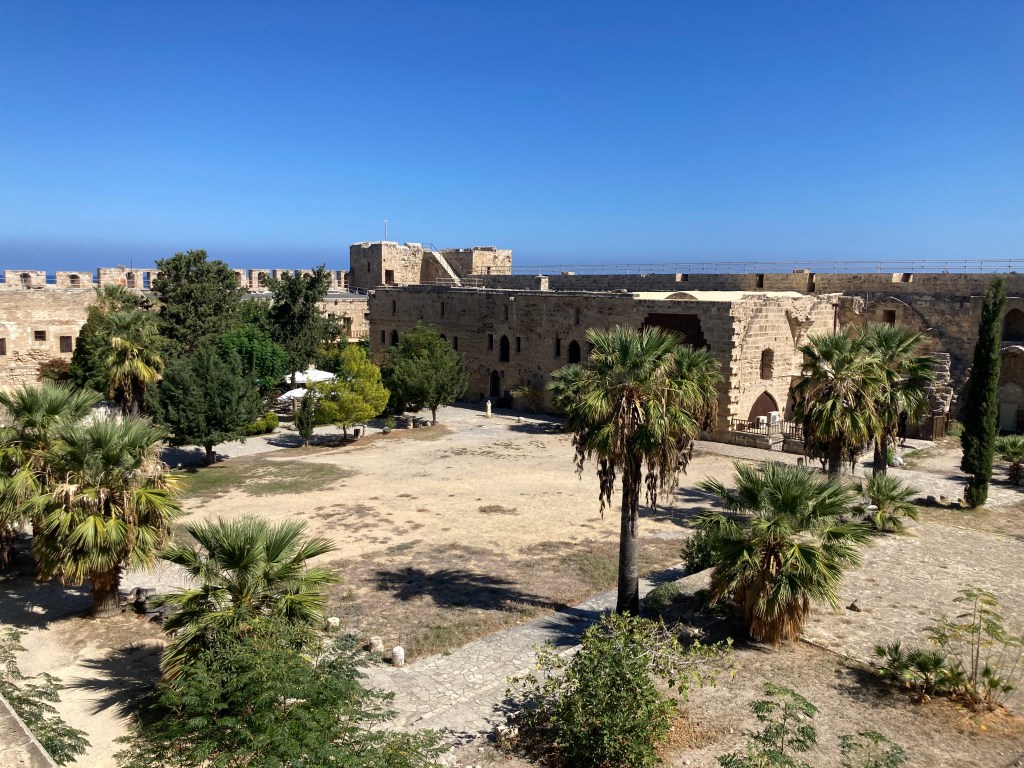
We drove on a good road through the dry and somewhat uninteresting interior to the outskirts of Lefkoşa ,then picked up the Gazimağusa road without the aid of Google or a map (because we didn’t have either). More by luck than judgement, we came across the massive Venetian ramparts and drove through a medieval gateway to the citadel, the so-called Othello Castle, where we parked up.
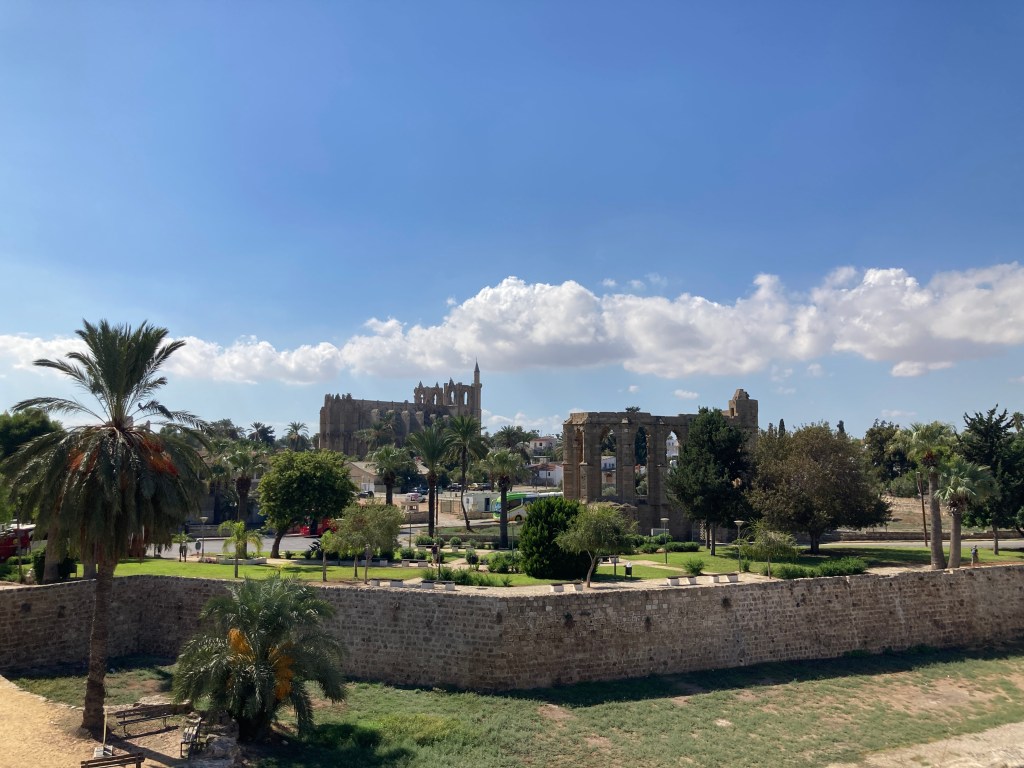
It was once a very wealthy city
After Paphos and Cirne it was a surprise to come across such a sleepy town. There are many ruined churches dating back to the Lusignan period, such as St Nicholas (subsequently Lala Mustafa Pasha Mosque) and Sts Peter and Paul (Sinan Pasha Mosque), as well as Venetian and Ottoman buildings of interest.
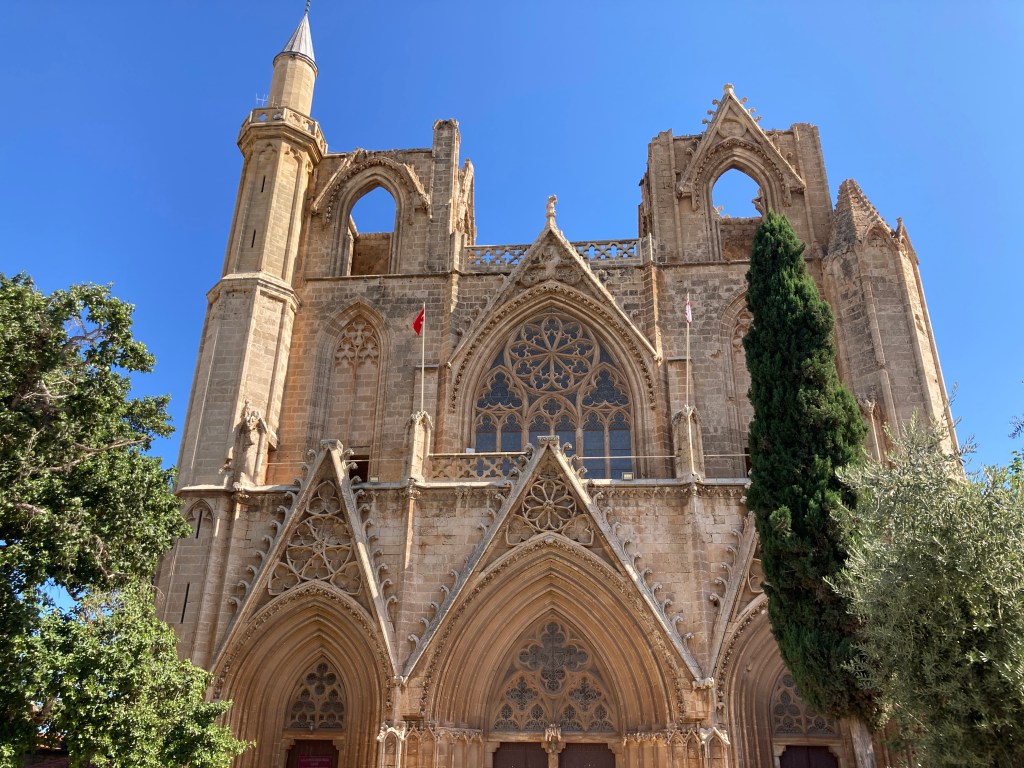

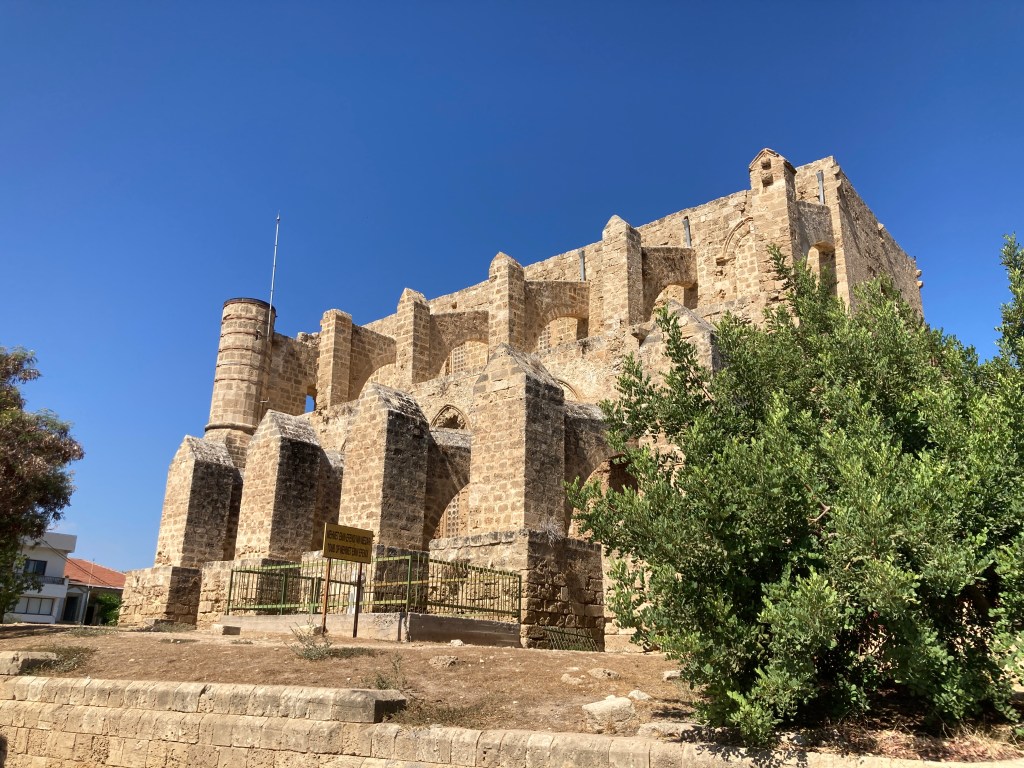
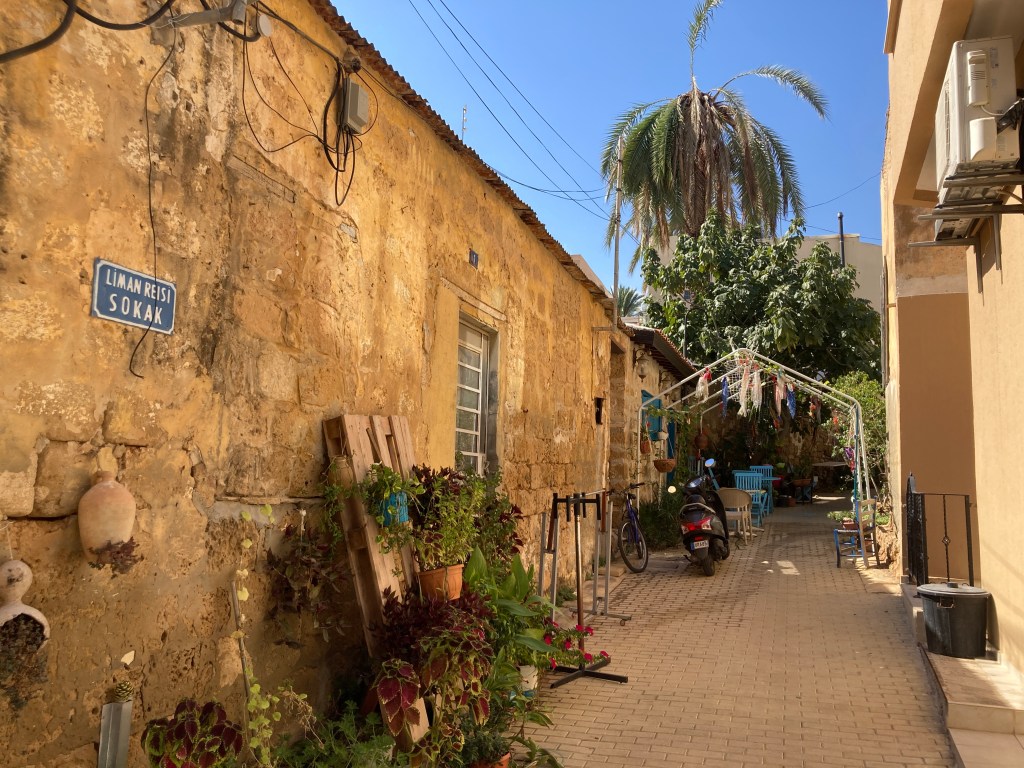
We decided not to stay for lunch but push on to nearby Salamis.
It is an enormous archeological site, one of the best preserved in the whole Mediterranean area. There were a couple of tour groups at the site, but by the time we had stopped for a drink we had it almost to ourselves.

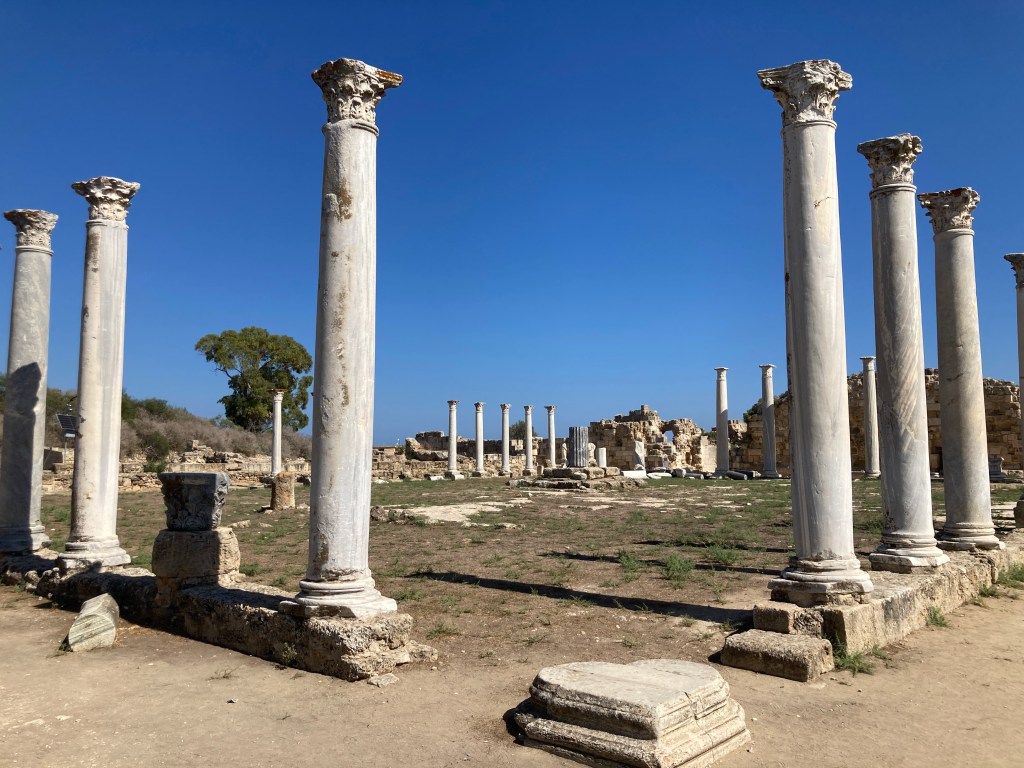
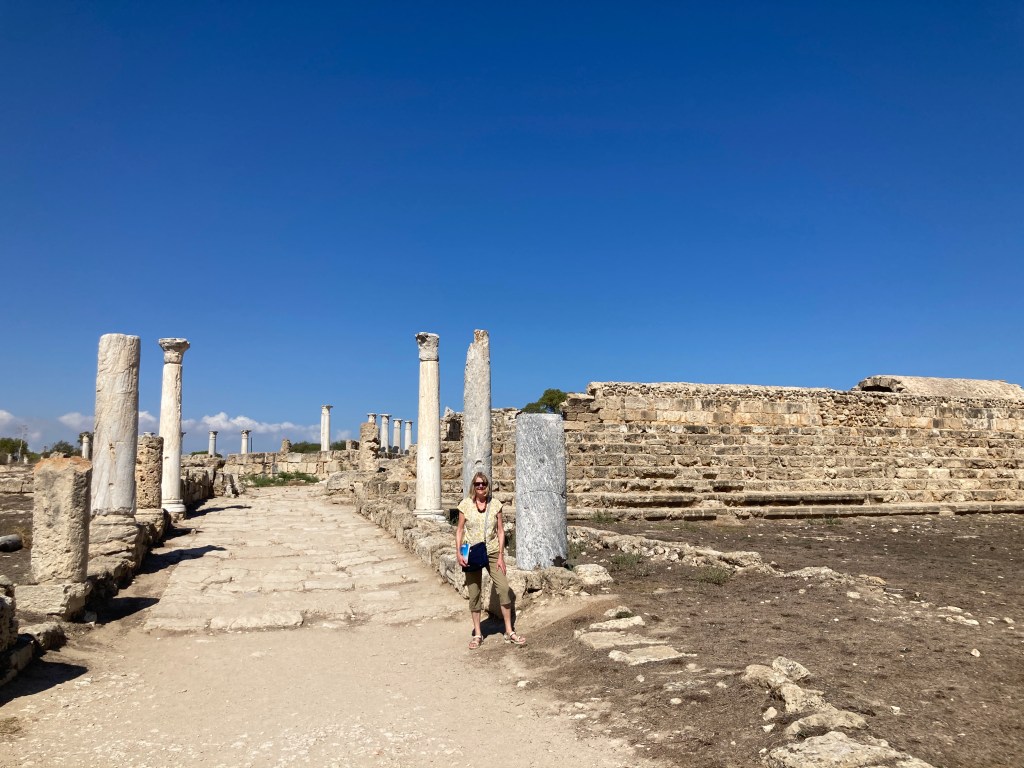

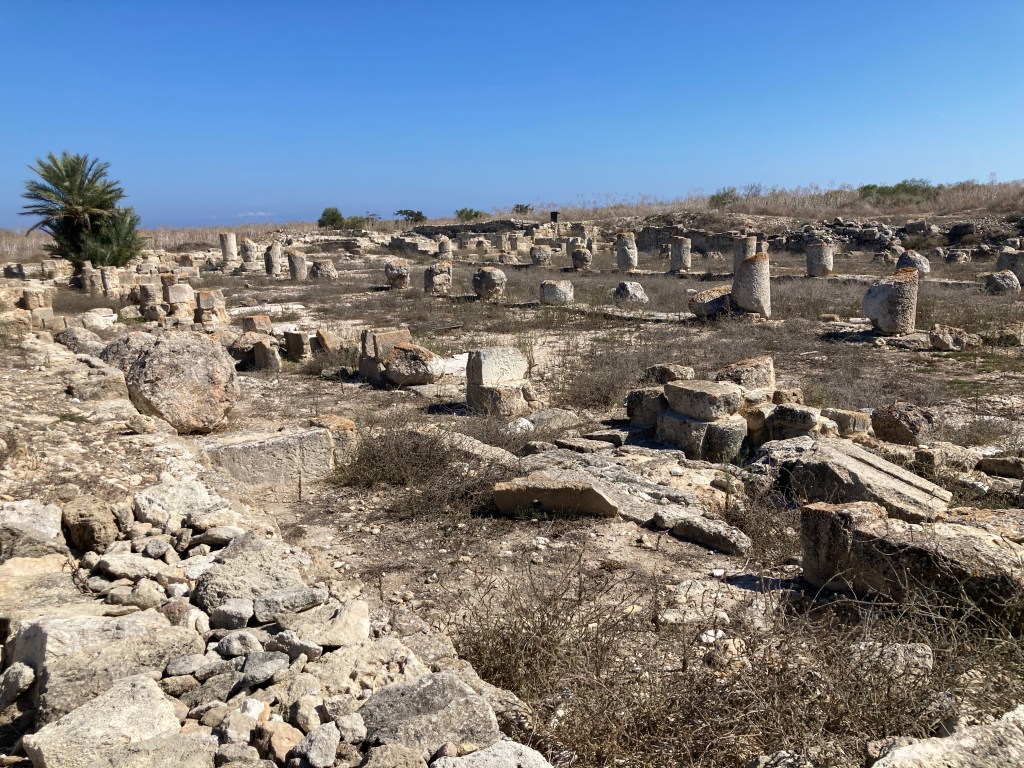
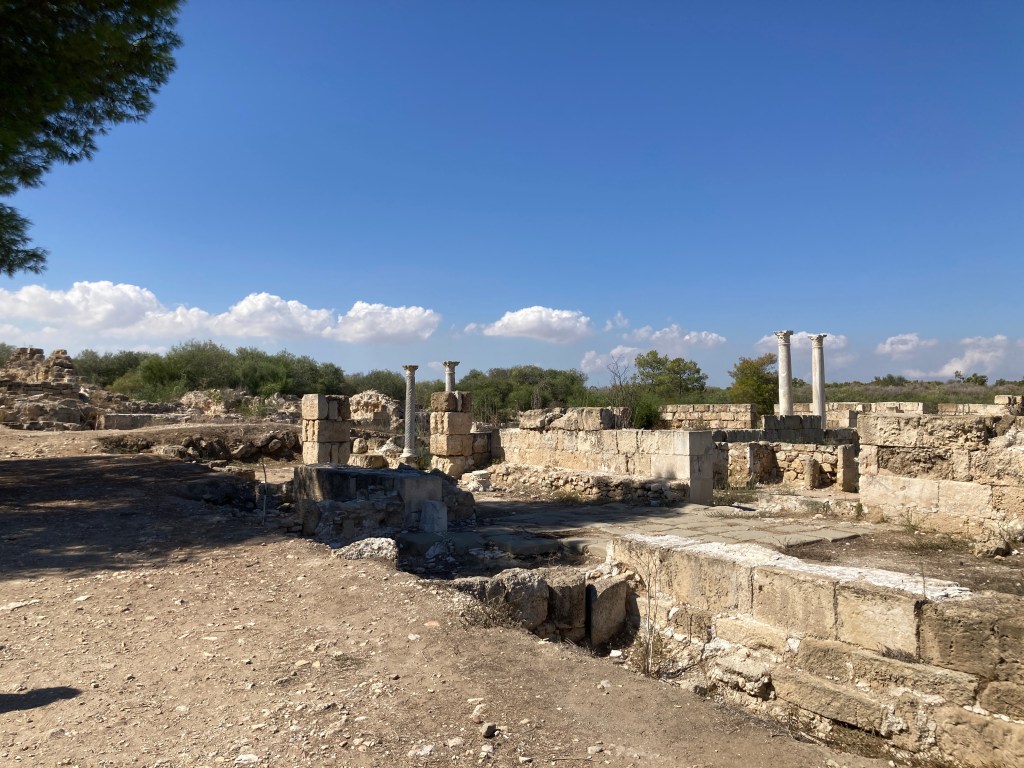
I felt slightly guilty about spending less than two hours there but one can only do so much walking in the heat.
There are great beaches in the area too but we decided to return to base.
***
We set off back to Cirne in the early afternoon, but our rash decision to cut off a corner backfired and we soon got lost in the middle of nowhere. We passed abandoned hamlets with ancient churches: a grim reminder of the civil war. Stopping in a seemingly deserted village, we searched for signs of life. An old man sitting on his terrace generously came to our rescue, getting into his car and telling us – in Turkish – to follow him. His only English word was something approximating to “roundabout” but that was enough to put us back on track.
Highlight of the day
***
However… we later took a wrong turn, causing us to take the old slow road over the Kyrenia mountains. We were soon stuck in a gaggle of crawling lorries loaded with gravel. But such is life.
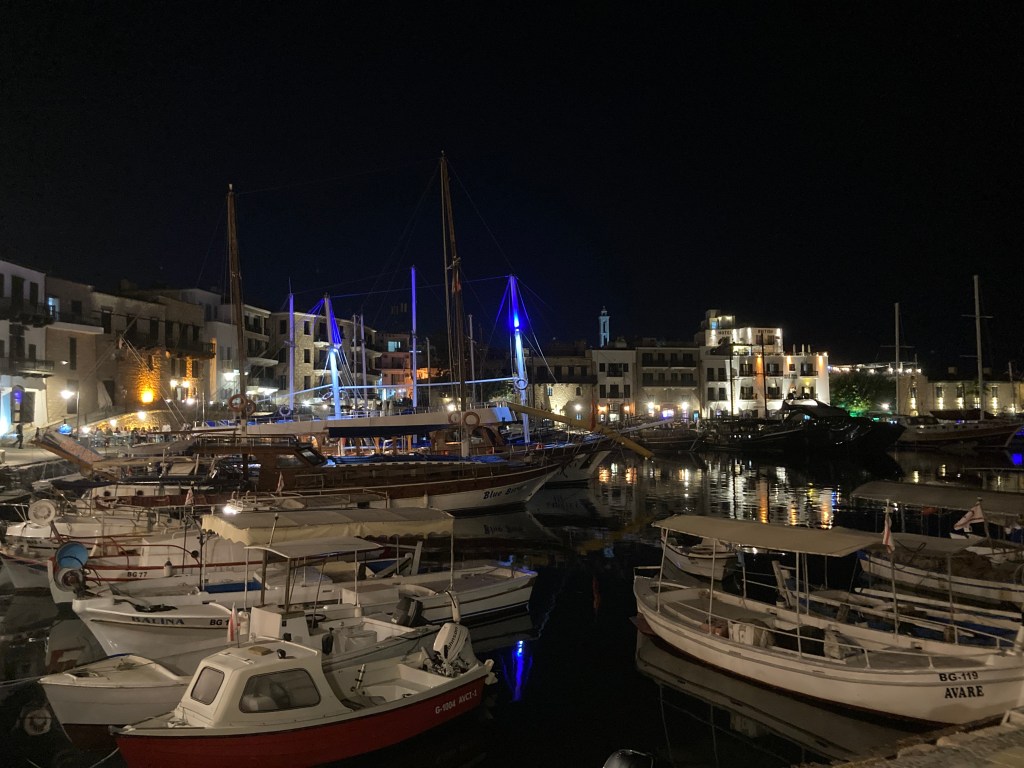
Back in Cirne at last we dropped off the hire car and went for dinner, preceded by a well-deserved G&T.
 The Wight Stuff
One thought on “Isle of two halves, part I”