Our fourth and final night in Cirne/Kyrenia ended with a stroll round the harbour, then to “The George” (our temporary local) where we had the misfortune to watch England v Greece on TV. England lost 2-1 and were utterly useless.
***
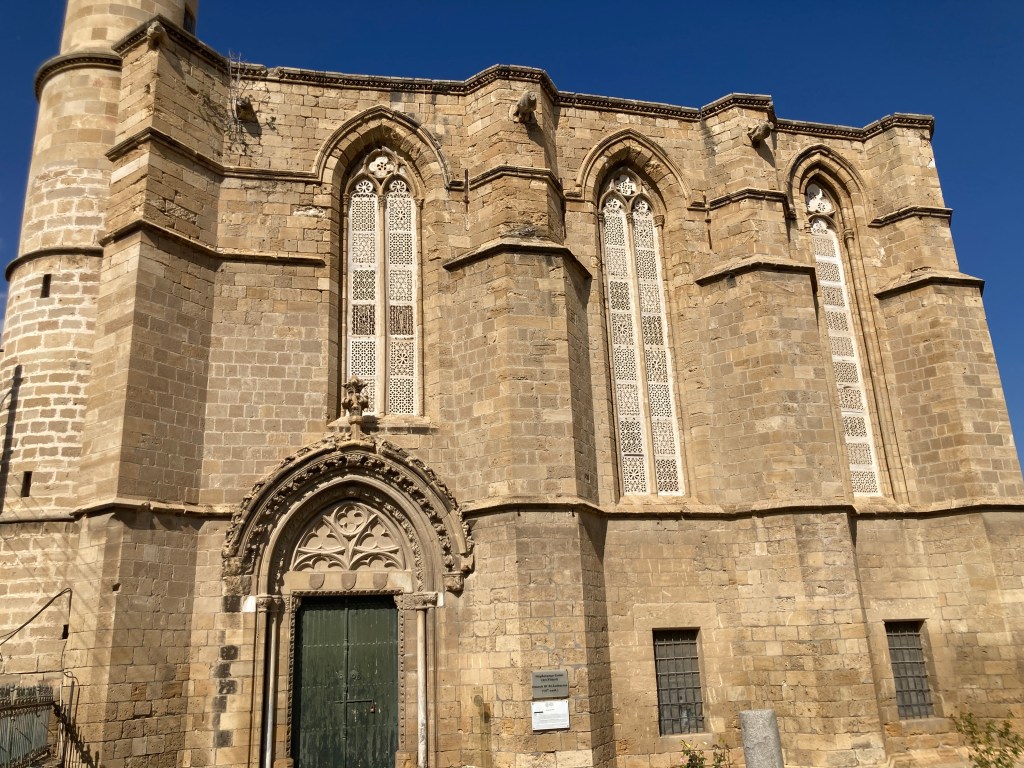
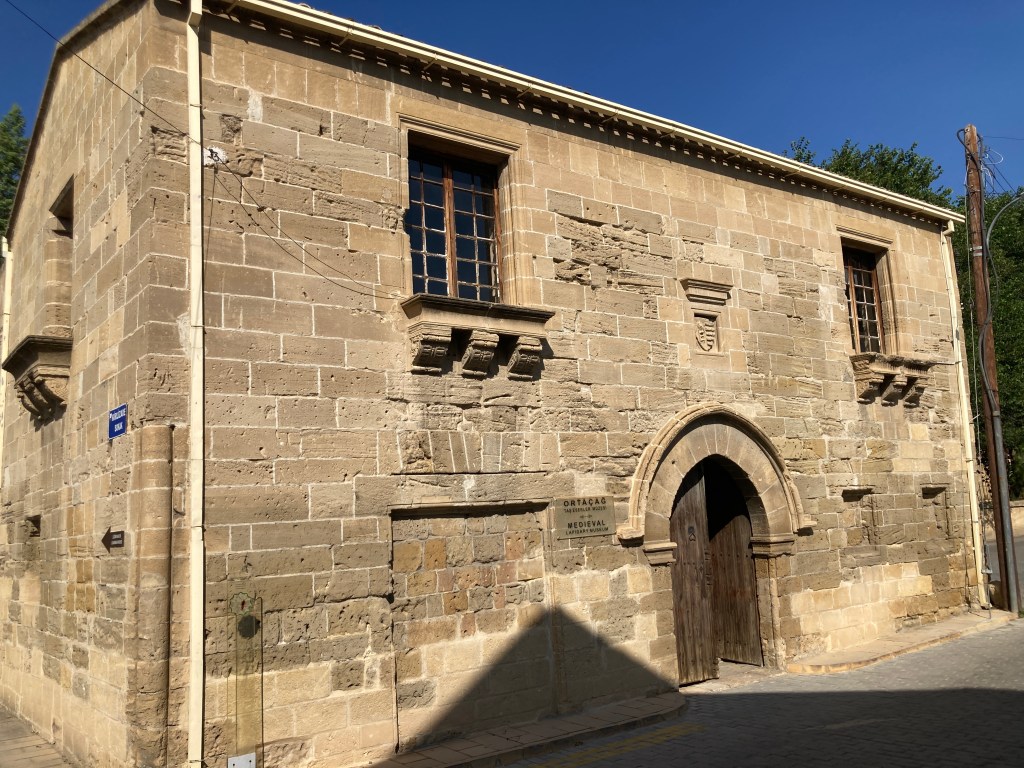
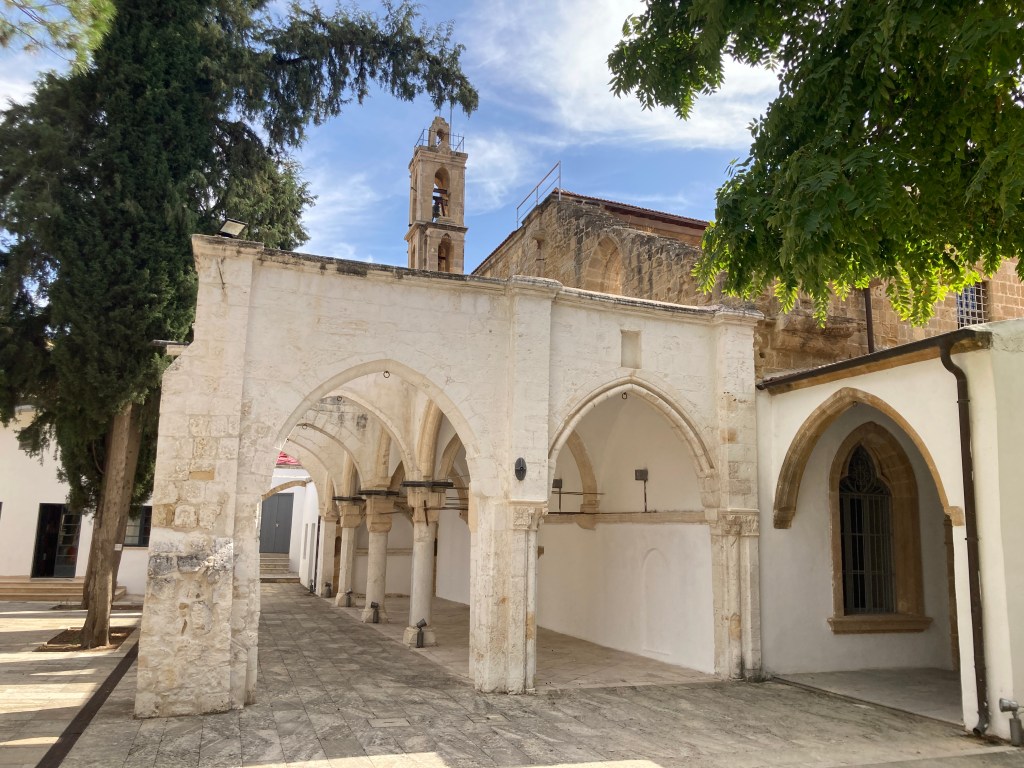
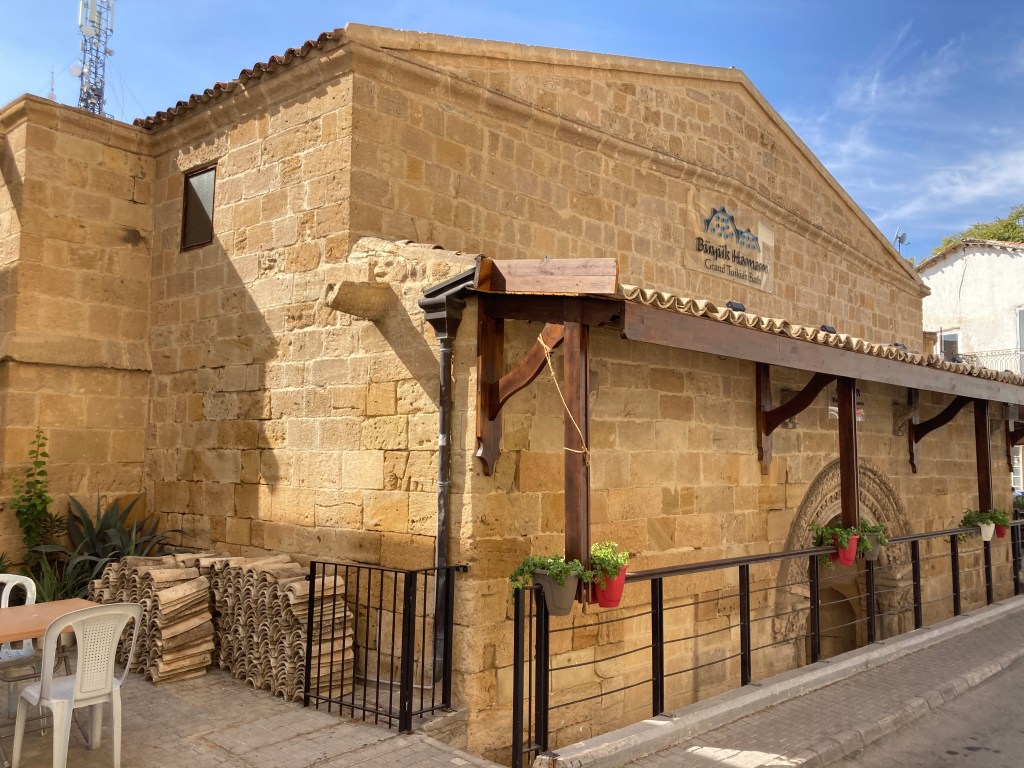
The next morning we took a dolmuş back to Lekoşa (i.e. north Nicosia), where we booked into the boutique Hotel Valide Hanim Konak. We explored the town till our feet ached and saw the main sights: the Lusignan Gothic churches, the Ottoman mosques and hamman, and the two 16th-century khans (market halls).
Büyük Khan
Whereas many of the medieval buildings in Famagusta have been in ruins for centuries, Lefkoşa’s are mostly in excellent condition.
There is really too much to see in a single day, but – as we culture-vultures know so well – ruin overload starts to set in after three or four hours.
After sunset the old town was surprisingly quiet and poorly lit, and we began to wonder if wandering around an area where we could easily have got lost and whose shops and eating houses were closed or closing was a good idea. We knew that our hotel had a restaurant specialising in steak so decided to return for dinner. The meat was excellent, as was the Turkish wine and raki.
And so to bed
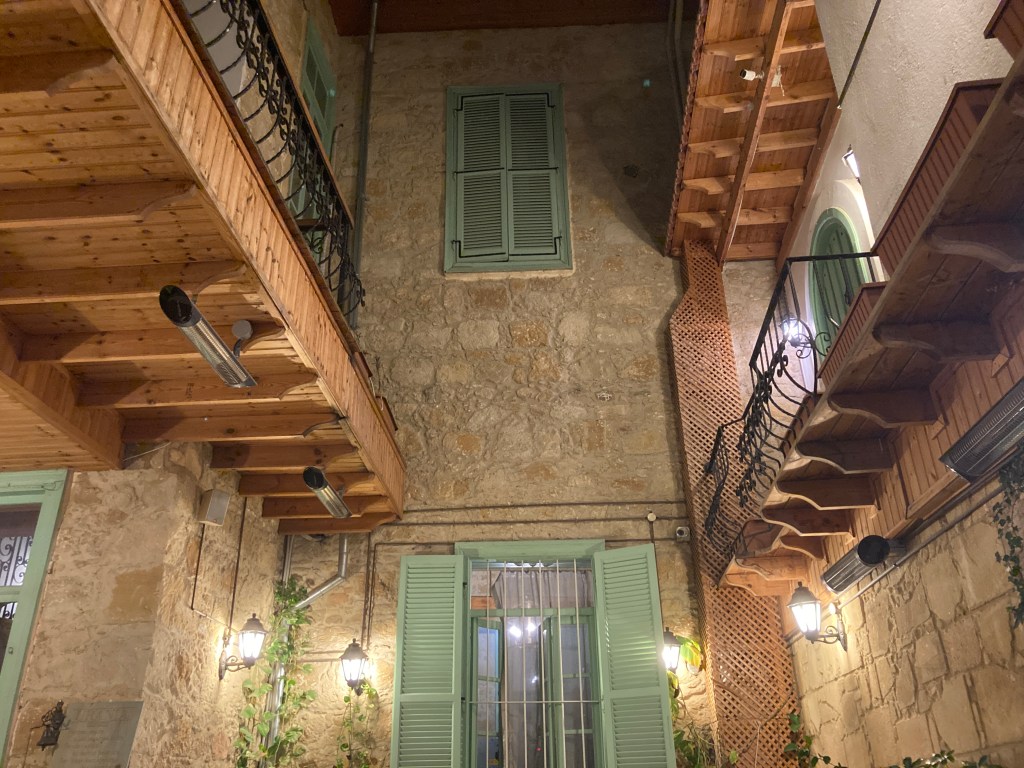
Central courtyard, Hotel Valide Hanim Konak
After a substantial breakfast we walked to the Green Line where there was no queue at border control. No longer would I have recourse to my dozen words of Turkish.
***
We took the bus to Paphos, and by late afternoon had reached the village of Pissouri (near the British military base at Akrotiri), where our friends Bob and Dot James had generously offered to put us up for four nights.
No more driving, and not much thinking!
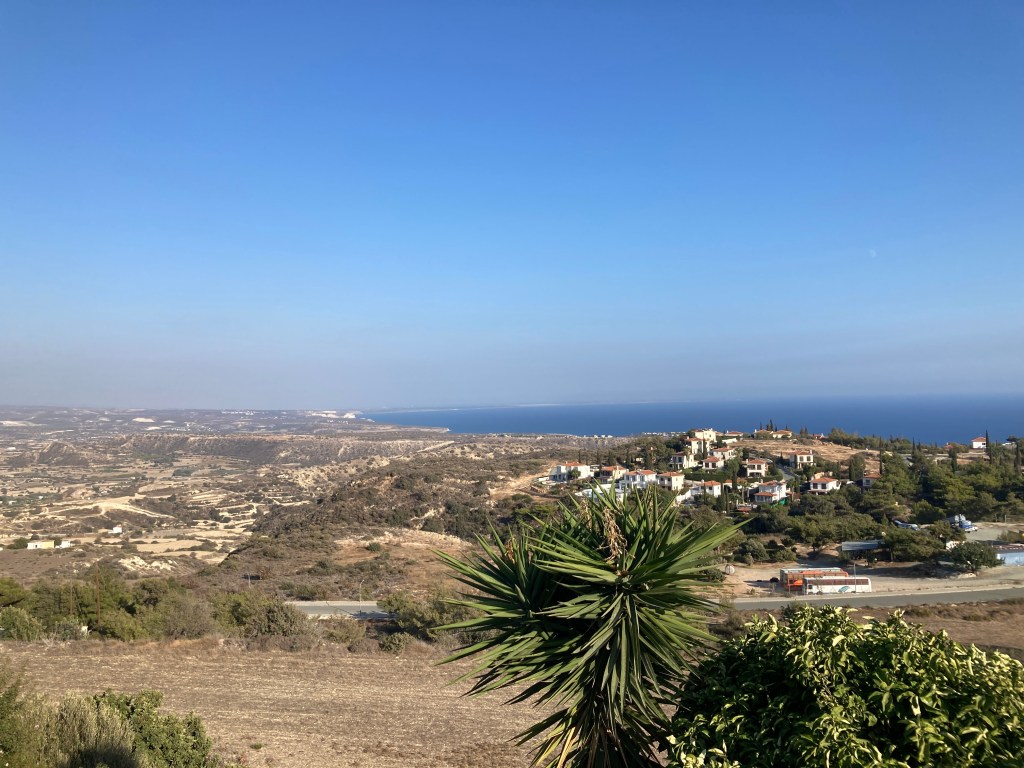
View across to Akrotiri from Pissouri
About half of Pissouri’s population comes from outside Cyprus, principally from the UK, and it is certainly not short of eating and drinking options. At the foot of the steep hill on which it stands is Columbia Beach. It is easy to see its attraction to incomers.
Thanks to our friends’ willingness to show us around, we enjoyed a late morning swim, followed by a memorably huge kleftiko at Diplokamaro family-run taverna in the village of Prastio.
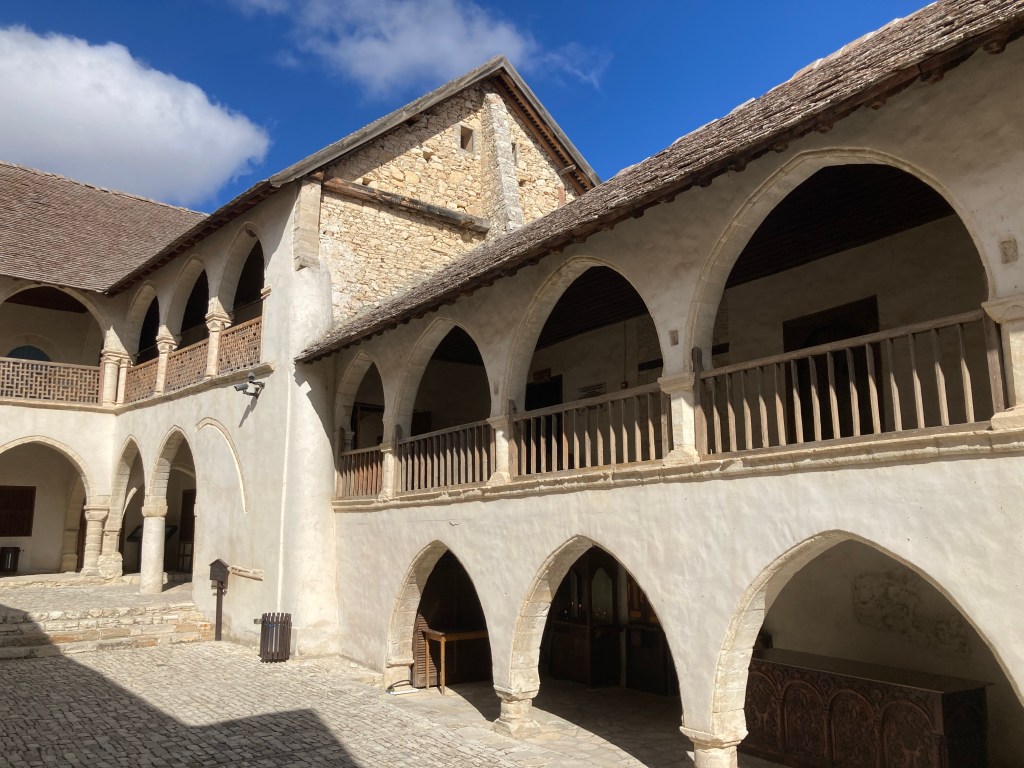
Timios Stavros Monastery, Omodos
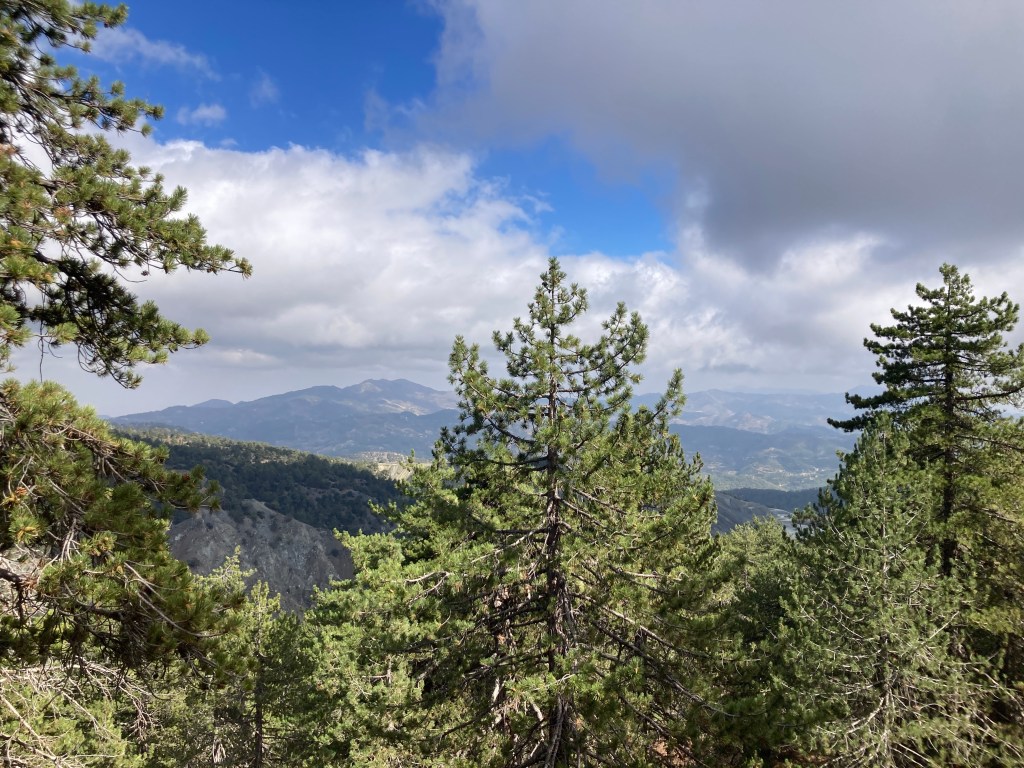
The next day we visited the impressive 16th-century Timos Stavros (Holy Cross) Monastery in Omodos – a well-touristed but lovely place – then ascended past the famous wine villages to Troodos, where we took a short walk.
A view from Troodos
Another side to the island
Kolossi Castle
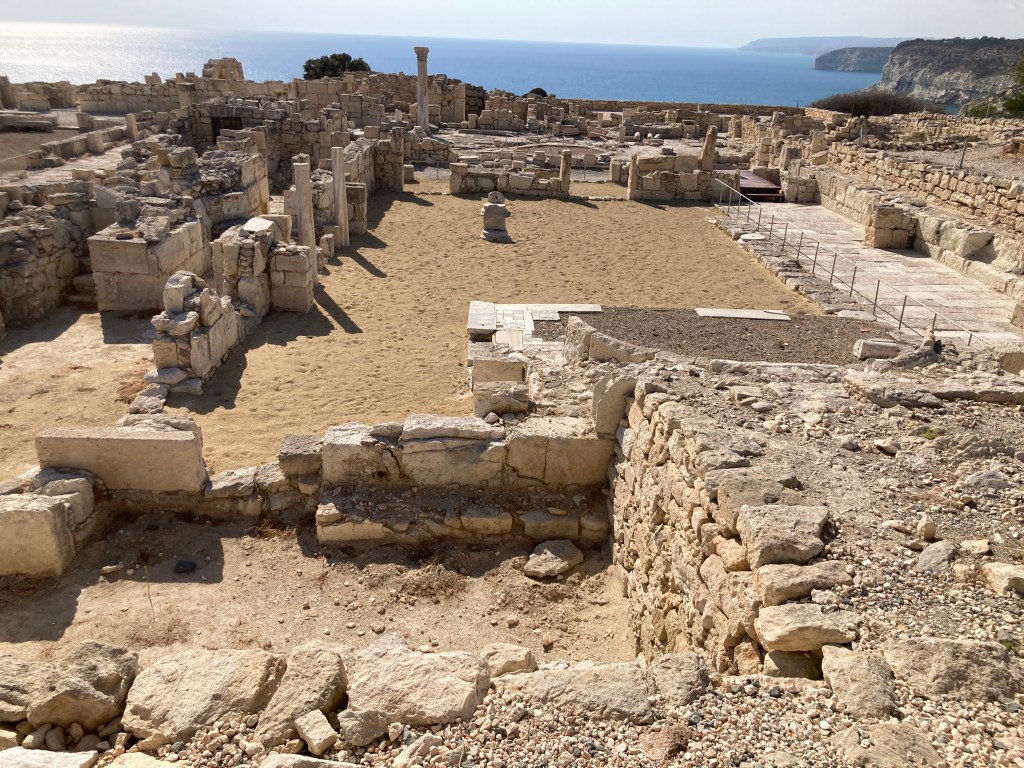
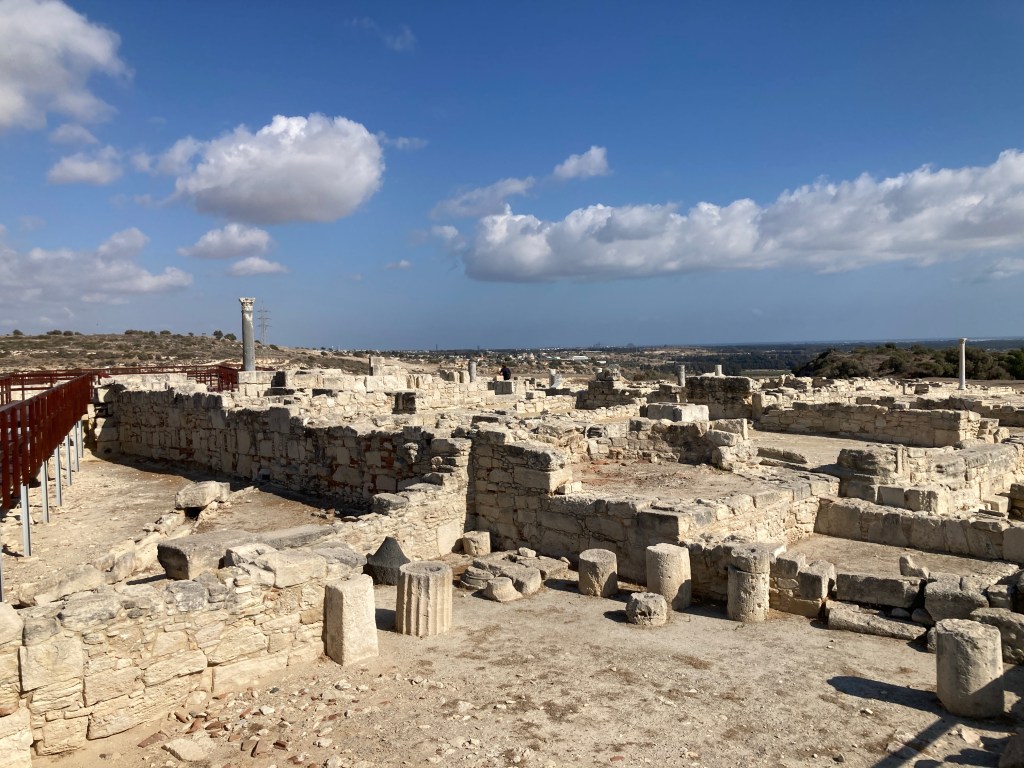
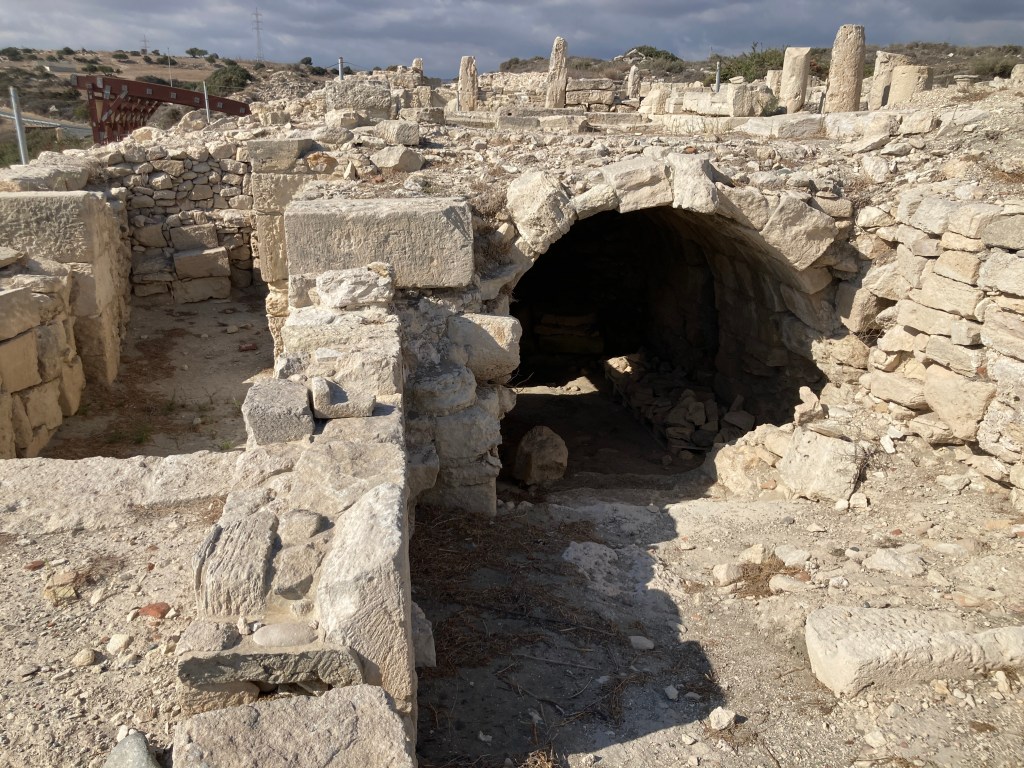
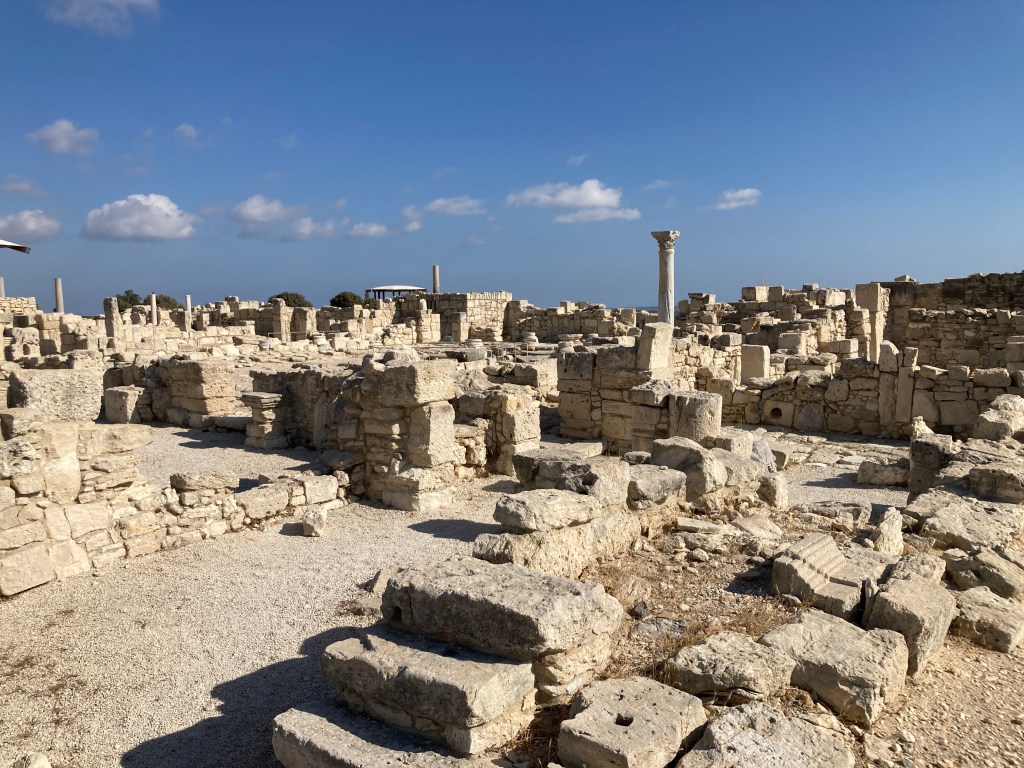
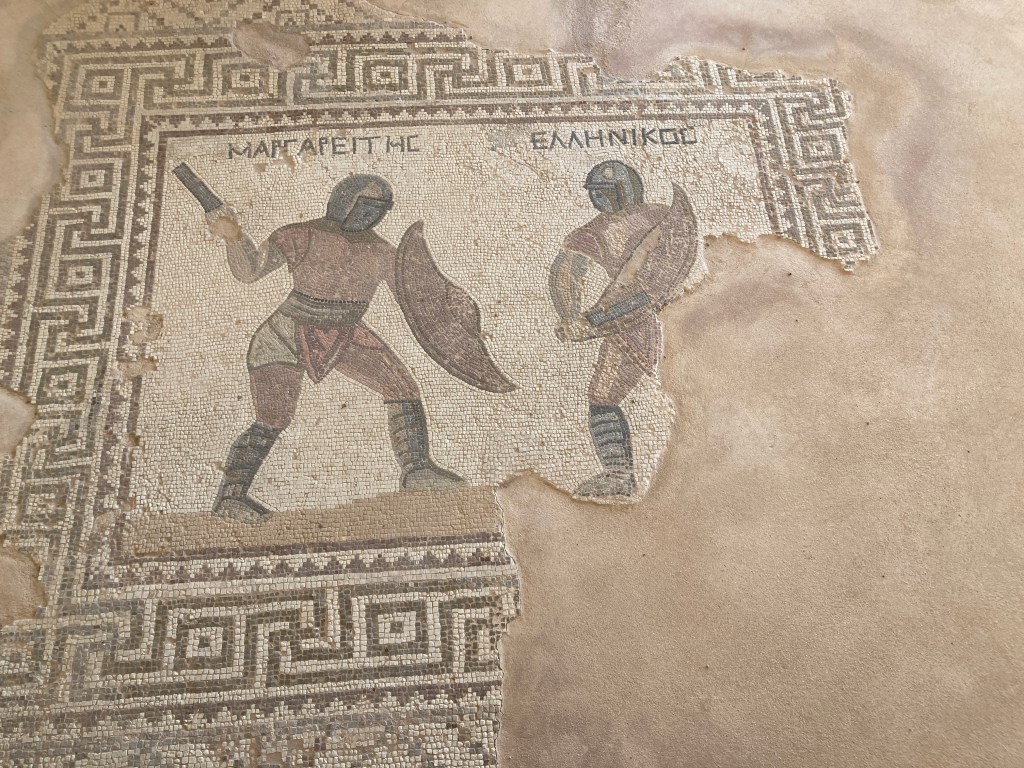
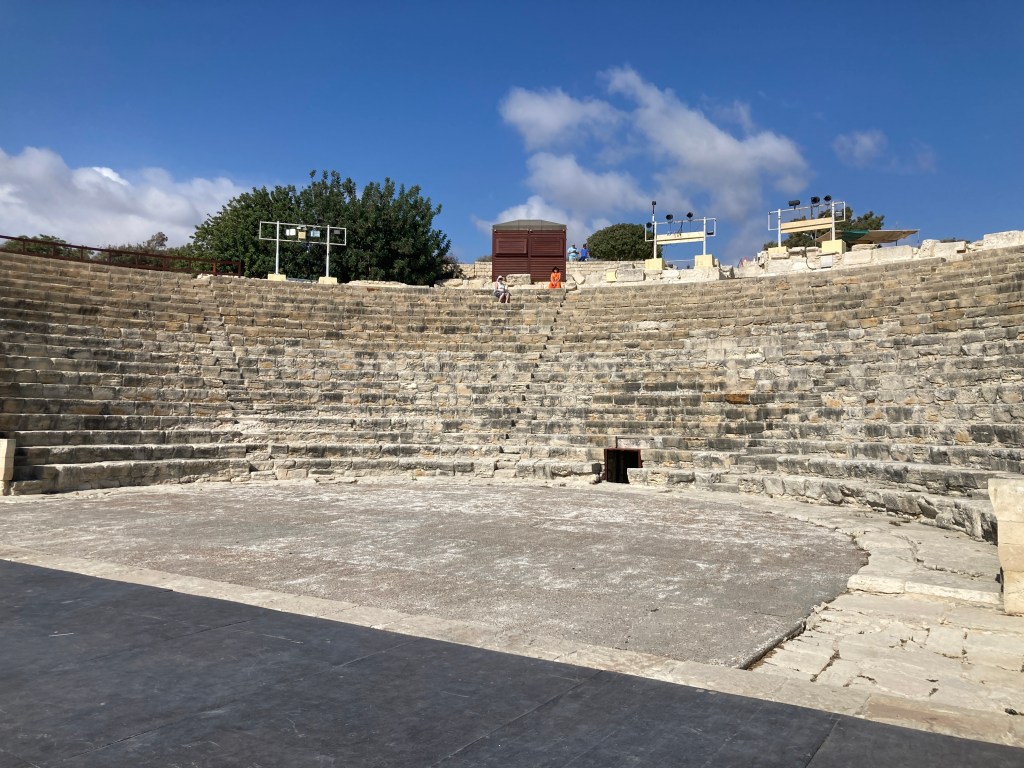
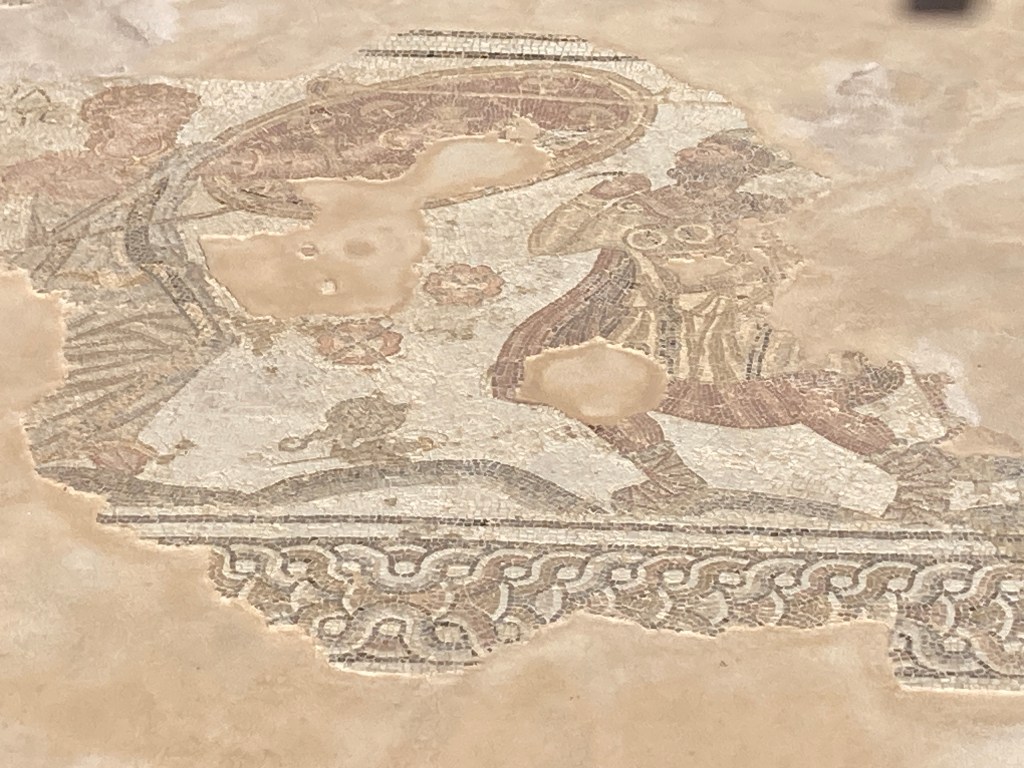
On our last full day in Cyprus we drove to the salt lake at Akrotiri then stopped at the Crusader castle of Kolossi before going on to Kourion – another huge ancient site.
That night we had dinner with an ex-colleague from the British Library, Bruce Madge (now a full-time Pissouri resident with his wife Vikki), whom I had not seen for at least 20 years.
It was a nice way to finish the trip
Pissouri
Final thoughts
There is a lot to see, especially if you are interested in Greek and Roman culture. There are great beaches – which we spent little time on – and the interior, with the high Troodos range, looked well worth exploring. I would definitely go again.
Although Cyprus is a long way from mainland Greece, Greek culture very much dominates. Sometimes you feel that you could be in the Peloponnese, apart from the fact that everyone’s English is fluent.
I am glad to have spent some time in North Cyprus, which has a great deal to offer. The people were just as friendly and the food was good. But best not to mention you’ve been there when you return south of the border. You will get two very different views of the Turkish invasion, needless to say. It is clear is that the Greek Enosis (unity) movement, which sought to incorporate Cyprus into a “Greater Greece” (as had happened with Crete), was a provocation to the Turkish population. The British made a right hash of things, and thousands died in shootings, bombings and reprisals. Well over a hundred thousand left the island. There is a strong case for saying that the Americans (especially Kissinger) were the real villains. I gather there are signs of improved cooperation but little to suggest that the island will be unified in my lifetime.




 The Wight Stuff
One thought on “Isle of two halves, part II”