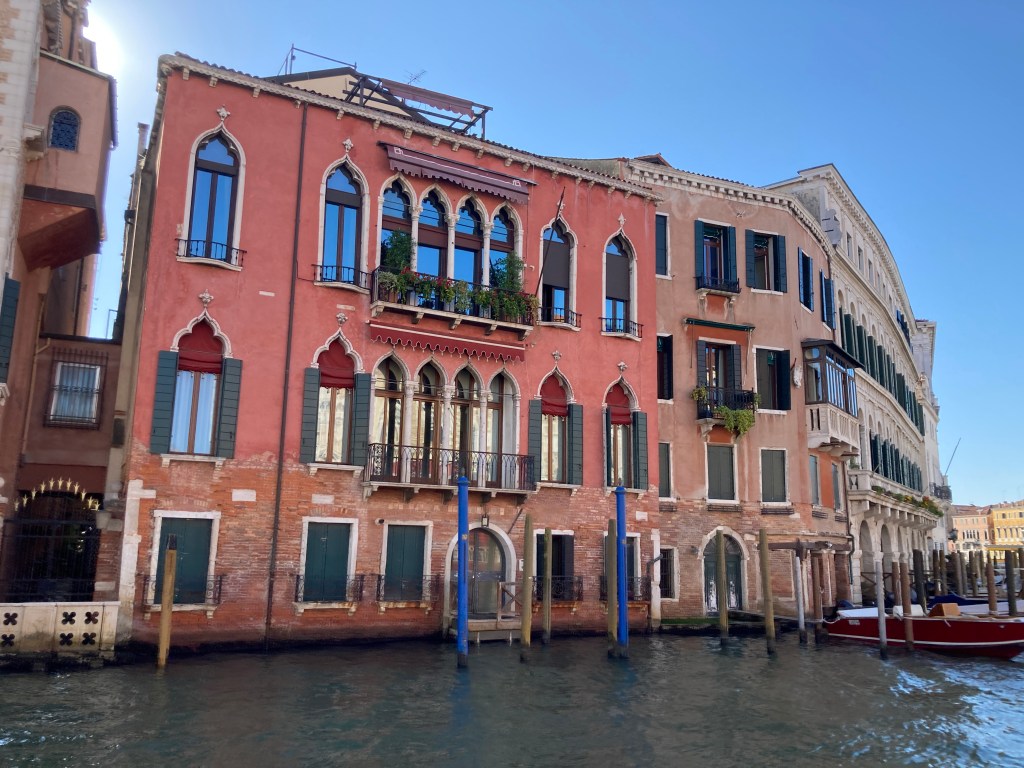
Our action-packed stay In Venice was over. Three days in Venice is never enough, even if it’s not your first visit, but we wanted a lazy week at the seaside (somewhere a bit cheaper than the Lido). We’d not been to Puglia before and, having heard nothing but good, we were looking forward to it.
Sunday 7 September
We crawled out of bed and left Ostello Santa Fosca at a quarter to six. We had the pleasure of seeing the sun rise as we marched along the Strada Nova and the Lista de Spagna to Santa Lucia station. A few joggers were enjoying the luxury of a peaceful morning in one of Europe’s most crowded cities. Bakeries were starting to open.
We barely had time to buy a coffee and a sandwich before boarding the 06:53 Frecciarossa to Monopoli. From Venice the line cuts inland, south-west towards Bologna, linking some of the north’s major cities, before rejoining the coast at Rimini. It’s a long journey but there are worse views than the Adriatic coastline.
We rattled along at an alarming pace (the track is nothing like as smooth as in France). Also alarming, although I suppose it was intended to be reassuring, was the presence of three armed policemen who proceeded up and down the carriages every hour or so.
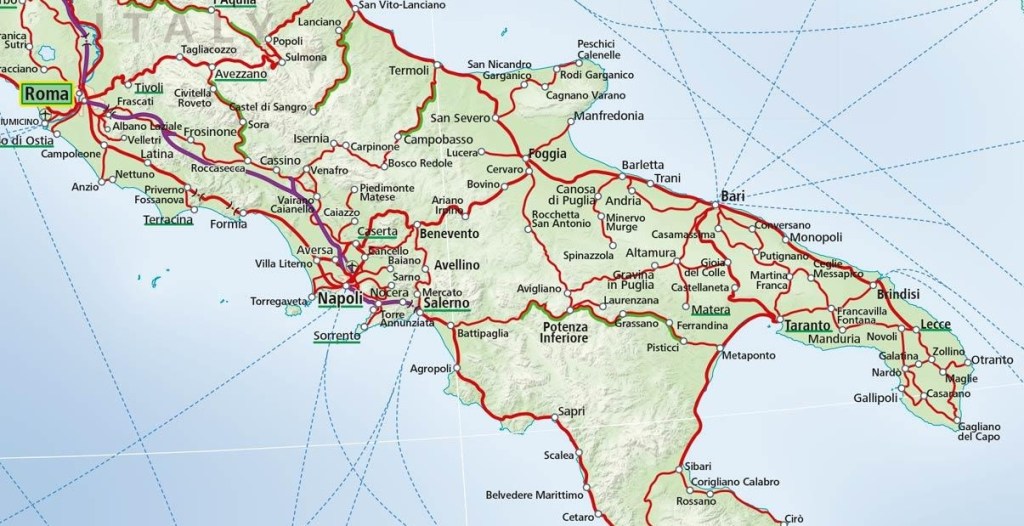
We passed small resorts and campsites strung along the long sandy stretch between Ancona and Pescara; then the beach gave way to olive groves and vineyards.
***
Monopoli is a small city south of Bari
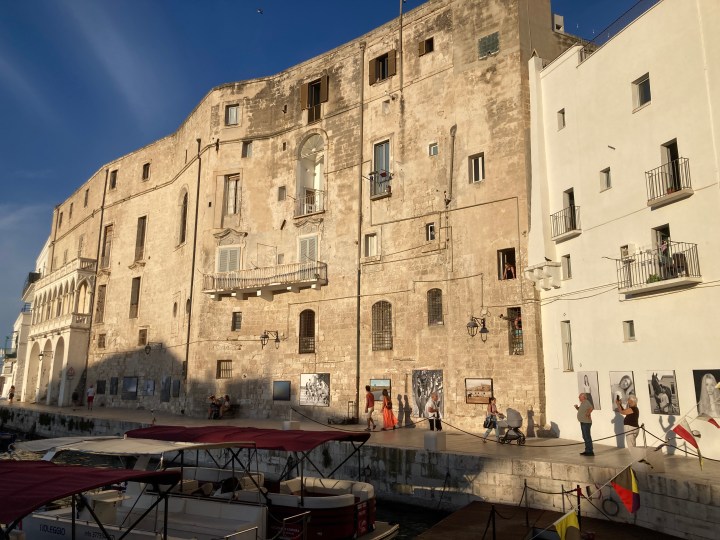
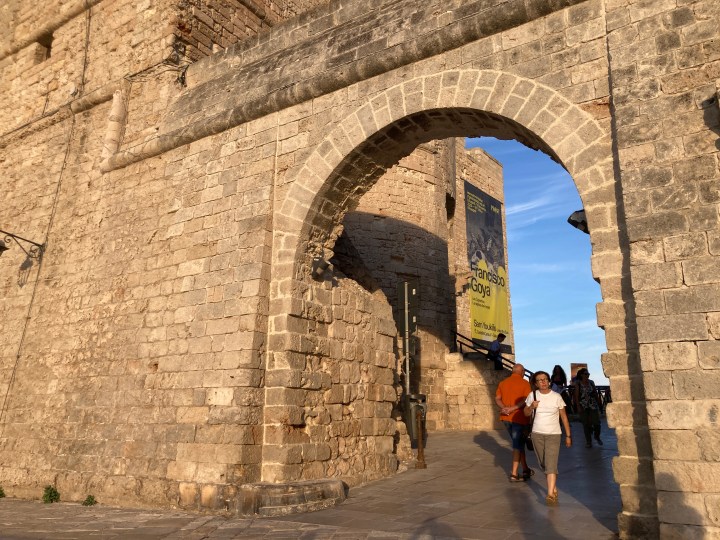
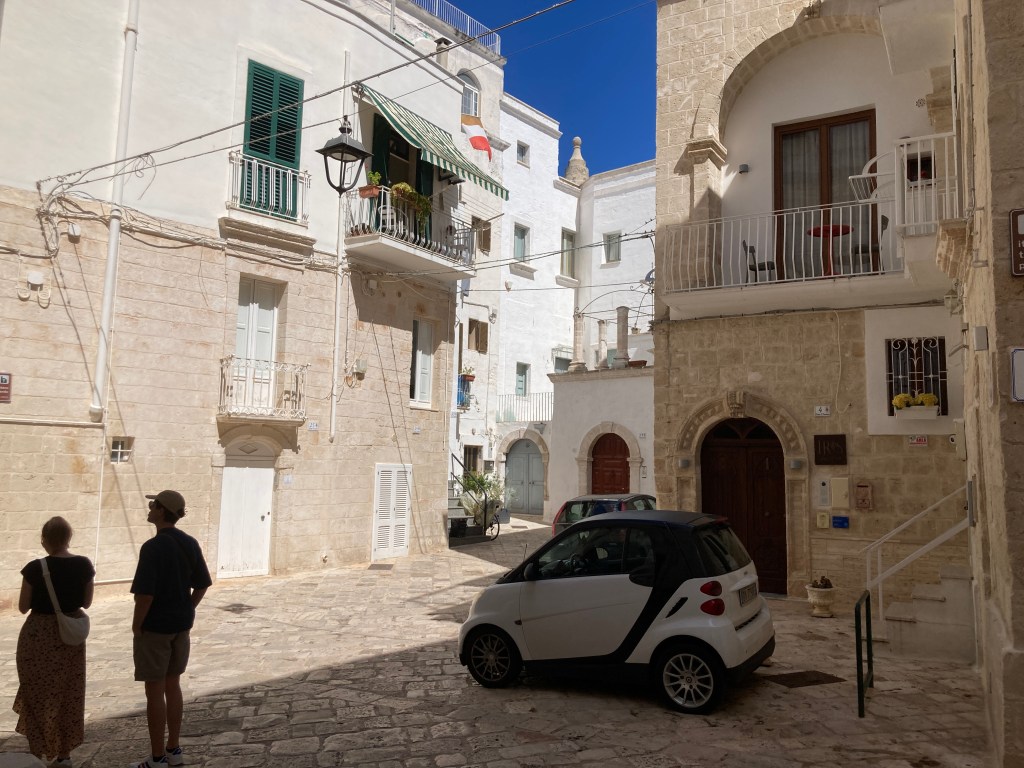
We arrived at 3pm, walking down from the station through the attractive and sleepy 19th-century quarter before reaching the narrow streets, whitewashed houses and Baroque churches above the old port. The sky was blue, the sea sparkled, and we knew we were in for a relaxing and enjoyable week.
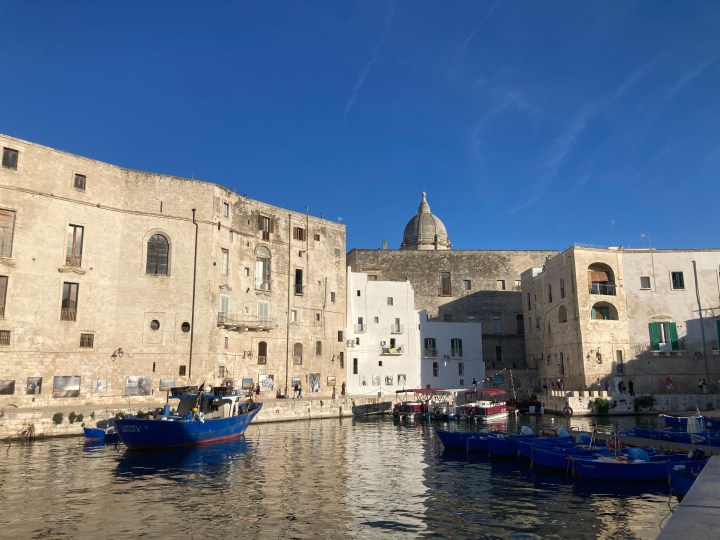
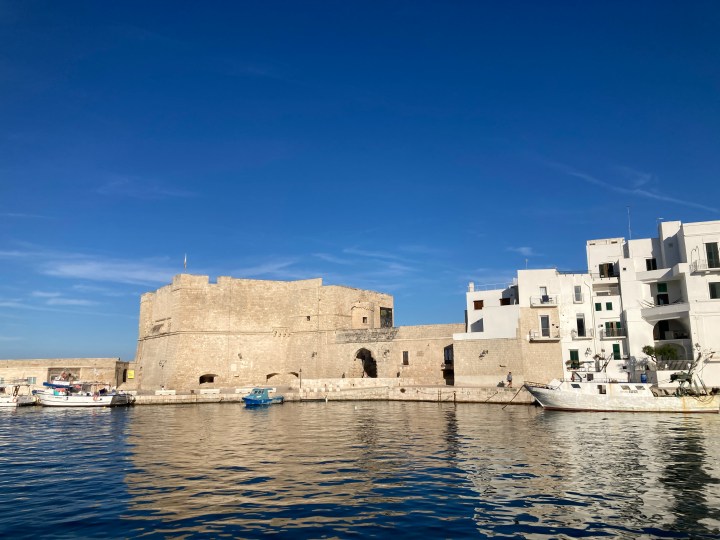
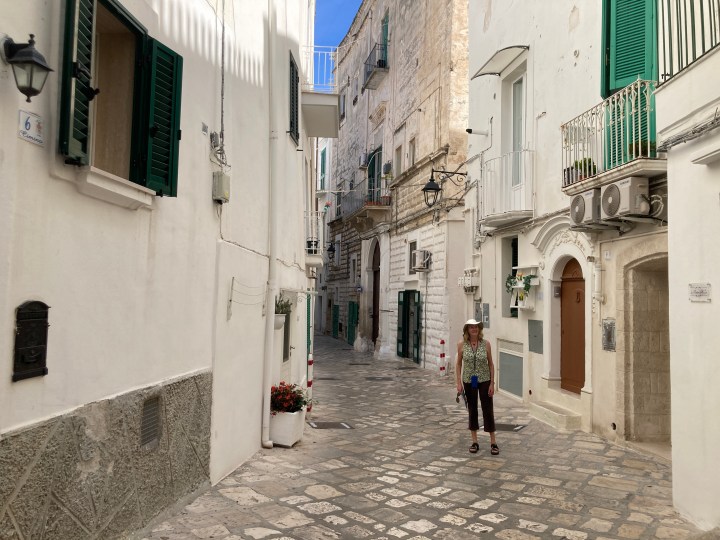
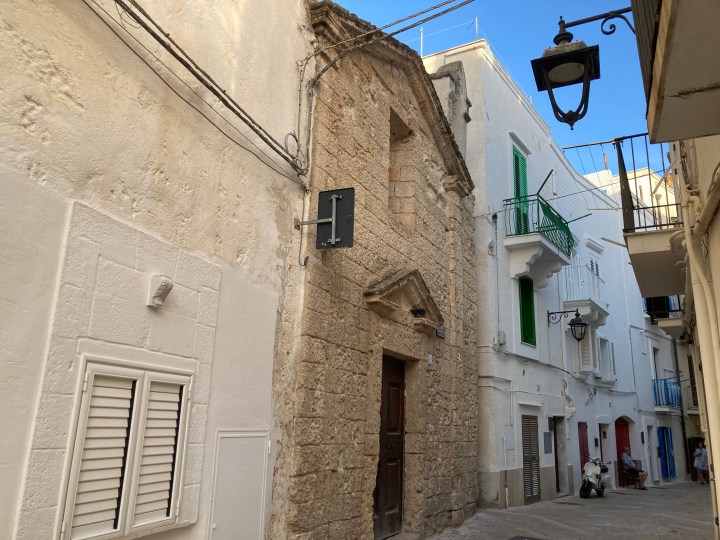
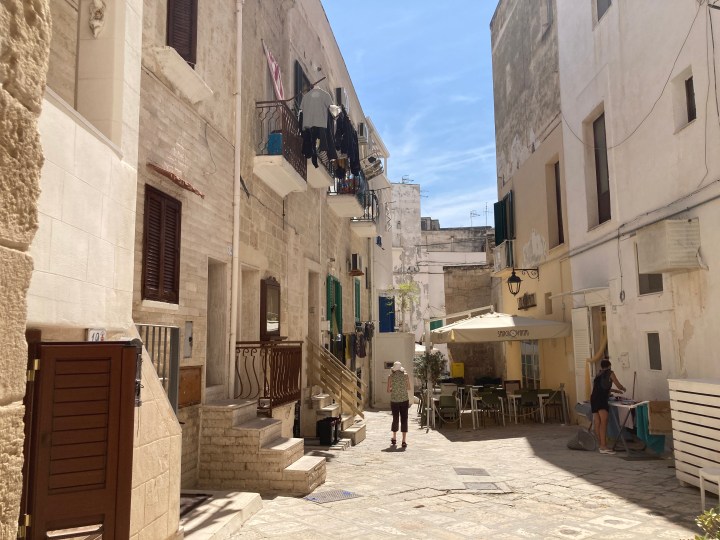
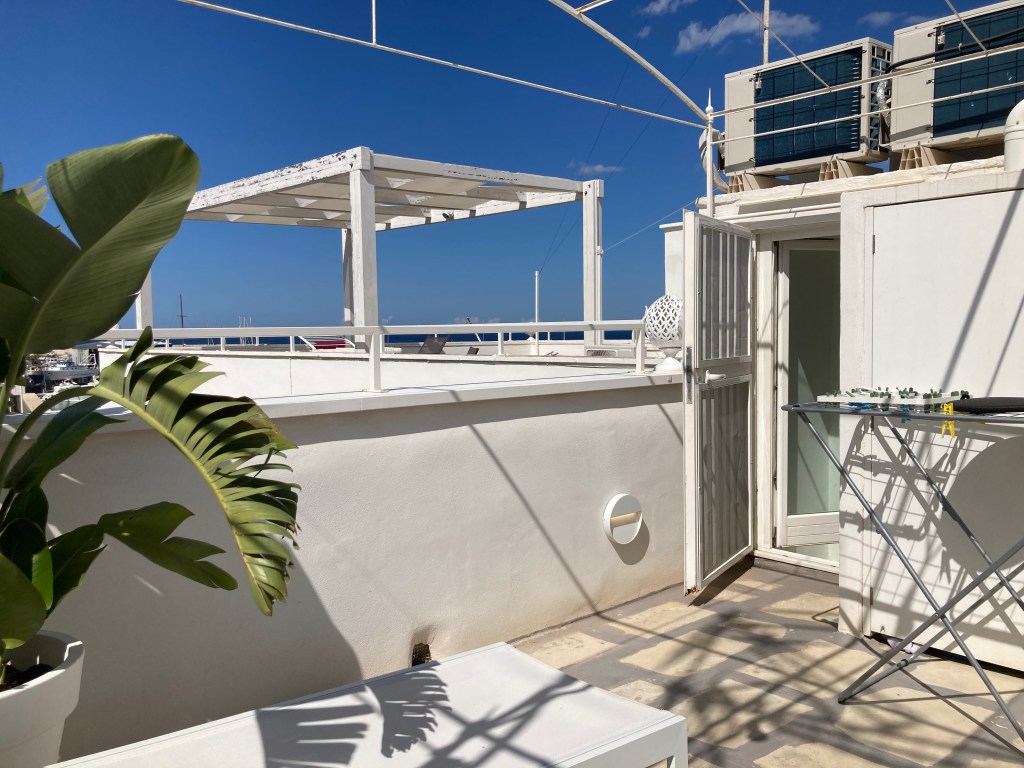
Our apartment, hidden in an alley between the port and the main square, Largo Giuseppe Garibaldi, was tall and narrow: three floors connected by flights of steep marble steps. If not quite a death-trap, moving around it was a challenge, especially with luggage and a dodgy ankle. On the plus side, it was well appointed and had an open roof terrace with sea views.
We settled in, then took a stroll past the castle of Charles V and along the Lungomare. It was aperitivo time and the crowds were gathering. We succumbed to the temptation of a margarita. Dinner was taken at Nuovo Premiato Caffé Venezia. I chose a local delicacy called braciole (stuffed beef rolls in tomato sauce), with roast potatoes. Anne, as so often, went for the tuna tartare. We returned to base and slept well.
Monday 8 September
It was time to get a week’s washing done and hung out to dry; then a walk up to the Primi Numeri supermarket for provisions. We returned through the winding streets and traffic-free squares for lunch on the terrace: salad, bread, olives, prosciutto crudo and gooey gorgonzola, accompanied by delicious primitivo wine. Superb.
And then a siesta
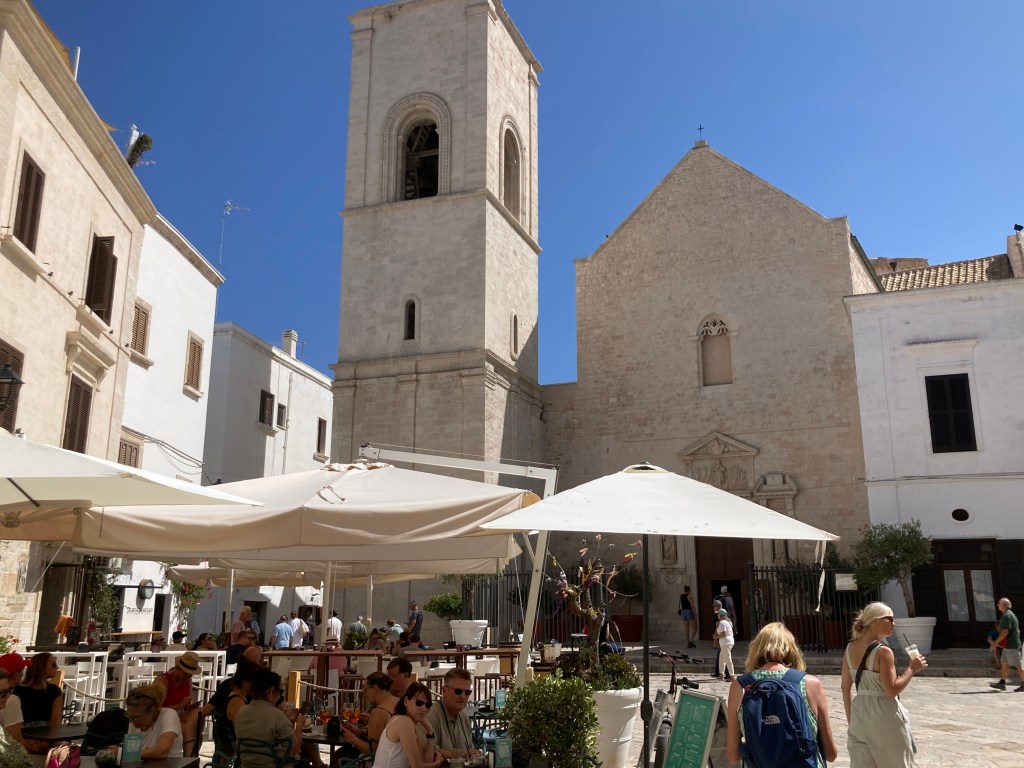
Later, we visited some of the Baroque churches that were hosting the PhEST photography and art exhibition (featuring Martin Parr, among others).
Tuesday 9 September
We had read good reports about Polignano a Mare, so we took the short train ride along the coast. It is indeed picturesque and must have been delightful a few decades ago. But when we arrived it was packed with tourists and noisy. What must it be like in August?
Having changed for a swim, I found the tiny beach to be stony, slippery and heaving with bathers, so decided not to bother getting into the water! We had a beer, then turned around and got the next train back to Monopoli. We spoke to a Dutch couple who were doing likewise.
***
Back in Monopoli in time for lunch, we enjoyed excellent seafood at La Locanda sul Porto, a few metres from our apartment.
At last, a swim
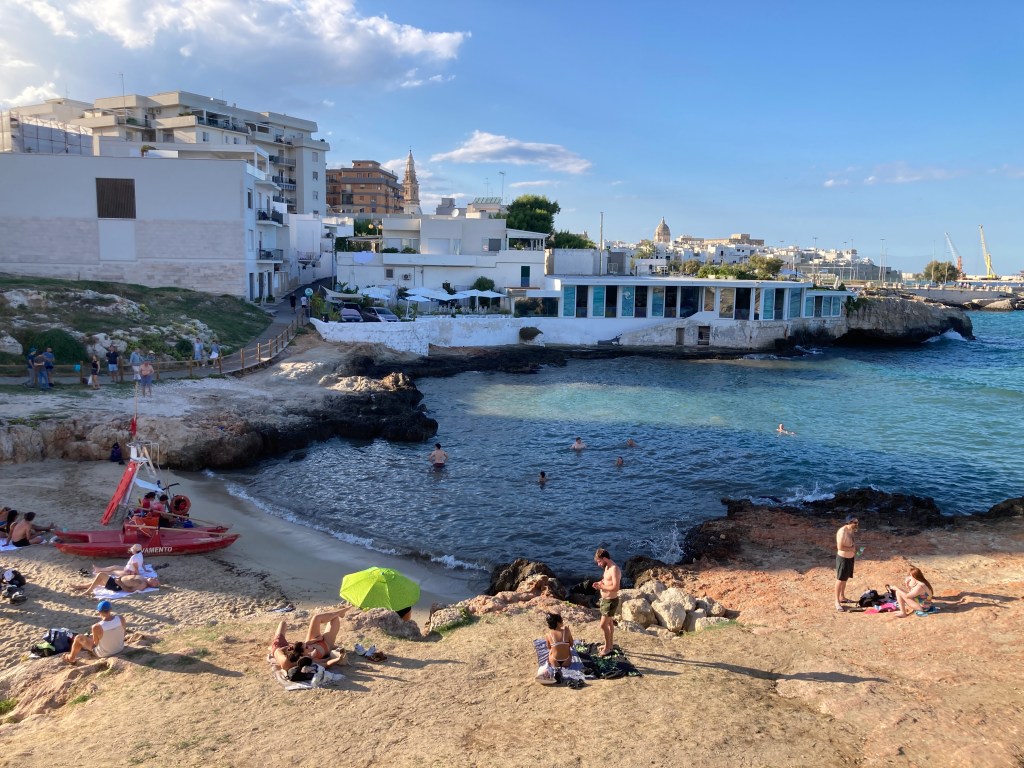
Porto Rosso is a little bay a short walk south of the town. When we arrived, about 50 locals and tourists were taking a late afternoon dip. Overlooking the sandy beach is a popular and inexpensive restaurant; once again it was aperitivo time. Then a stroll home for snacks on the terrace.
Wednesday 10 September
Keen to see a bit more of Puglia we caught the 10:29 south to the celebrated city of Lecce (it was only a few euros, so not worth an Interrail travel day). The train was busy, and the air-con freezing. We passed fields of melons, olive trees and prickly pears. I had the impression that it had not rained for months.
It is a 20-minute walk from Lecce railway station to the Chiesa di Santa Croce, a jaw-dropping wonder of Baroque architecture.
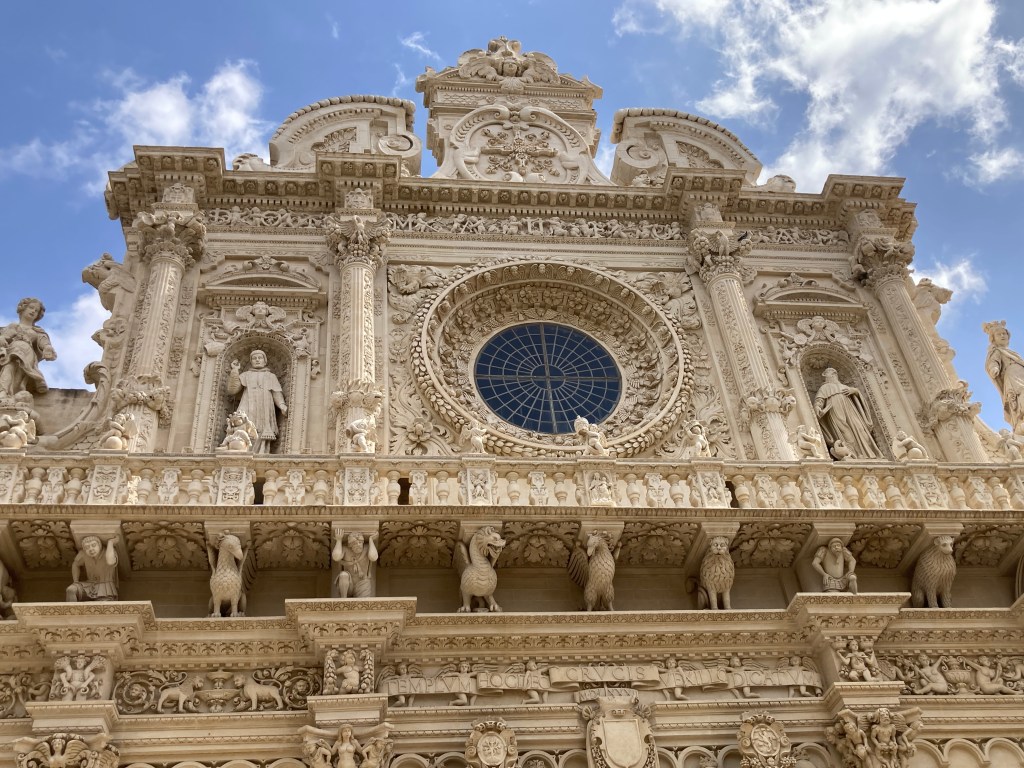
Time for a late lunch. I tried a local pasta dish: orecchiette with a sauce of aubergines, flaked almonds and tomatoes – probably North African-influenced. The afternoon was spent visiting the duomo and five (I think) other astonishingly ornate Baroque churches. Those that made the greatest impression were San Matteo and Santa Chiara, but all deserved more attention than we were able to give them.
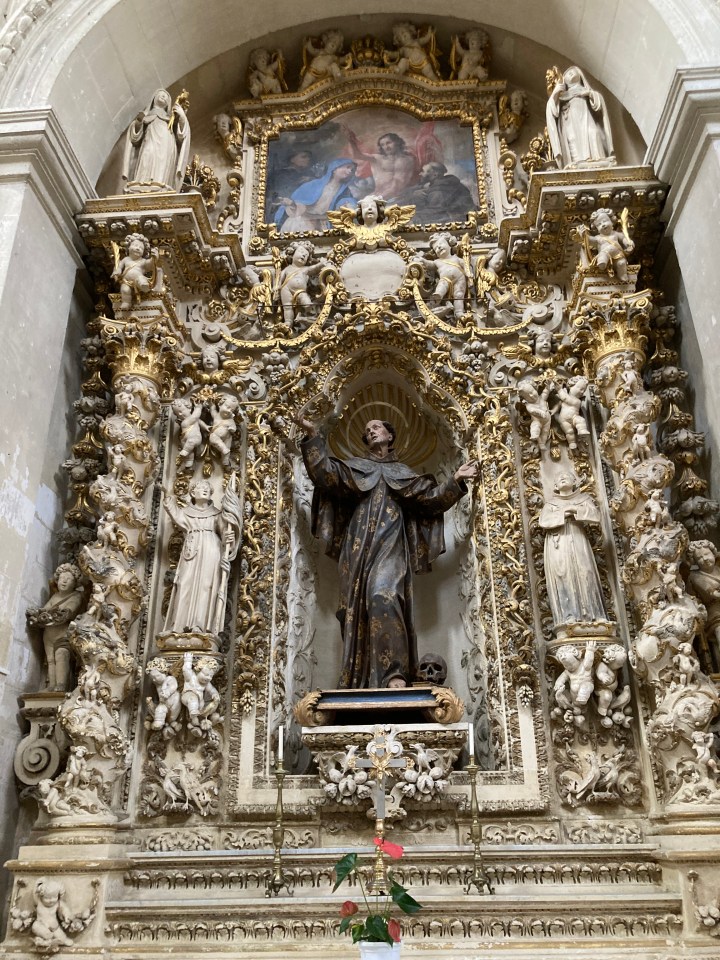
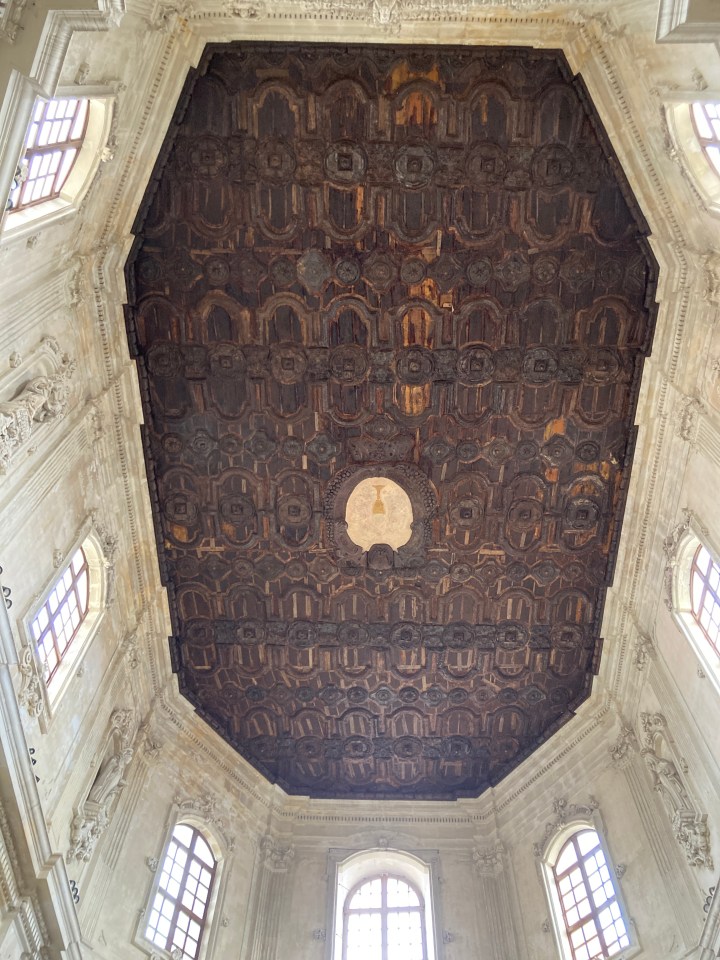
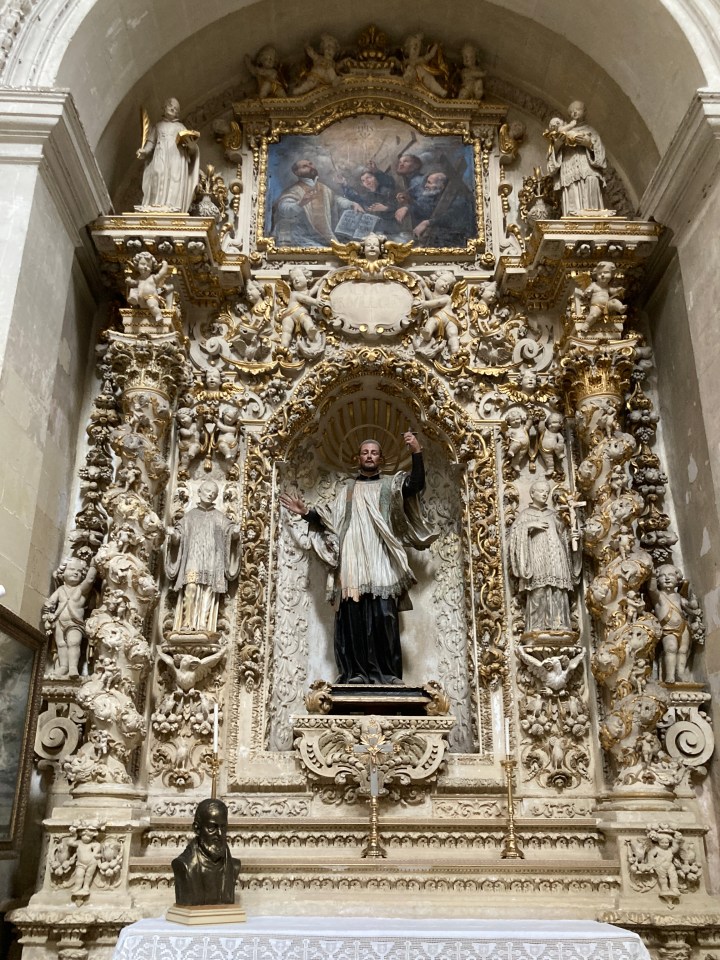
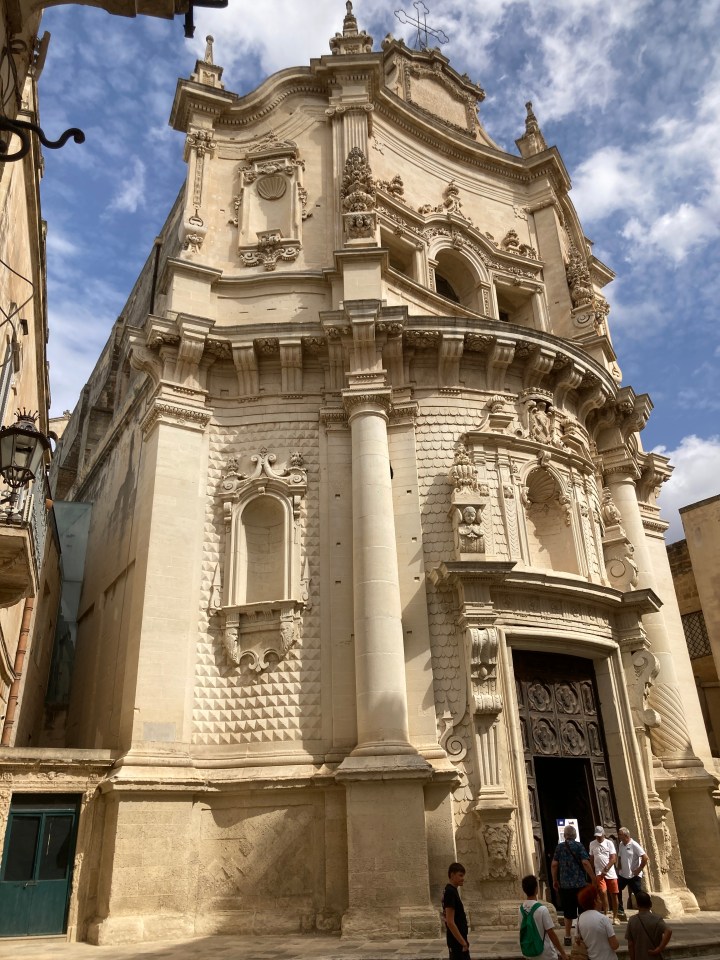
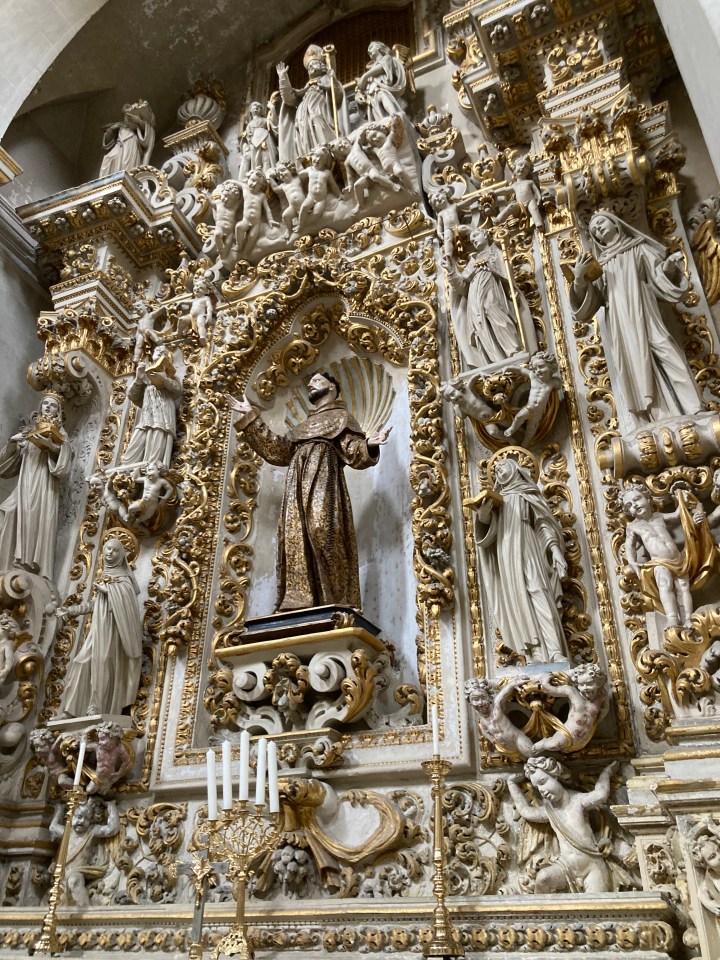
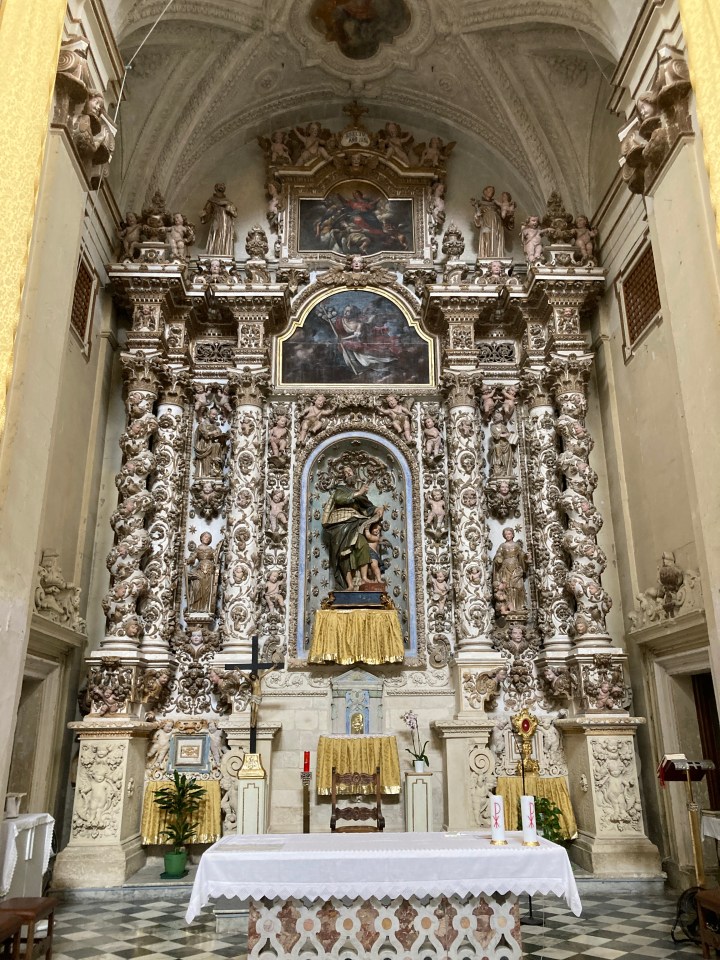
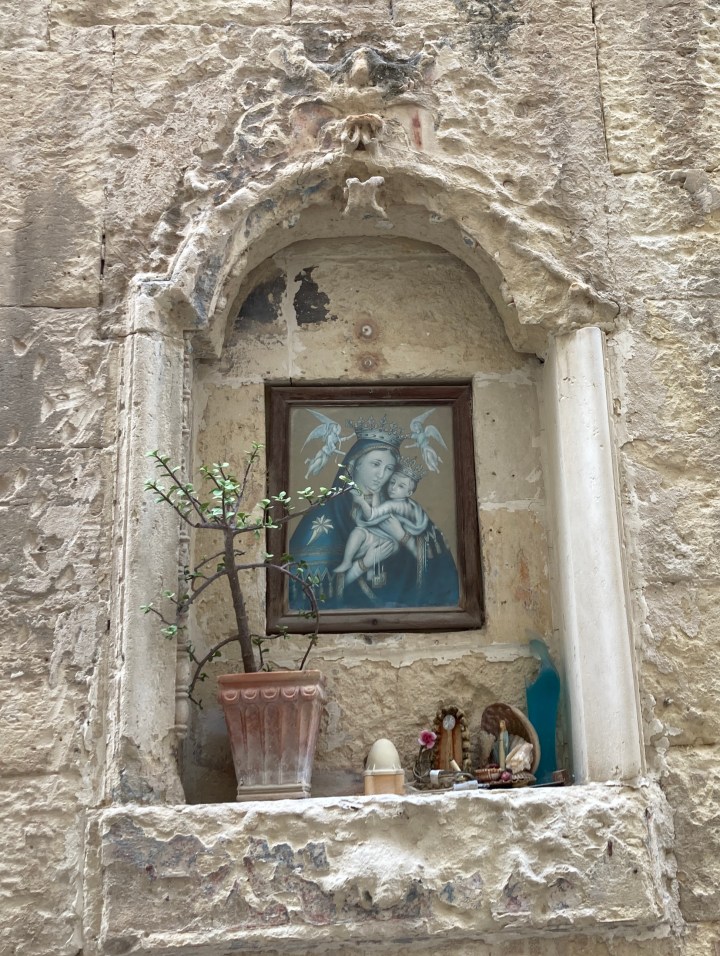
Would it would have been a better idea to stay over for a night or two? Maybe, but you can only spend so much time gawping at churches and shrines unless you are an art historian or a nun. And, crucially, Lecce does not have a beach.
Train back, then gelato
We were beginning to think of sunny Monopoli as our home town (if only!). There is a well-trod path through the restaurant-packed streets which is comparatively busy and noisy, but aside from that we found it pretty quiet and relaxed. To cap off a busy day, we spent another evening snacking on our roof terrace. I engaged a neighbour in almost fluent drunken Italian; I did not think I had it in me.
Thursday 11 September
We awoke to find it had rained during the night. A pity we had left the washing out, but the sun was not long in making an appearance.
Should we go to Alberobello to see its famous trulli? We had intended to do so, but the bus times were a bit inconvenient. And judging by our trip to Polignano, Alberobello could well be a tourist trap packed with Instagrammers. Such cynicism from folk so young. We decided we could live without it. Ditto Ostuni and Martina Franca: both worth visiting no doubt, but perhaps another time.
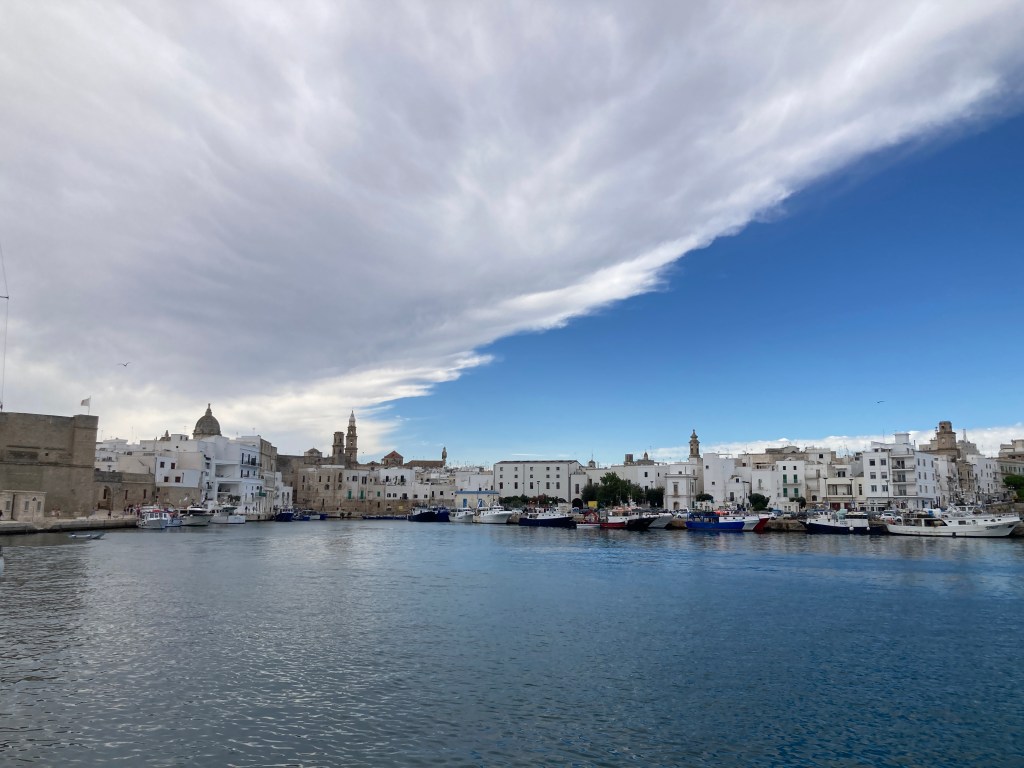
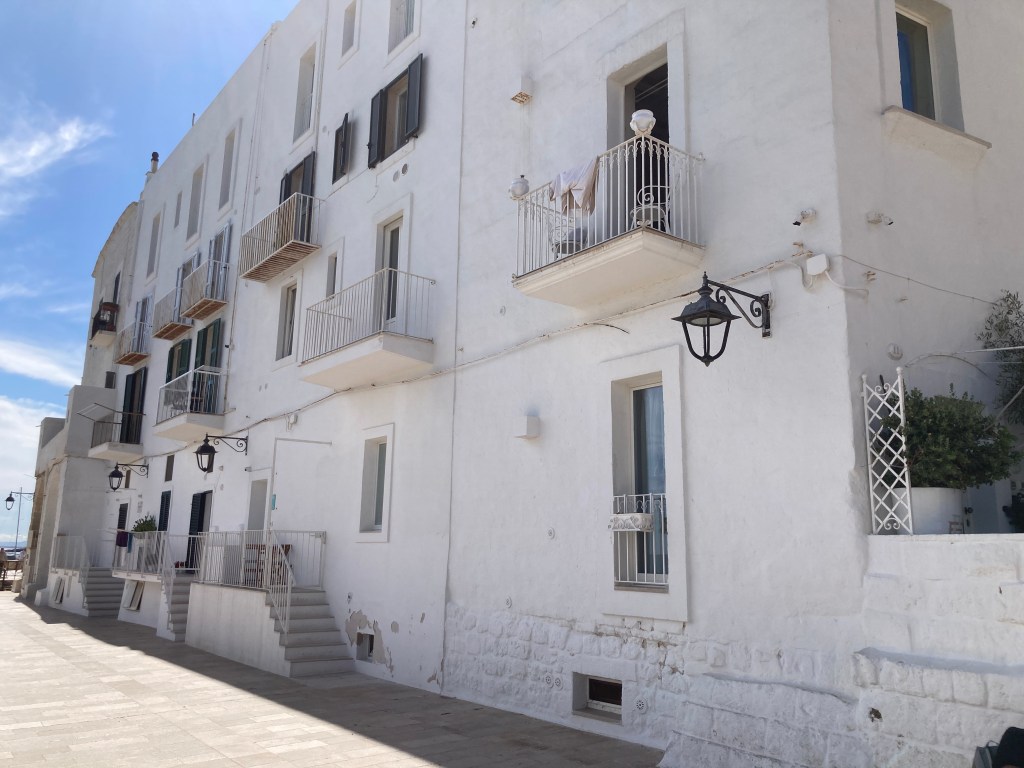
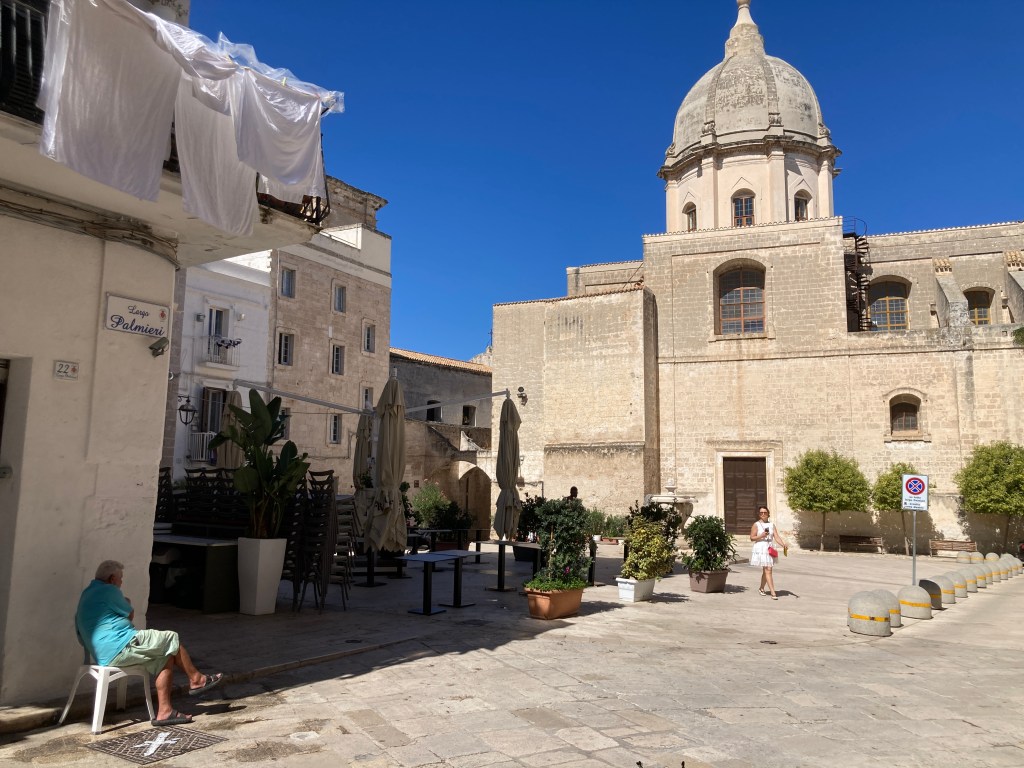
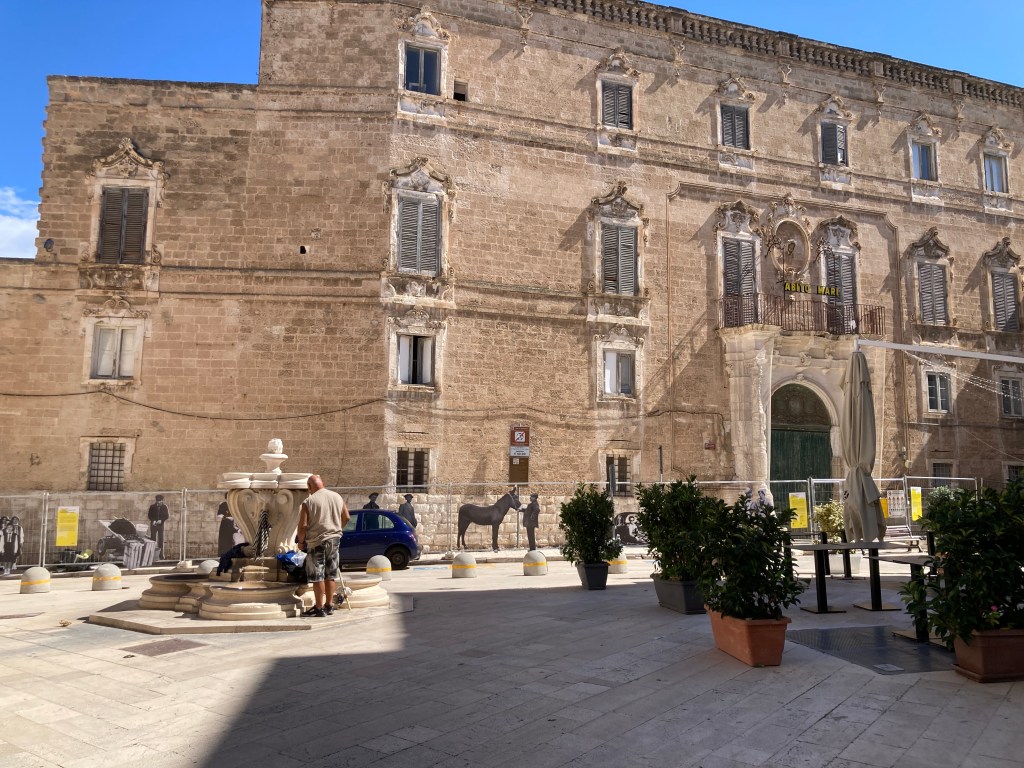
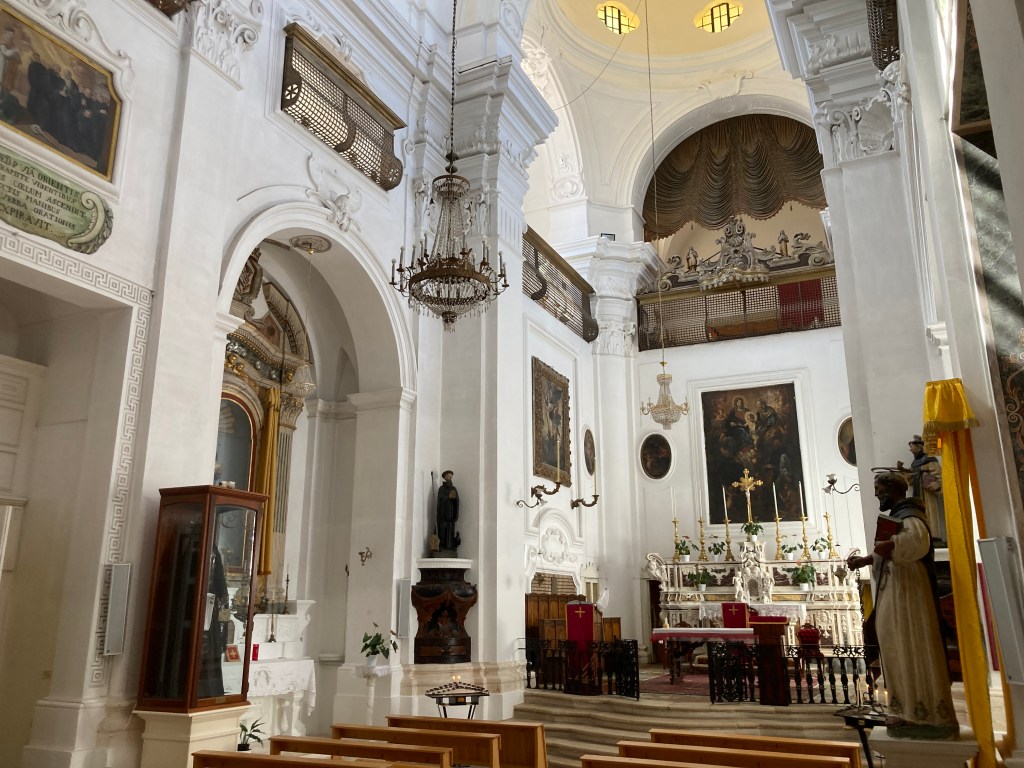
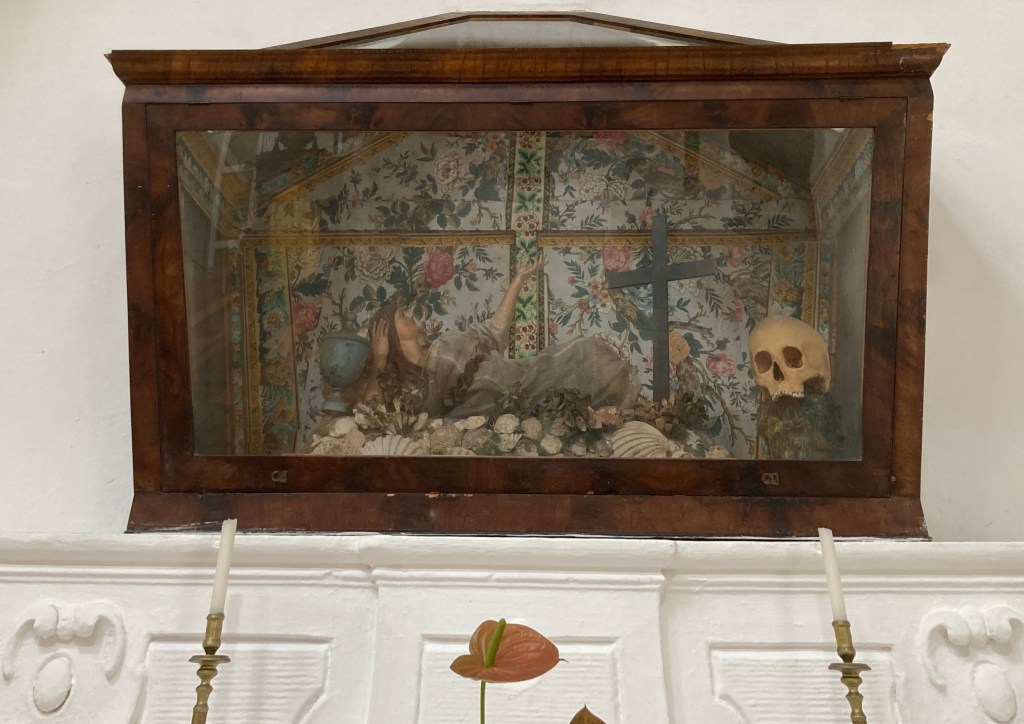
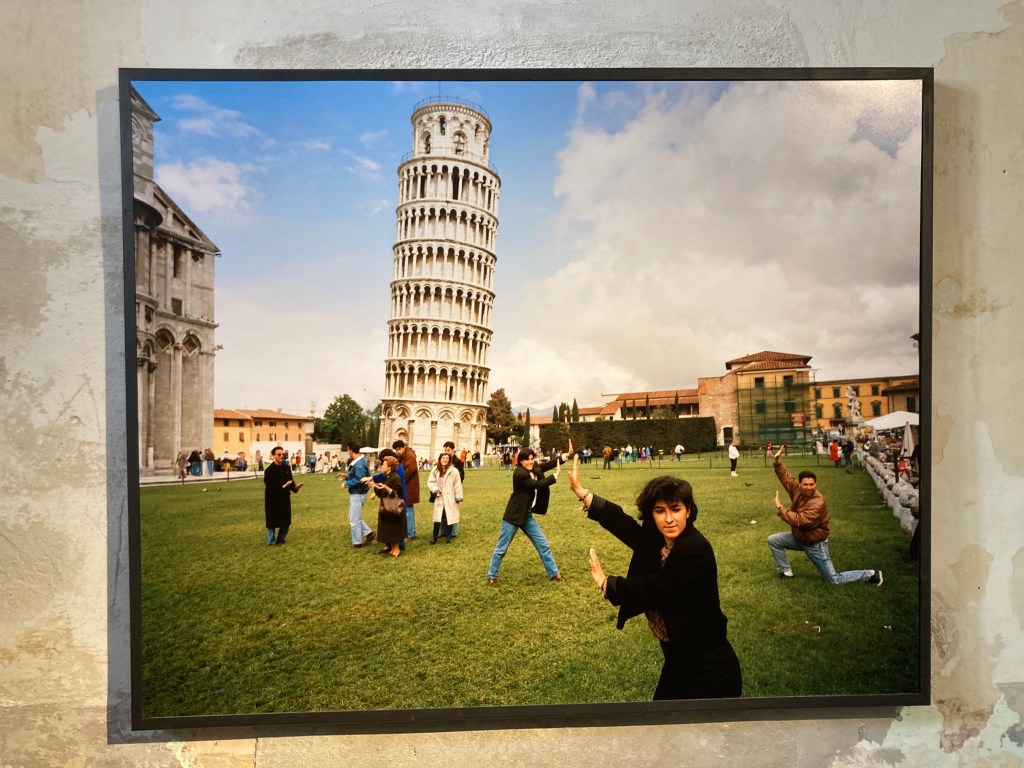
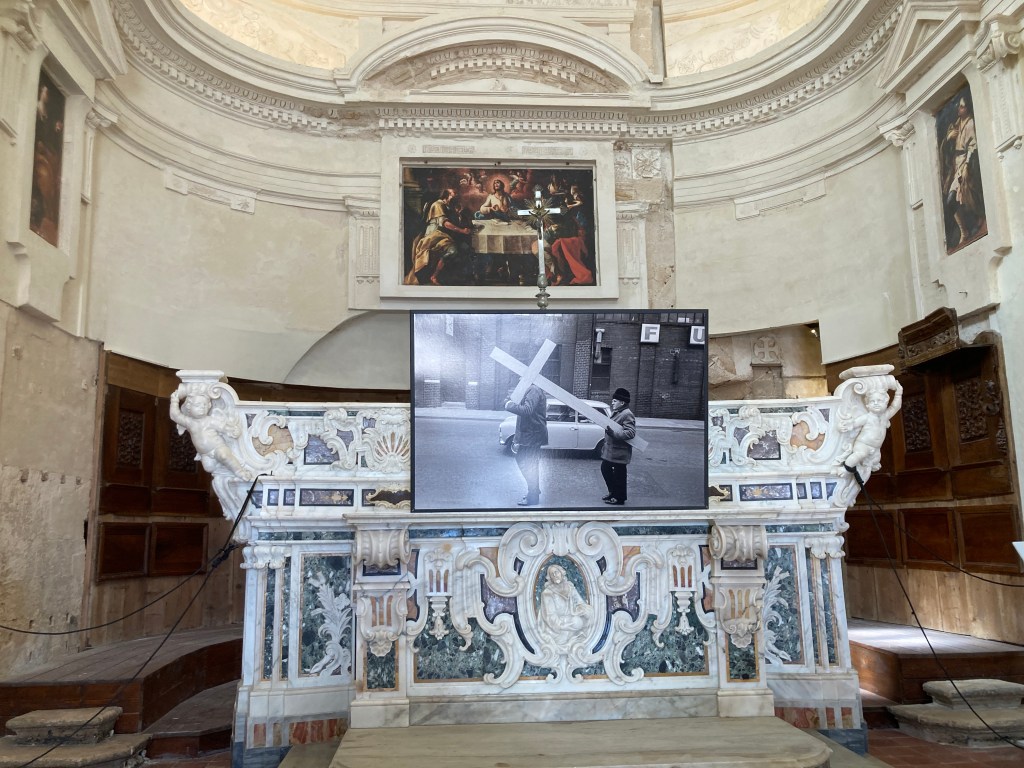
Instead we spent the day exploring parts of Monopoli we had not yet seen, taking advantage of an inclusive ticket for the photography exhibition to see the castle and yet more Baroque churches. Extraordinary decoration – where did all the money come from? Clearly Southern Italy hasn’t always been poor. Indeed there were signs of very substantial recent investment.
We returned to Porto Rosso for a dip and a drinkie, then strolled back as night fell.
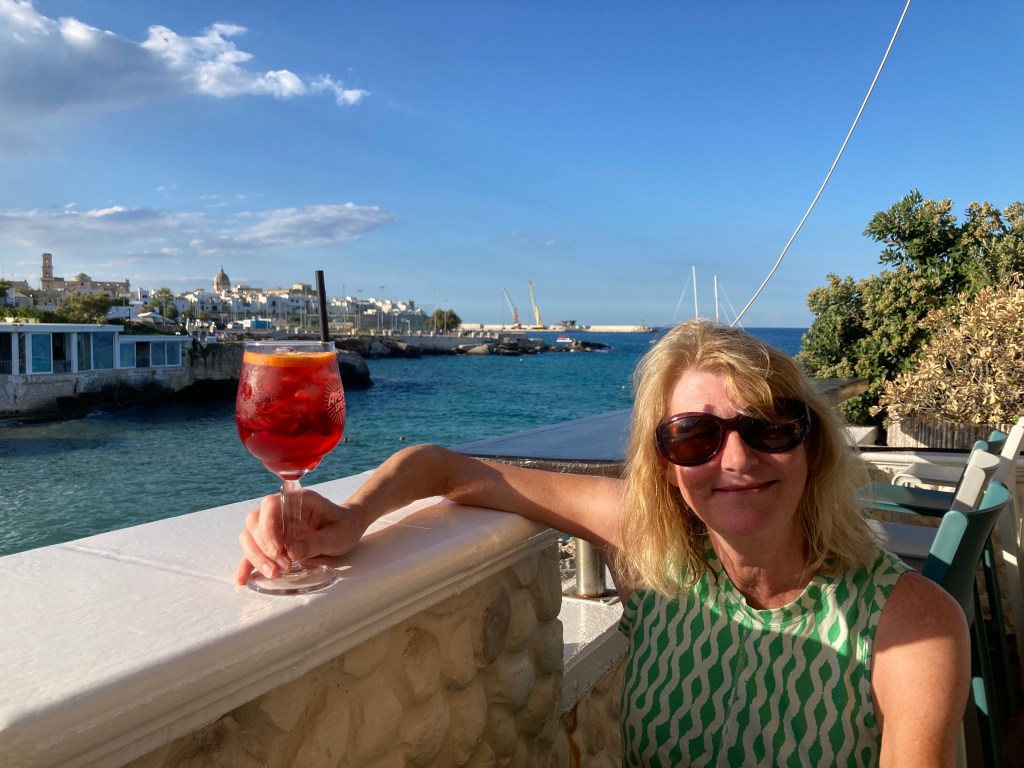
A lovely, lazy day
Friday 12 September
We left the apartment early for a coffee, then bought lunch from a bakery before tidying up in preparation for the following day’s departure.
Just for a change, we walked past Porto Rosso to Porto Nero (the next bay) for our afternoon swim. It was equally delightful. Back in town our first-choice fish restaurant was full, so we randomly chose Komera, a place we had walked past all week, for our last meal in Monopoli. Thankfully there was no piped music and they found us a good table in the garden. So far, so good, but what to order?
Fortune favours the brave. It was time to go al crudo with a sharing platter of raw seafood (oysters, mussels, clams, prawns, squid and – most scary of all – baby octopus, aka moscardini). I ate four moscardini, Anne had none. Bizarrely, the traditional accompaniment is spicy cheese. Everything was delicious.
I am still alive
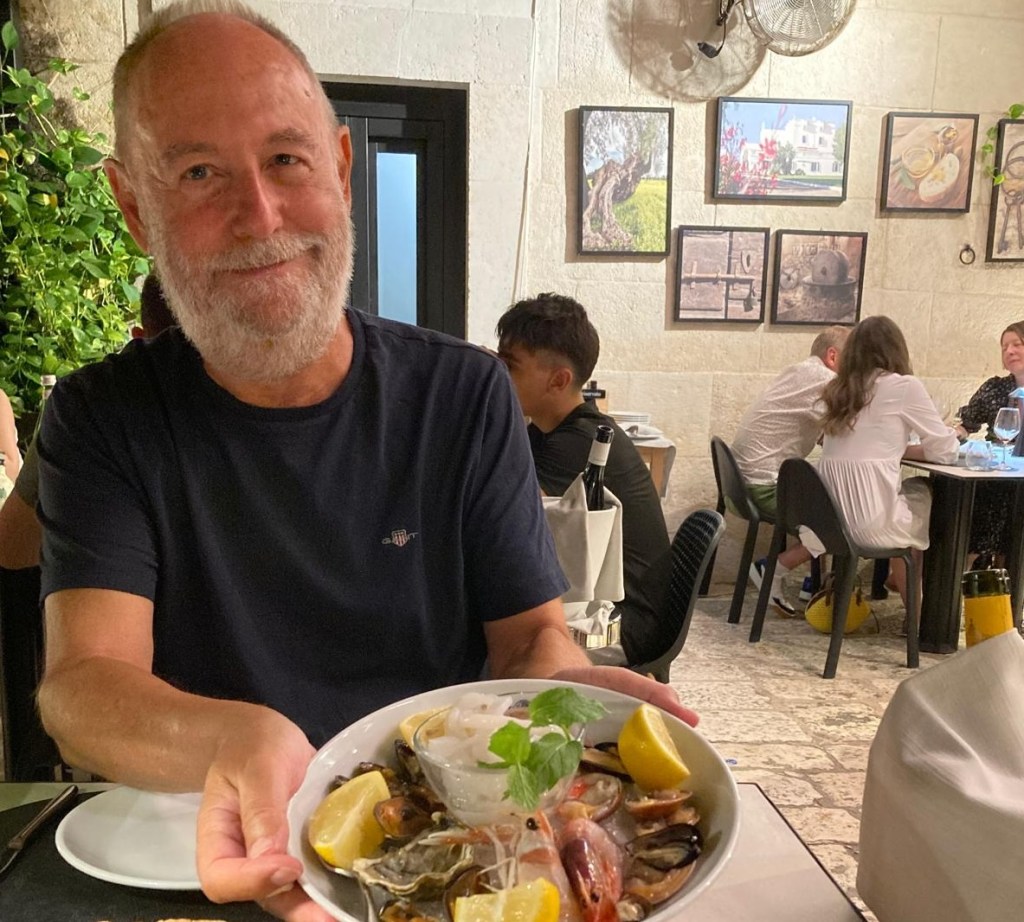
We followed it up with a more conventional frittura of fish and a side dish of fried zucchini flowers.
Saturday 13 September
Time to leave this magnificent town, which does not even get a mention in our edition of the Rough Guide to Italy! We walked to the station for the 10:03 to Bari (40 minutes). Again, the train was busy.
***
The station at Bari was in the throes of rebuilding work. It was very hot; we walked for what seemed like hours through the elegant 19th-century town, with its wide boulevards and fine shops. By the time we had found our apartment (La Maison de Poupée, a proper death-trap) just inside the casbah-like old town, we were in immediate need of refreshment. We found a delicatessen that sold enormous panini, as well as beer and wine.
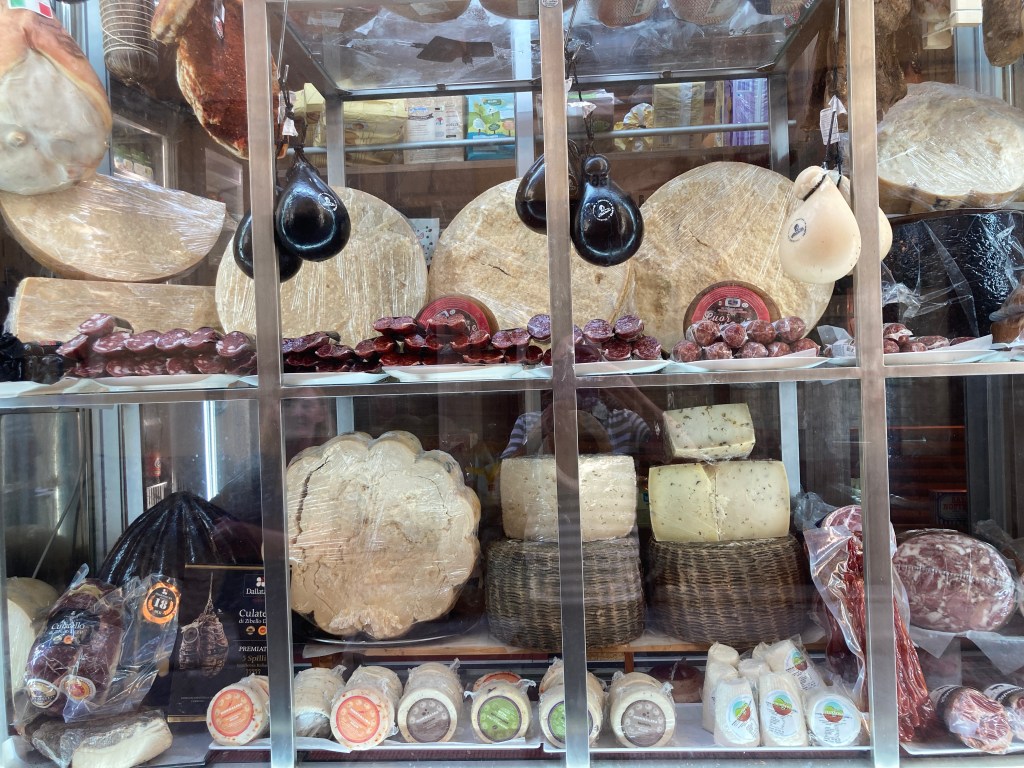
We sat outside, and were duly entertained by some of the worst buskers it has ever been my misfortune to hear. Finally a gentleman appeared and offered (inevitably) a spirited and tuneful rendition of “Volare”, which was appreciated by the assembled customers.
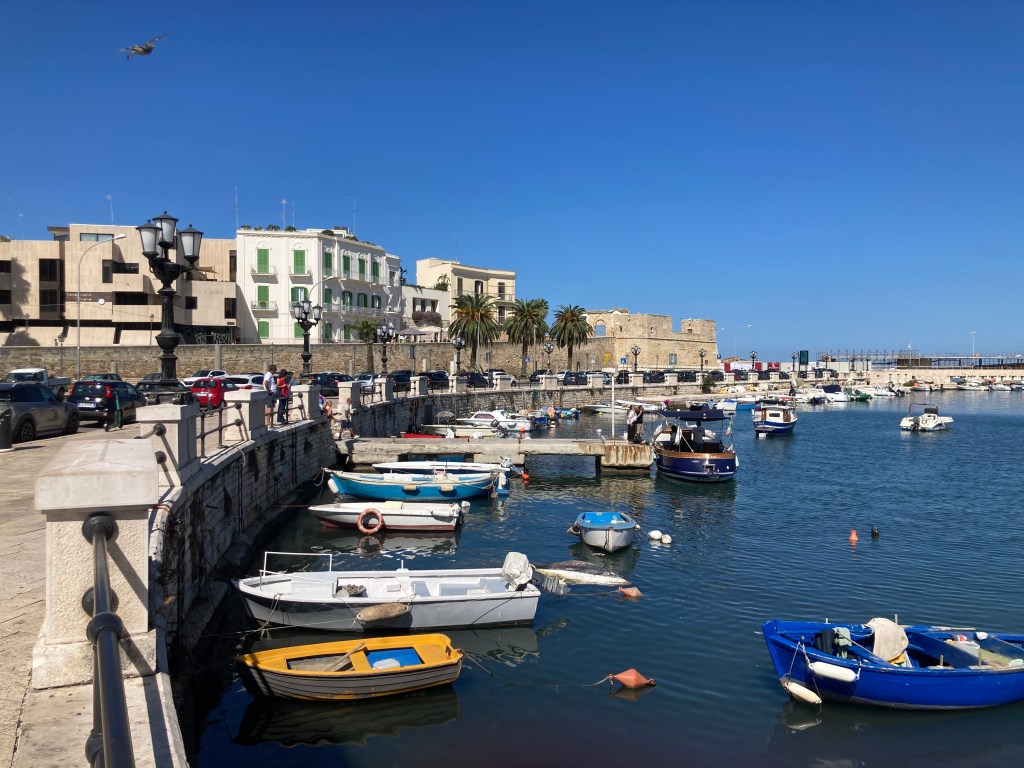
Bari, which used to have a reputation as a crime-ridden cesspit, is now an attractive and lively city. Not that crime is a thing of the past; the novels of Gianrico Carofiglio make that clear.
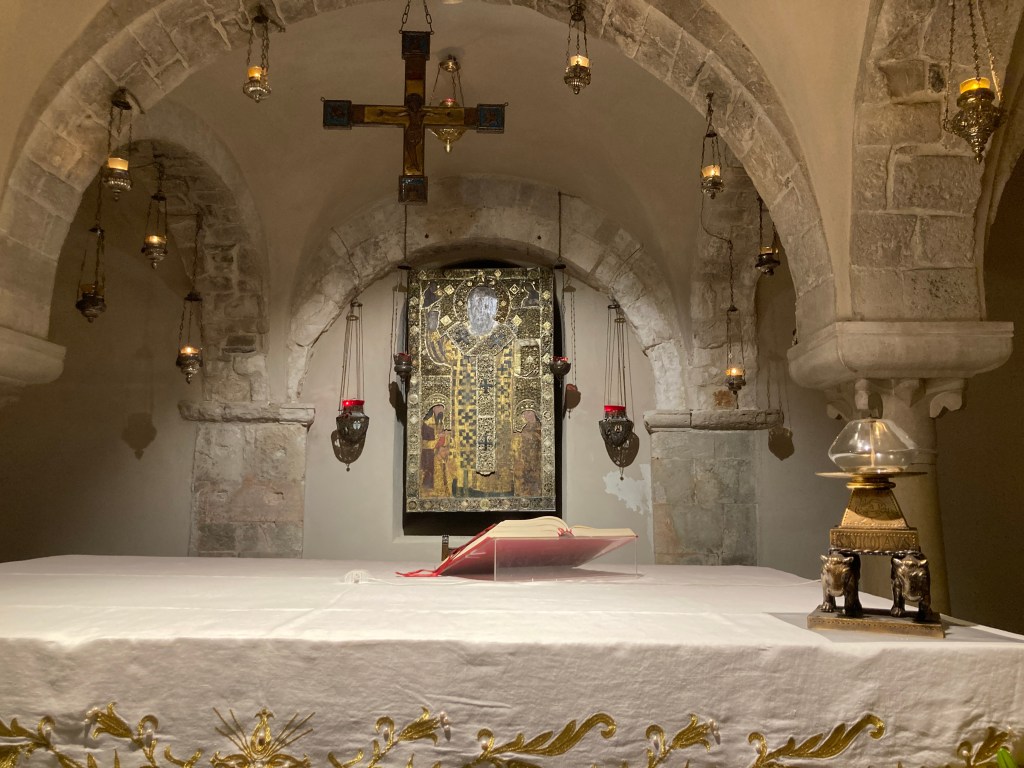
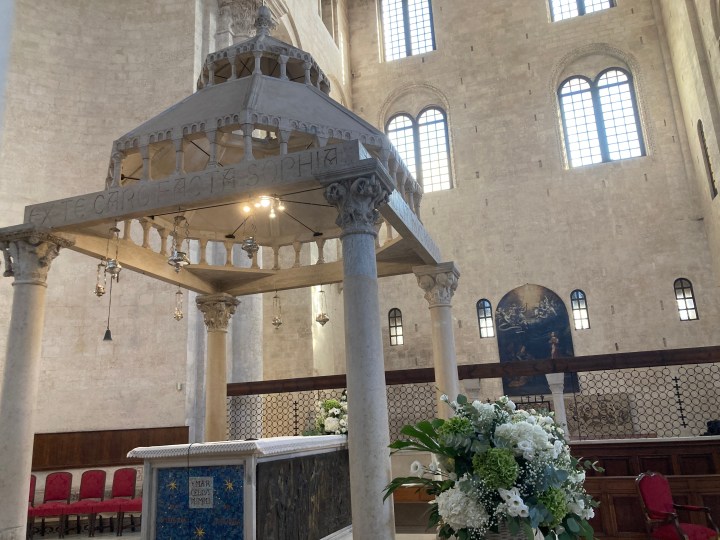
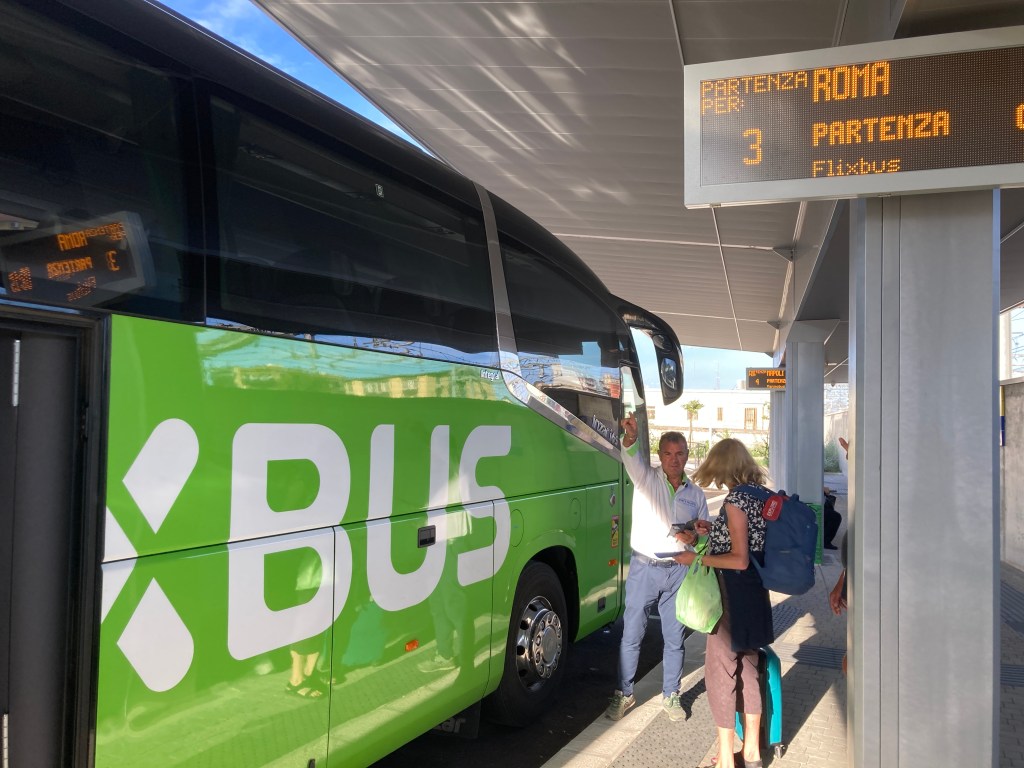
We went because it was a convenient place to catch the Flixbus to Rome, but it certainly merited the stopover. It has many art-filled churches, most famous of which is the Romanesque Basilica San Nicola, a huge castle-like building that claims to contain the relics of St Nicholas. It is a popular pilgrimage destination for Russians, as we noticed.


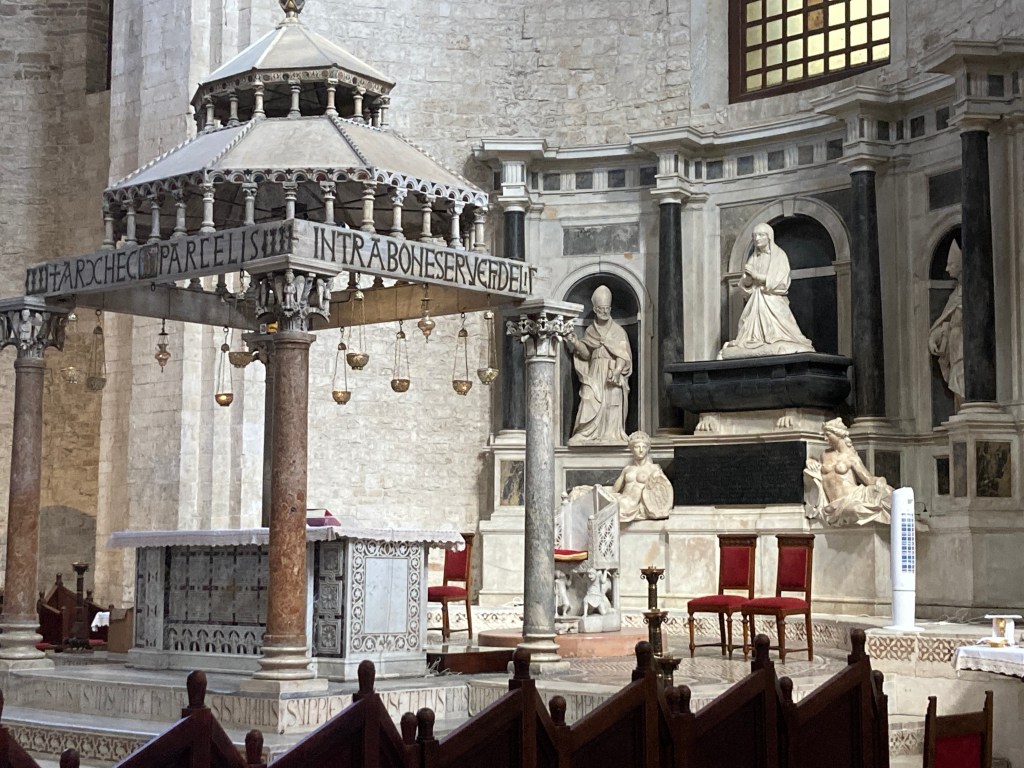
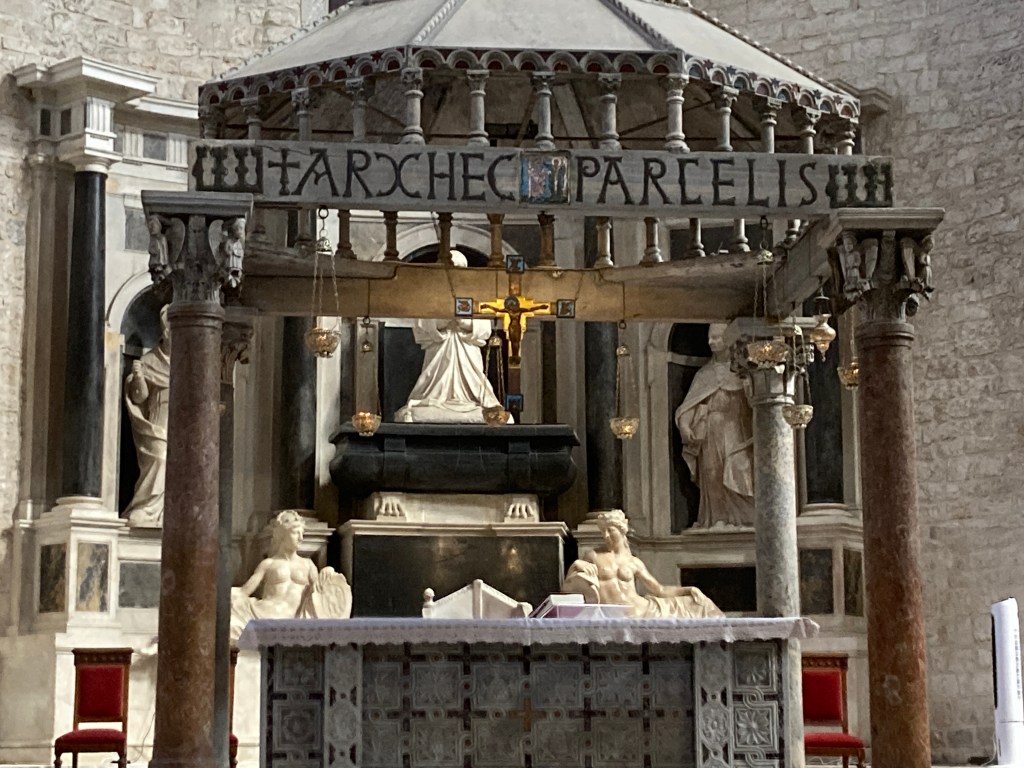
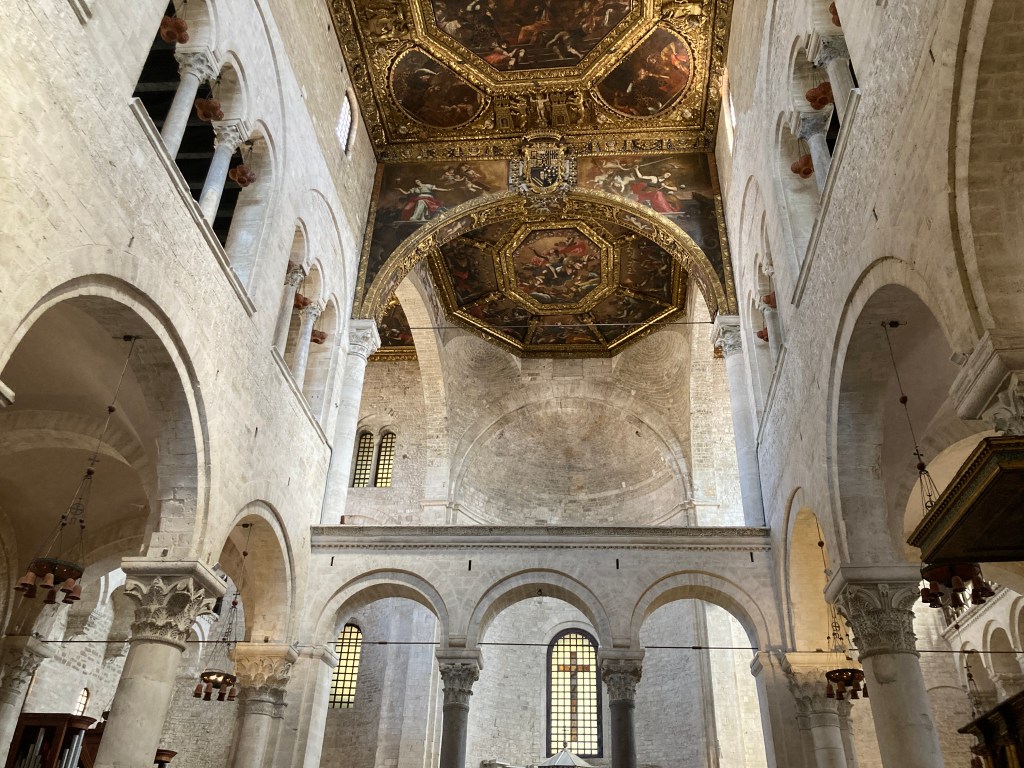
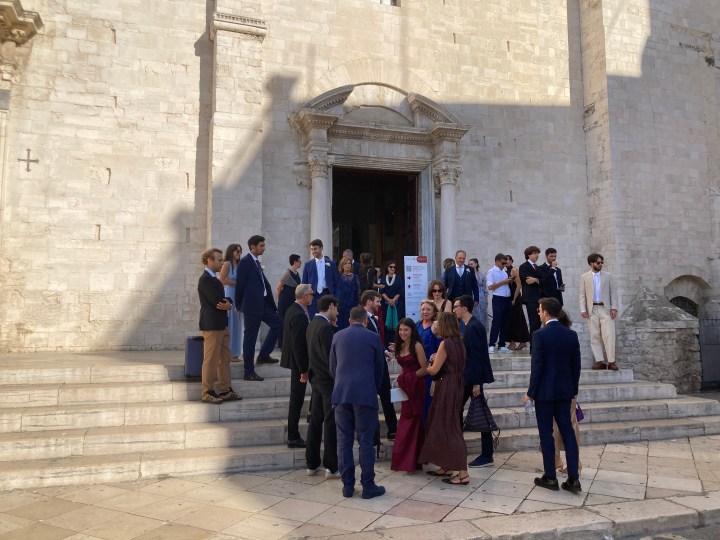
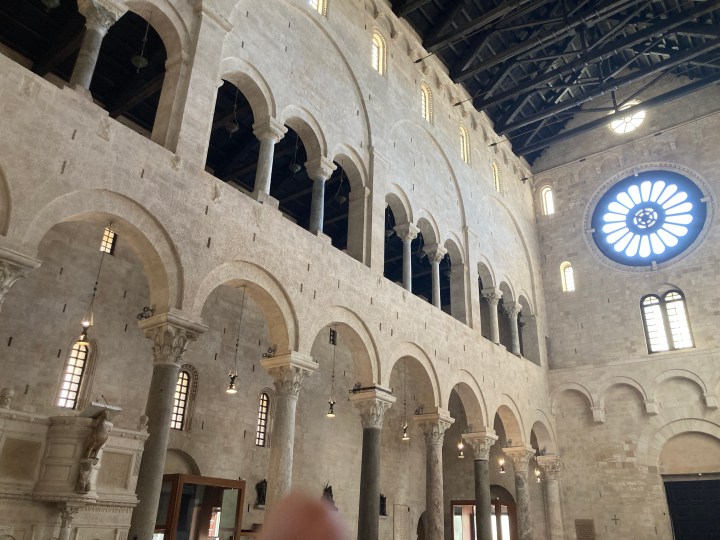
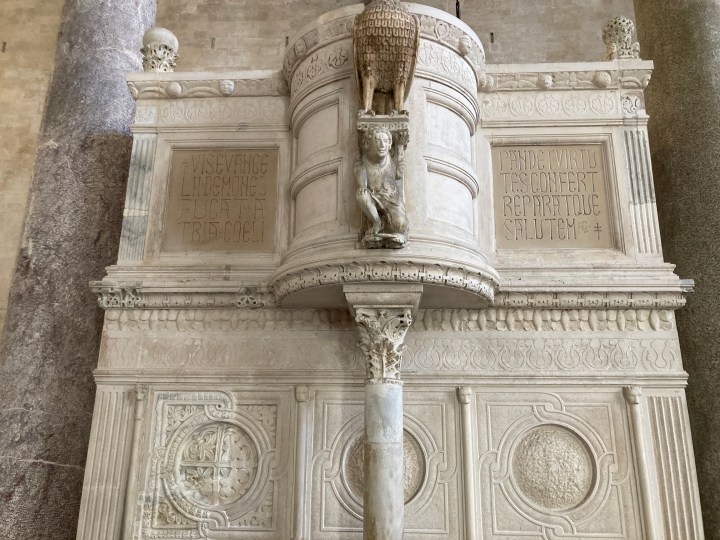
Close by is the Cattedrale di San Sabino and its museum, which displays a fine range of paintings and ecclesiastical knick-knacks – and, notably, a magnificent manuscript of the Exsultet. Outside a well-heeled wedding party was gathering. We hurried in before it closed.
I needed to find an optician’s. Once again I’d lost a screw from my sunglasses (this only seems to happen when I’m abroad). Eventually we found one that was open. They fixed my glasses for free, as always, but then Anne decided to buy a pair of Ray-Bans so they must have been delighted that we showed up. On a whim I asked the manager if he could recommend a steak restaurant. A long discussion then ensued, with the three members of staff arguing the merits of two rival establishments. They decided that Carneo was better. It was certainly good. Excellent meat, lovely wine, and not very expensive.
We retired to our death-trap, and packed for the morning. We’d be taking the 09:00 bus to Rome.
Next episode: Rome
 The Wight Stuff