Our only other visit to this lovely country took place 15 years ago. It was a measly week of over-activity: flying to Bangkok, then a train south to Surat Thani, ferries to Ko Phangan and Ko Tao, then flying home via Ko Samui. In other words, too much time spent travelling. It would be a more leisurely experience this time. We’d take three weeks to explore the country (well, part of it), from Thursday 29 January to Tuesday 17 February 2026. And we would have liked it to have lasted even longer.
The rain at home was relentless
We couldn’t wait to escape from it. We took an overnight BA flight from Gatwick and landed at Bangkok Suvarnabhumi a couple of hours before sunset. I’d hardly managed to sleep, as I was seated next to a world champion fidgeter. And the cabin was freezing cold. We’d hoped for a quick getaway to our hotel but had not counted on having to fill in a tediously detailed online form (each) before we could make it through immigration.
Friends had advised us to download the Grab app (an Asian equivalent of Uber), and it worked perfectly, allowing us to book a taxi at an agreed price. No haggling, and no need to be able to speak Thai. The long drive from the airport was less than 500 baht (about £12).
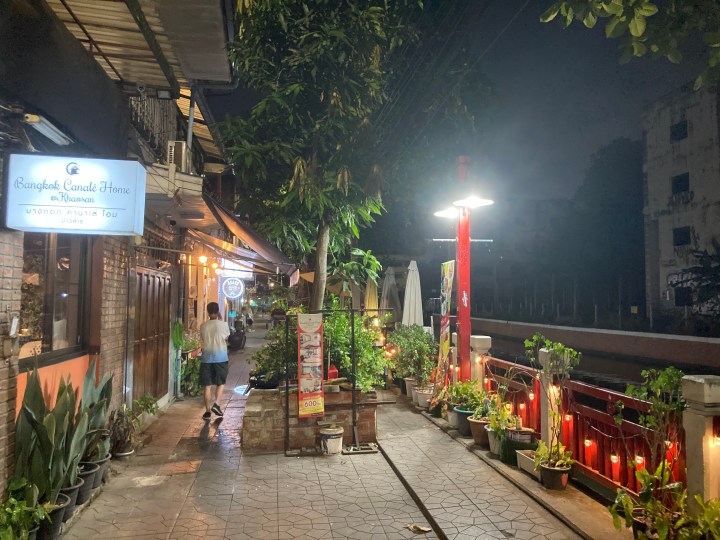
Our two nights in Bangkok were spent at Lamphu Tree House next to a khlong (canal), just a few minutes’ walk from Soi Ram Buttri and the in/famous Khao San Road. It was traffic-free, apart from the odd scooter, our teak lined room was quiet and spacious, there was a small pool in the garden, and breakfast was included in the room price. From the many little restaurants nearby we chose the roof-top bar at Bravo, where we were greeted by a charming ladyboy waiter. It did not take me long to order my first bowl of spicy prawn soup, tom yum kung.
***
We would have just one full day in Bangkok before moving on to Chiang Mai. Having seen the Grand Palace on our previous visit, we headed for the Jim Thompson House. A half-hour walk by the khlong took us to Golden Mount, where we picked up a long-tailed boat.
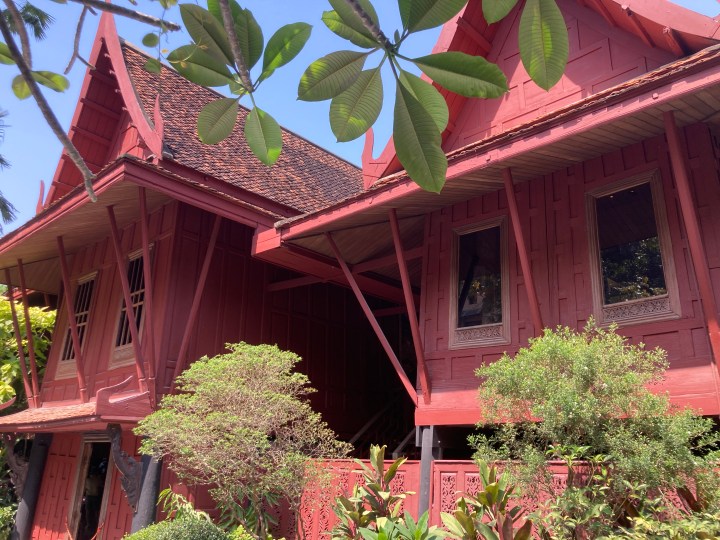
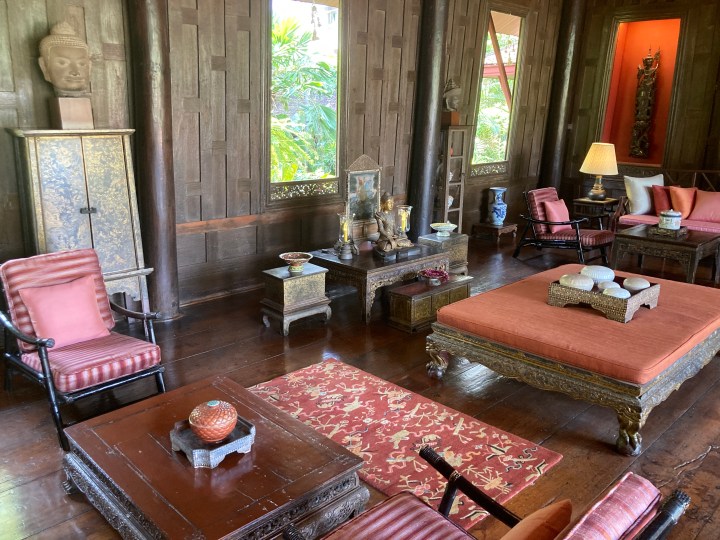
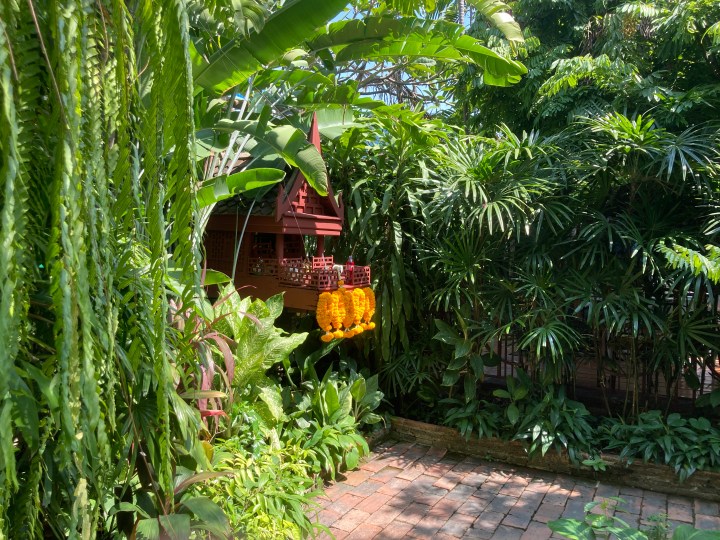
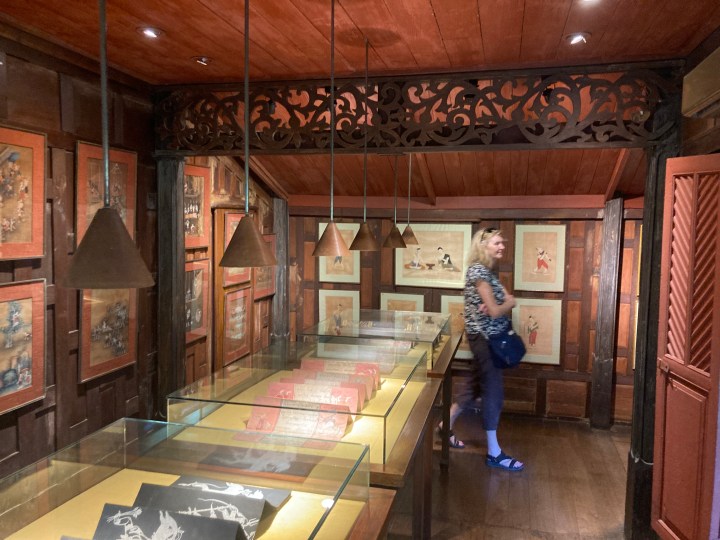
Jim Thompson was an American architect and art collector who is credited with reviving Thai silk manufacture. Thompson mysteriously disappeared in Malaysia in 1967. The house is really a collection of re-erected buildings from outside Bangkok, and is now a public museum.
Afterwards we took a tuk-tuk to the National Stadium and rode the BTS Skytrain to Sephan Taksin, picking up an express boat to Rajinee pier. It was getting hot (34 C) and we needed a beer stop. But we didn’t get one; the locality seemed to entirely beer-free. So we pressed on to the huge and chaotic jumble of buildings and scultures that is Wat Pho, one of Bangkok’s oldest temples and famous for its giant Reclining Buddha.
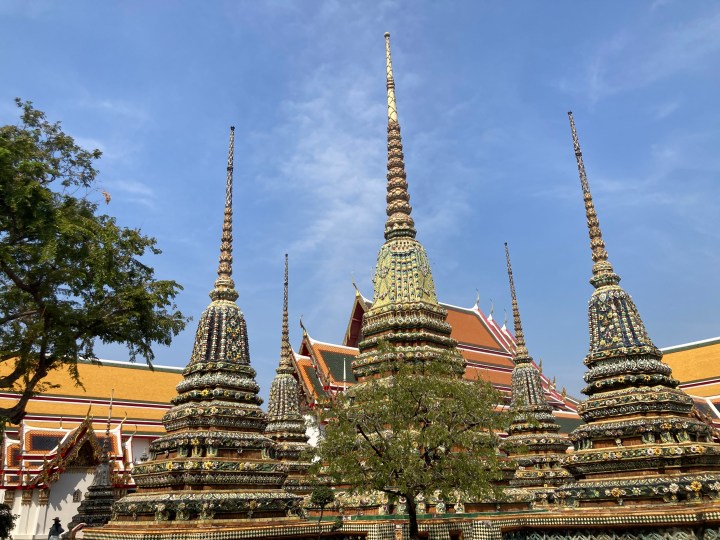
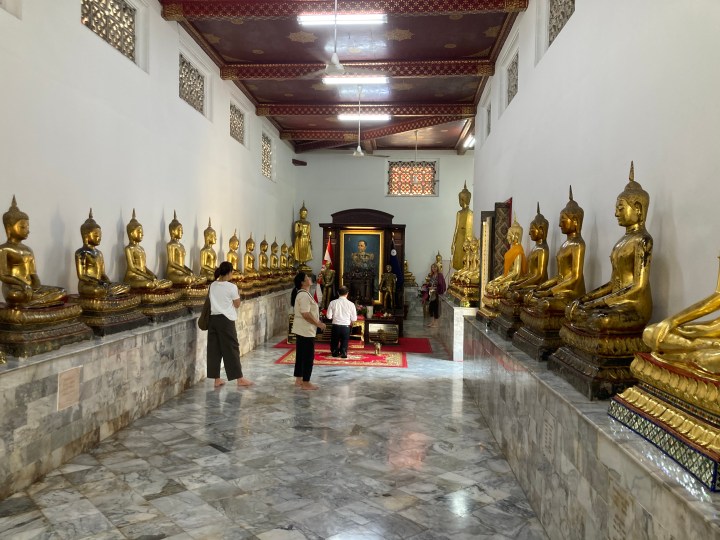
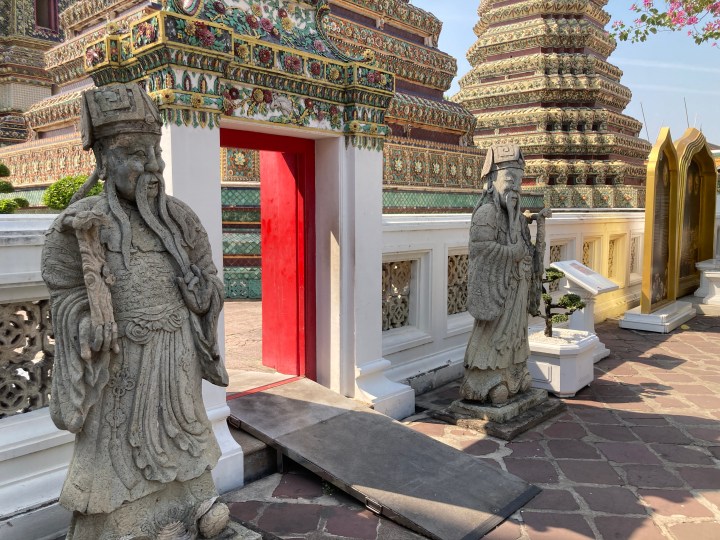
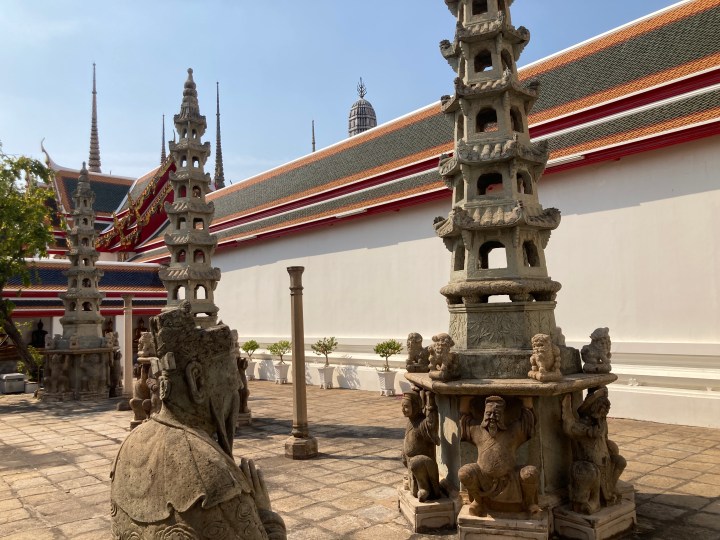
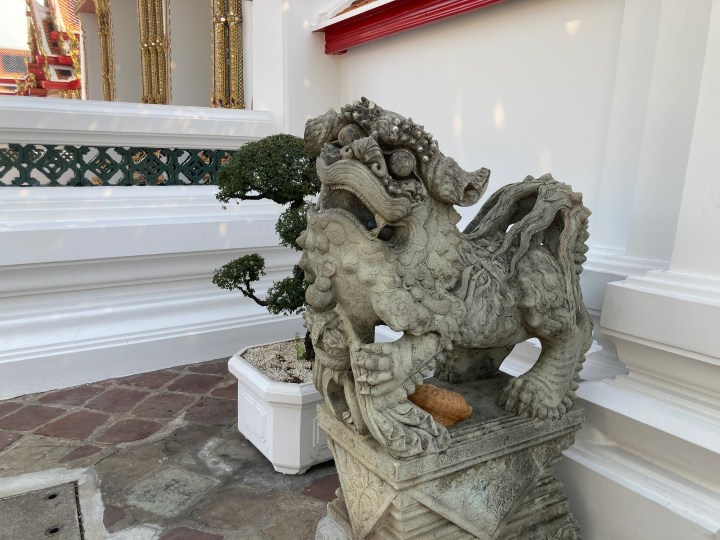
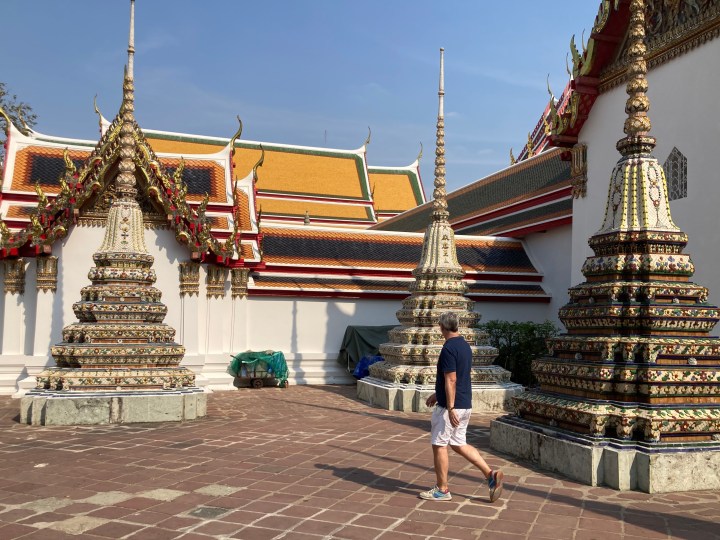
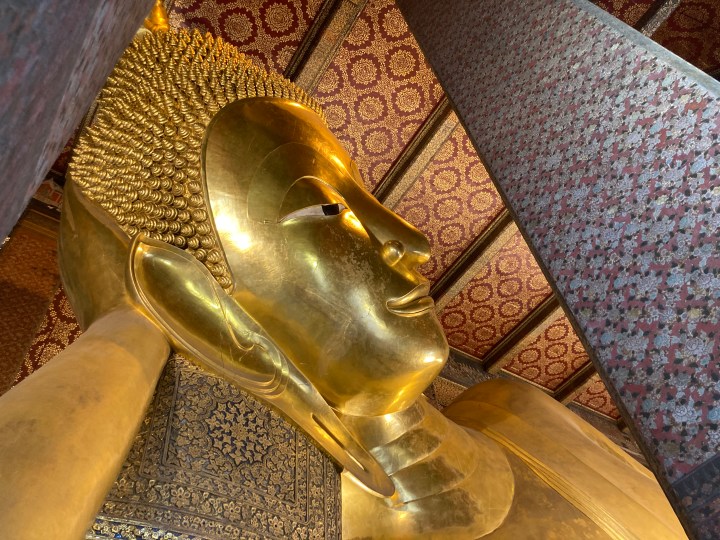
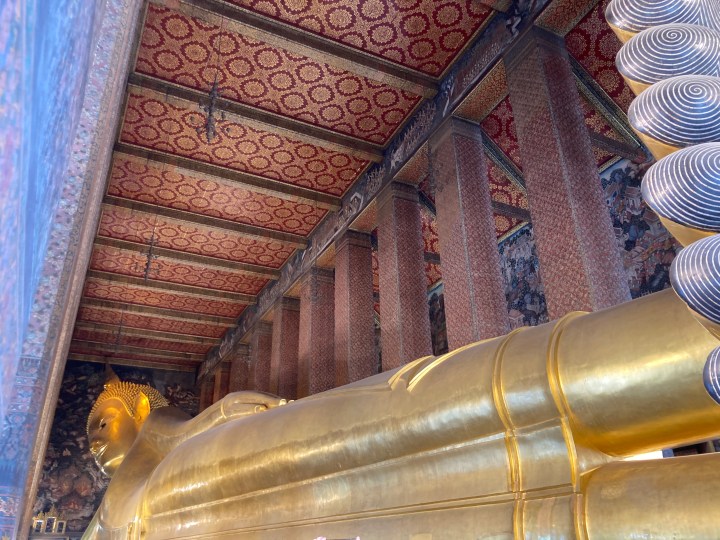
It was busy – though most visitors only seemed interested in the Reclining Buddha – but also worth seeing for the many golden Buddha statues, Chinese stone sculptures, and multicoloured chedis set against a blue sky.
We haggled over a tuk-tuk
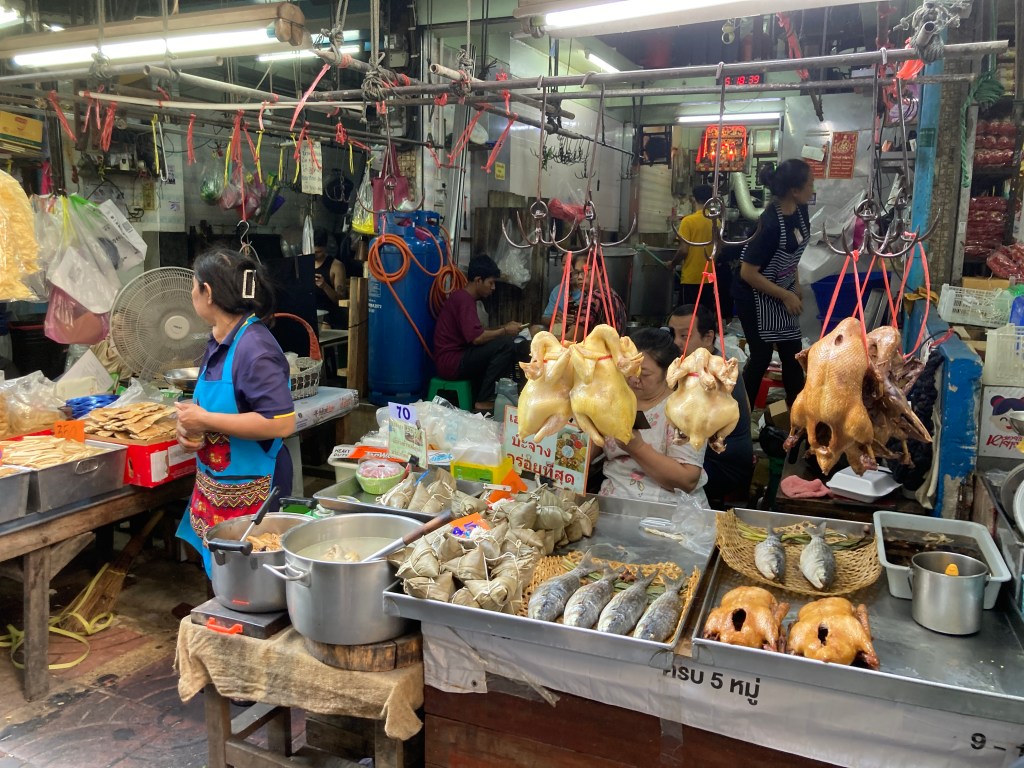
It was a wild ride to Chinatown, with its gigantic market selling just about everything. I have never seen so many dried mushrooms. And it was there I had one of the worst meals ever; a greasy and sickly-sweet fried spring roll which contained nothing but rice vermicelli. Even I could not force that down, but at least we finally got our beer.
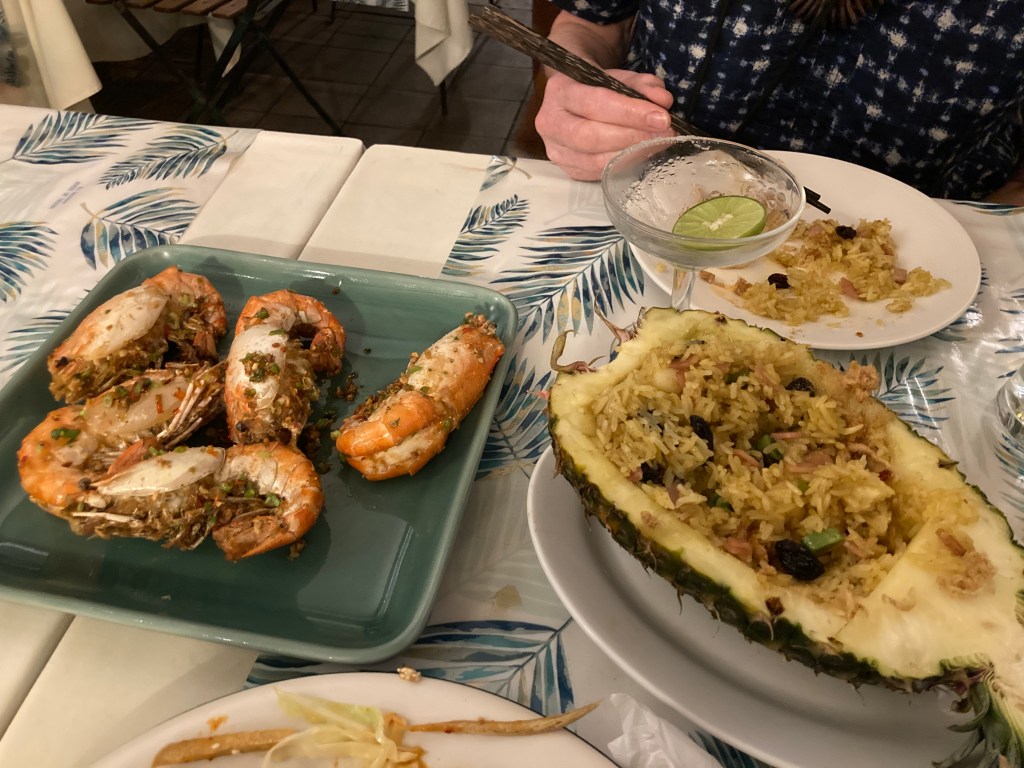
We headed back to the hotel for a kip and a dip, then strolled along the canal and turned right, over a bridge to a well-reviewed restaurant called Hemlock, on Phra Arthit Chanasongkram. We began with miang kham (betel leaf wraps) then enjoyed grilled giant prawns with pineapple rice, washed down with a jug of margarita mix. We walked back to the hotel through the bright lights and the racket of Ram Buttri and Khao San Road.
We loved our short stay in Bangkok
It was still dark when we rose at 6:00 for a bite of breakfast before ordering a taxi to the swanky new Krung Thep Aphiwat railway station. The driver seemed to get lost at one point and it was bit nerve-wracking, but we arrived 15 minutes before our 7:30 train to Chiang Mai.
It costs 558 baht and takes 10 hours from Bangkok, on a Chinese Diesel Rail Car that has seen better days. As so often, the AC was set to freezing. We had a few snacks with us, which was just as well as the catering was limited to pot noodles and coffee.
The first half of the journey was pretty dull, with little to see apart from paddy fields and the occasional animal or human, before we halted at Kluntan. We started to climb through mixed forests and banana groves.
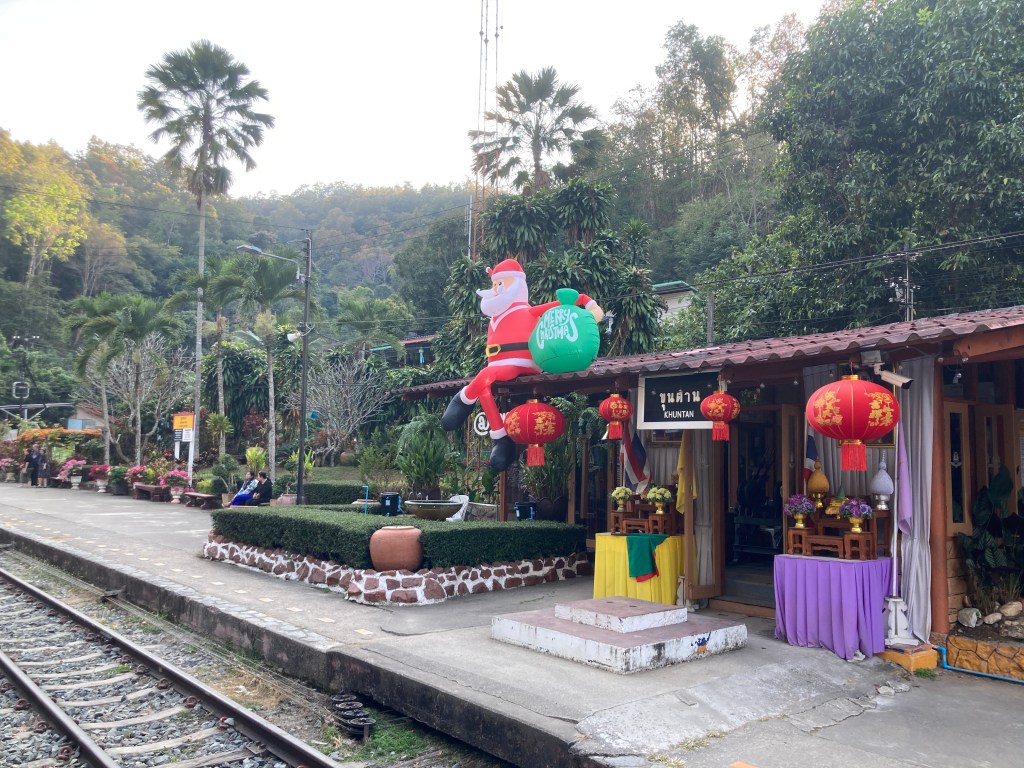
Our train pulled into Italian-designed Chiang Mai station just in time for the Thai national anthem.
Which blares out at 6:00pm each evening
We were met by ex-colleague Graham Jefcoate and his partner Kom, a Professor at Chiang Mai’s Faculty of Architecture, who treated us to dinner at Punn Toh restaurant. I ordered the local speciality, khao soi (a delicious curry noodle soup). To cap off a long day we went for cocktails at a nearby rooftop bar. Graham and Kom kindly put us up in their guest apartment, north of the airport.
***
We awoke to a pleasantly fresh morning and clear skies. Graham led us to a lovely Saturday market. I needed a hat and immediately found one for a few pounds.
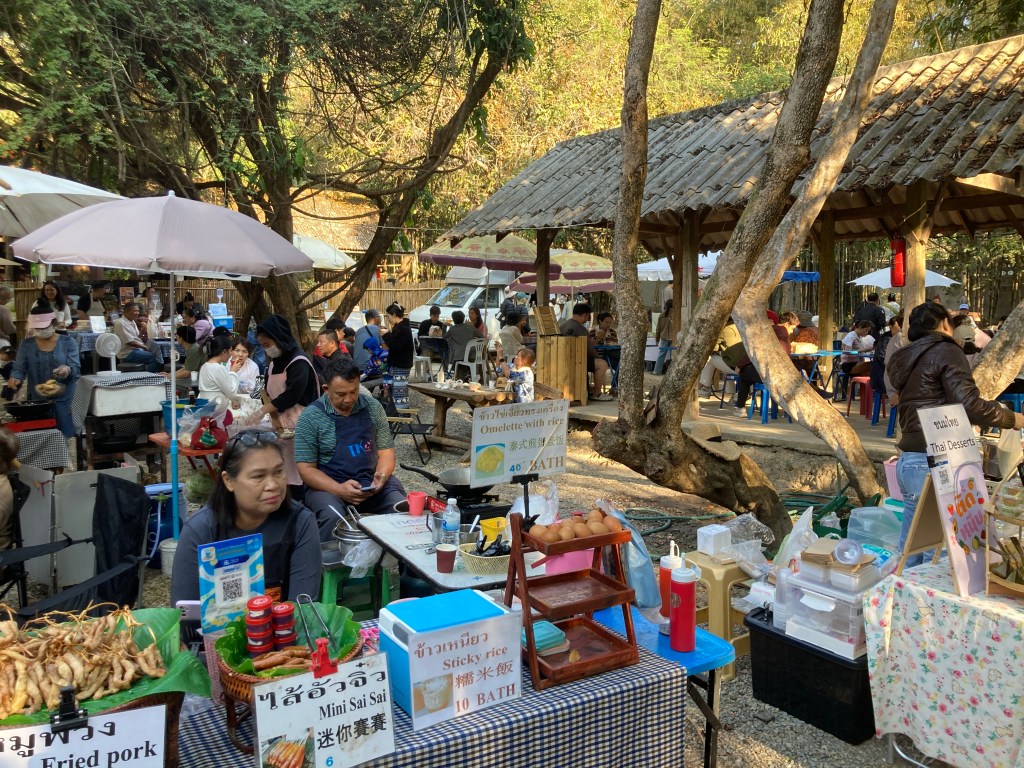
Cheerful groups of boy scouts and girl guides marched past. Why do Thais enjoy dressing n uniform so much?
Chiang Mai is more than a large regional city. It was formerly the chief town of the Lanna kingdom, perhaps the equivalent of Edinburgh. Lanna maintained its independence until the 18th century when it was gradually absorbed into Siam.
***
The day’s tourism started with a drive to the Daraphirom Palace Museum, with its colonial house and rose gardens, then up the steep mountain road known as the Samoeng Loop. We stopped at the superb Queen Sirikit Botanical Garden, and again at a viewpoint facing west towards Myanmar.
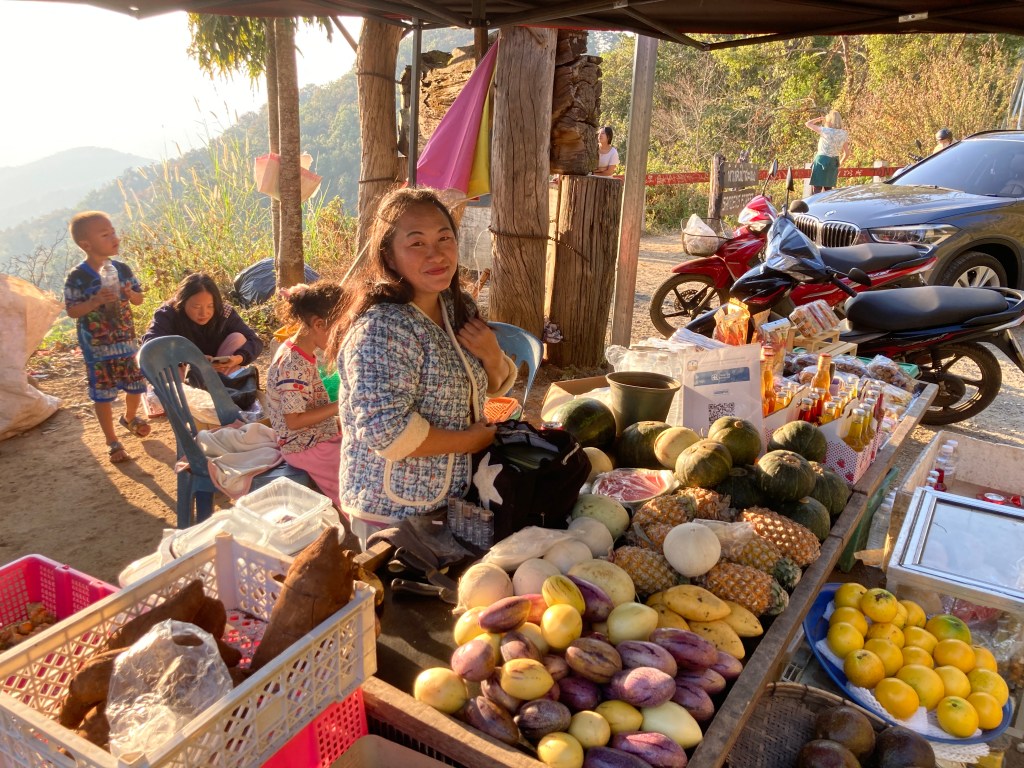
Dinner, back in town, was at a very camp Thai restaurant called Lamour. A general election being held that weekend, booze was not available. But the food was good and we survived on fruit juice.
***
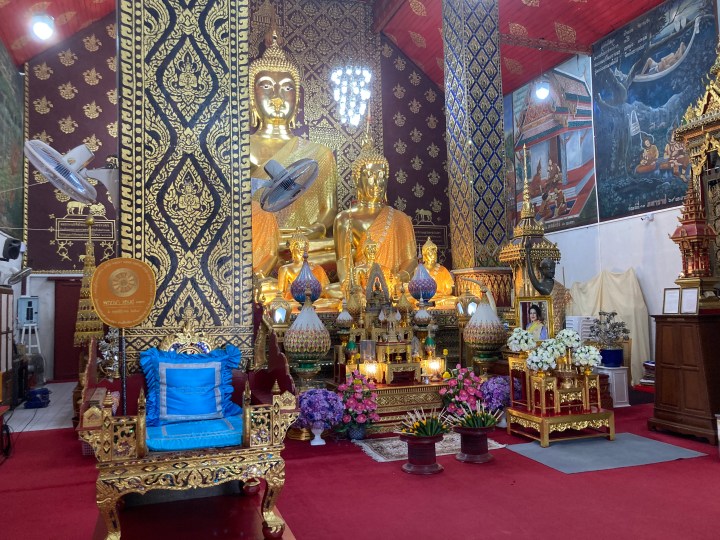
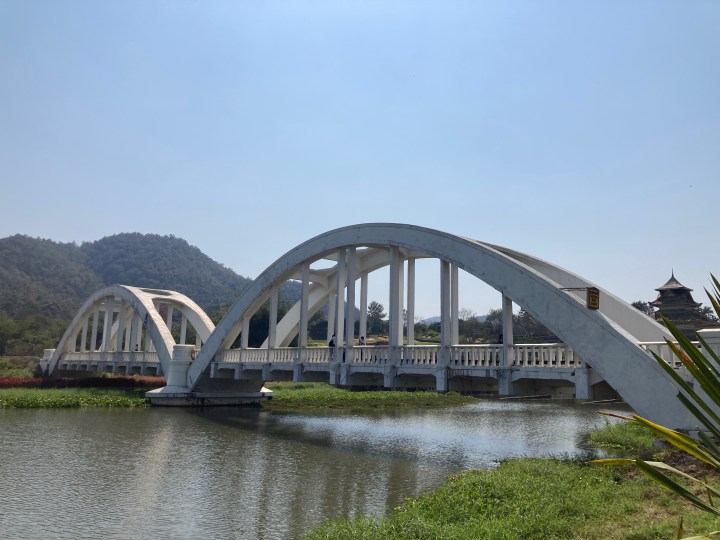
On Sunday Kom kindly drove us to the nearby city of Lamphun, via the famous Chomphu white railway bridge. Chief amongst Lamphun’s attractions is the 1,000-year-old Wat Phra That Hariphuncha (though largely rebuilt in the 15th century).
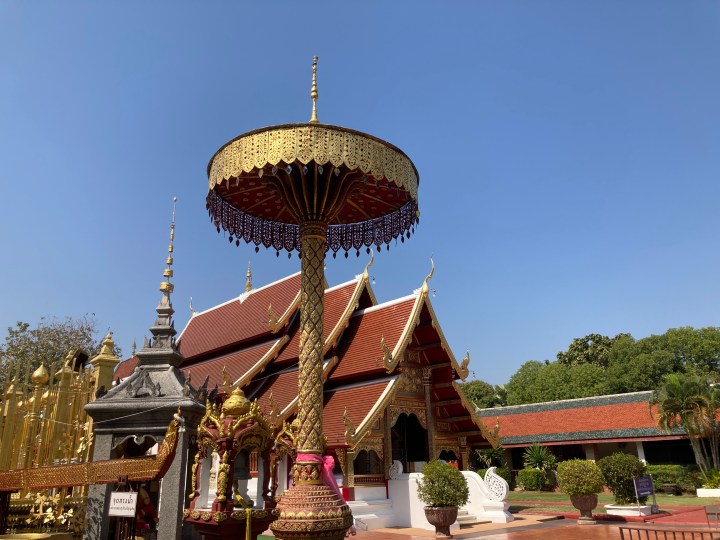
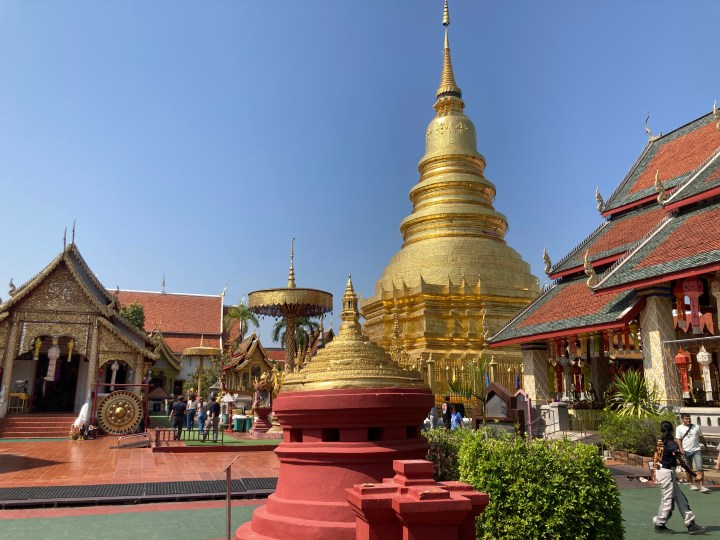
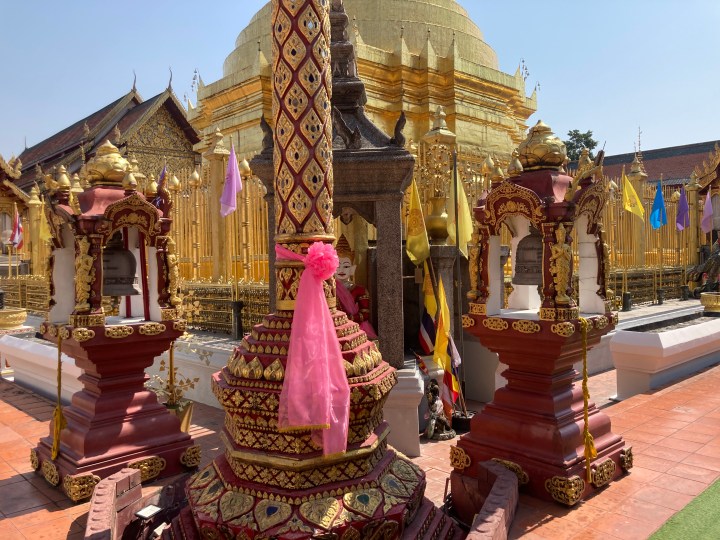
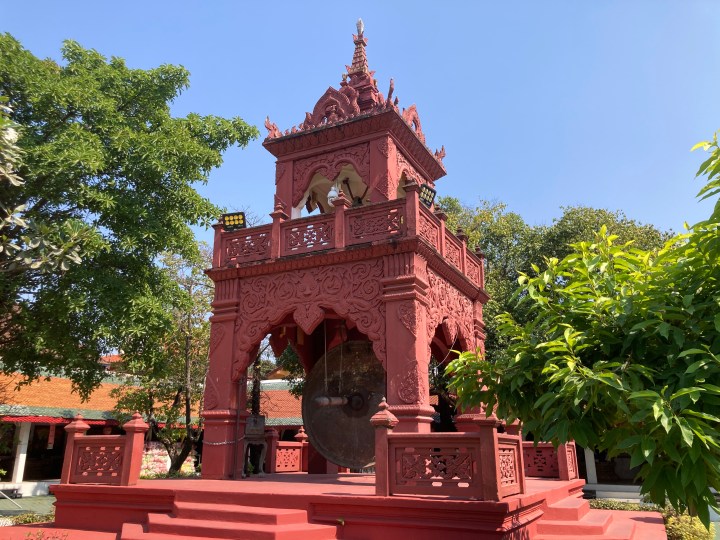
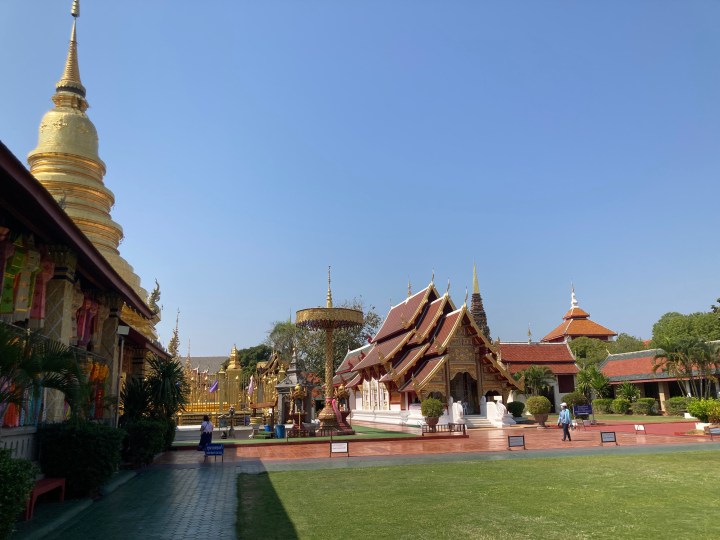
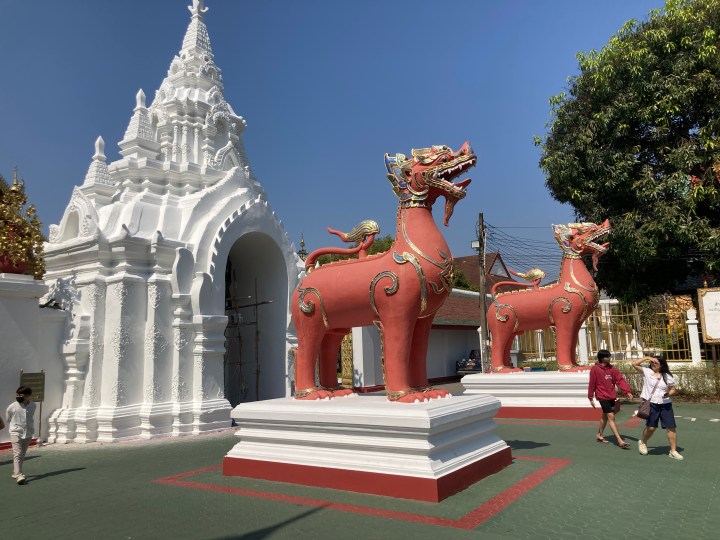
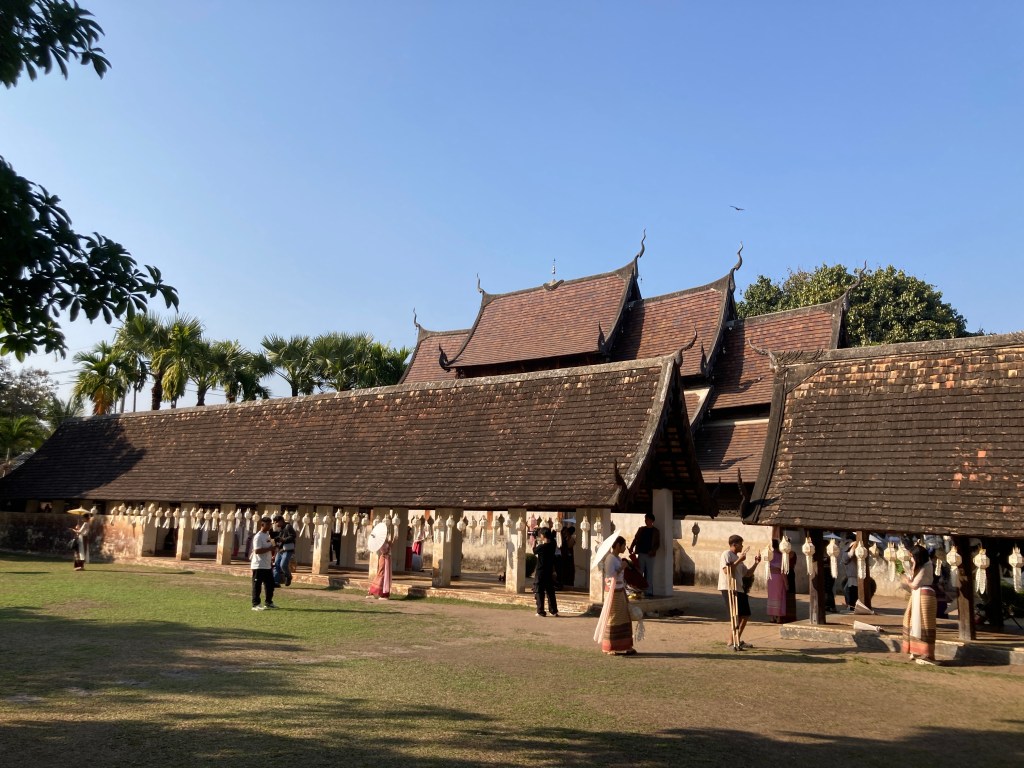
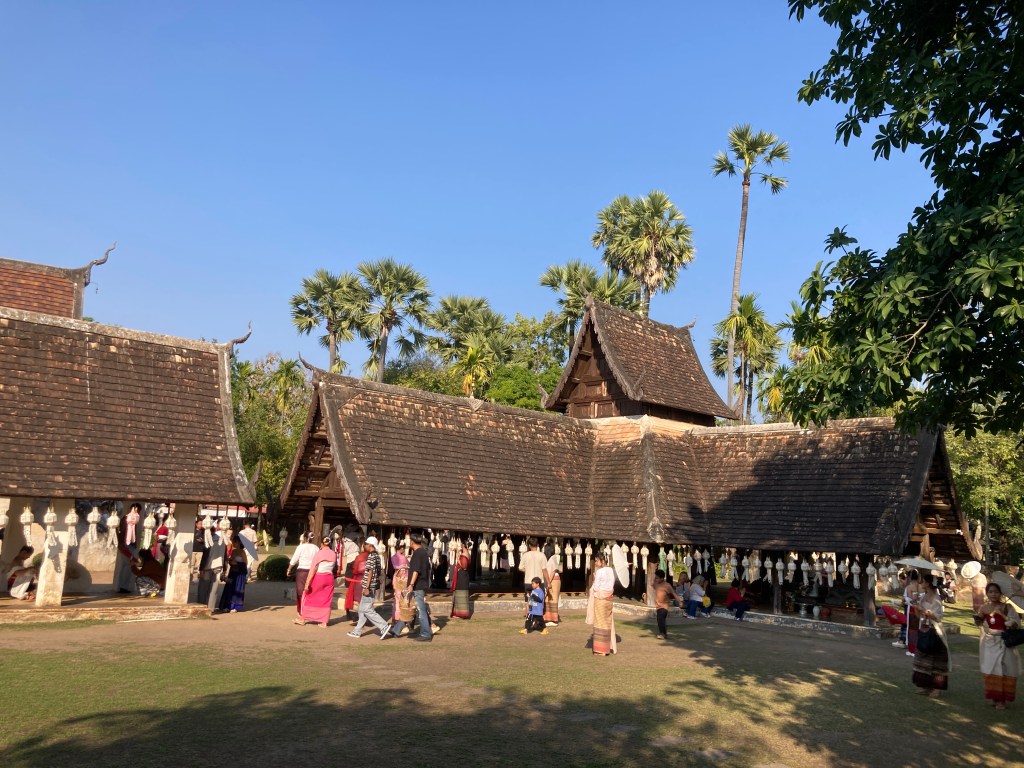
After lunch we returned to Chiang Mai to see the well preserved wooden Wat Ton Kwen, with a four-gabbled pavilion set in a serene location. Not as serene a scene as it would have been without the presence of dozens of cosplayers. But at least they were behaving themselves.
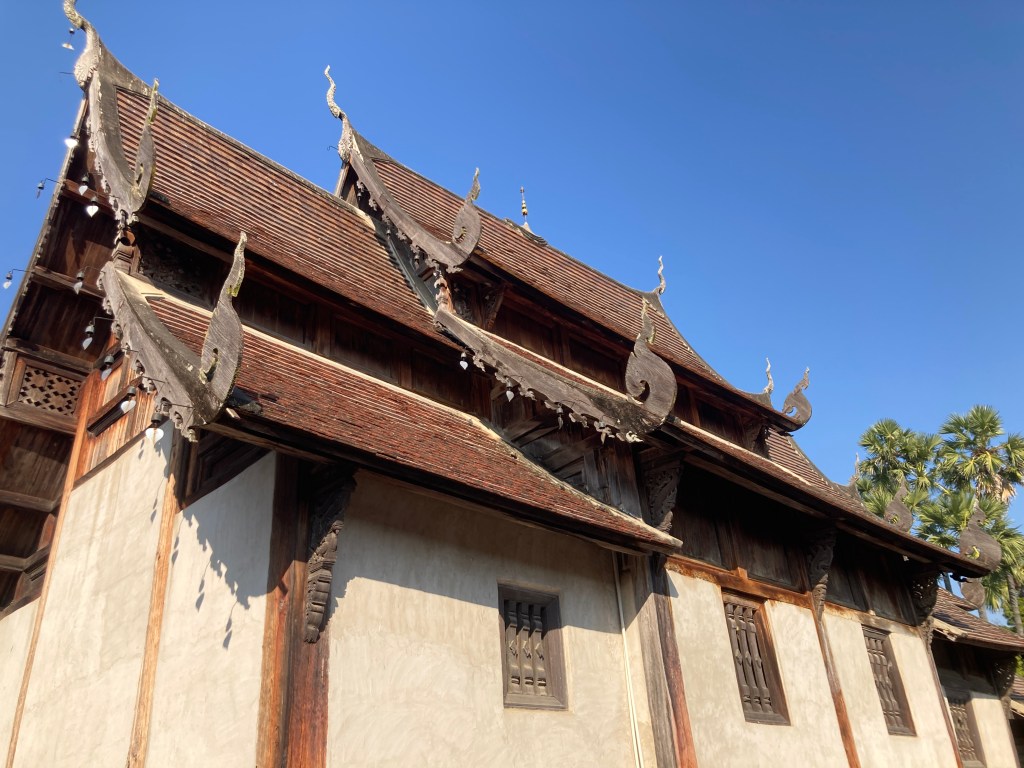
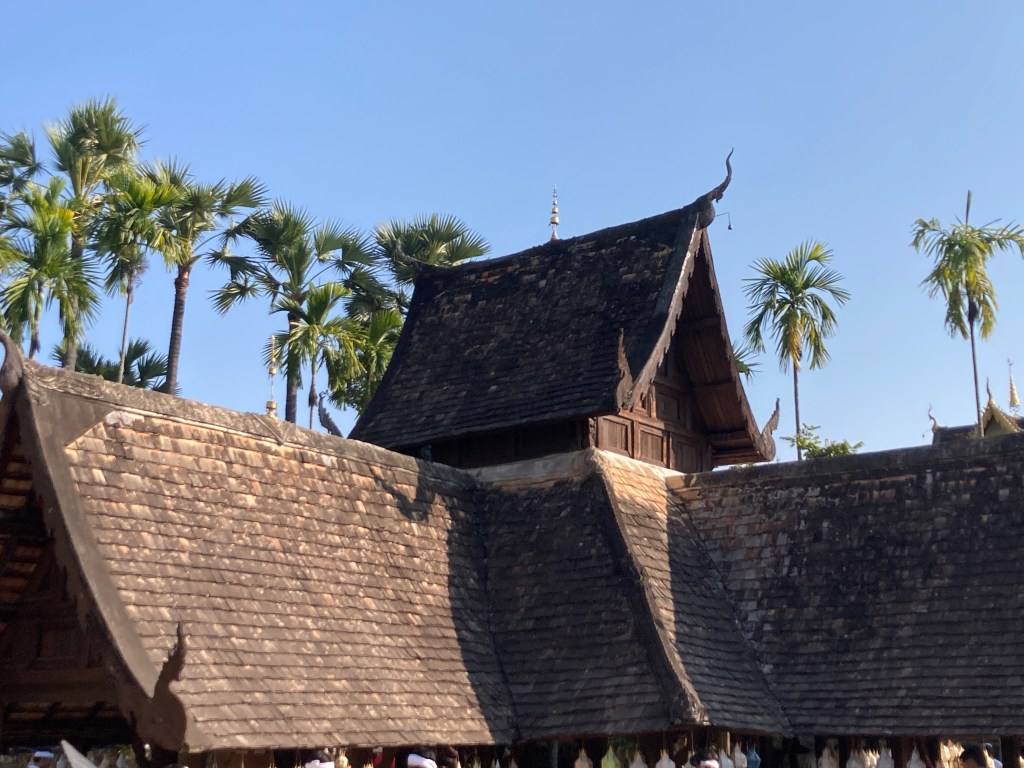
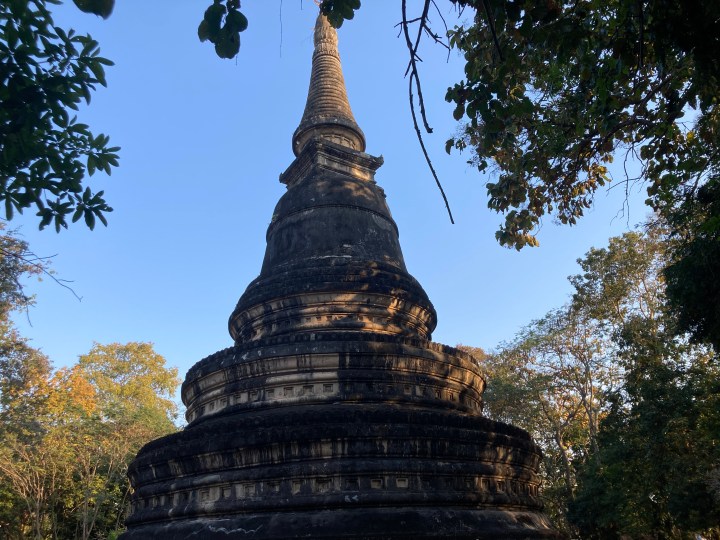
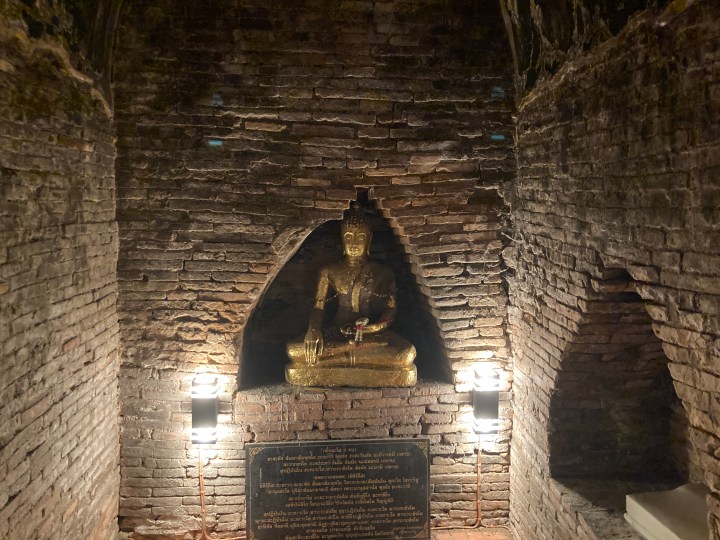
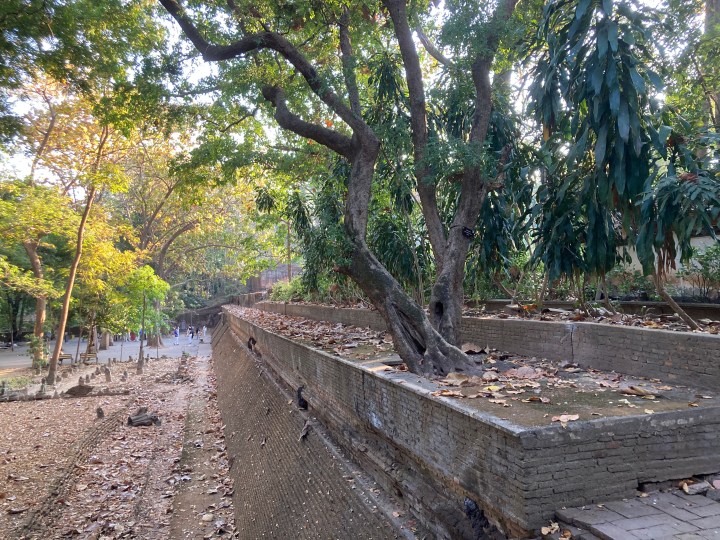
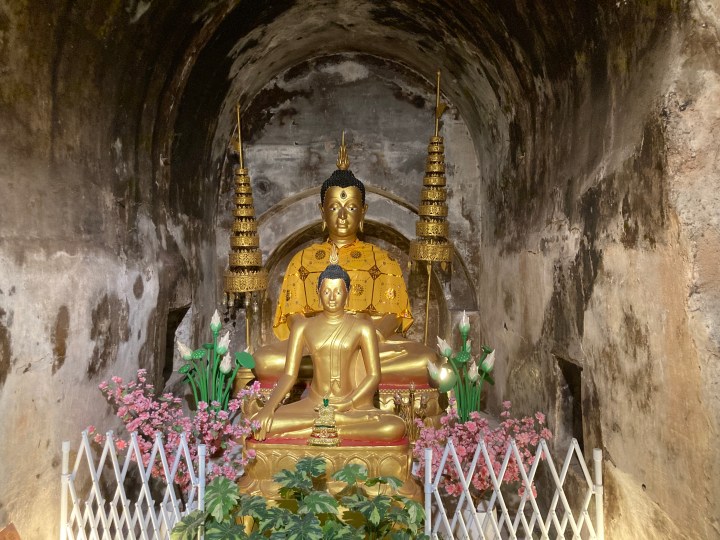
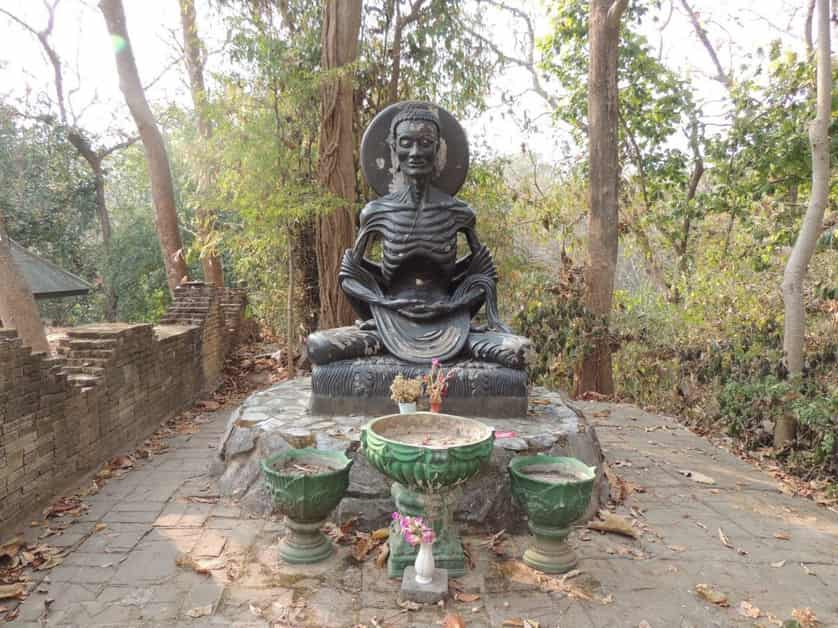
Then to Wat Umong, a 13th-century forest temple located in a tranquil setting at the foot of the Doi Suthep mountain. Under the chedi are tunnels with shrines to explore.
***
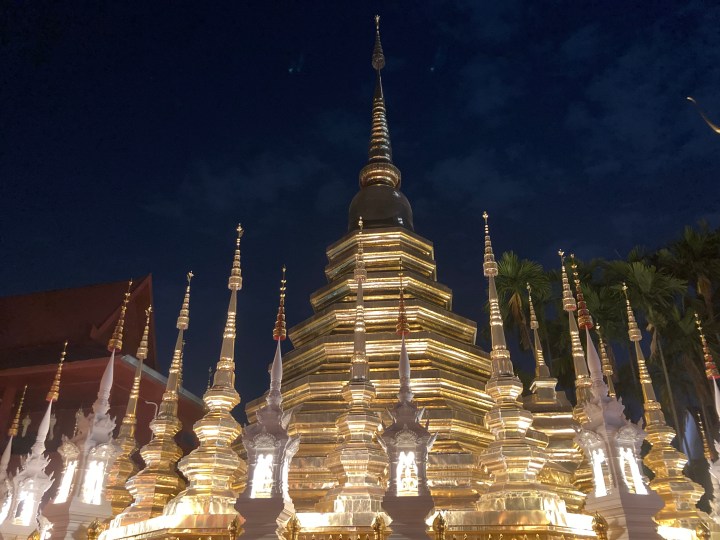
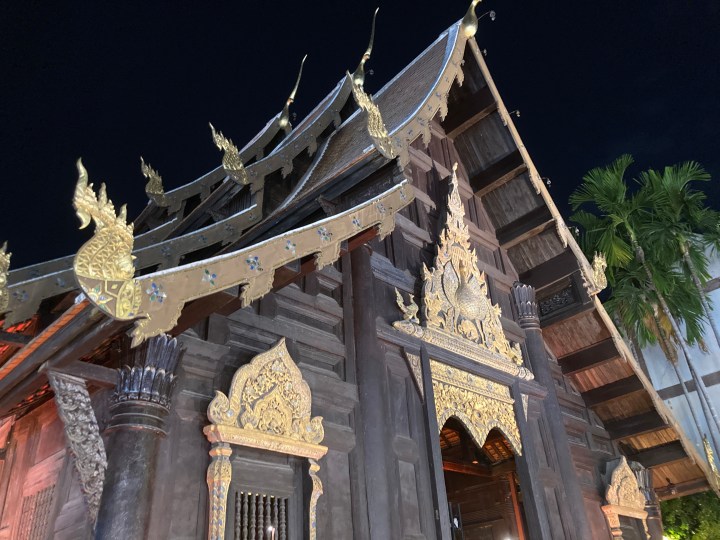
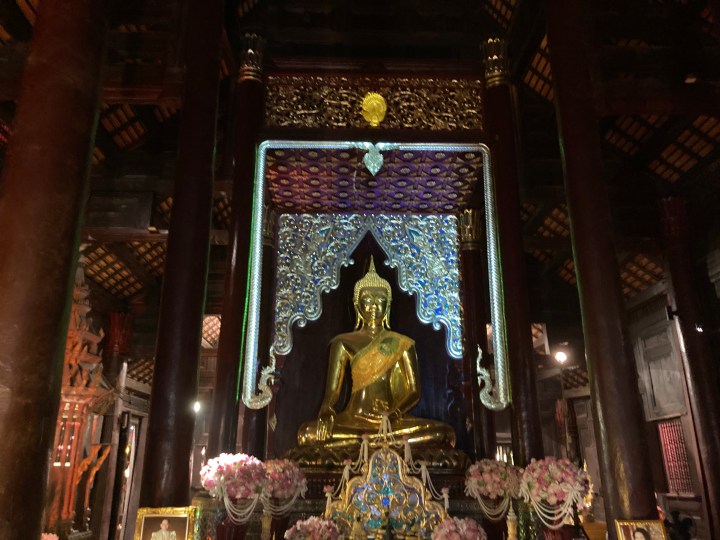
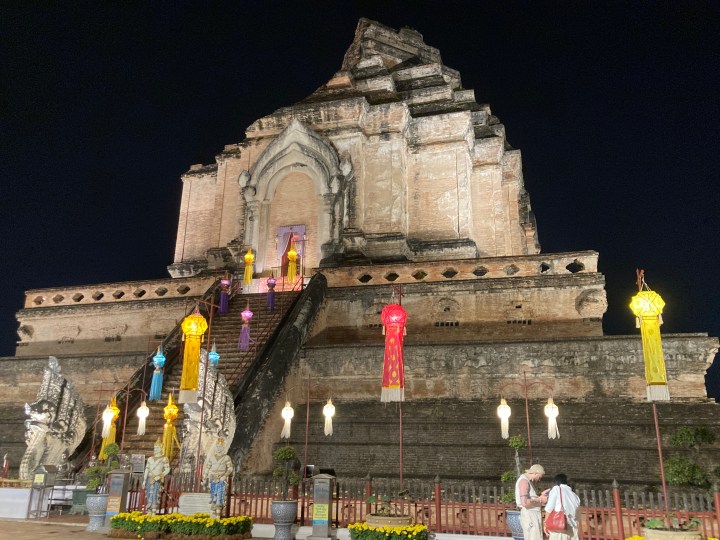
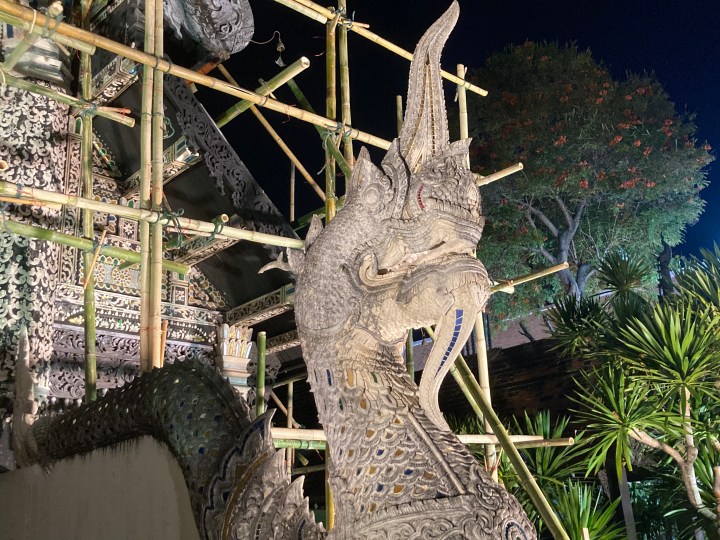
Back in town, night was falling and a full moon illuminated the crowds at the walking street market and the temples. We visited 15th-century Wat Chedi Luang, with its massive collapsed pagoda and dipterocarp tree, and beautiful Wat Phan Tao.
The lighting was impressive and evocative
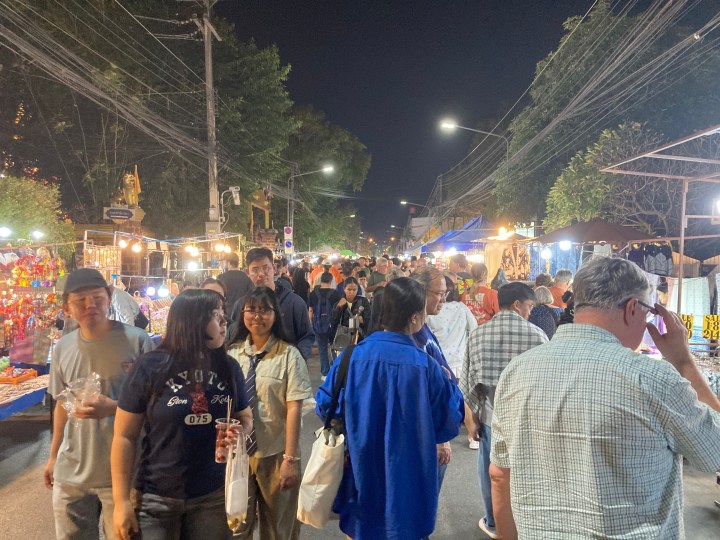
A full-on weekend. But so enjoyable, and the jet-lag was fading…
 The Wight Stuff