It was still bucketing down in the UK (and much of the rest of Europe) but we still had another week in Chiang Mai. It was time to explore the old town, which lies inside a rectangle surrounded by a moat. Graham was our guide as we visited Wat Phra Singh, perhaps the most important of the many temples.
There is an elegant library housed in a beautiful teak and stucco pavilion, and a Lanna-style chedi with an octagonal base, constructed in 1345. The lawns and gardens are well maintained, and the area exudes serenity, even though it was fairly busy on the morning we visited.
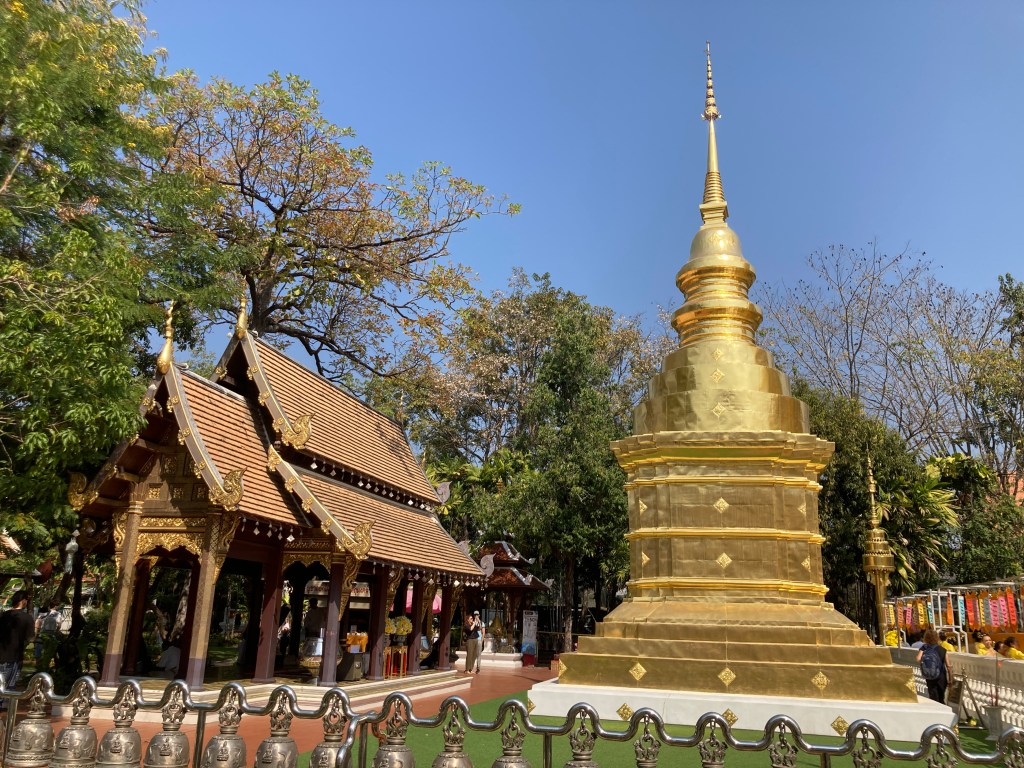
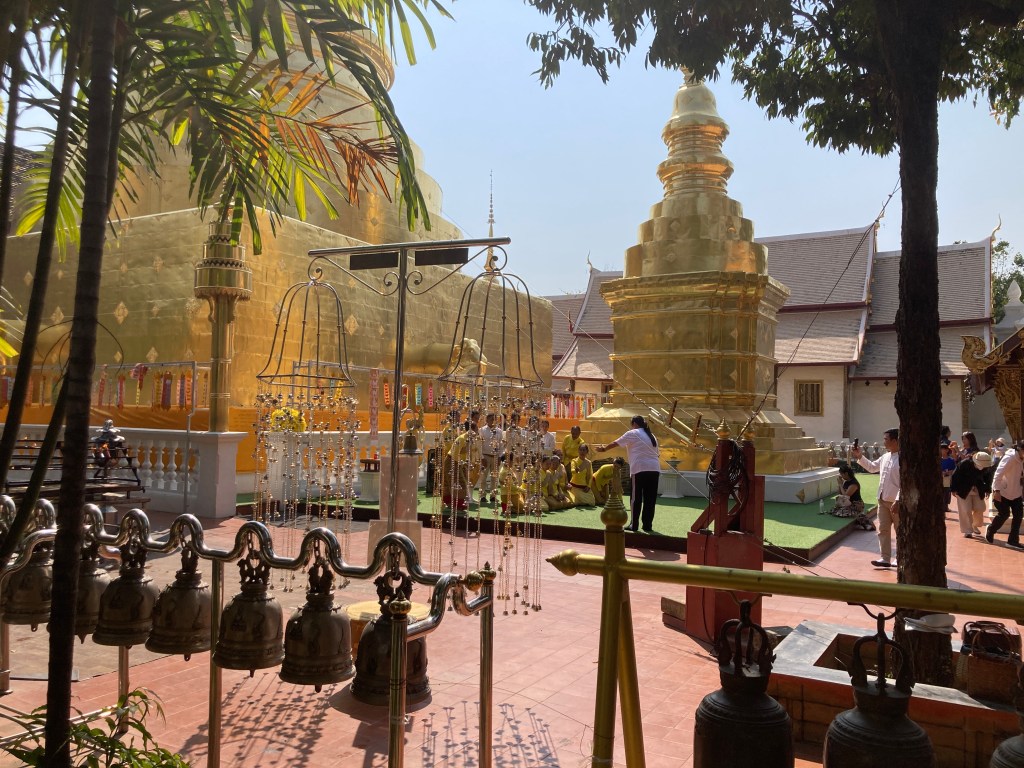
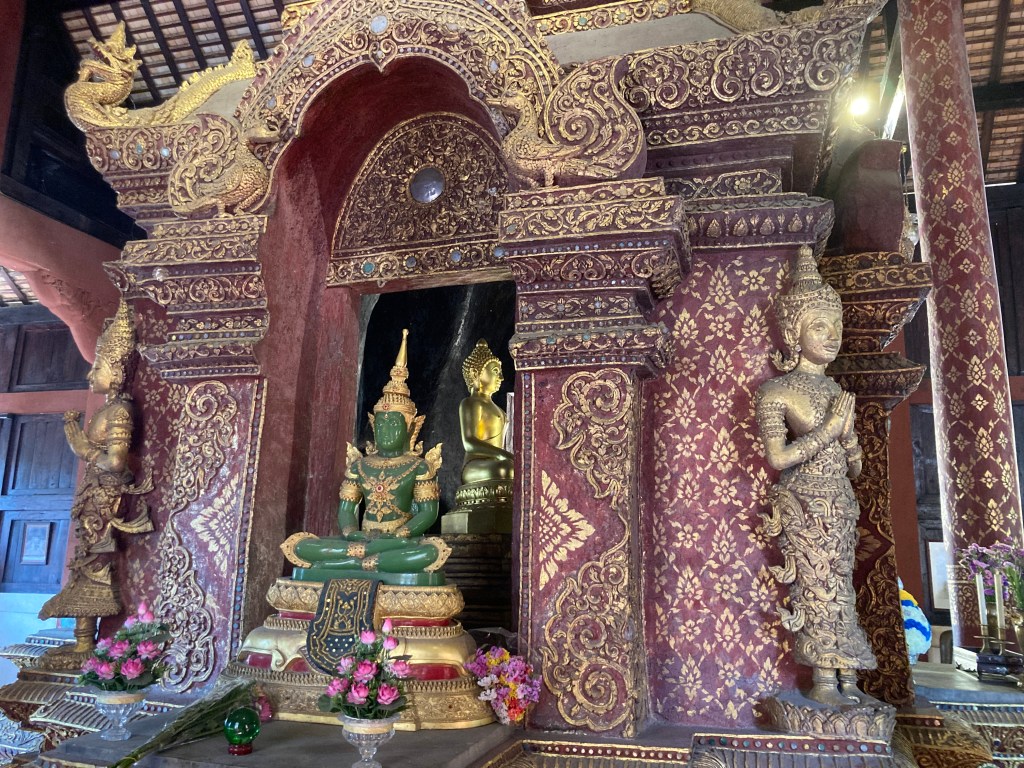
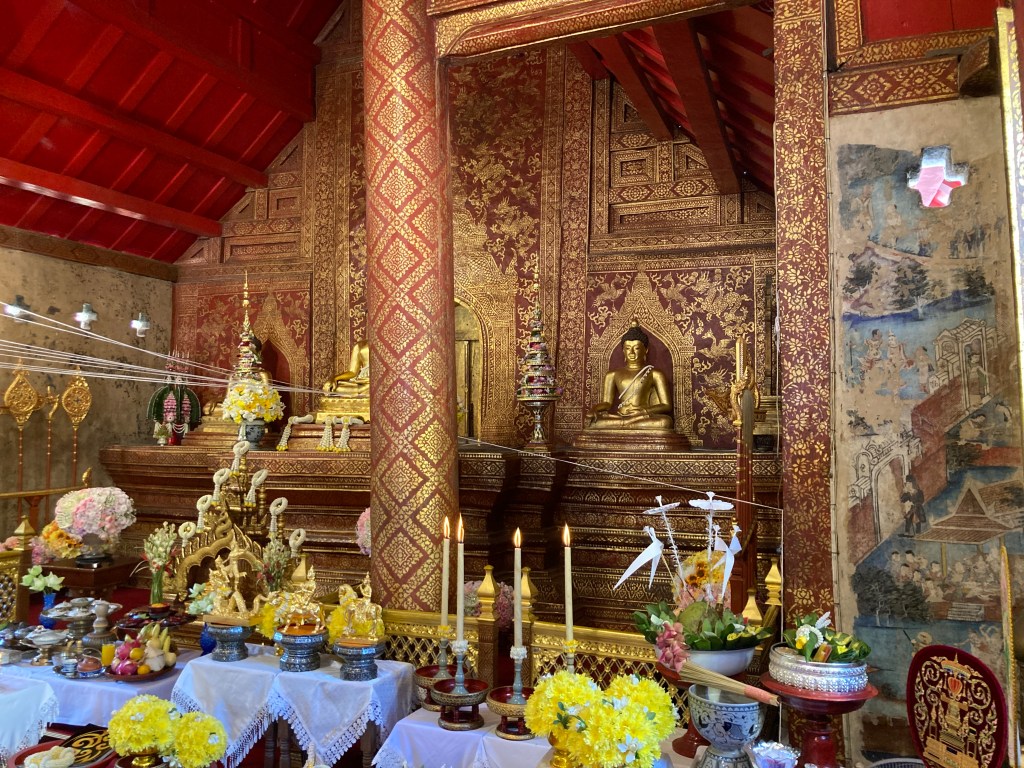
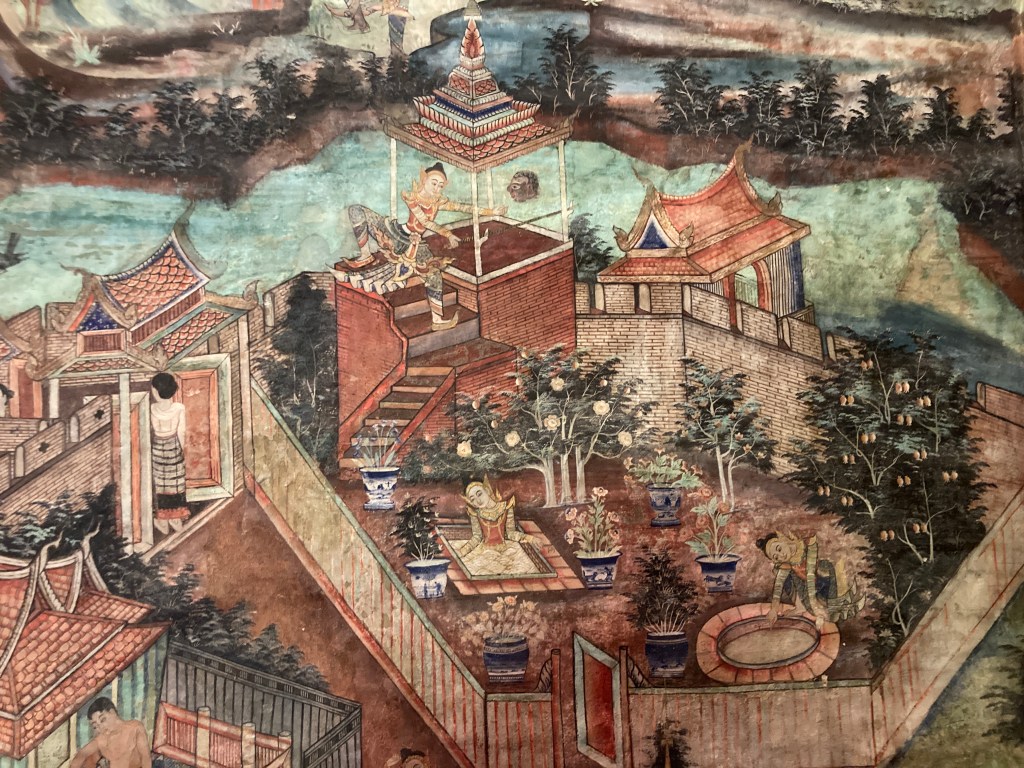
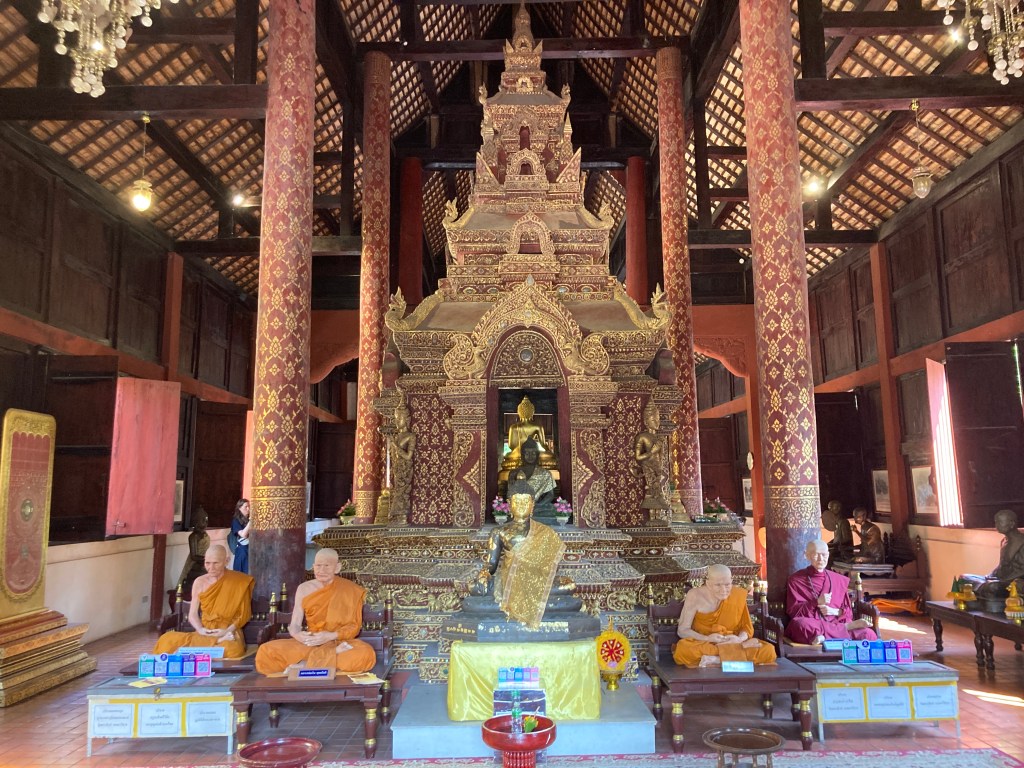
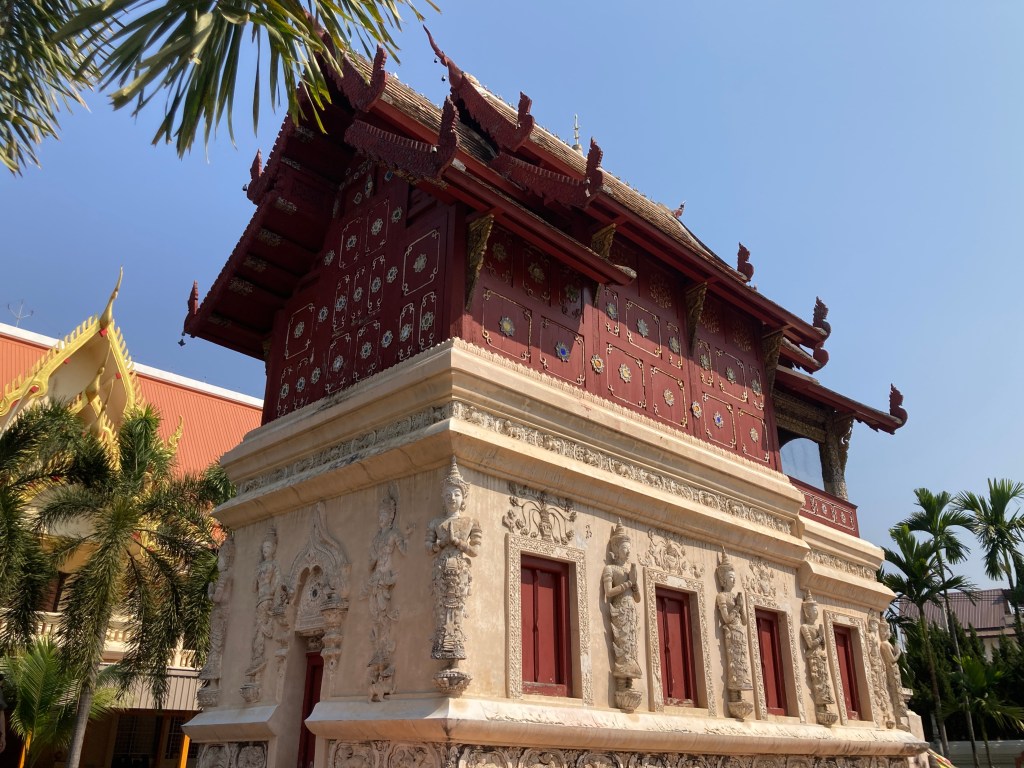
These great complexes are not so much places for worship or ceremony as social and educational centres, perhaps offering massages and music-making. The great majority of Thais identify as Buddhists – a higher proportion than in Sri Lanka, for example.
It was a day for taking it easy
It was hot – what else would you expect? Although air quality can be poor in Chiang Mai in February owing to forest fires, we were fortunate to be spared the pollution that often reaches dangerous levels. Nevertheless, walking for longer than 45 minutes without a break is a bit of a strain.
We stopped for an excellent lunch at Naree Coffee De’ Klang Vieng, where we were served by inmates of the Women’s Correctional Institution. Most of these women have been convicted of minor drug-related crimes.
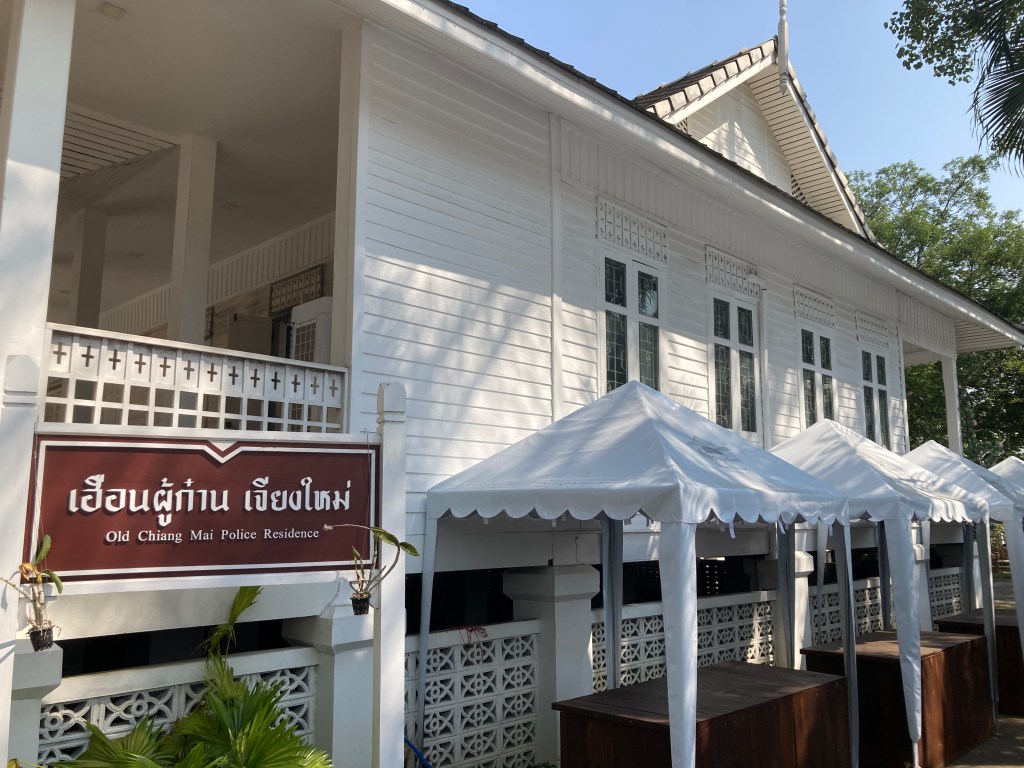
Away from the main roads, the old town is surprisingly peaceful. Choosing side roads at random, we passed small hotels, workshops, temples and attractive private houses with gardens. A further beer stop at the Writers’ Club and Wine Bar in Rachadamnoen Road (to become our local for the next few days), was followed by a taxi back to the apartment in heavy commuter traffic.
Impressions of Chiang Mai?
We found the city to be relaxed, sophisticated, and generally prosperous. When you visit the crafts markets, no-one hassles you to buy anything. The locals speak good English, and are helpful and courteous. And it is an encouraging sign when you can cross the road without much fear of being flattened.
***
The next morning we set off for the National Museum. We already knew that public museums shut on Mondays, but this was a Tuesday. Alas, perhaps because of the forthcoming general election (or mourning for Queen Sirkit, or whatever) they were shut for an extra day. Never mind, Wat Ched You (a royal temple) was only a short walk away.
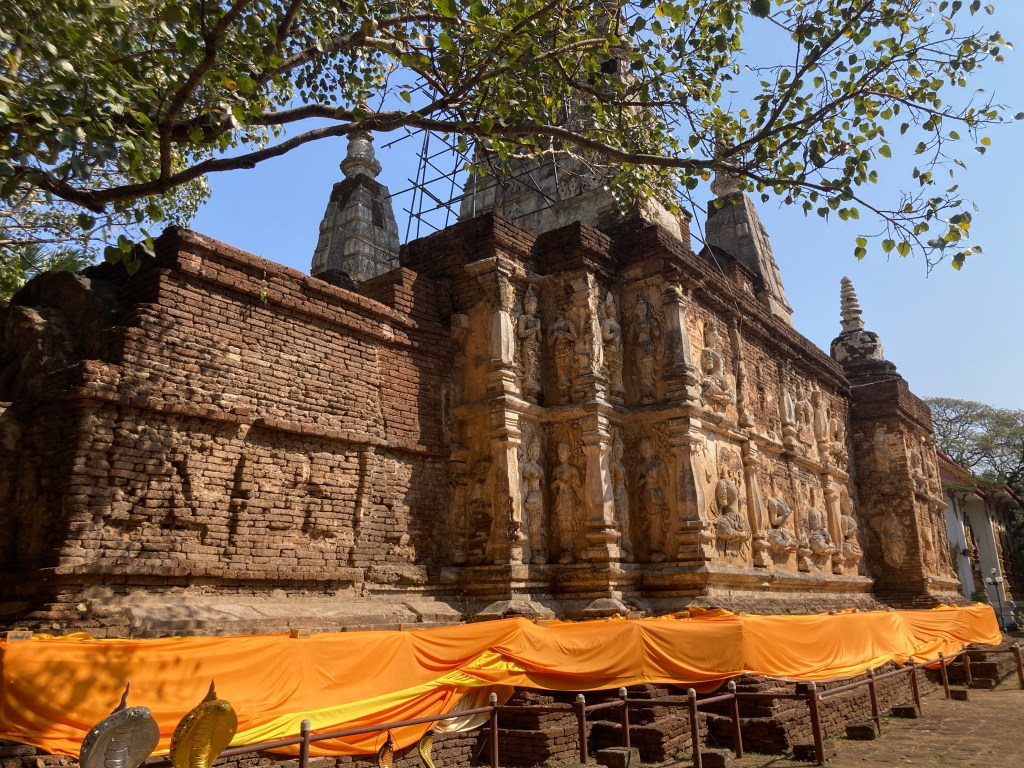
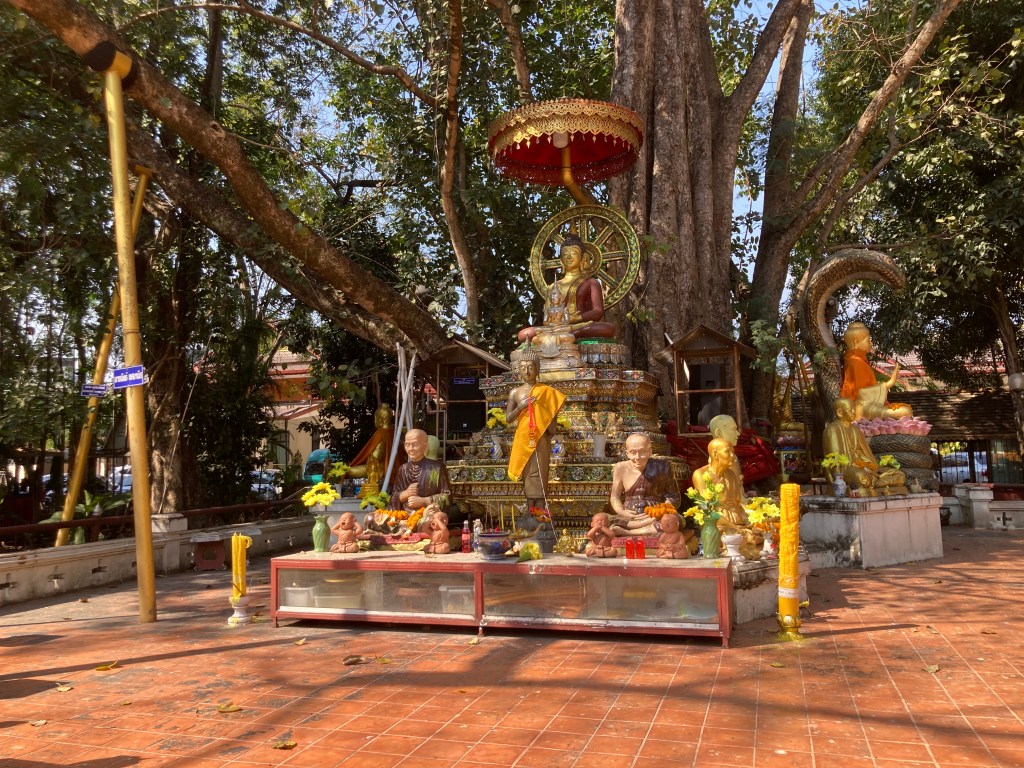
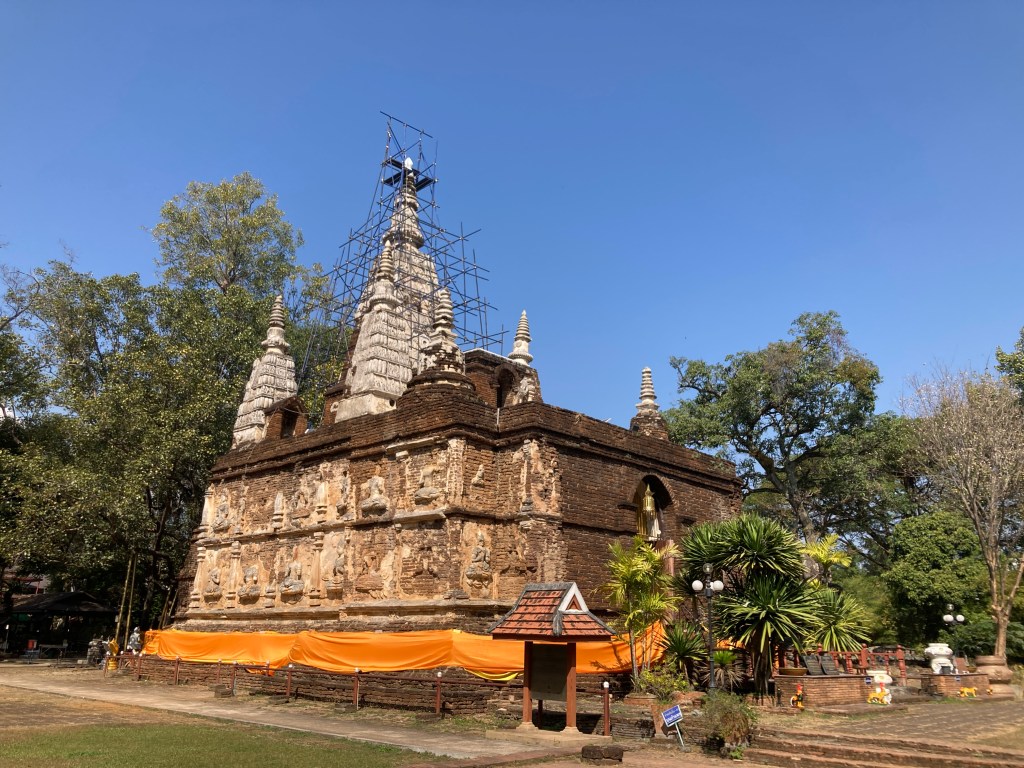
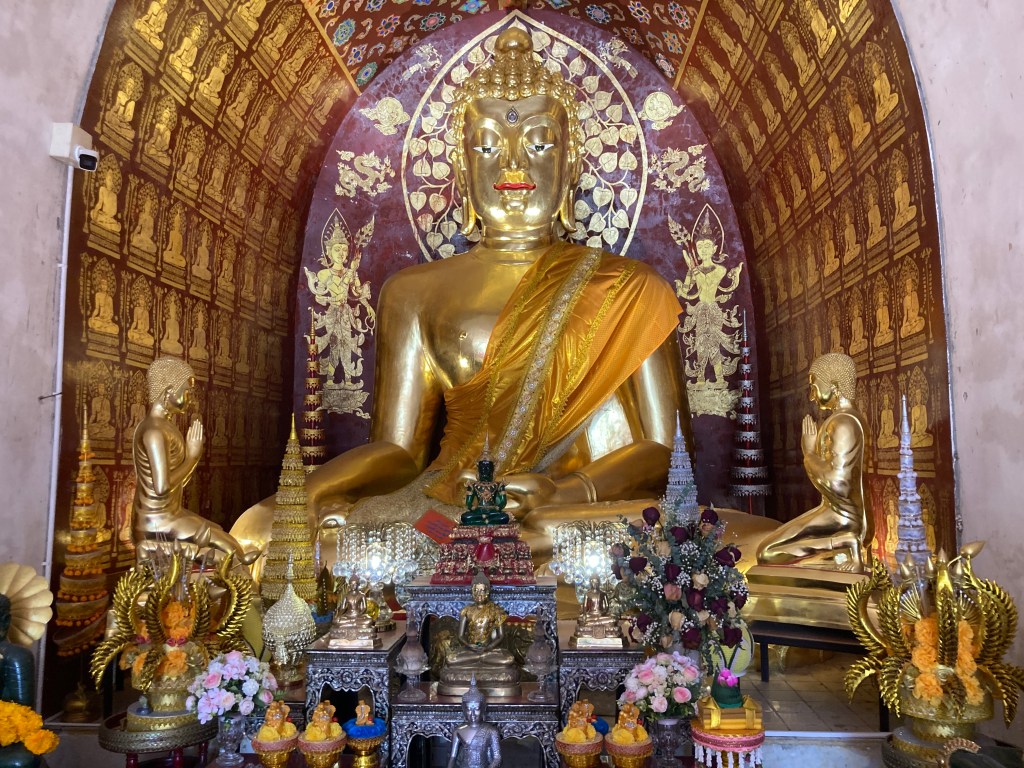
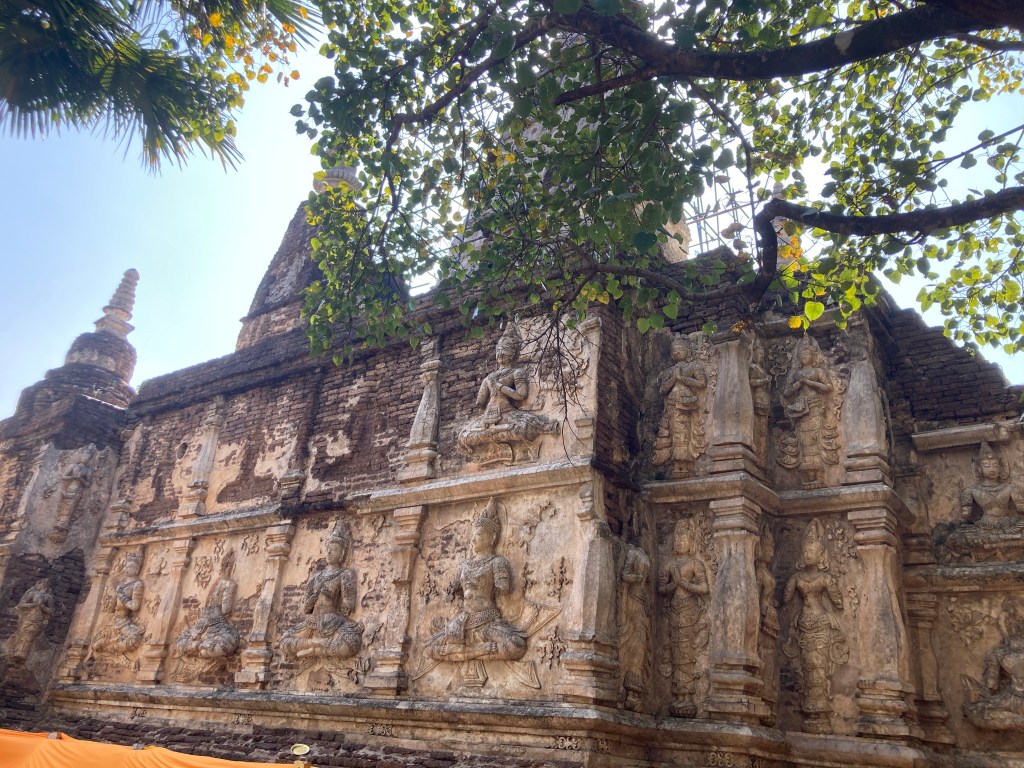
The main building has seven spires or chedis and shows – I read – Indian influence. Externally, there are 70 large stucco reliefs of divine beings. The 8th Buddhist World Council was held there in 1477. Some distance from the centre of town, it is well worth visiting. Kom joined us for lunch at Kalm Kitchen, after which we visited the Lanna Traditional House Museum – happily, open to visitors.
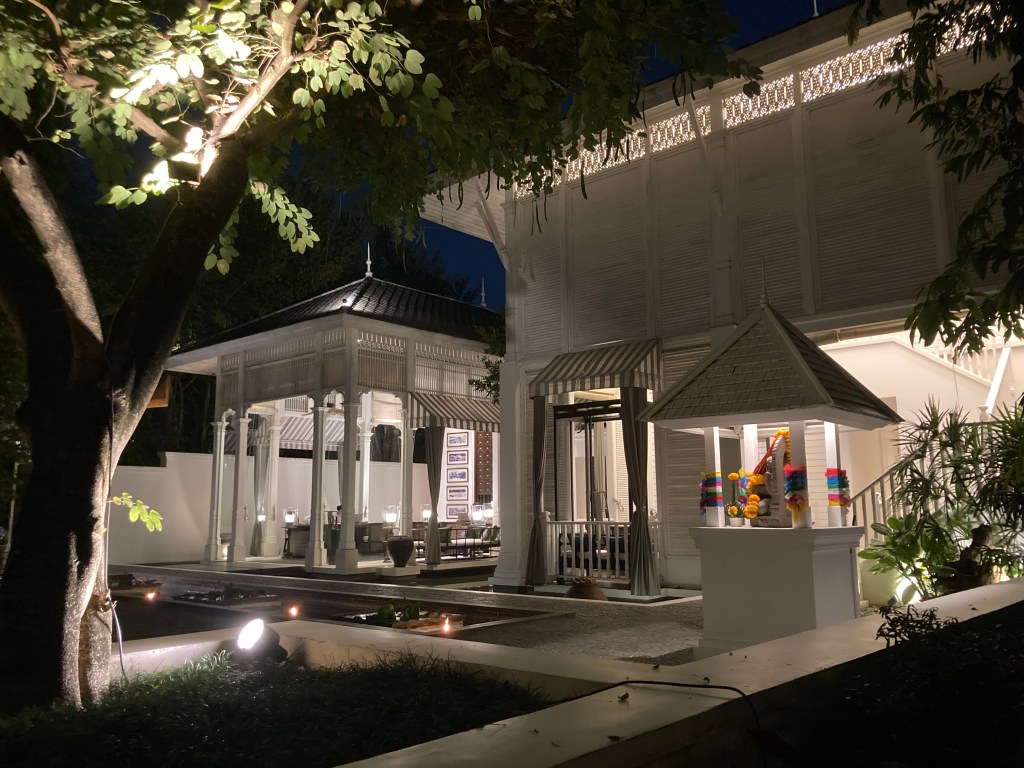
We spent the evening at the magnificent 137 Pillars House, a luxurious hotel with a fine restaurant and bar. This large colonial building was once the head office of the Borneo Company, a major exploiter and exporter of Thai teak from the early 19th century. Graham has curated an exhibition about the teak wallahs and heir families, which is on permanent display at the restored house.
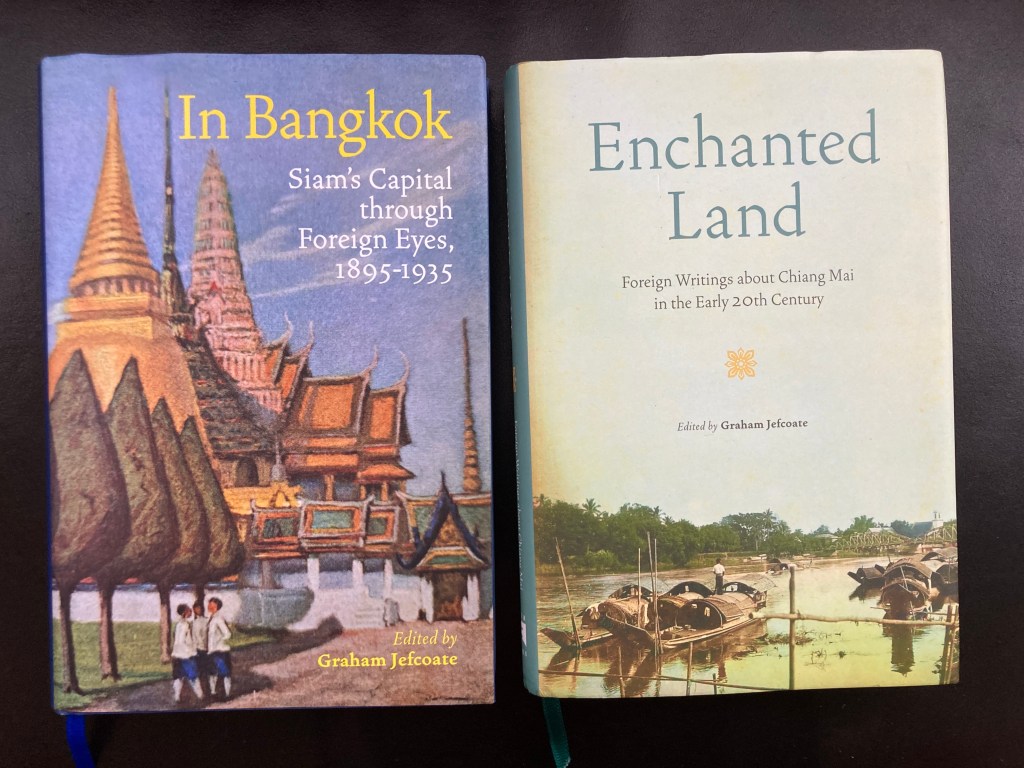
More about the teak wallahs, and about European visitors in general, can be found in his two beautifully produced books, published by River Books of Bangkok.
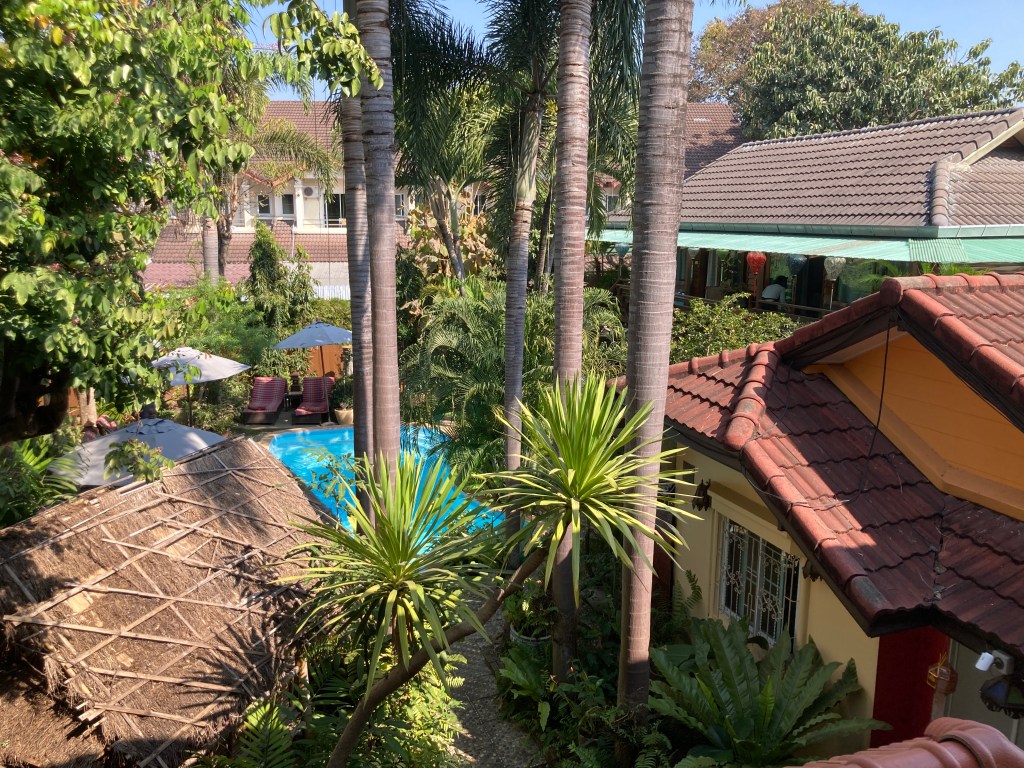
The next day we moved on to Liam’s Suan Dok Mai, a quiet Dutch-run guesthouse, still in Chiang Mai but to the north-east near the Ping river. It is amazing what you can get in Thailand for your money. For about £35 a night we had a large AC room with a terrace, use of a swimming pool and a very substantial breakfast cooked to order. Evening meals and poolside snacks were available too.
I highly recommend Liam’s
***
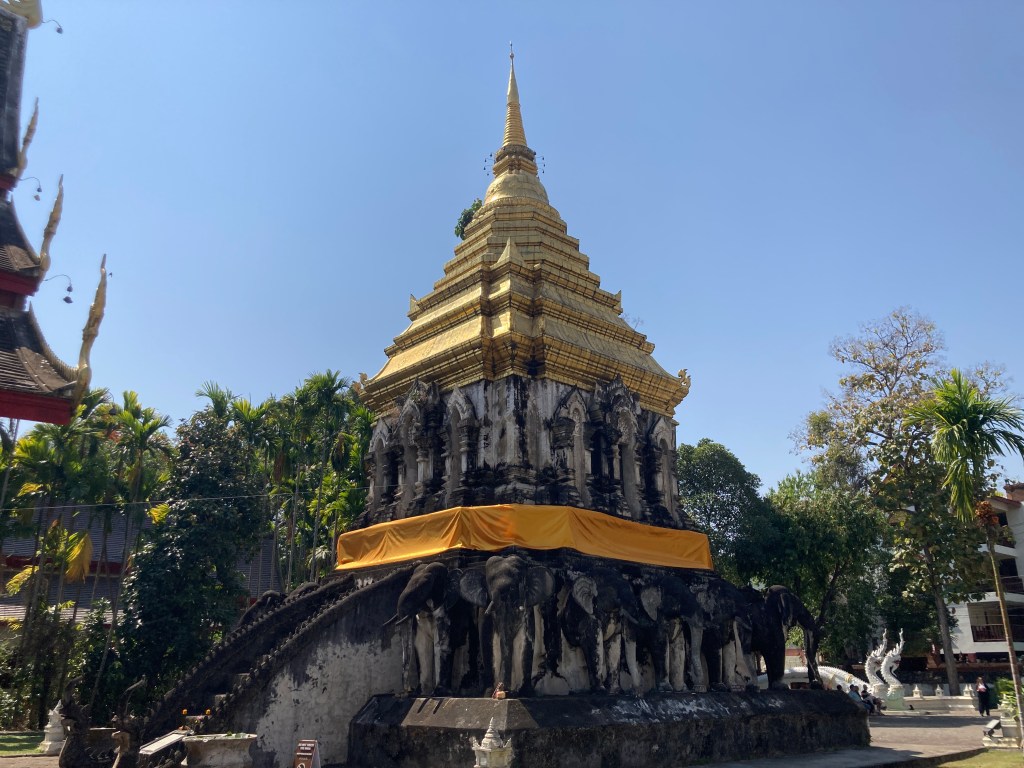
Determined to see the National Museum after Tuesday’s disappointment we made a more productive return visit then took a taxi to Wat Chiang Man, which dates back to the late 13th century. It has a chedi notable for the brick-and stucco-elephants that appear to support it.
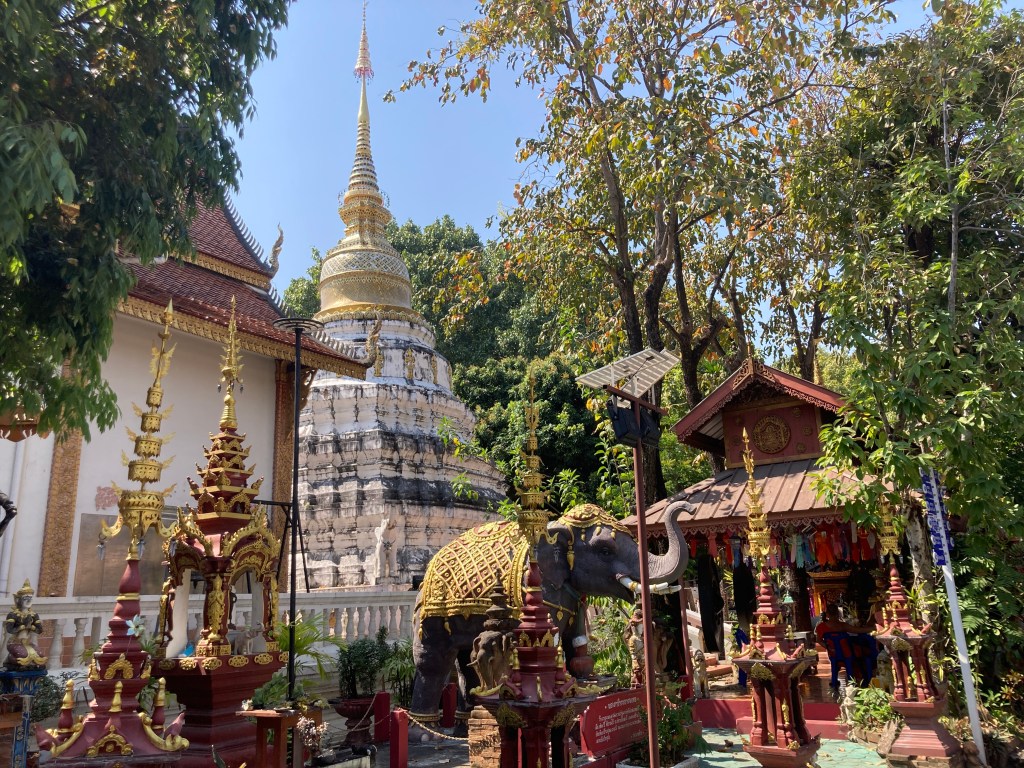
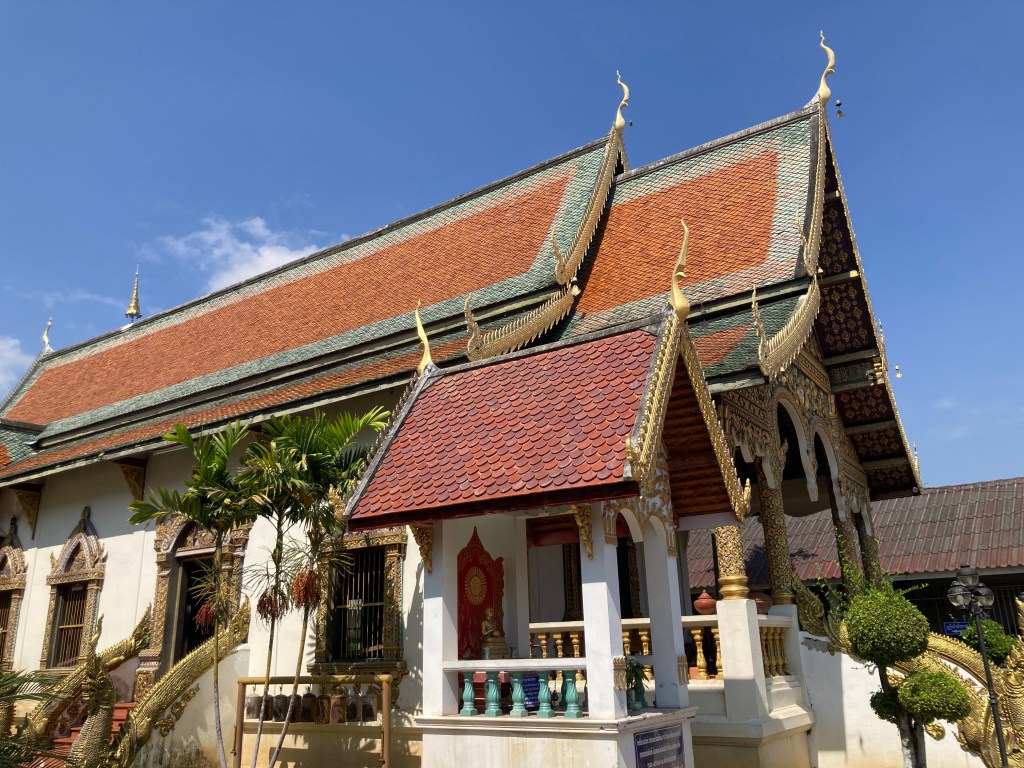
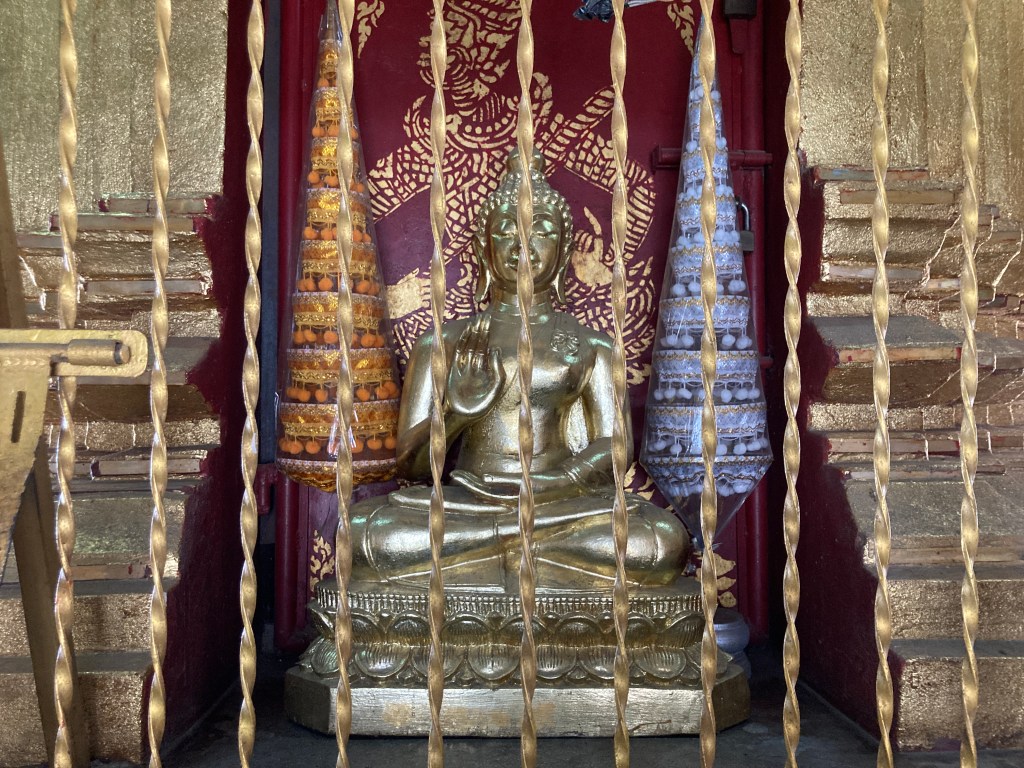
It seemed to be hotter than ever, so it was off for a refreshing beer and snack at the Writers’ Club once again, before giving Wat Prah Singh a second look.
***
Thinking we’d give the temples a miss for a day, we booked a two-hour cruise up the river. It proved to be a good way to enjoy a cool breeze for once. We passed small settlements with fishermen outside traditional houses, although somewhat hemmed in by large luxury hotels – if mercifully no skyscrapers.
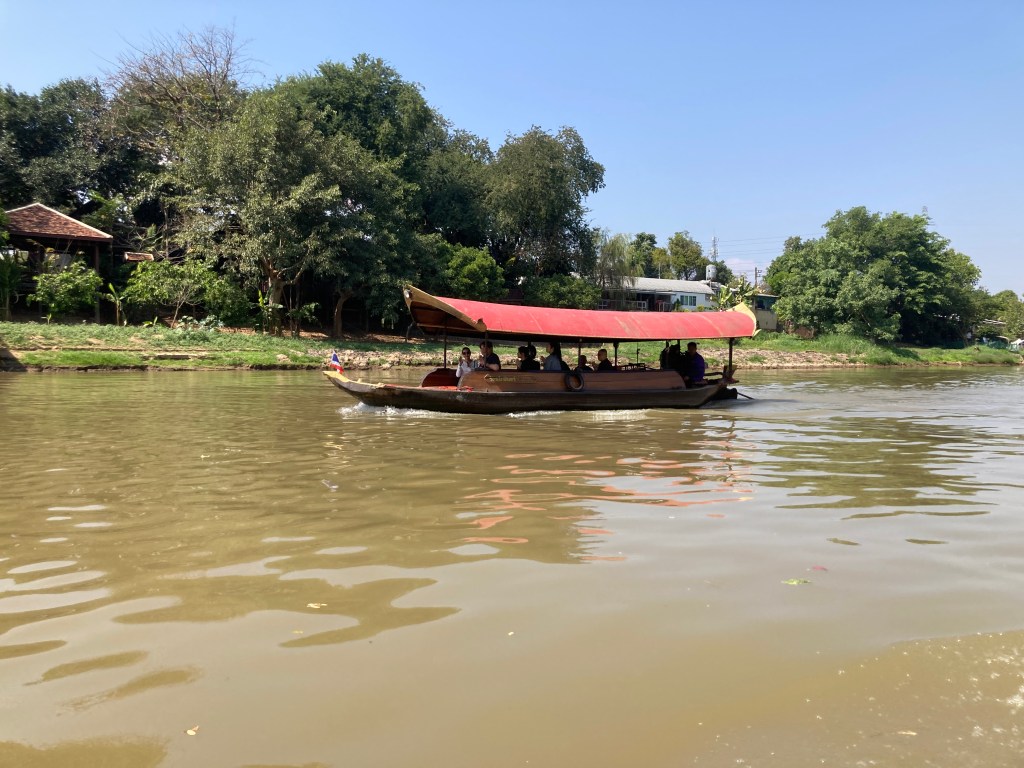
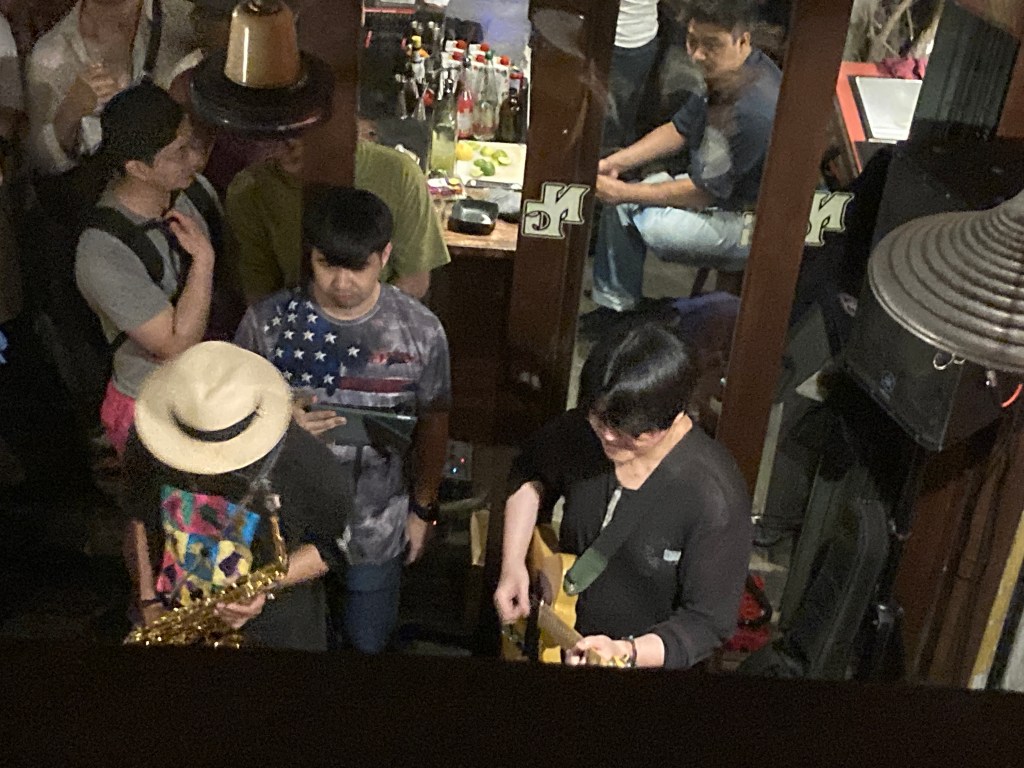
Back in town, Anne had a pedicure and I had a delicious bowl of mushroom and coconut milk soup. A late afternoon beer at (guess where?) the Writers’ Club was followed by a memorable Friday night of music at the North Gate Jazz Co-op. The standard of musicianship was incredibly high, and the repertoire of funk and jazz rock right up my street. The place was utterly rammed, with lots of people standing outside on the pavement; fortunately we had arrived very early. We got chatting to an American couple, Jim and Maryanne, whom we were to team up with over the next few days.
Back to the temples
Once more, Kom gave up his Saturday to drive us around. We went first to Wat Pha Lat, a rustic temple-cum-retreat near the summit of Doi Suthep; it would have been quiet and serene had it not been swamped by a large tour group of inappropriately dressed Italians, as well as others who had bravely walked up from town via the Monk’s Trail.
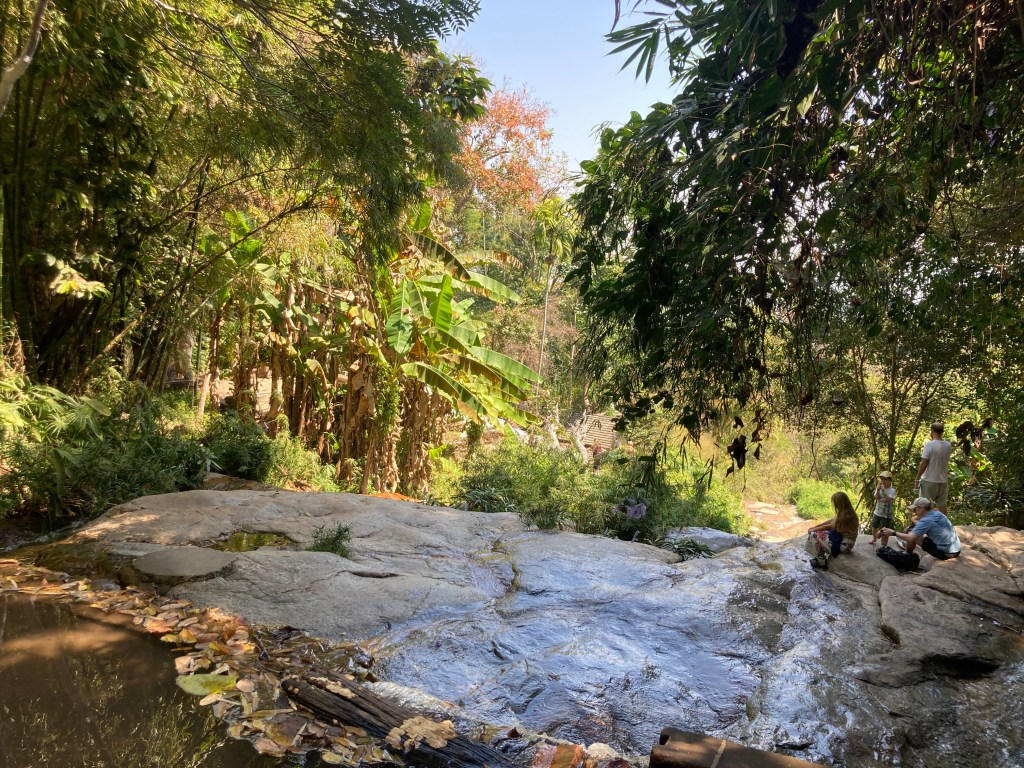
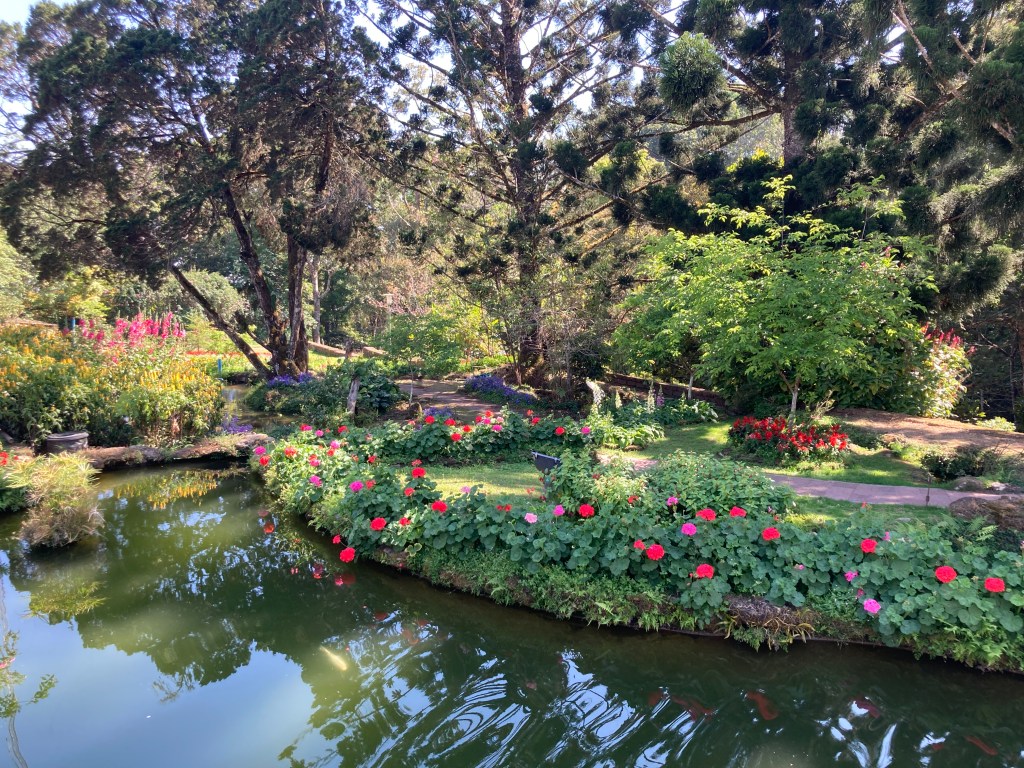
We enjoyed the cascades and fresh air before a lunch break, then Kom drove on to the beautiful, well-stocked gardens at Bhubing Palace. We were almost the only visitors. Apparently the royal family only come once a year.
At the very top of the mountain is Wat Phra That Doi Suthep. On clear days (and this was one) there are panoramic views of the city 1,000 metres below.
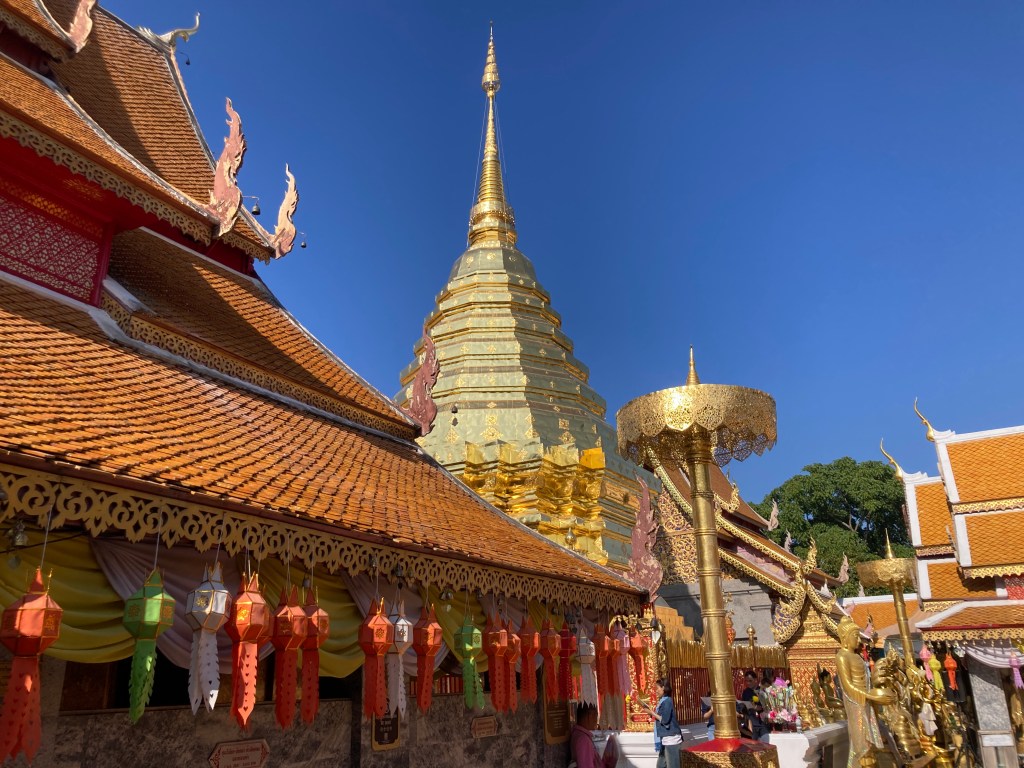
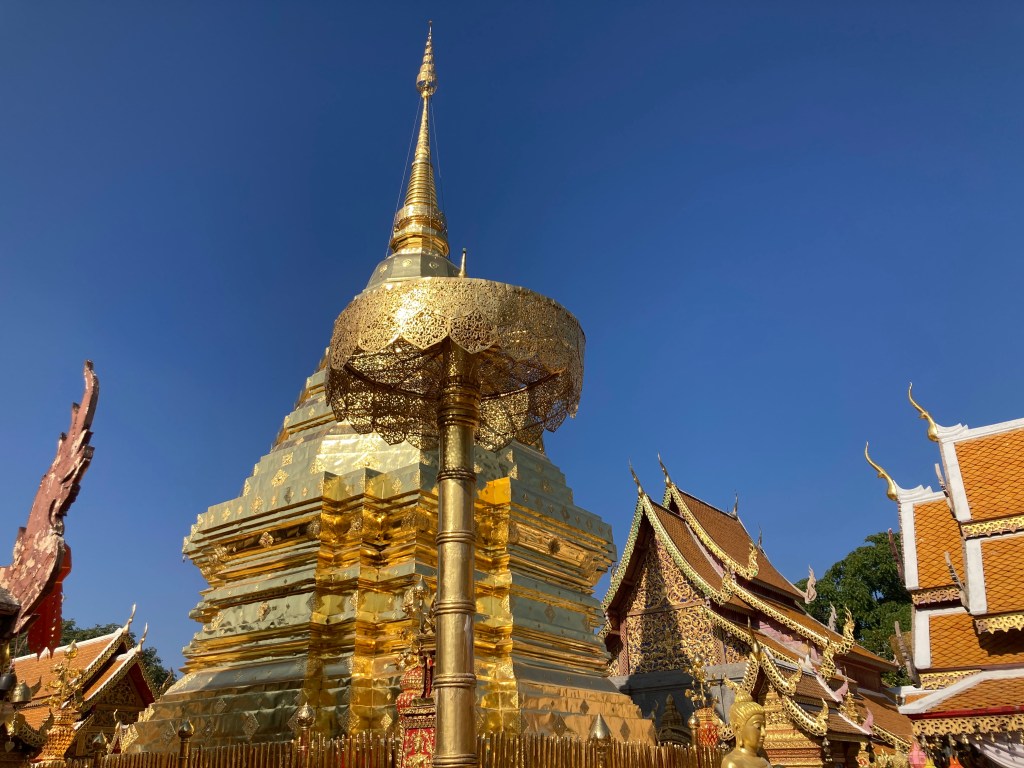
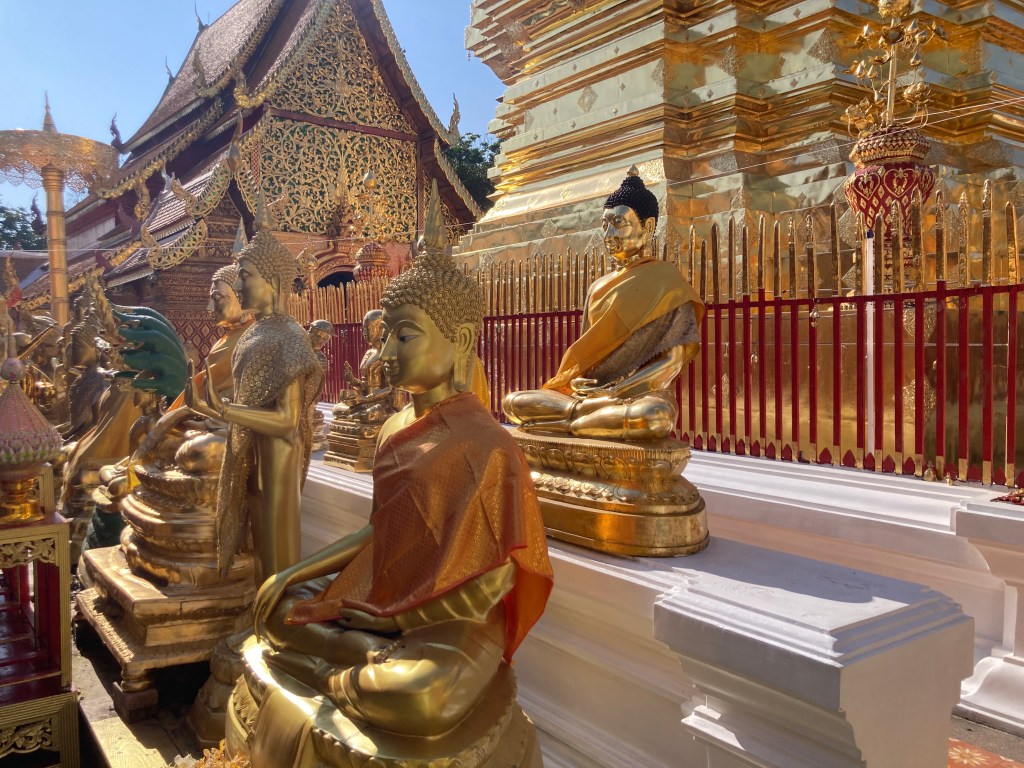
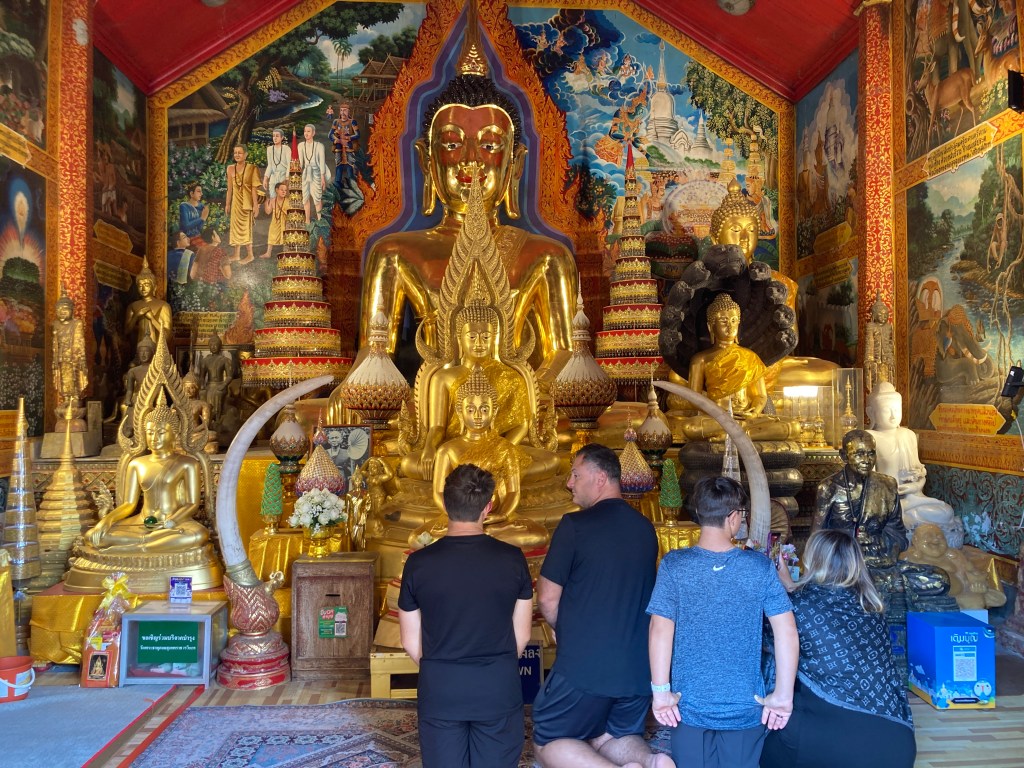
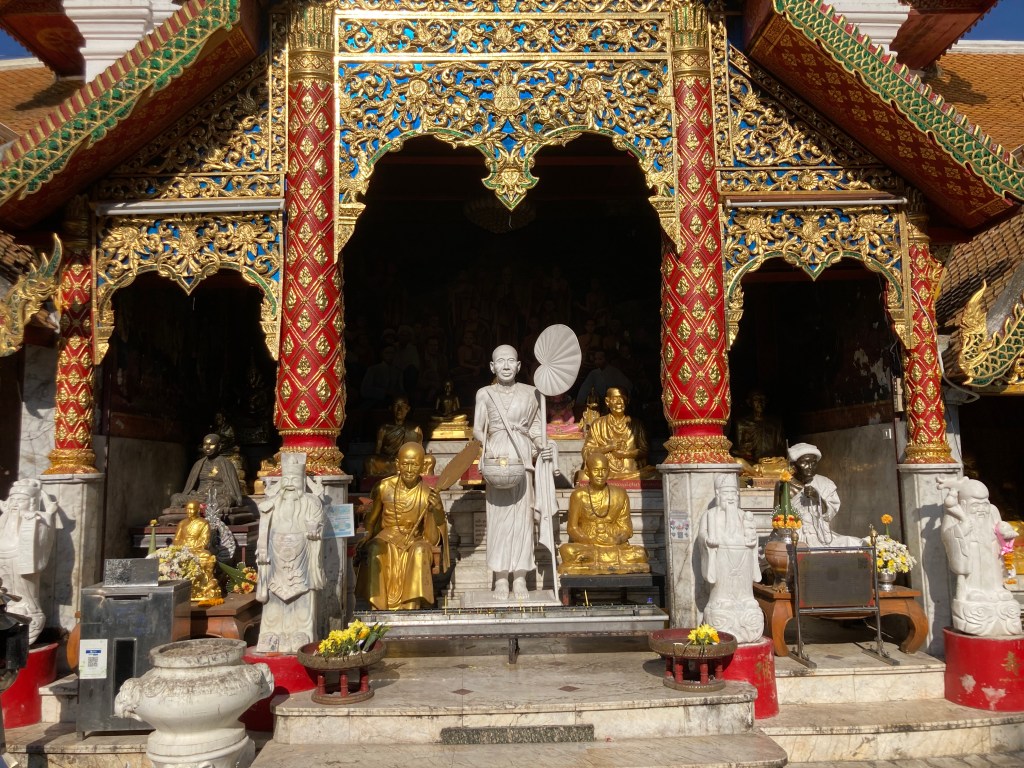
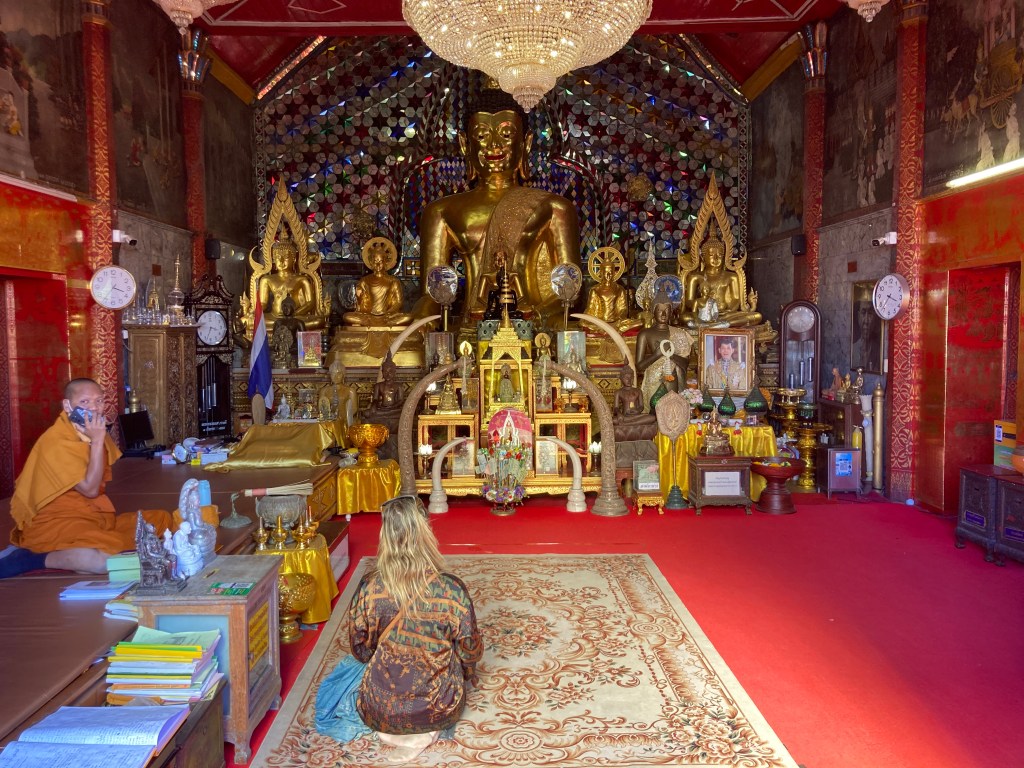
The temple complex is one of the most popular destinations in Chiang Mai, attracting a constant steam of tourists and pilgrims from all over Thailand, as well as from other countries where Buddhism is popular. I had the happy experience of being blessed by a monk, which included a generous sprinkling with holy water.
Back to town for a cup of tea
Then on to a very different site: the cemetery of Wat Suan Dok, with its white tombs and recently gilded chedi glowing at dusk. The funeral monuments contain the ashes of the royal family of Chiang Mai.
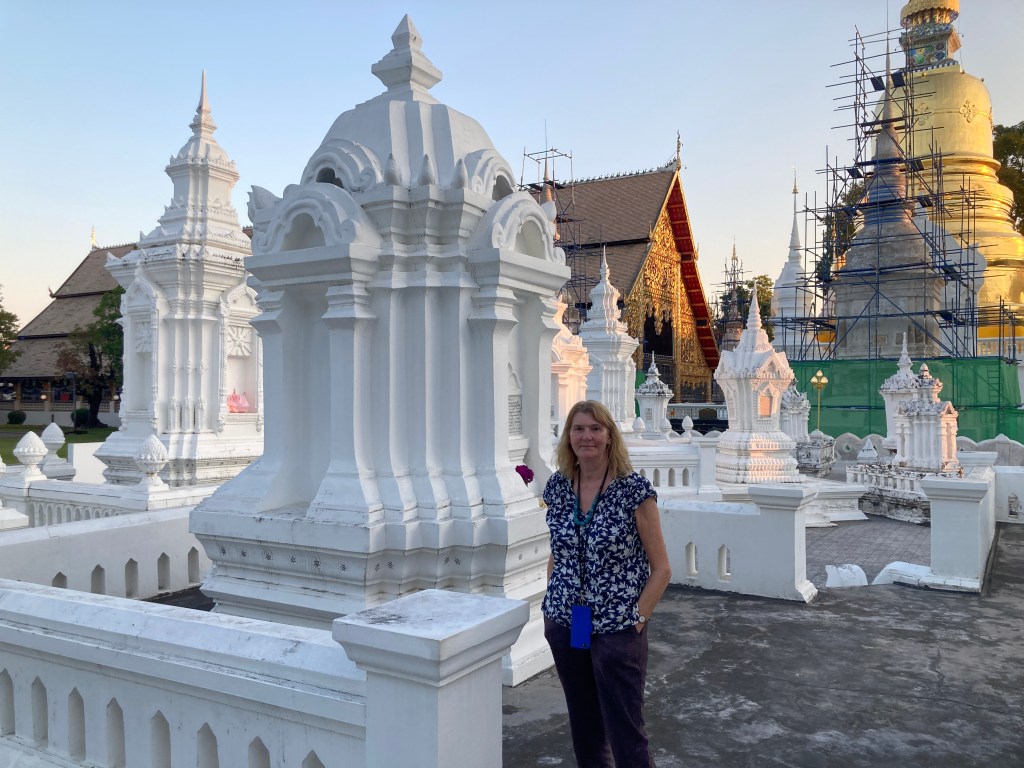
At Wat Suan Dok you can talk to a monk about Buddhism if the mood takes you.
We dined at Baan Rai Yarm Yen, a restaurant specialising in real northern Thai cuisine (e.g red ants, frog curry), and with an unexpected cowboy vibe. I confess that I wasn’t very adventurous with my choice.
***
Sunday 8 February was election day and Chiang Mai was busy. We read and swam, then took a stroll down to the river. A meeting with Jim and Maryanne at the Writers’ Club (yet again) was followed by dinner at Huen Pehn, a cross between a restaurant and a junk shop. But I really can’t recommend it. Our food, when it arrived was mediocre and cold.
Our final day in Chiang Mai was hot and humid. We saw a bit more of the town in the afternoon, visiting important attractions such as the Red Lion British pub, before meeting Graham, Kom and their guests (Jim Stent of the Siam Society and Belinda Stewart-Cox, elephant conservationist) at the Panyo restaurant. Formerly known as Luang Yo House, this is one of the finest restored colonial buildings in the city.
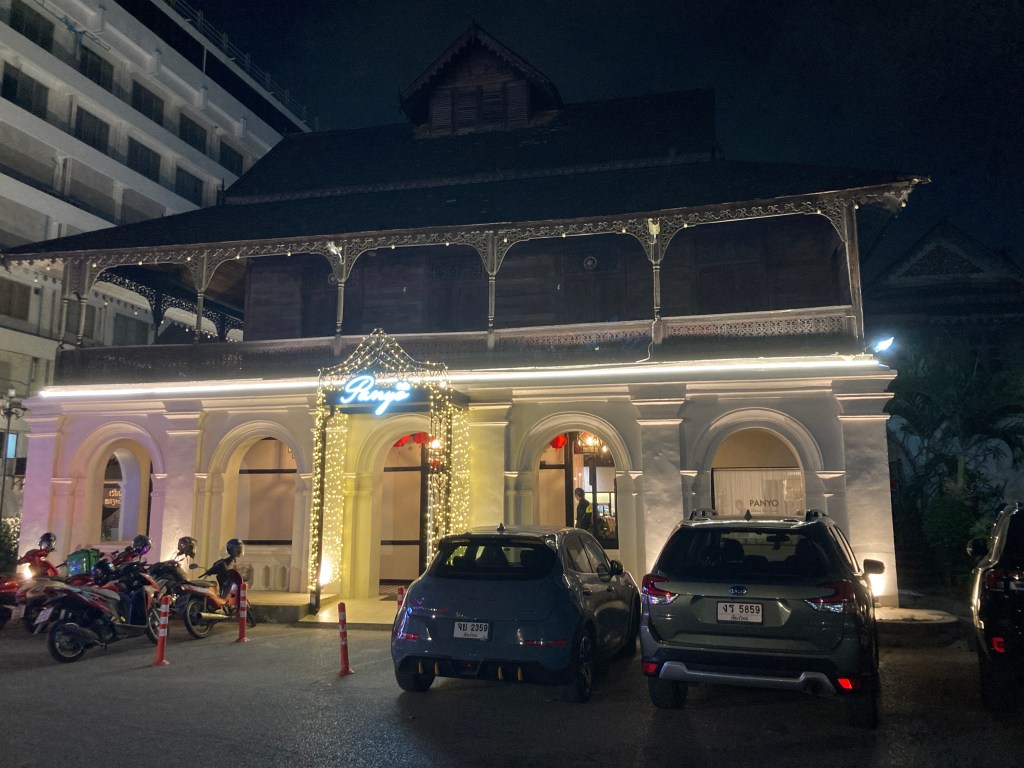
The food and service were very good, and the bill was surprisingly modest.
The following morning the election results started to come in. Contrary to predictions, the ruling right-wing party retained control. There were protests across the country.
And so I think I can say that we have “done” Chiang Mai. The next day we would be moving on to Ko Lanta.
 The Wight Stuff