It is easy to forget that 40 years ago our country (my country, that is) was at war. Very easy for someone of my generation to forget that it happened four decades ago. And even easier for subsequent generations, because there has been little about it in the news.
For youngsters who were not even born in the 1980s the Falklands War must seem like ancient history. I was born only 10 years after the end of the Second World War, but it could have been 100 years as far as I am concerned. I half-understand how it hugely affected my parents, but I sometimes find it hard to believe that it really did happen, because I wasn’t there to witness it. Yet when I think back to what I was doing a decade ago, it seems, as the cliché has it, like yesterday.
***
When the Falklands War began on 2 April 1982 I was in Santander in Northern Spain, making my way to Madrid for a research trip. Everyone I spoke to seemed sure that a diplomatic solution would be found. I said as much to two Argentine tourists and we shared a chat and a nervous joke.
Surely the US would intervene before things got out of hand?
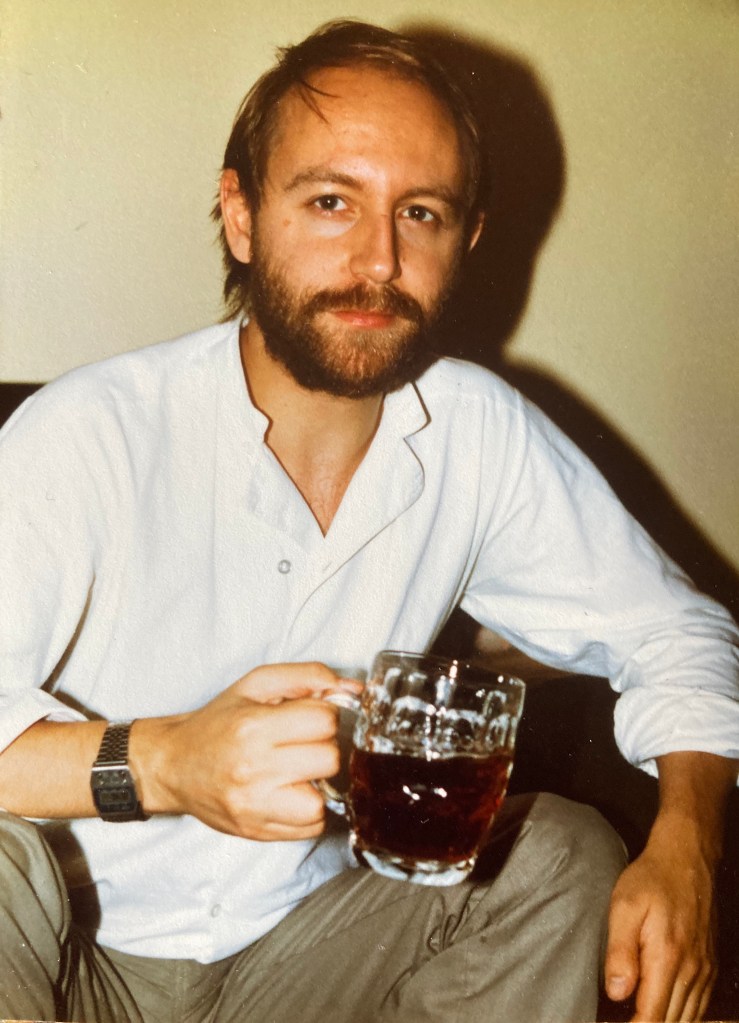
A few weeks later I was back at university in Oxford. The UK Task Force (no fewer 127 ships!) had just already arrived in the South Atlantic. I remember standing, pint in hand, in the Fir Tree on Iffley Road with my best mate Bern, watching a TV report about the missile attack on HMS Sheffield. It was 4 May 1982, two days after the sinking of General Belgrano.
I could barely believe what I was seeing. A British destroyer was sinking and dozens of its crew were dead or wounded. Together with the loss of the Belgrano, this event rammed home what should have been obvious to everyone from the start: going to war with another country is a deadly serious matter. The outcome was uncertain, despite the jingoism of the tabloids. The Argentine forces had the upper hand and it was clear that a lot of people were going to die. But not me, nor my friends or family. I knew no-one in Argentina or in the British Armed Forces. I watched events with a certain detachment.
Within the Oxford Spanish sub-faculty, of which I was a member, the war could hardly have failed to be the main topic of conversation. Some (but not including me) had visited Argentina, and there was at least one Argentine amongst the post-grads. The Spanish lector at the time was amazed that most Brits seemed to accept the deaths of their fellow countrymen quite casually, as if to say, “That’s what they are paid to do. The important thing is that we win”.
Is that what Russians are thinking today?
“All for Mother Russia”, and the death of individuals – even thousands of them – hardly matters? Argentina was never a nuclear power, but Russia is. And that puts a different complexion on the war we are watching on our TVs.
***
The Falklands War taught me and my generation to expect the unexpected. Argentina of all countries! And within a few years we saw the collapse of the Soviet Union, the demolition of the Berlin Wall, mortgage rates in excess of 12%, the Yugoslav wars… British people went to Dubrovnik for their holidays and now they were watching it being bombarded. It was dreadful to see, even from a distance, but I doubt that many in the UK thought that World War Three was on the cards.
Do I now – watching the unfolding of Putin’s “special operation” in Ukraine that shows no sign of stopping – fear that a wider European war is imminent? I do think it is possible, because all wars start small and end up big. In a sense, as Putin claims, the UK is already at war with Russia – from a relatively safe distance. I know from my visit to Moscow (also 40 years ago) that many Russians are afraid of the Americans, and that existential threats have always come from a westerly direction.
I blogged a while ago about estimating the chance of something happening. Some people are amazingly good at forecasting. I would like to know what they think about the prospects for all-out war in Europe. Or maybe I don’t.
***
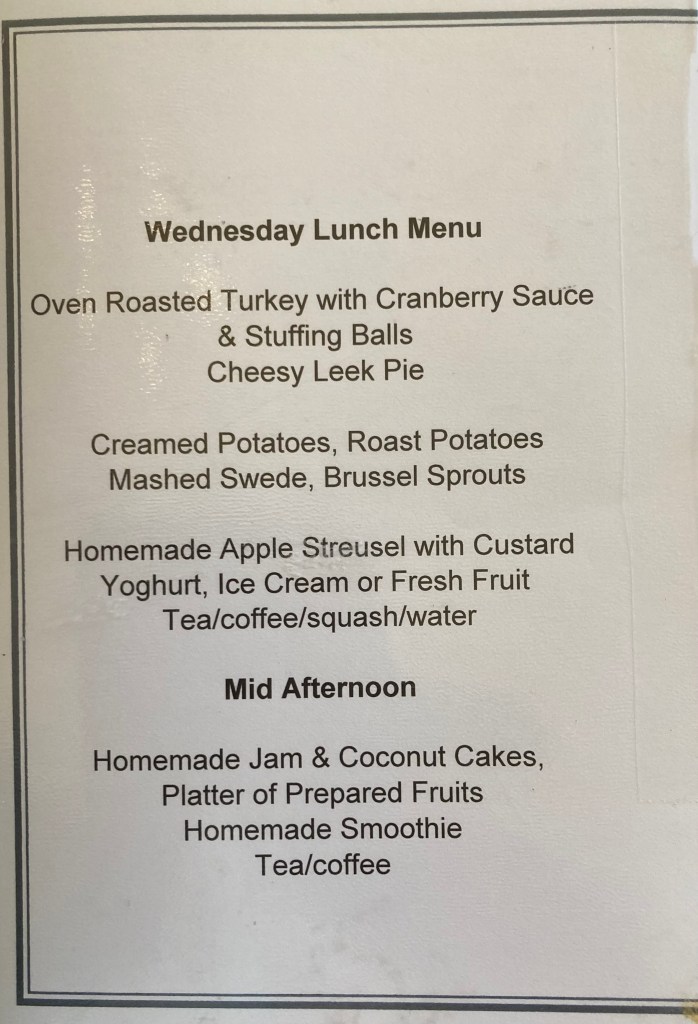
It would be a shame to be obliterated just now because life, for me, is returning to something like normality. My parents are finally settling into their care home, Dad having shrugged off Covid at the age of 96. They cannot live for ever but at least they are being well looked after, even if Dad is prone to describe life there as a “shambles” for which, he reminds me, they are each paying £1,000 a week. I don’t disagree with him. It’s true that his mobile phone ended up in the washing machine, but at least it gave me a break from his pestering calls!
***
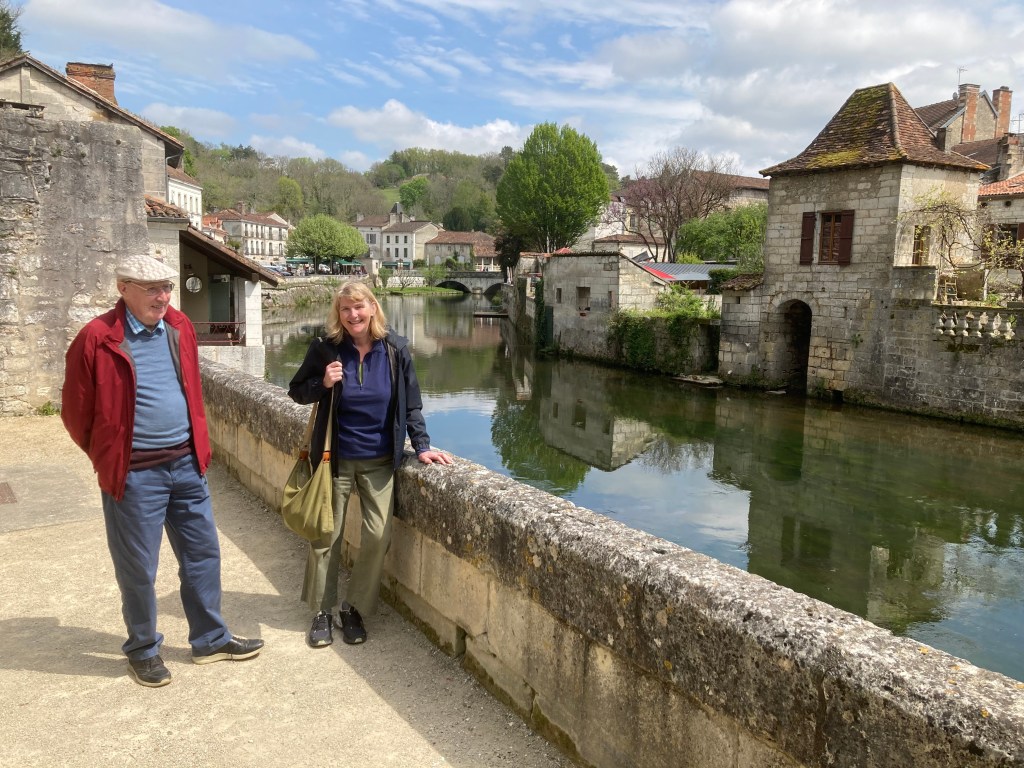
Anne and I spent Easter in France, with a week in the holiday house and a few days further south, visiting friends and taking my father-in-law, David, to Brantôme, Périgueux and Bergerac.
Since then I’ve been catching up with one friend or another almost every day, trying to make up for lost time. It has been a heavy fortnight of eating out. I had forgotten how stimulating it is to talk to different people about your recent experiences and hear about theirs. You have to put your thoughts into words – as much to explain things to yourself as to others. It really affects your perception of current events and your own situation as you navigate through the fog of uncertainty.
 The Wight Stuff