One evening after school Steve called round with his latest purchase, Led Zeppelin II. I could not believe my ears. That opening riff! It was almost pornographic. Why hadn’t I heard this stuff before? Where had I been? The only pop album my parents possessed was Rubber Soul — admittedly not the worst place to begin my journey.
Such was my introduction to rock music
Starting with Led Zep II my musical education soon took in Deep Purple in Rock and Piper at the Gates of Dawn – leading, inevitably, to Lick My Decals Off, Baby. It was 1970 and I was 15. I had a group of like-minded friends. As well as Little Steve, there was my best mate Big Clive (a gentle giant who stood six foot four) Iain, Janet, terrible twins Ian and Alastair, and a few other boys and girls. The twins possessed a few vinyl (what else?) LPs, amongst them a “sampler” from CBS called Fill Your Head With Rock. It was a low-priced double-album featuring many of the top bands from Columbia’s stable, including Johnny and Edgar Winter, Spirit, Flock, Argent, Chicago, Soft Machine, Blood, Sweat and Tears, Miles Davis, Taj Mahal, Al Stewart, The Byrds, It’s A Beautiful Day, Santana etc. One of the up-and-coming British bands, Skin Alley, contributed “Living in Sin”, written by Bob James.
A few months later I acquired the follow-up sampler Rock Buster, which featured a photo of young bodybuilder Arnold Schwarzenegger on the sleeve. It included another song by Skin Alley, also written by Bob James, called “Queen of Bad Intentions”. (We had fun singing the line, “Your body’s large and your mind is obscene” – which seemed to be aimed at someone we all knew.)
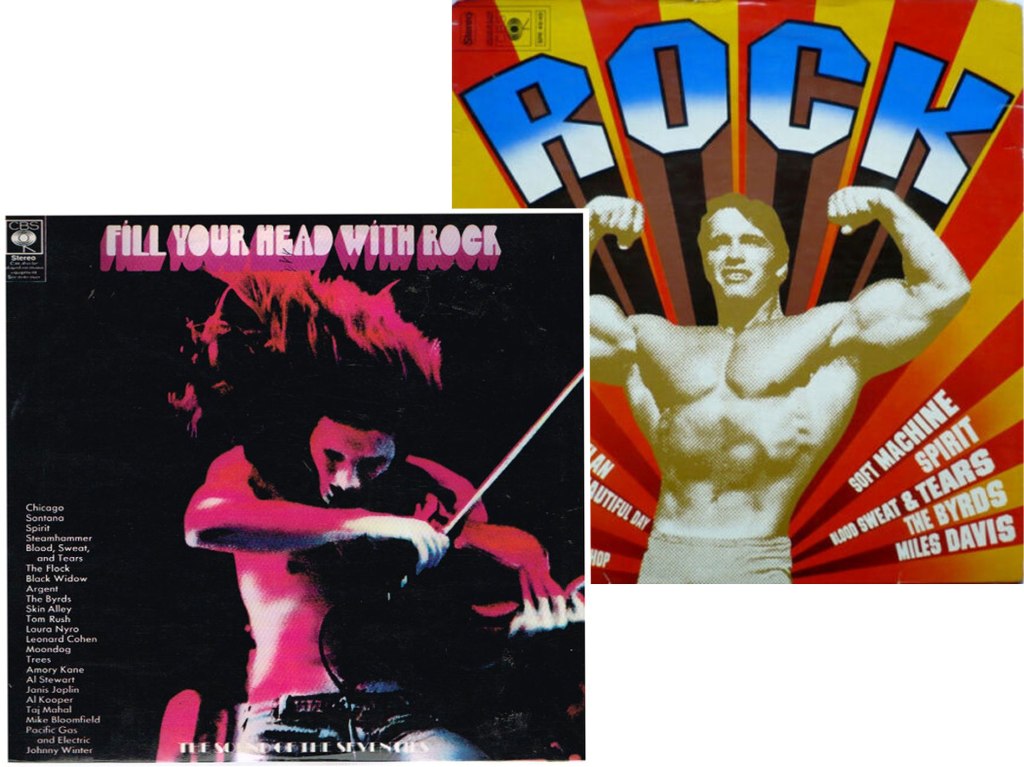
This series of affordable albums influenced and inspired a generation of music fans in the early 70s, me included. The fact that I set my heart on playing guitar in a band is directly attributable to them (for better or worse).
Within a couple of years I had given over my pocket m money to see Deep Purple, King Crimson, ELP, The Who. Jethro Tull, Uriah Heep, Quiver, Hawkwind, Rory Gallagher, Captain Beefheart and the Magic Band, The Kinks… and others that I can’t recall. Almost any rock band that came to Liverpool in fact.
***
Life being the string of unlikely coincidences that is, I met Bob James a few years after Anne and I bought a holiday home in Charente, because he and his wife Dot lived just a few kilometres away. That was the best part of two decades ago.
Bob and I have become good friends
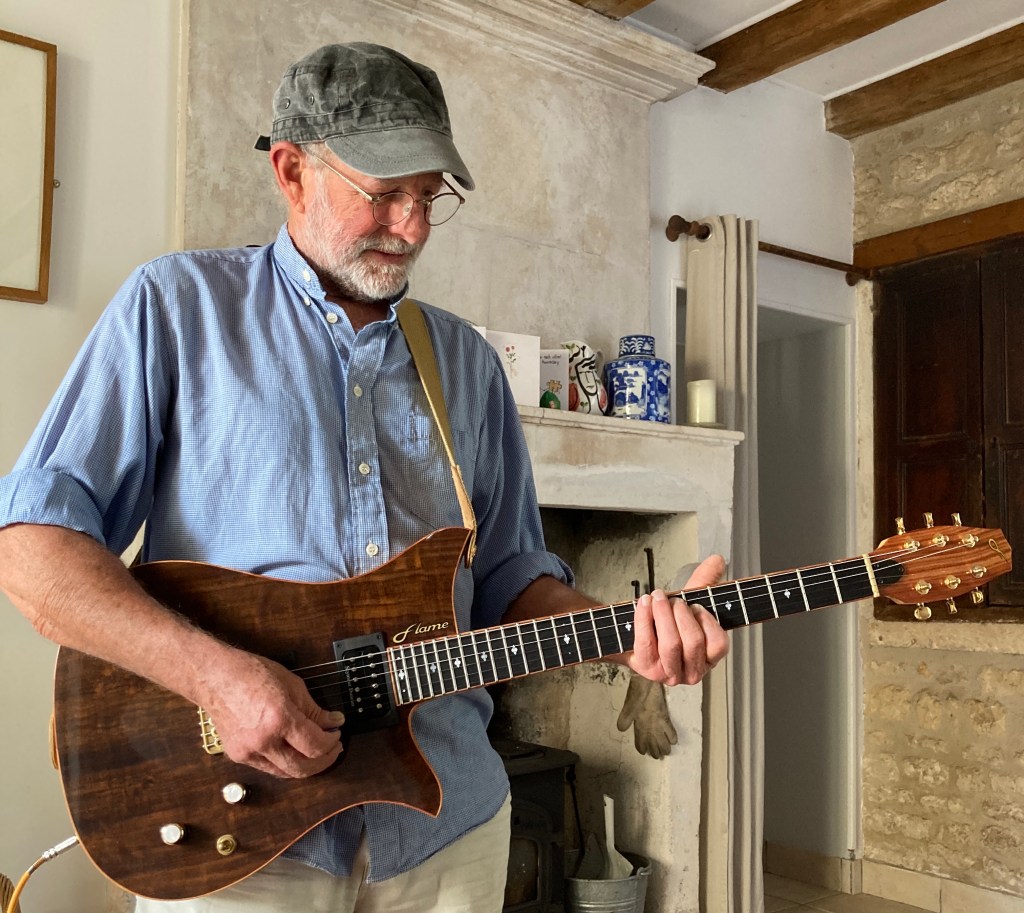
Bob still plays the guitar and is a very accomplished musician.
***
To boys of my generation, bands like Skin Alley were heroes. They had contracts with top record companies and were playing festivals like the Isle of Wight. Bob is seven years older than me, which means that when Rock Buster came out he was only 22. When you think about it, you realise just how vulnerable these young lads were. Many, like Bob, had given up their jobs and left their home towns to try their luck in London.
***
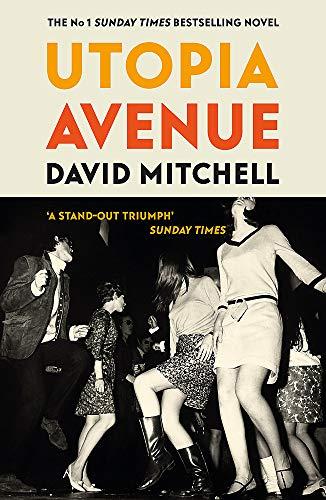
Last year I loaned Bob a novel called Utopia Avenue by David Mitchell. It plots the trajectory of a fictitious prog-rock band. Utopia Avenue achieve fame, enjoy its rewards, then come to a sudden and tragic end. I didn’t think Bob would care for it, finding it quite unrealistic. But he said that pretty well every incident recounted in the story had happened to Skin Alley, including getting their gear nicked, being ripped off by American producers and performing, badly, on LSD.
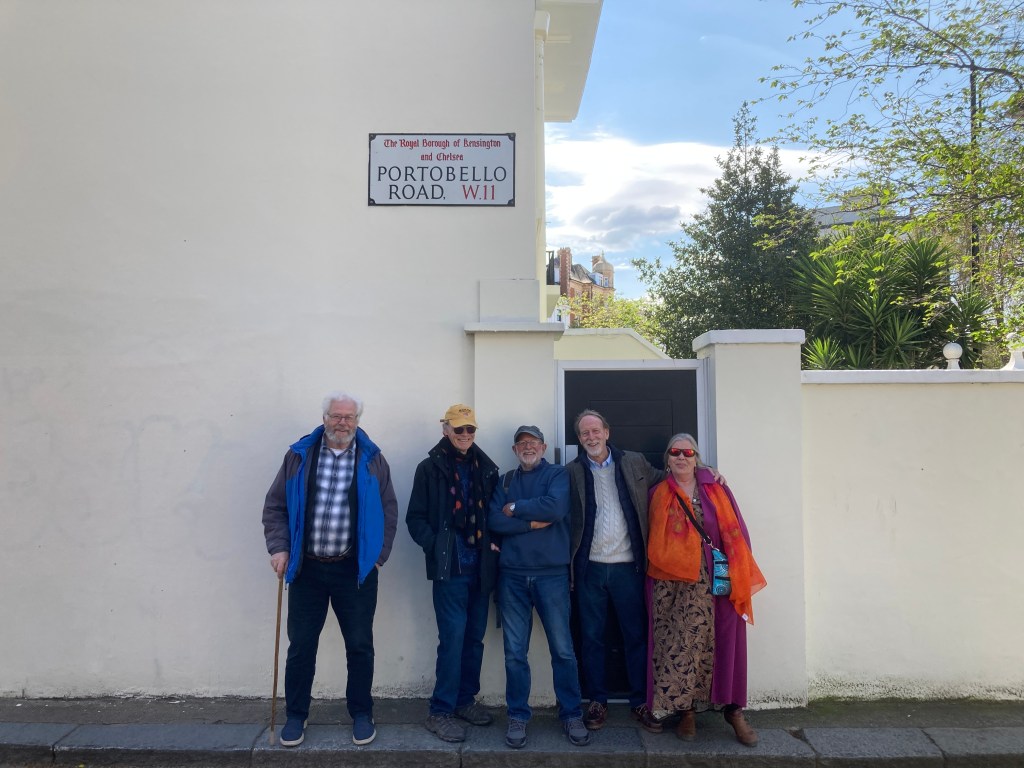
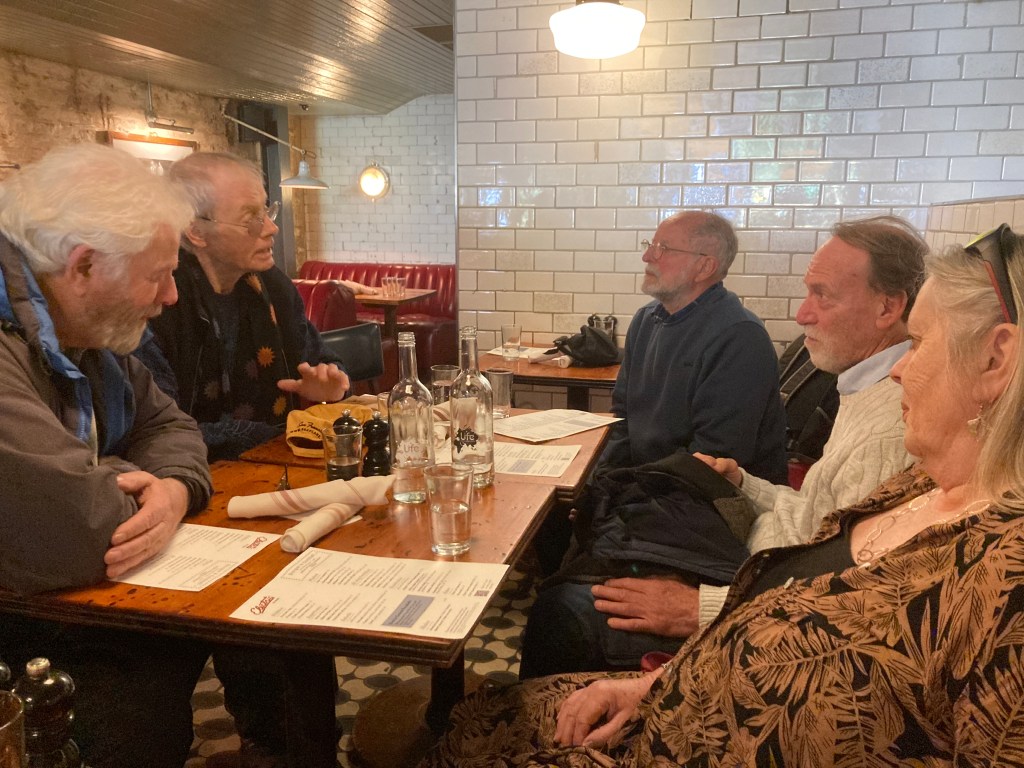
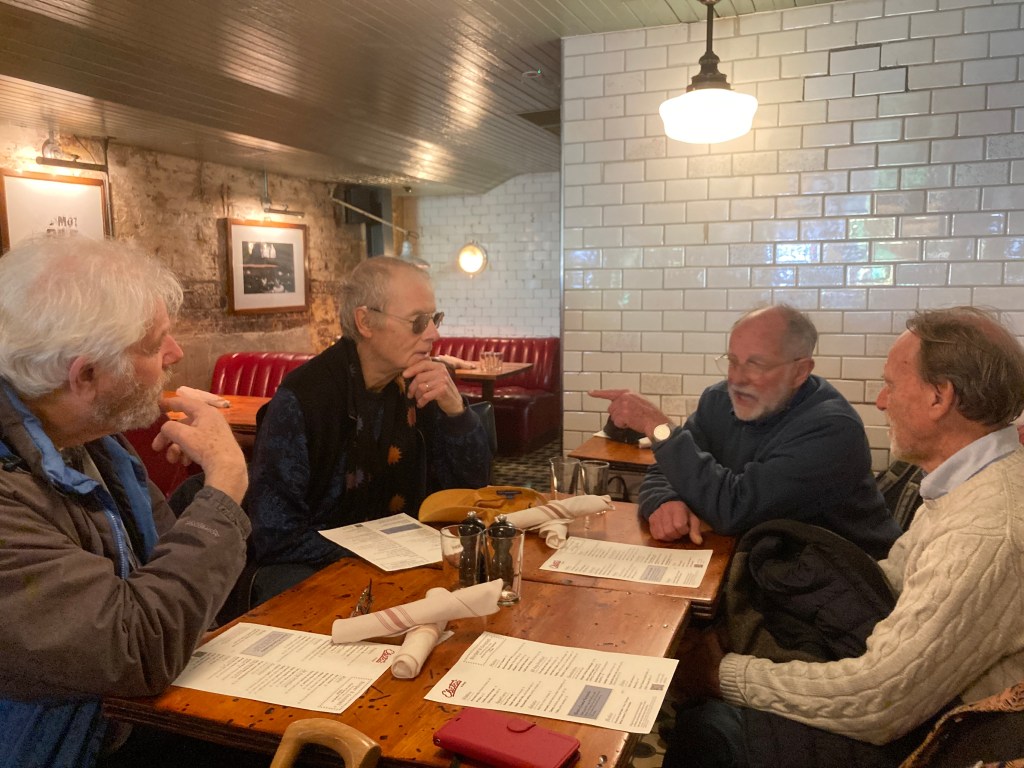
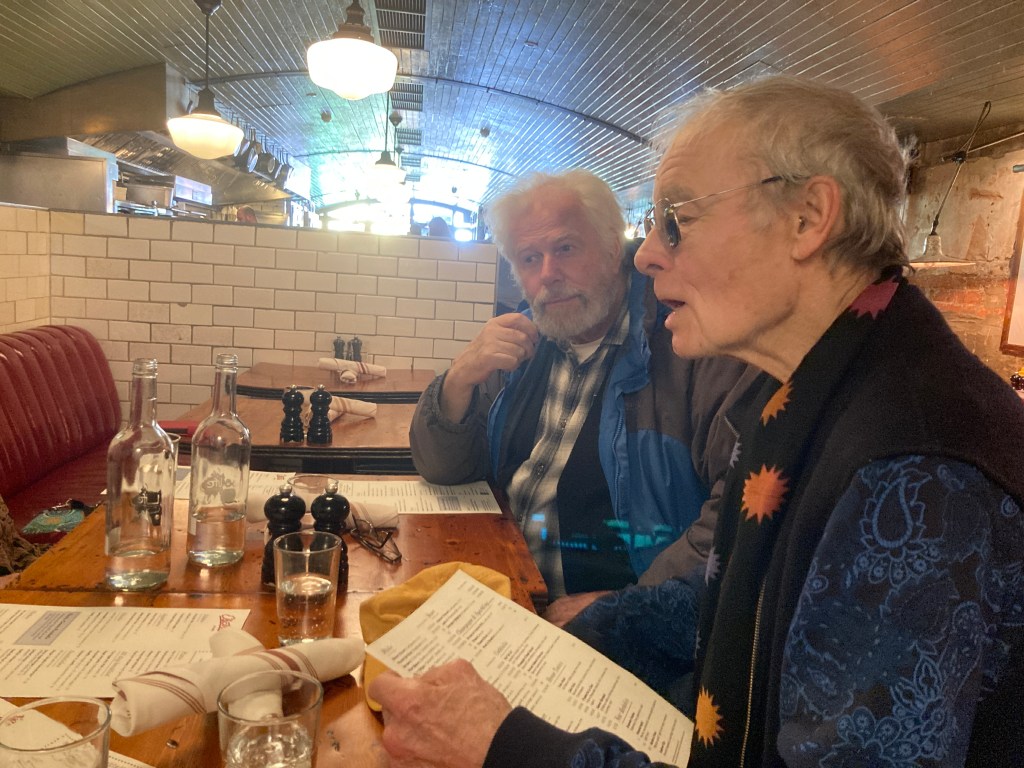
This April Bob came over from France to join his former bandmates for a 50th anniversary reunion. There was one notable absentee: keyboardist Krzysztof Henryk Juszkiewicz had died just a year earlier. I assumed the role of un/official photographer, and we made our way to Notting Hill Gate.
There to meet us were: Thomas Crimble (bass), Giles Pope (drums) and former manager Richard Thomas. Giles had come from Austria, Thomas from Wales, and Richard from far-away Wandsworth.
Richard, a schoolmate of Giles and Thomas, founded Clearwater Productions, and (some years later) discovered Simply Red, which brought in a few quid.
After leaving Skin Alley in 1970, Thomas Crimble briefly joined Hawkwind, then went on to manage the Glastonbury Festival for nearly three decades. He was replaced by Nick Graham, who joined from Atomic Rooster (where he played with Vincent Crane and Carl Palmer). Nick later co-wrote a power ballad, “The Flame”, for US band Cheap Trick, which went to No. 1 on the Billboard Hot 100 in 1988.
***
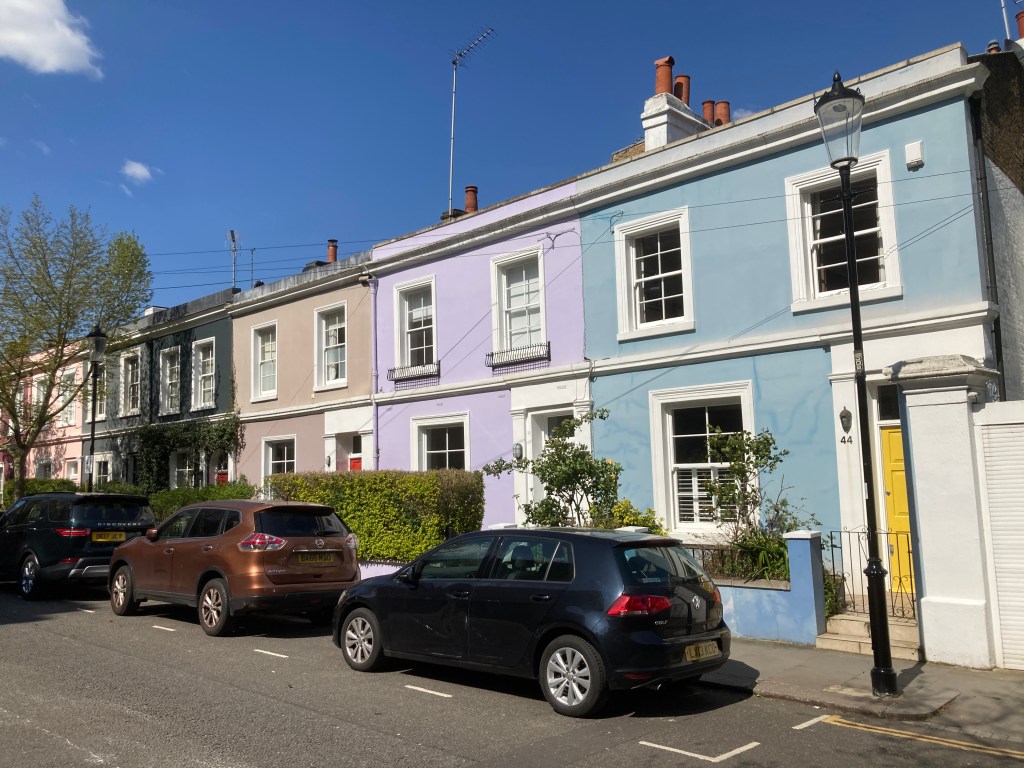
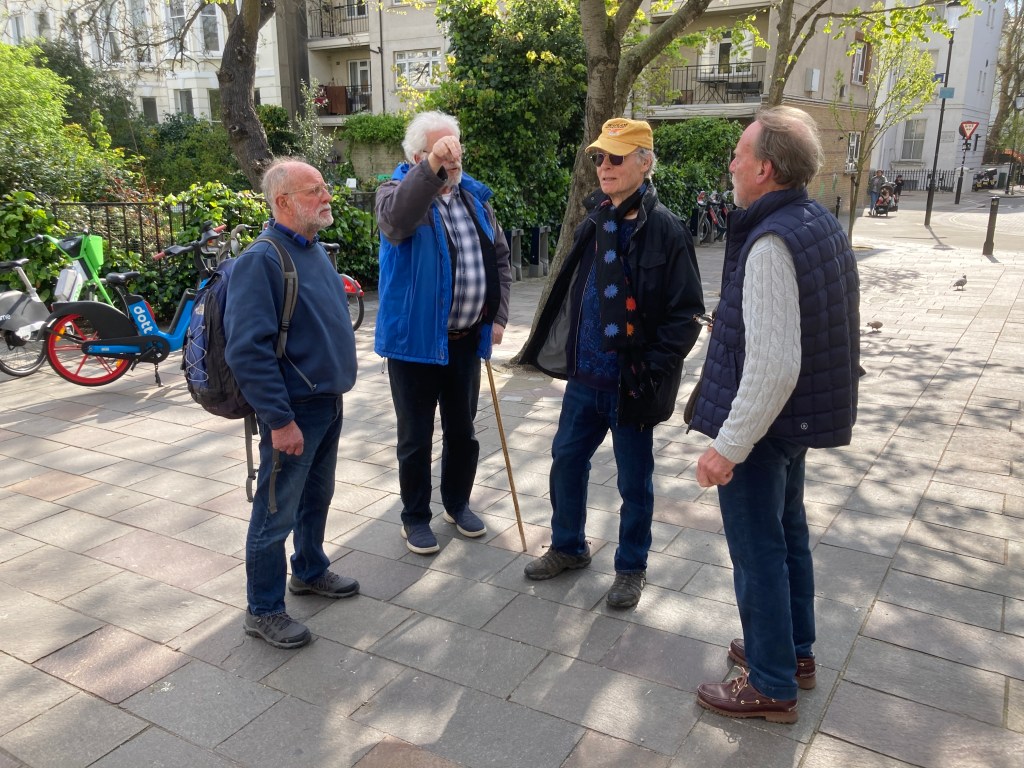
Giles had put together an itinerary. Joined by Thomas’s wife Diane, we proceeded in fine weather down Portobello Road, with me eavesdropping and taking photos along the way.
Literally a trip down Memory Lane
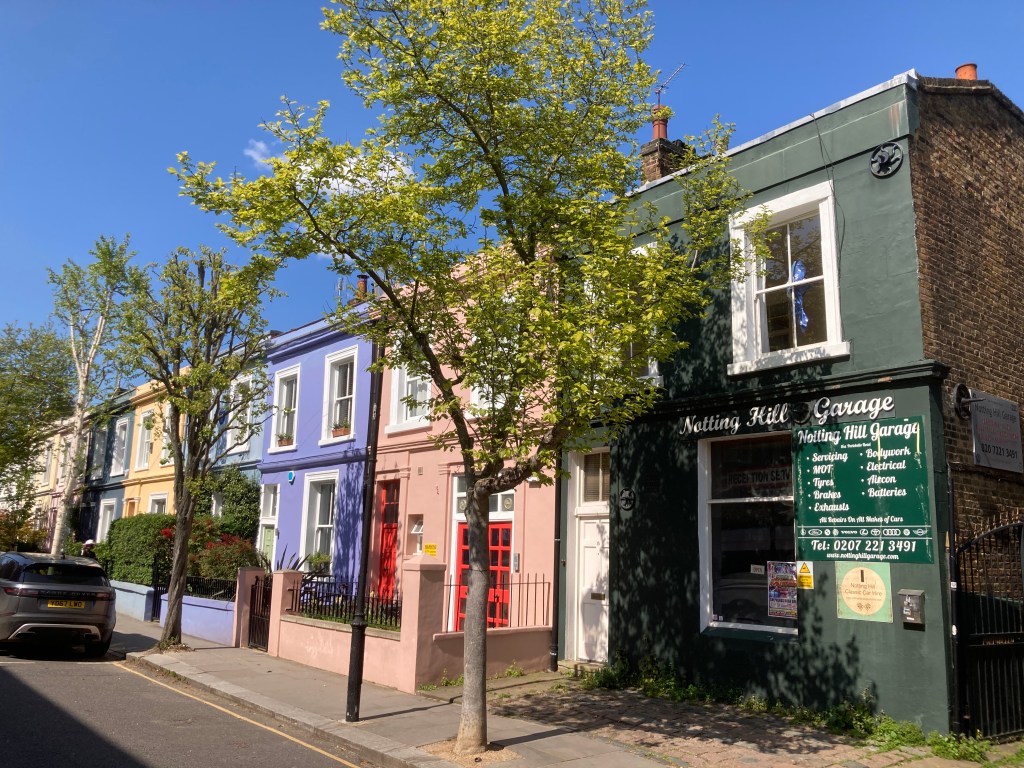
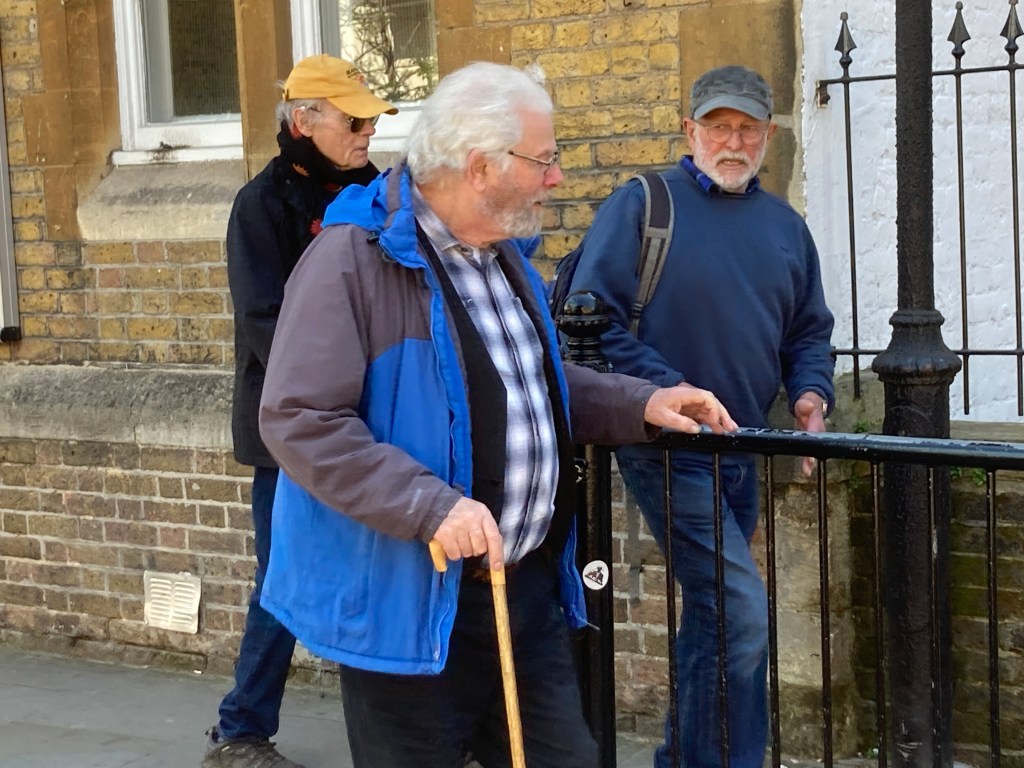
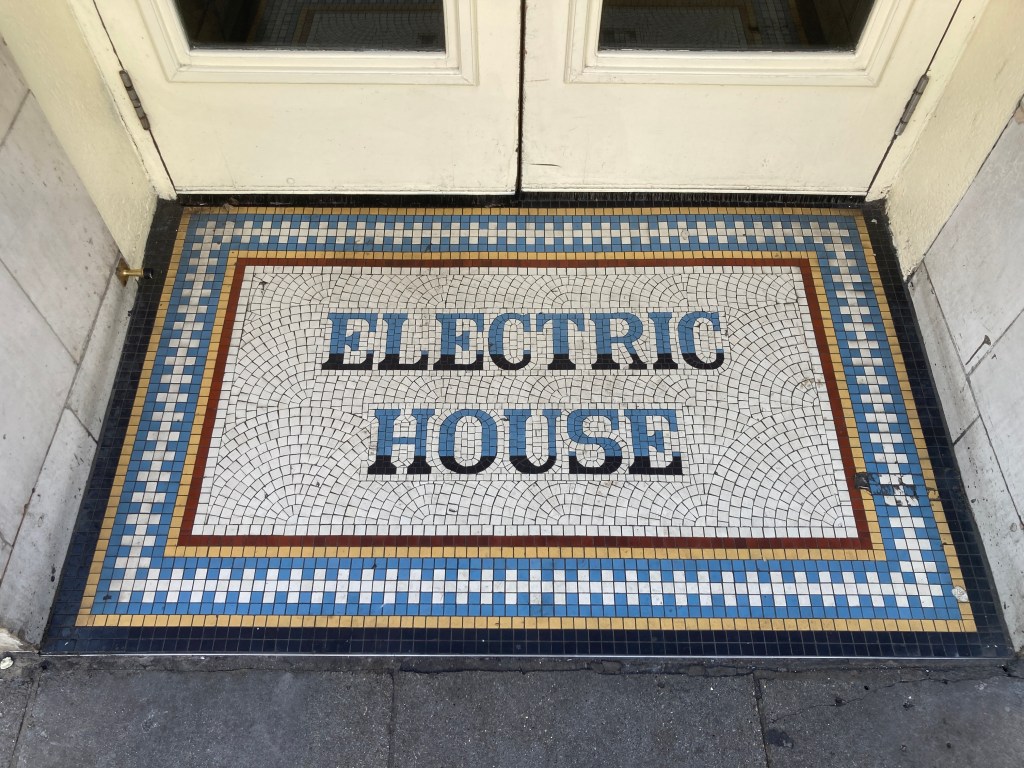
We stopped at the cafe in the Electric Cinema for a cup of tea and a long chat. A famous avant-garde establishment in the late 60s, the Electric used to show films all night.
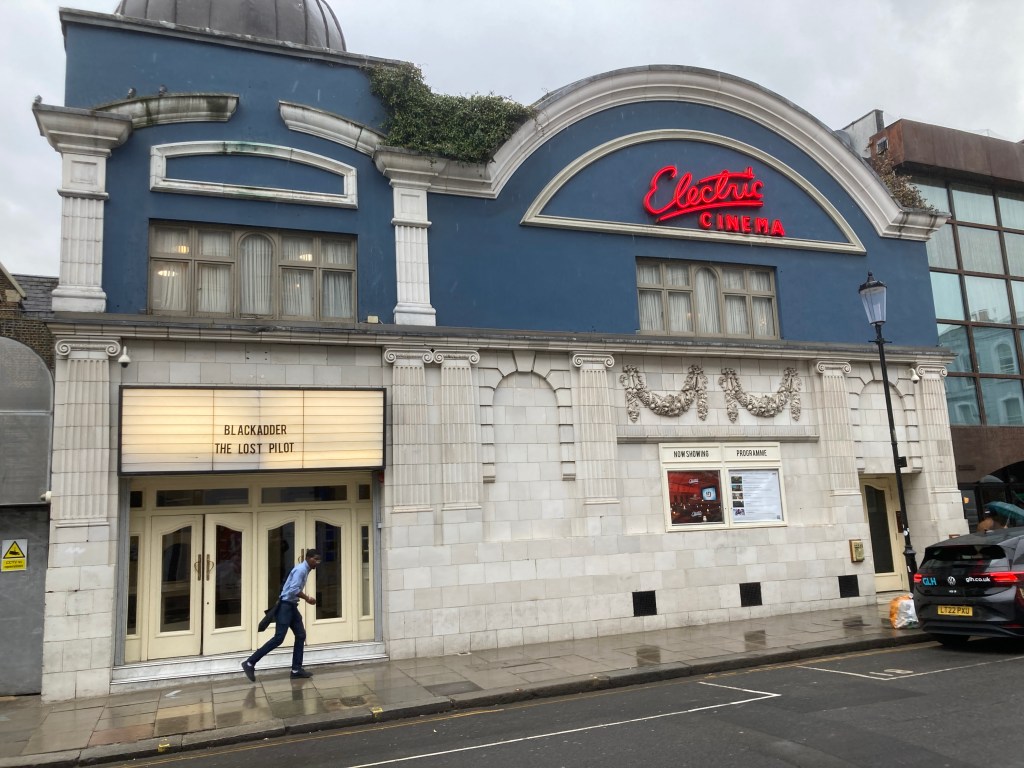
To be present at this Skin Alley reunion was a huge privilege. Unfortunately the volume of the piped music at the cafe made it impossible to record the conversation, except by scribbled notes. If I’d thought about it earlier, we could have found somewhere quieter to make a proper oral history recording.
Such a meeting may never happen again
Here are some things I learned…
Thomas Crimble confessed that he’d been tripping for three days before recording their second album (To Pagham and Beyond) and could barely sing. Nevertheless this album did sound true to the way they played, whereas the first (Skin Alley) sounded disappointingly dead. Bob ascribes this to the layering of multiple tracks by “bouncing” them from one tape deck to another, losing sound quality in the process. Having used a 4-track machine in the 70s, I know exactly what he means.
They discussed various bands and personalities of the era. Ian Hunter (Mott the Hoople) and Quiver lived up the road. Martin Quittenton of Steamhammer co-wrote “Maggie May” and acquired an impressive mansion with the proceeds.
Skin Alley played Glastonbury in 1971 and are on the compilation album Glastonbury Fayre Festival, contributing yet another piece by Bob James entitled “Sun Music”. (I blogged some time ago about the 1973 Buxton Rock Festival, which must have rivalled Glastonbury for mud and general unpleasantness. )
***
We passed the house where Performance (with Mick Jagger) was filmed, and strolled on to All Saints Church, in whose hall of the band played several gigs.
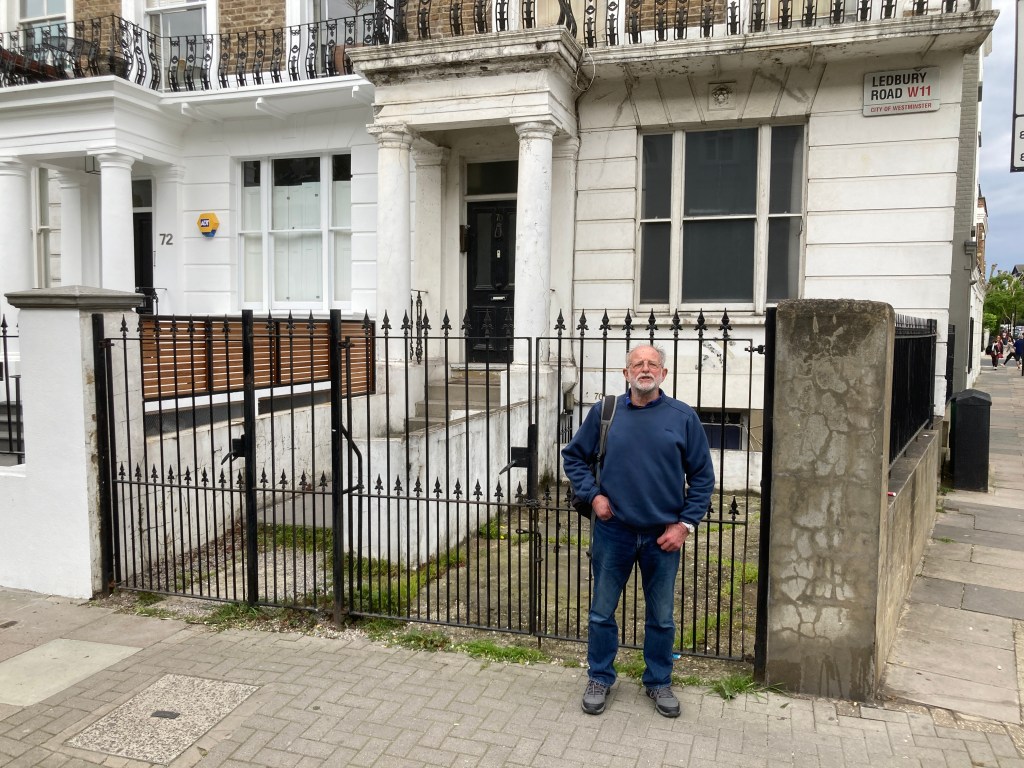
Bob peeled off to revisit the house at 70 Ledbury Road where his friend Krzysztof had lived.
Next halt was outside the Trinidadian-owned Mangrove cafe at 8 All Saints Road.
Regulars included Bob Marley, Vanessa Redgrave and Jimi Hendrix
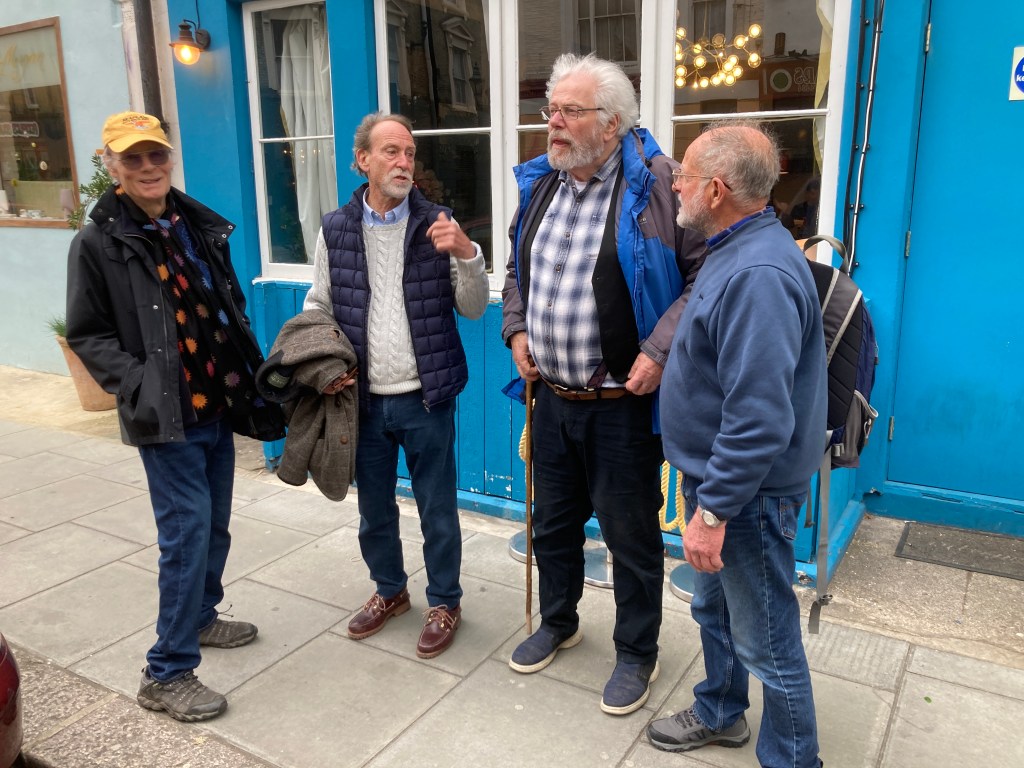
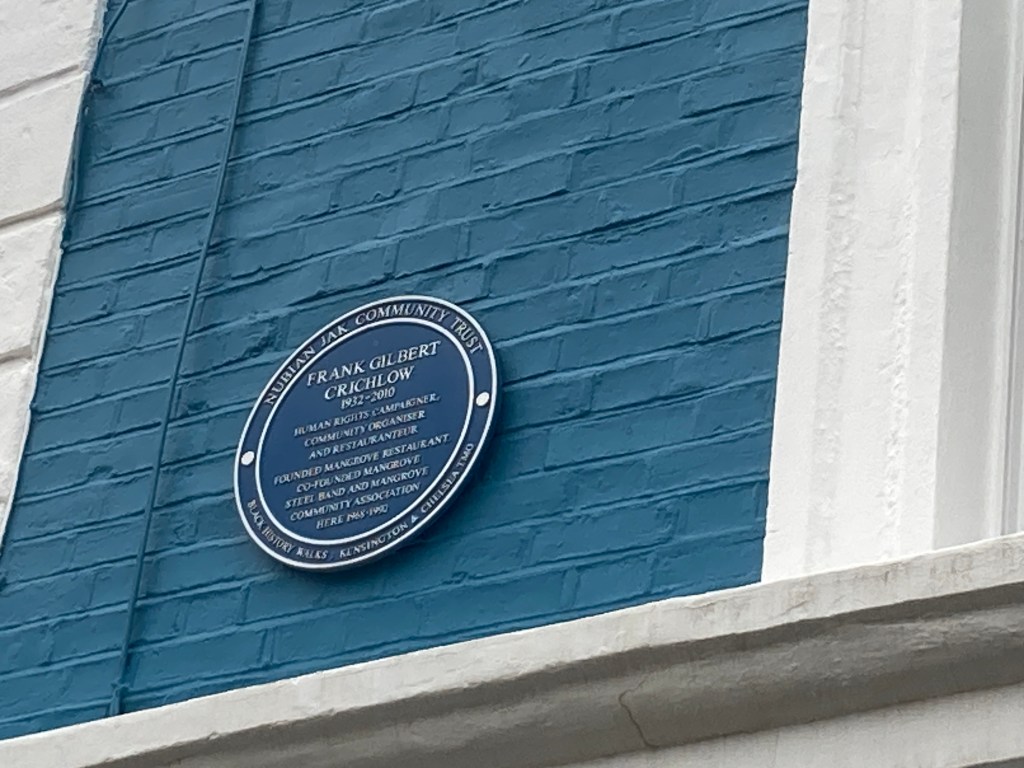
The Metropolitan Police continually targeted it, because illicit drugs were allegedly being sold on the premises. In 1972 a major trial collapsed and eventually the Met paid compensation, effectively admitting malicious racism.
We stopped at Basing Street Studios, originally the recording studios and headquarters of Island Records, set up by Chris Blackwell in 1969. Many famous musicians have recorded there, including Black Sabbath, Eric Clapton, Led Zeppelin and Cat Stevens. Richard talked about getting an unlikely deal with Stax in the Sates, and being ripped off and let down (as usual).
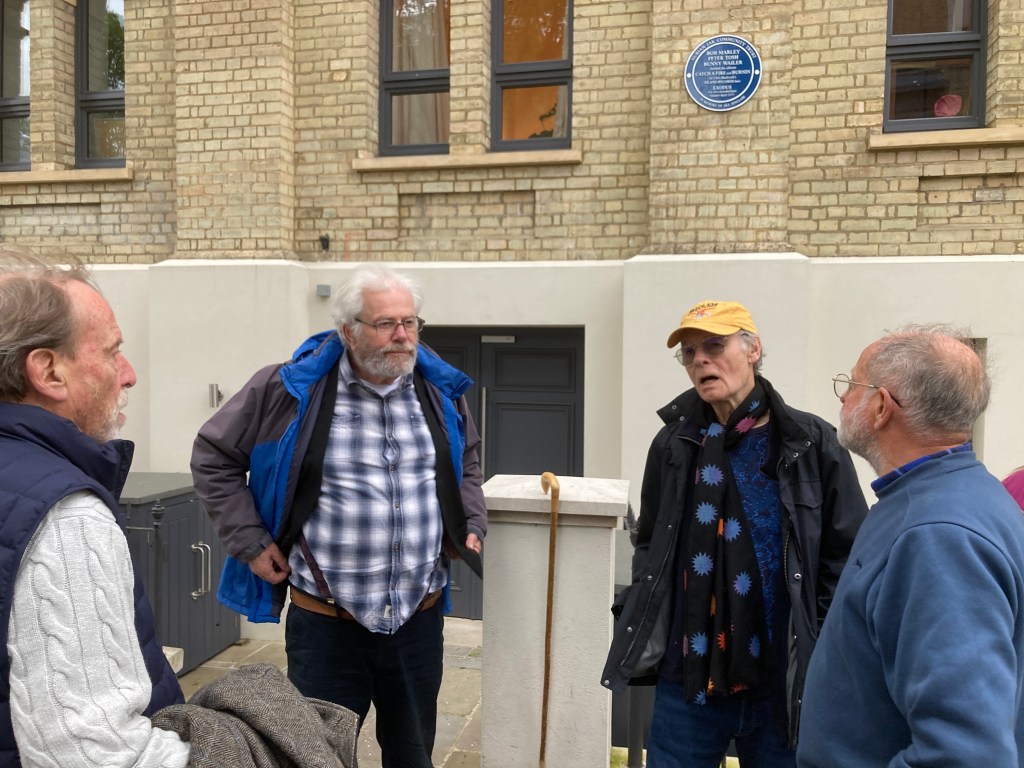
Today, Portobello Road area is picturesque and well touristed. It is no longer a cheap area to live. But back in the late 60s it was properly bohemian, not to say dangerous. Skin Alley had a basement flat in Lancaster Road that doubled as a rehearsal studio. They recalled that Errol Brown (of Hot Chocolate) used to wander the area, trying to recruit a backing band.
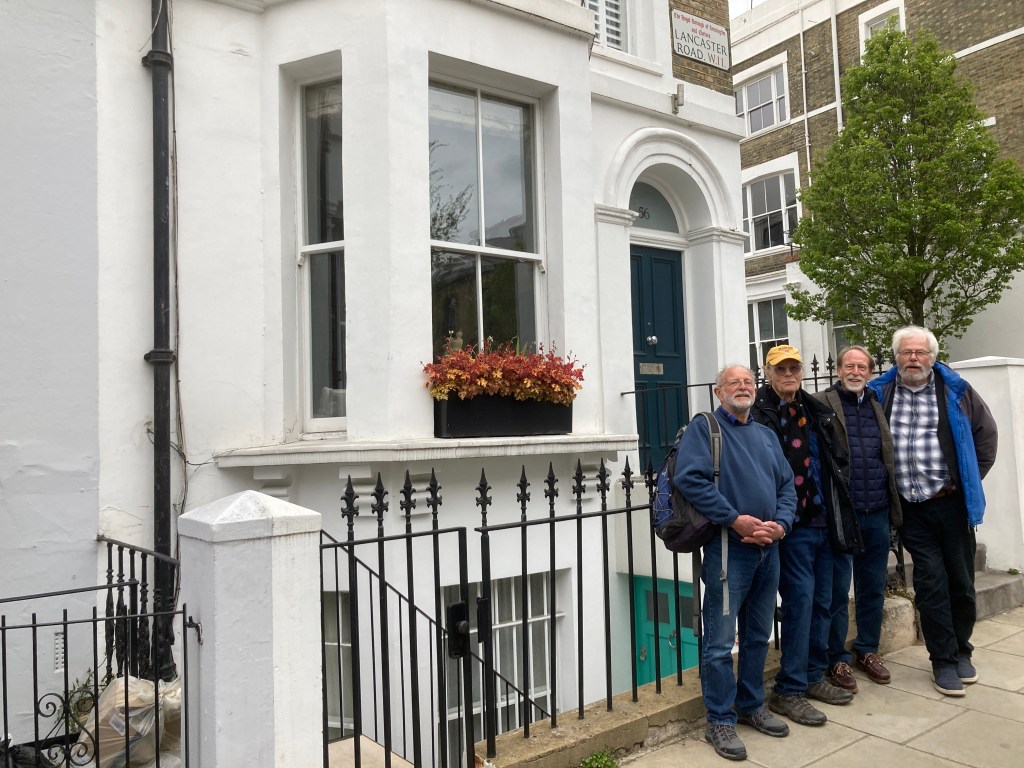
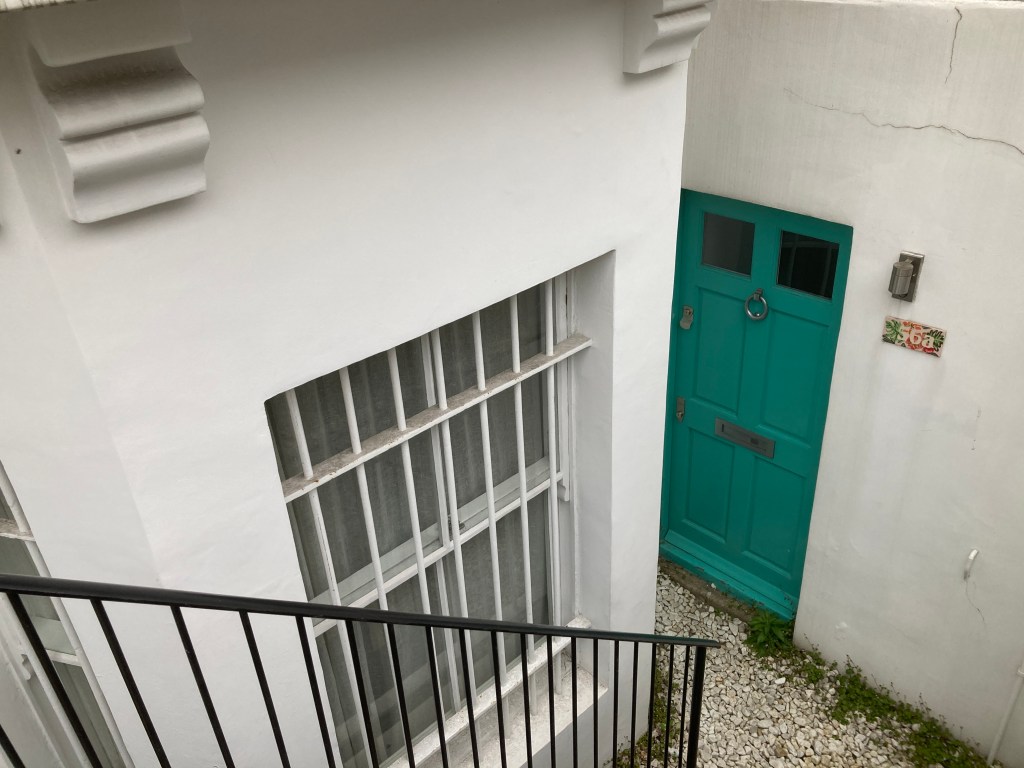
Organist Krzysztof, like Giles, was a jazz musician and Giles played his Graham Bond albums to him. A version of Bond’s “Walking in the Park” can be heard on To Pagham and Beyond. The band’s performances were part-spontaneous and each one was different.
Giles recalled that a couple of skinheads used to come to the flat and nick his LPs, but he was too intimidated to do anything about it. One night the band returned from a gig, too tired to unload the gear from Thomas Crimble’s Commer van. During the night it was broken into and much of their equipment was stolen; the Hammond, weighing a ton, survived. Giles went to report the theft to Ladbroke Grove police station and received the helpful response, “Well, what do you expect? It’s all dodgy round here”. Manager Richard replaced the gear from his own funds; there was briefly a fortuitous bank balance error in his favour! Giles bought Aynsley Dunbar’s old snare drum for 300 quid. After he left Skin Alley he was asked to join Genesis, but there was no opportunity for improvisation and he didn’t enjoy being told exactly what to play.
The members of Skin Alley moved out when the flat was taken over by Hawkwind hangers-on and turned into an LSD factory.
***
When it started to rain we sought sanctuary in the Duke of Wellington, where Lemmy used to drink (someone added “unfortunately”). Talking of Hawkwind, Thomas mentioned that Nik Turner just wanted to have a good time whereas Dave Brock was – understandably – keen to make money. Dik Mik had got into serious dealing and died about five years ago.
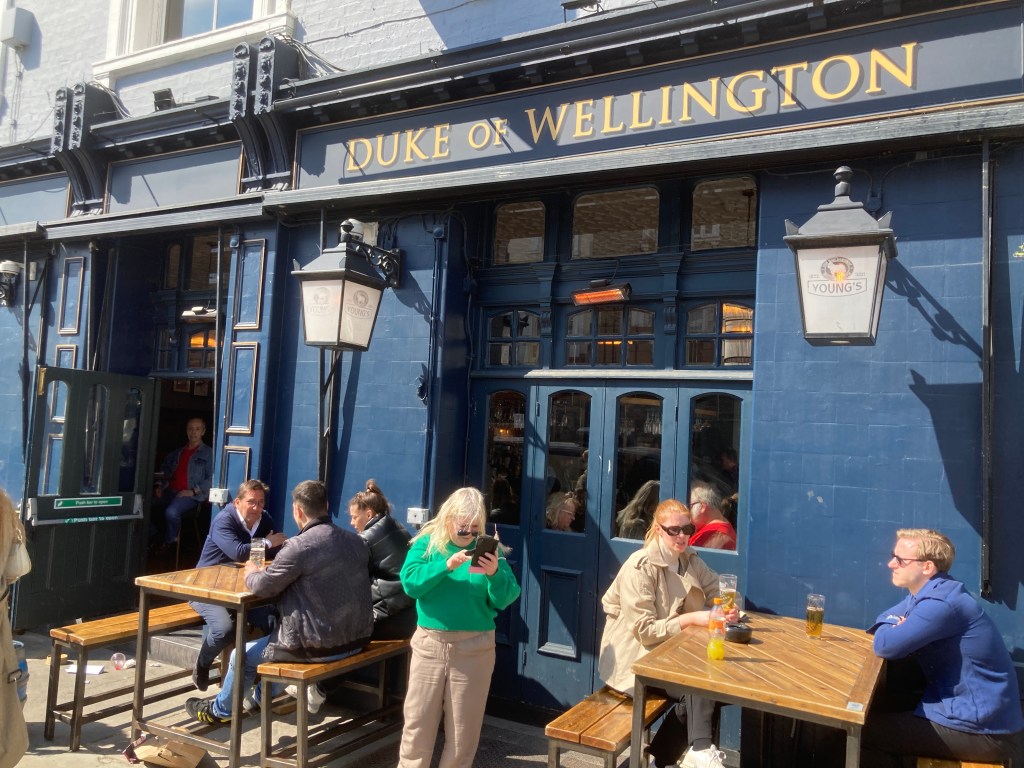
It was outside this pub that Krzysztof used to busk with his accordion, to make ends meet. More friends and associates joined the band for dinner, and it was there that Bob produced a three-page letter, carefully preserved for more than 50 years. It was Krzysztof, his friend from Redditch, who had convinced him to come down and join Skin Alley when they were looking for a new guitarist.
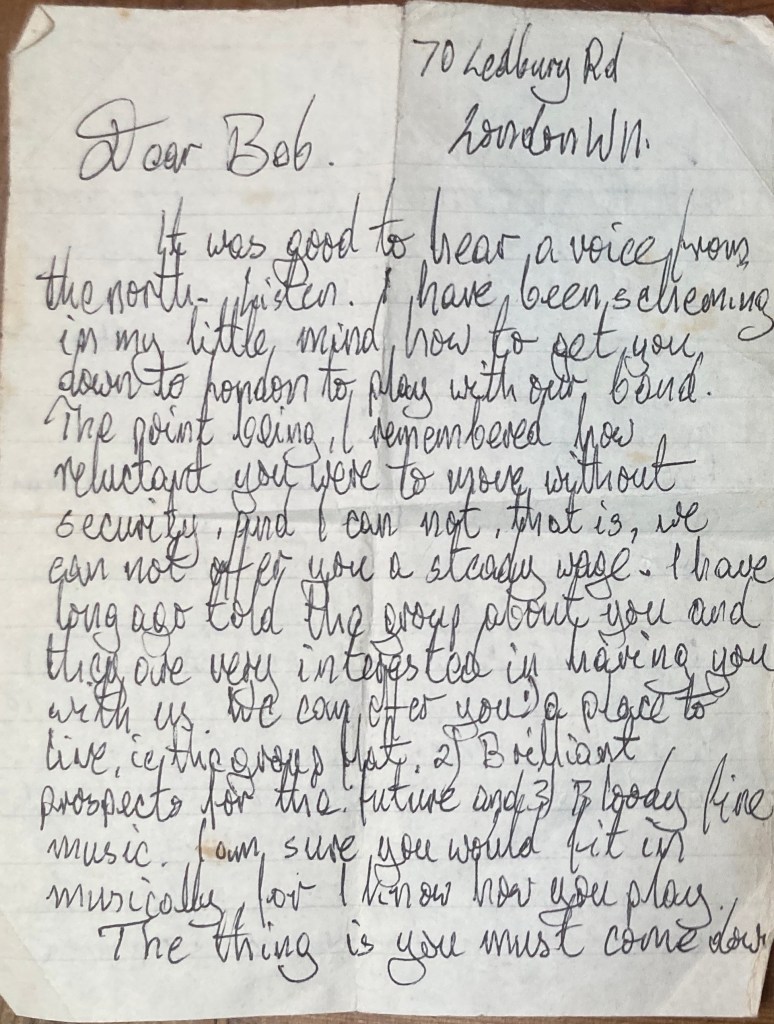
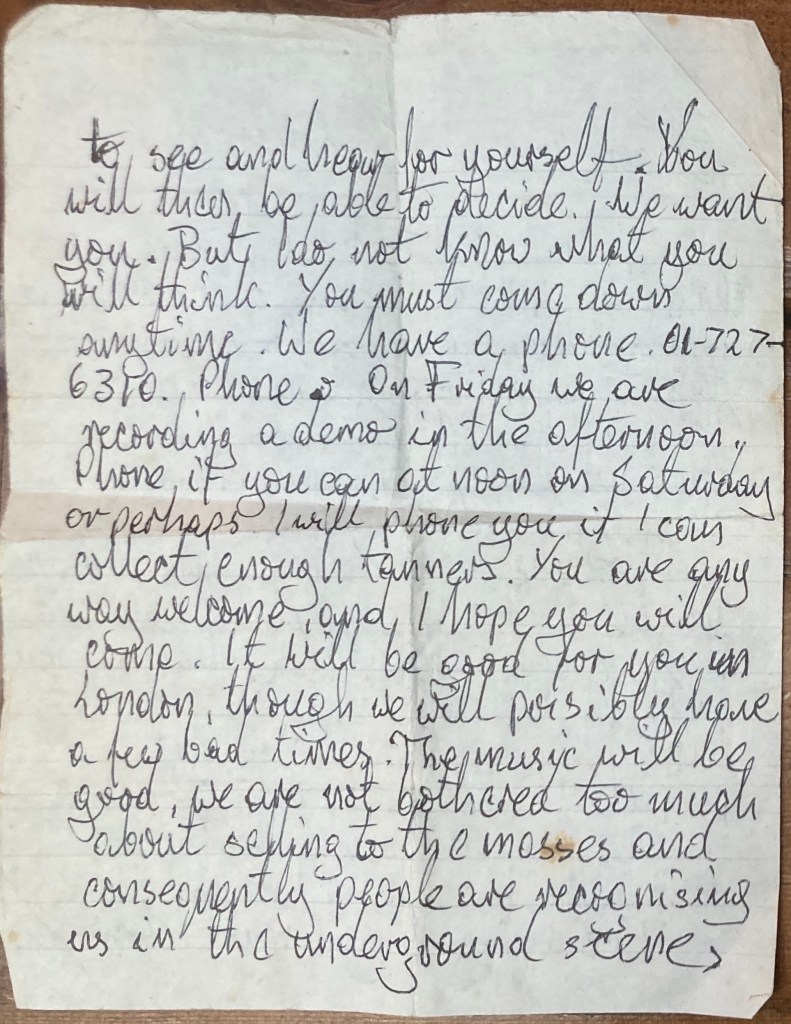
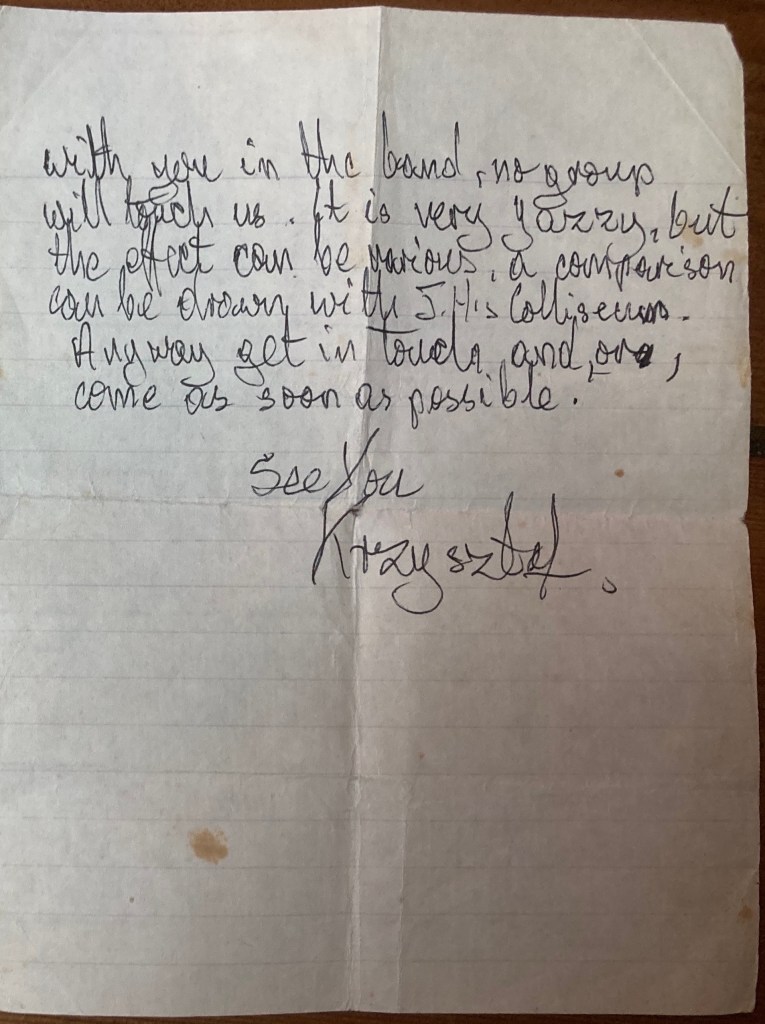
The rest is rock and roll history, you might say…
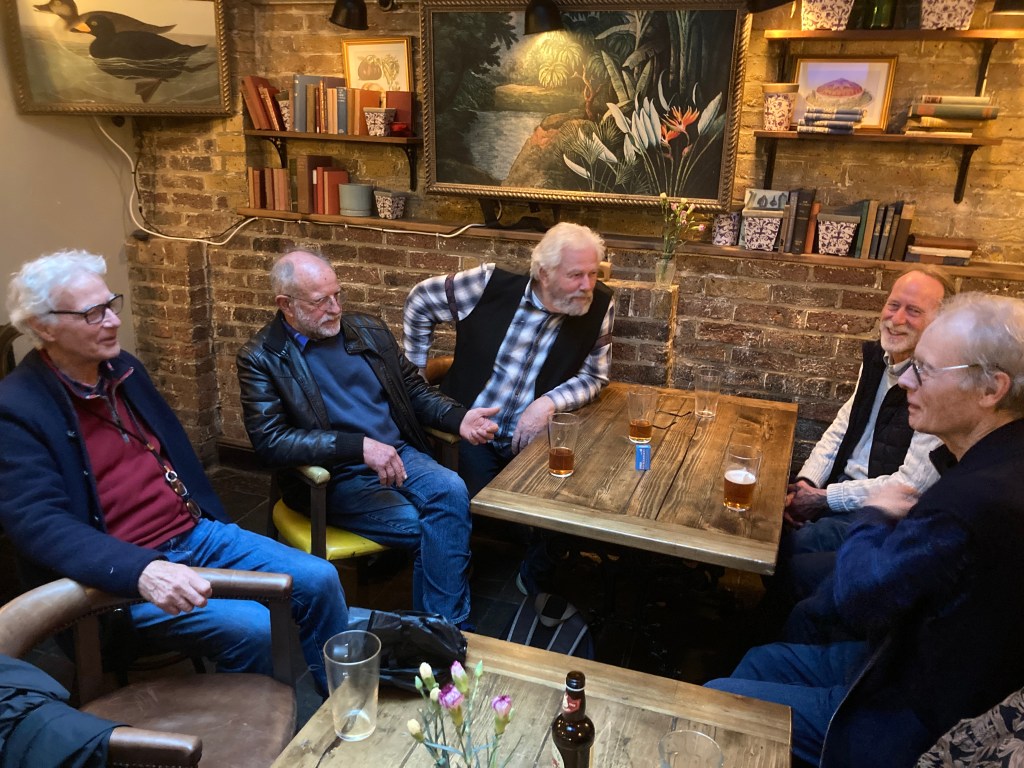
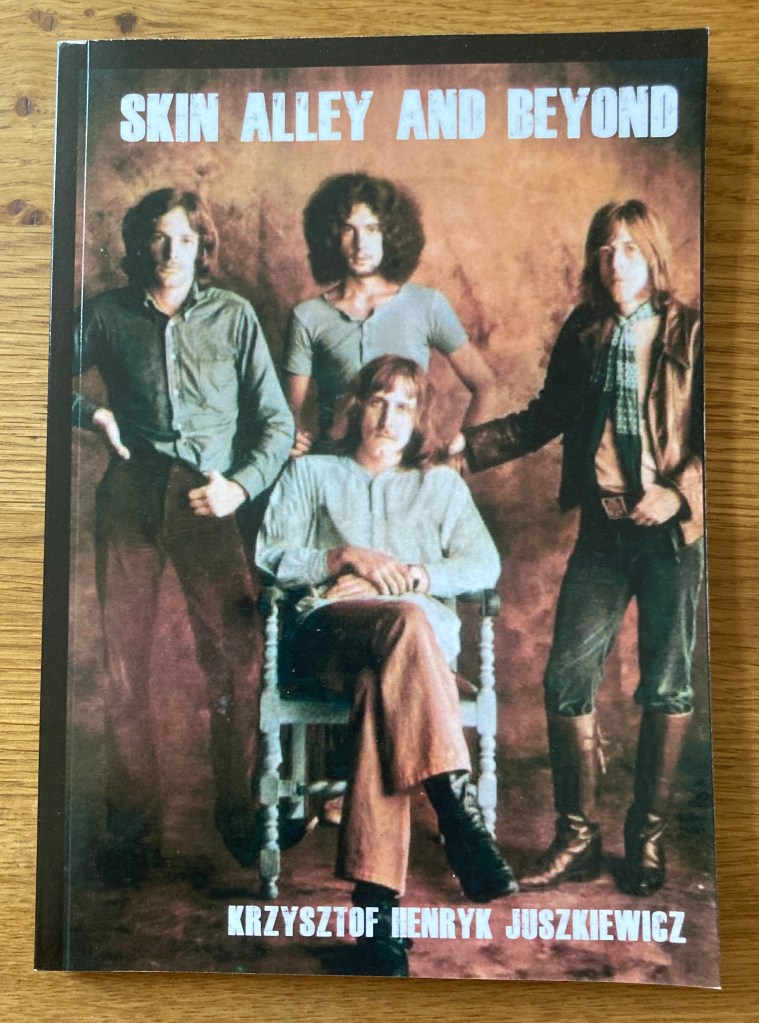
We drank a toast to Krzysztof. His memoir, Skin Alley and Beyond, is available on Amazon. Shown with him below (seated) are, from left to right, Bob James, Nick Graham and Tony Kinght (who replaced Giles on drums).


Hi Colin lovely to see and read this, just a little bit of a story. I’m a bit older than you born in 1952 and had both the samplers you mention. I loved Skin Alley and saw them in Leeds 1971. I’m a rare record dealer and collector. Many years later I contacted Krzysztof and told him about the cover of Living in Sin by a Polish rock band called Test in 1974. I sent him the sound file and he was really impressed especially since like him they were Polish. We had a couple of email chats and he mentioned that he had had some lumps biopsied so I was not surprised but very sad when he passed away. He struck me as a very nice guy. Kind regards Bob Howe
LikeLiked by 1 person
Hi Bob, thanks so much for your comment which I will pass on to the members of the band.
LikeLike
You have some interesting pieces of music history on your blog! I had no idea that Living in Sin had been covered by another band. Bob will be thrilled to hear it. Krzysztof certainly was when Bob Howe told him – esp being Poles like him. He was very proud of his Polishness when we worked together as young guys. I only realised how central it was to his outlook when we began doing regular calls two years ago.
Bob will know best, but I think Living in Sin got a wide audience because it was on the 1970 CBS sampler you mentioned. It has a nice sax solo by Bob on it. The song was on our first album, Skin Alley, which disappointed me cause you couldn’t really hear the drumming on most tracks. But on Sin I had the idea of playing congas over my drumming, and the congas came out nicely. I think I’m right when I say that everyone thought that the recording of the whole album didn’t really capture our sound. It was produced by Dick Taylor of the Pretty Things and I think it was his first shot at producing. He was nice and funny with us young guys who looked up to him, but I have to admit he irritated me quite a bit whenever he came to gigs of ours and told me “Why don’t you play like that in the recording studio?” I particularly remember him saying that in the Speakeasy Club, where we later jammed with Jimi Hendrix. But you don’t tell a Pretty Thing where to get off! I used to do a lot on the bass drum and that’s all pretty much inaudible on the album. It’s possible that I was still eighteen years old when we recorded the album.
LikeLiked by 1 person
Thank you, Giles. This is a great addition to the story.
LikeLike
Wow, this is really cool! I’ve been wondering how and what they’ve been doing since Skin Alley disbanded almost 50 years ago, and now I finally know. Thanks for the great music, boys.
LikeLiked by 1 person