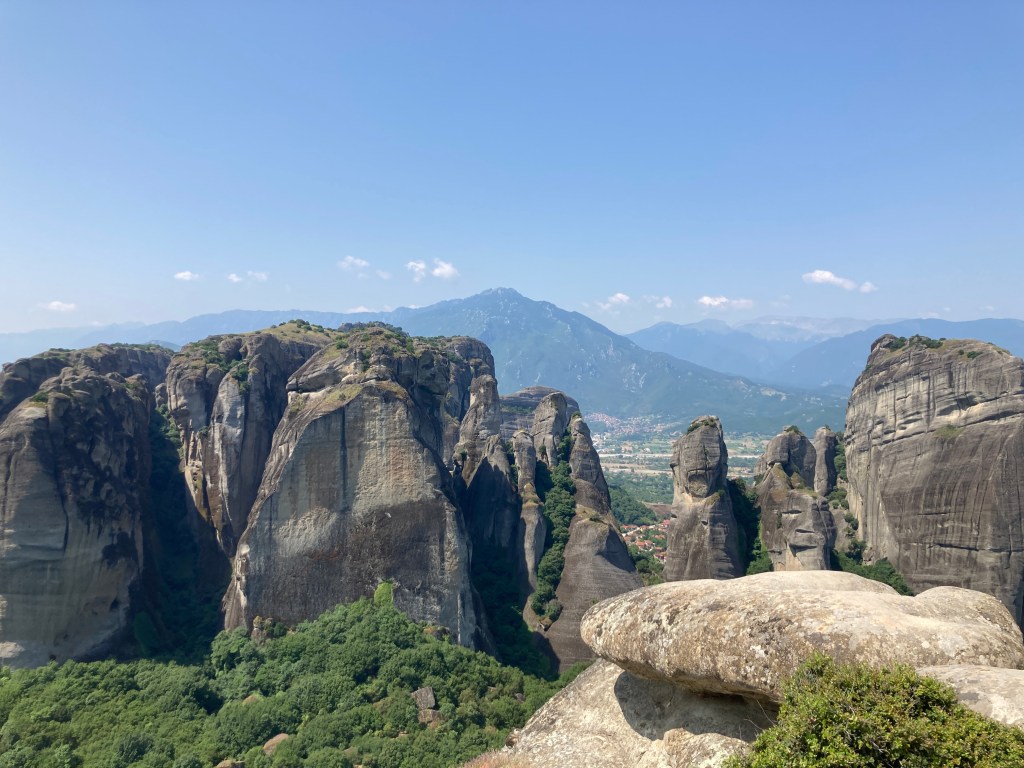
You may already have seen jaw-dropping pictures of medieval buildings perched on towering rocks. This is Meteora, in Northern Greece.
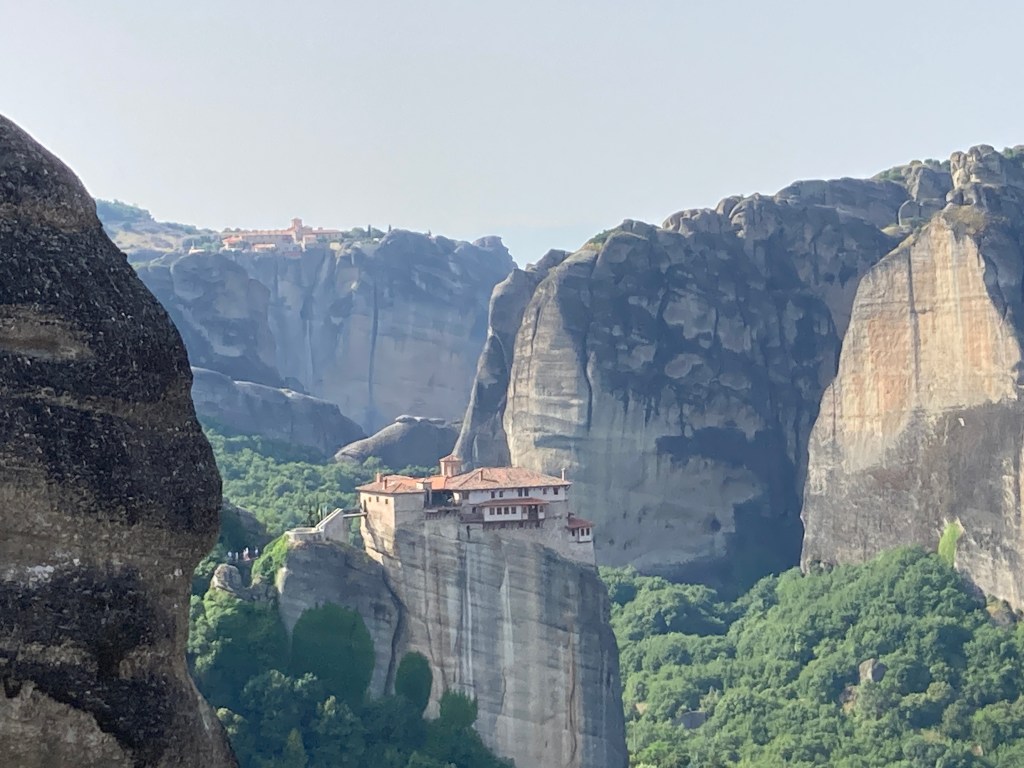
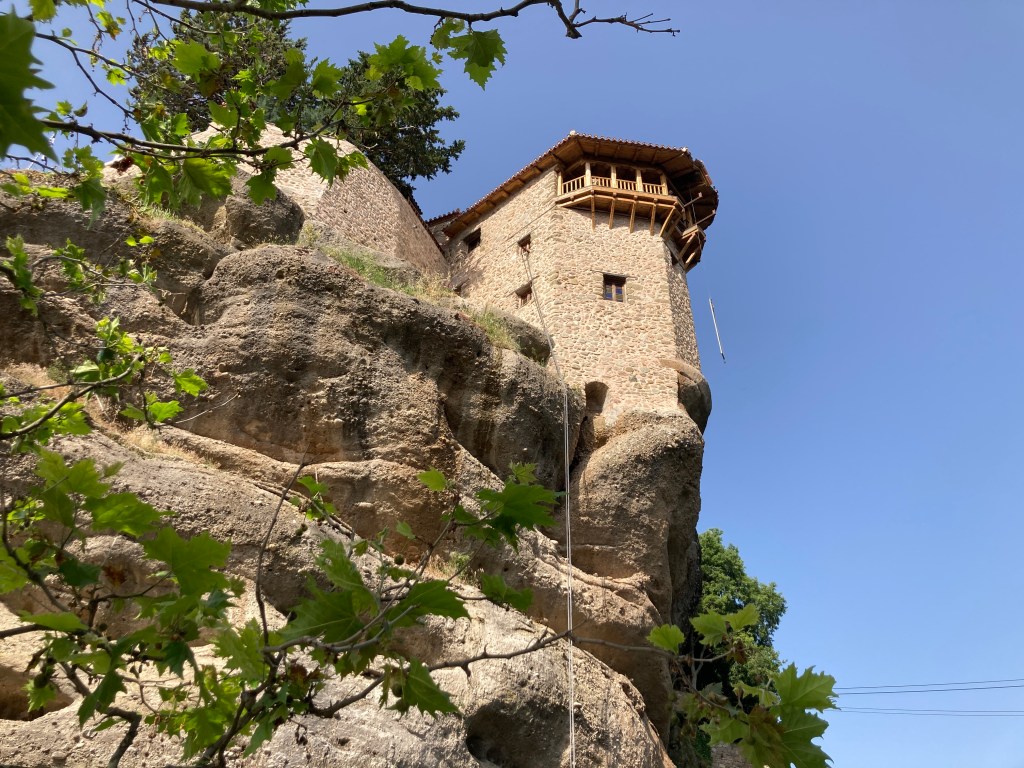
There are six surviving monasteries (and several ruined ones), four of which we visited over two days: namely, the Great Meteoron, Varlaam, Roussanou and Ayios Nikolaos Anapafsa. They appear to be impregnable and isolated. And once they were; the only way in was by long, rickety ladders or being winched up in a basket.
Nearer my God to Thee!
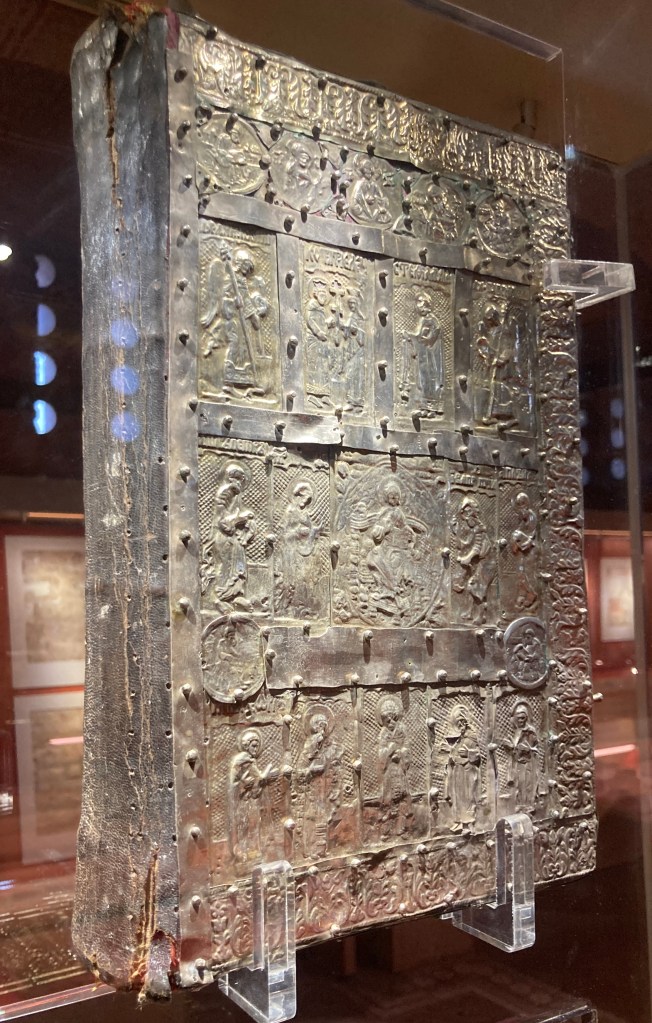
Now, mundanely but conveniently, you can park up and enter via stone staircases (some much longer than others). All four are effectively museums with exhibitions of treasures and exquisite fresco-covered churches. Photography inside the chuches is not permitted.
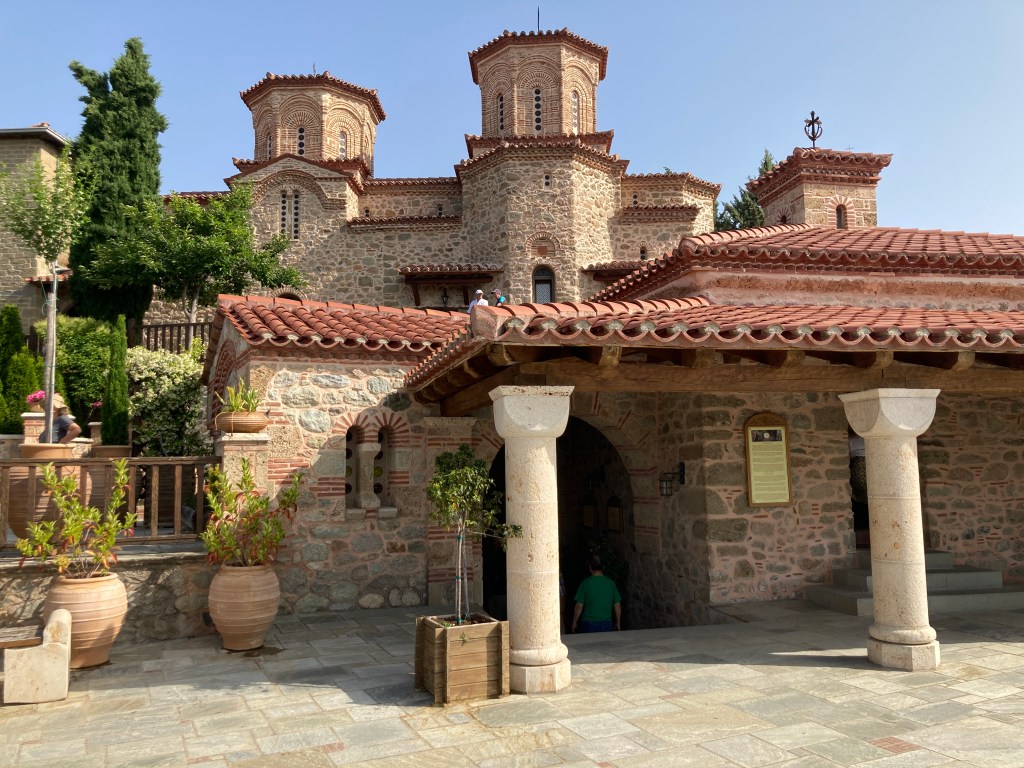
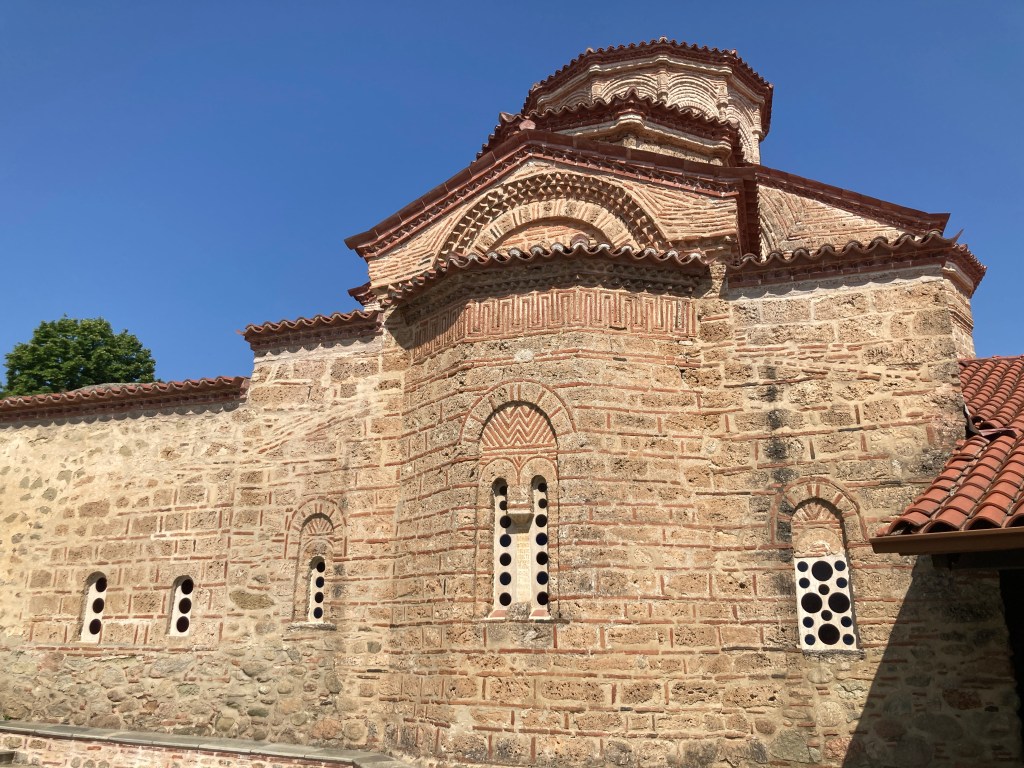
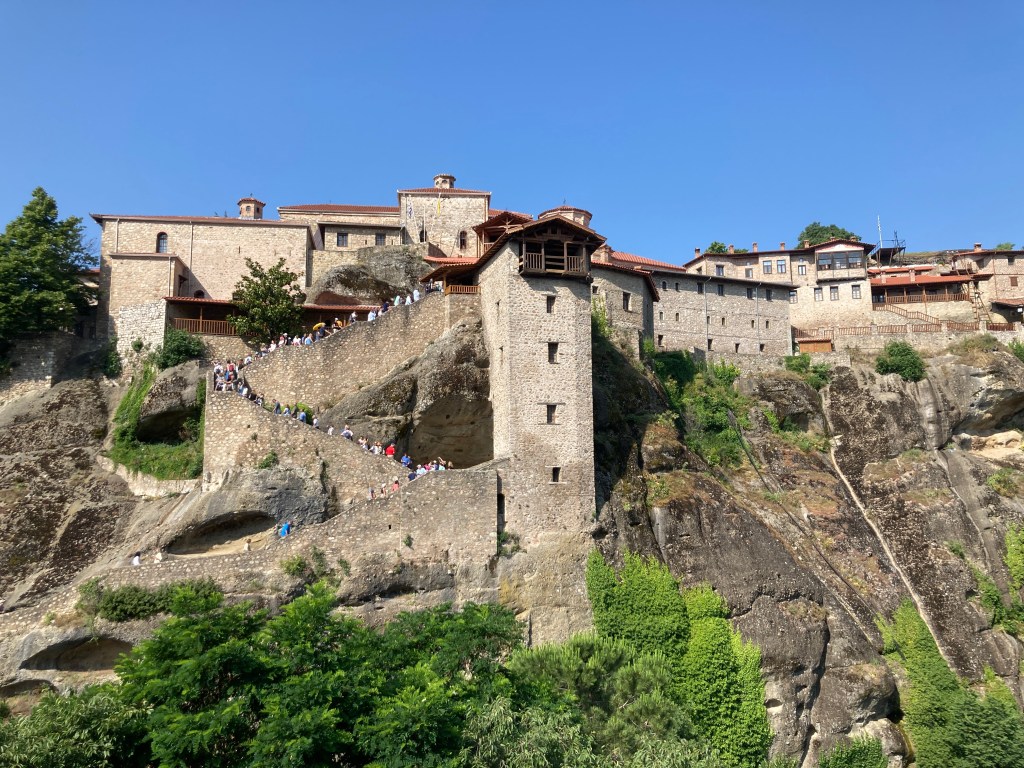

Not all visitors to Greece come from western Europe. French, English, Germans and Italians were thin on the ground. It is entirely logical, although to my eyes still a novelty, to pass row after row of parked cars from Romania, Bulgaria, Serbia, Northern Macedonia, Albania and even Ukraine. I heard Russian tourists in one of the monasteries. If you profess the Orthodox Christian faith Meteora is sure to be on your bucket list, especially since Mount Athos is off limits to women.
I was surprised to see a coach party from South America
It is obvious why Meteora has attracted monks and anchorites for at least 800 years. Even if these monasteries had never been built the landscape would still be awe-inspiring.

Visiting this part of Greece was a delight, and there was more to come. After three nights we packed our bags and drove west over the Pindos mountains, back in the direction we had come, soon encountering a long-expected thunderstorm that, fortunately, did not last more than an hour or so.
***
Skirting Ioannina, we climbed slowly through the region of Zagori, where we made Monodendri our base.
Everyone knows, or ought to know, that Greece is a mountainous country, but after swimming in the warm Aegean it comes as a surprise to be driving through villages 1,500 metres above sea-level, where you might choose to wear a pullover in the evening.
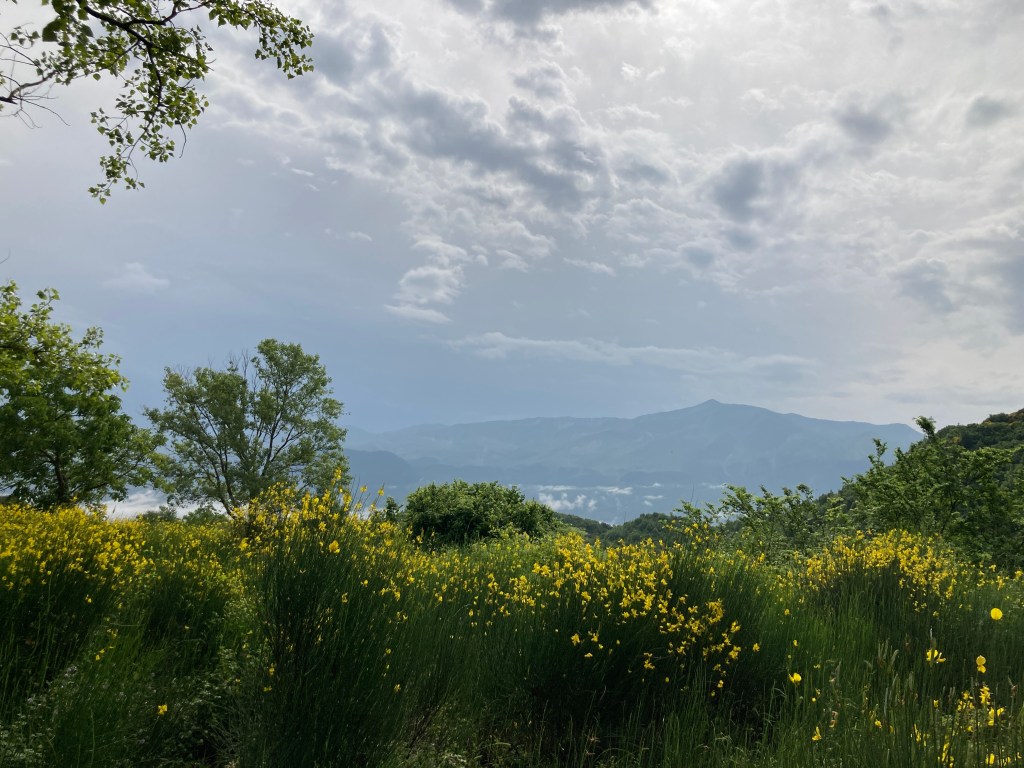
If you were brave enough to visit in January you could easily be snowed in.
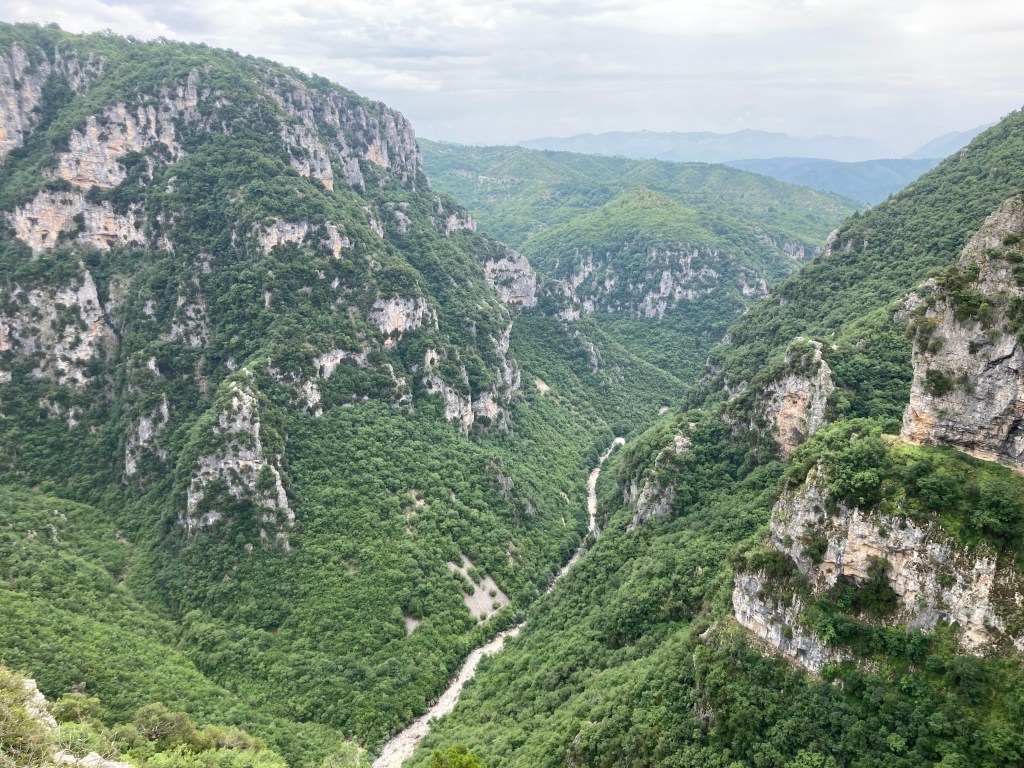
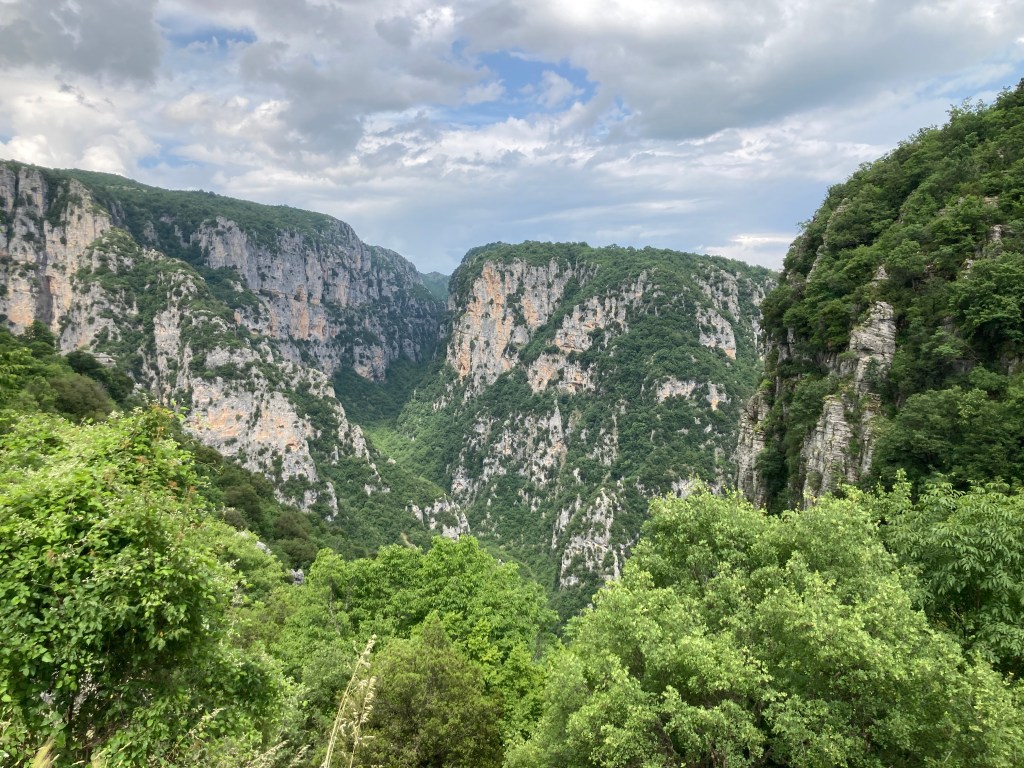
Vikos Gorge is a top attraction
For a panoramic view we headed to Ayia Paraskevi church. We would tackle the gorge two days later.

***
The following morning we set off to explore Zagori by car, soon realising that we would need longer than a few days to see it properly; it is crossed by high mountains and deep gorges. It is not that the roads themselves are bad, just that it takes a surprisingly long time to get from A to B.
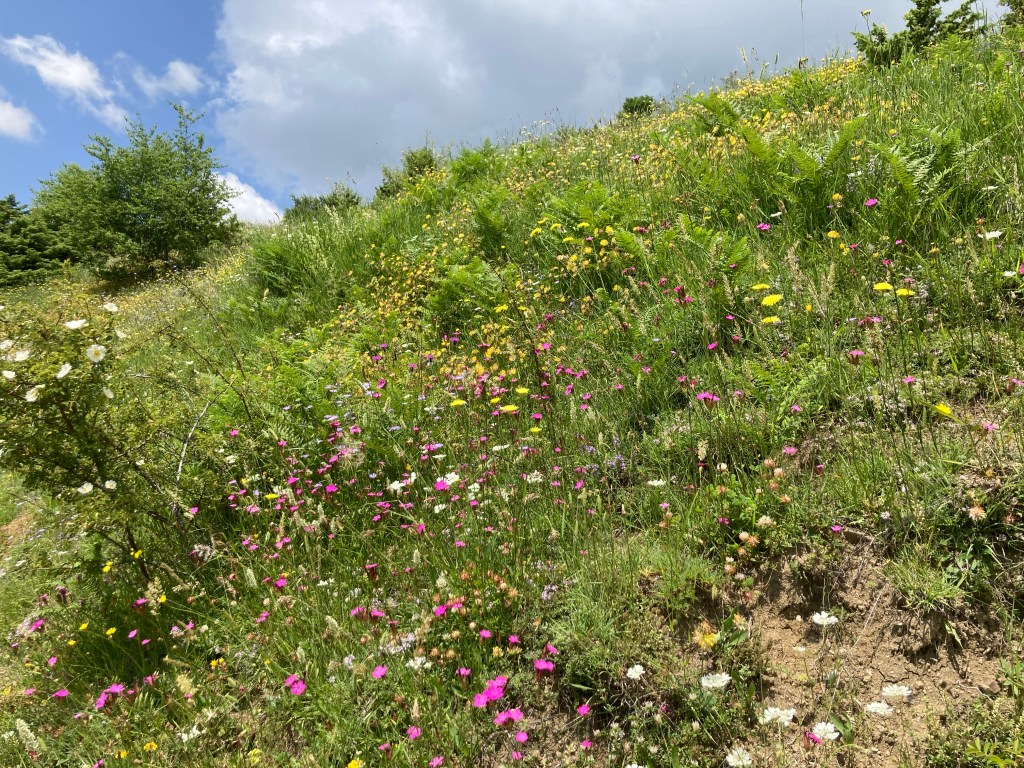
Even in late June wild flowers were in abundance. Cattle and horses graze on the slopes. In short, Western Zagori is one of the most beautiful places I have been fortunate enough to visit. We didn’t get a chance to see Eastern Zagori. Perhaps another time?
Amongst its photogenic attractions are the 18th-century packhorse bridges, three of which can be crossed near the villages of Konitsa and Kipi.
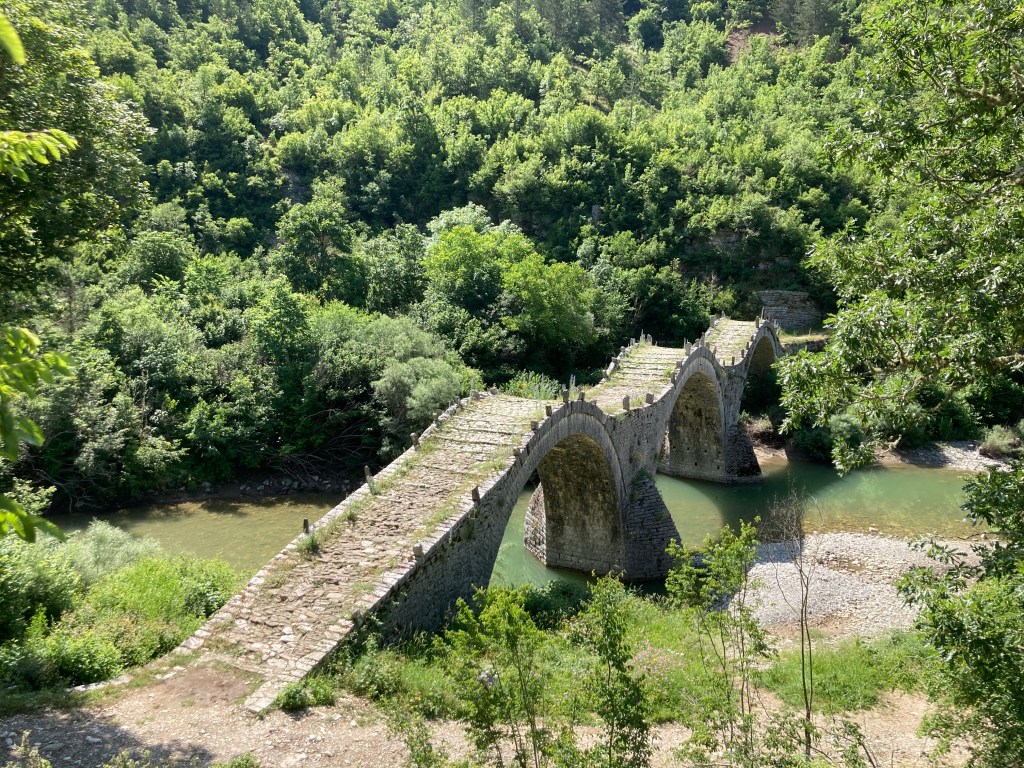
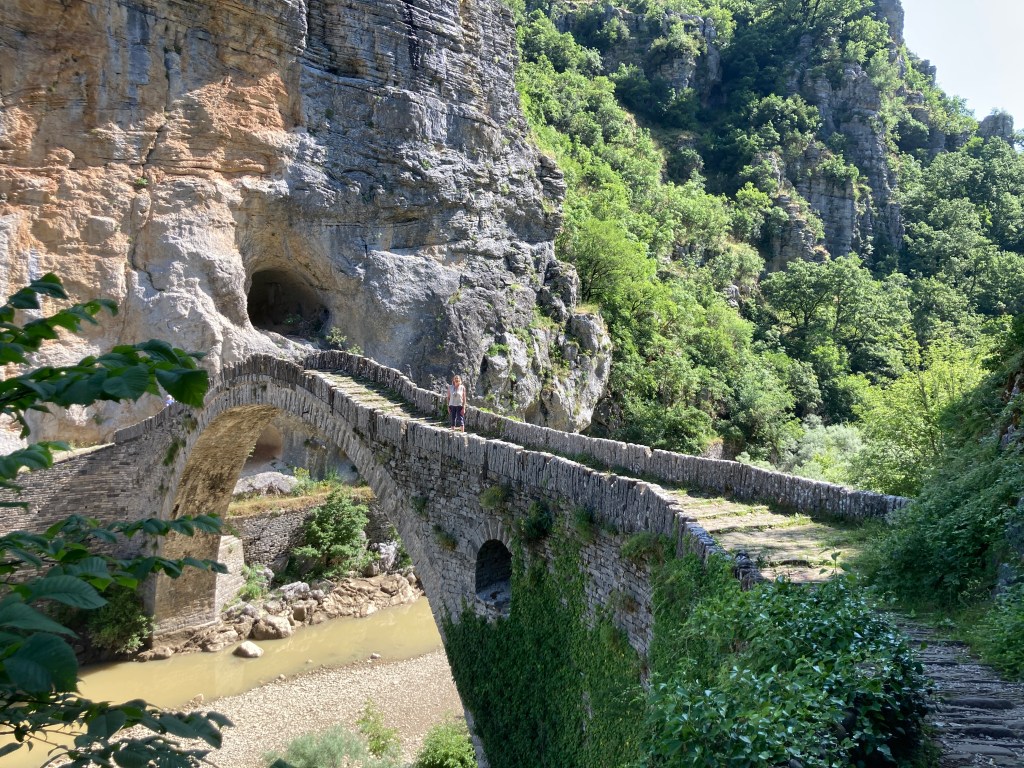
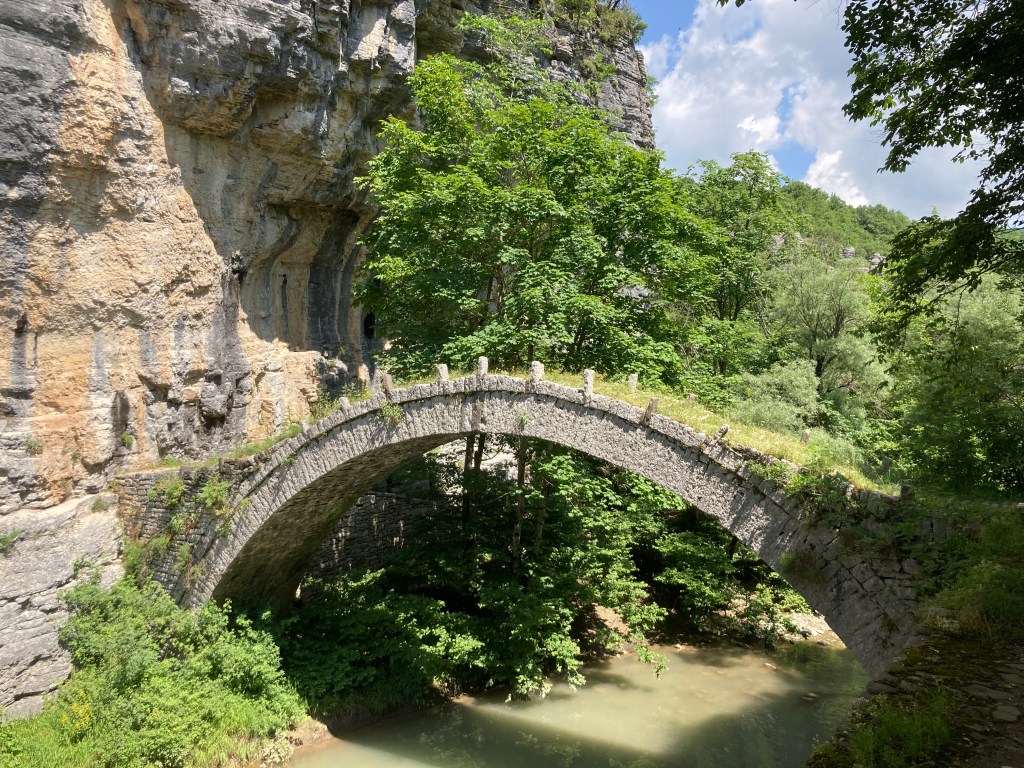
A perfect day for walking and exploring
***
A hike down, along and up the Vikos Gorge is not a Sunday stroll. Once again we were grateful that it was not excessively hot – and not raining either. This is one of the deepest gorges in the world, the equal of the more famous Samaria Gorge in Crete.
Owing to a communication breakdown, our guide arrived late and unprepared (e.g without walking poles). However we were grateful that he did finally show up, because otherwise we might have turned back after a couple of hours!
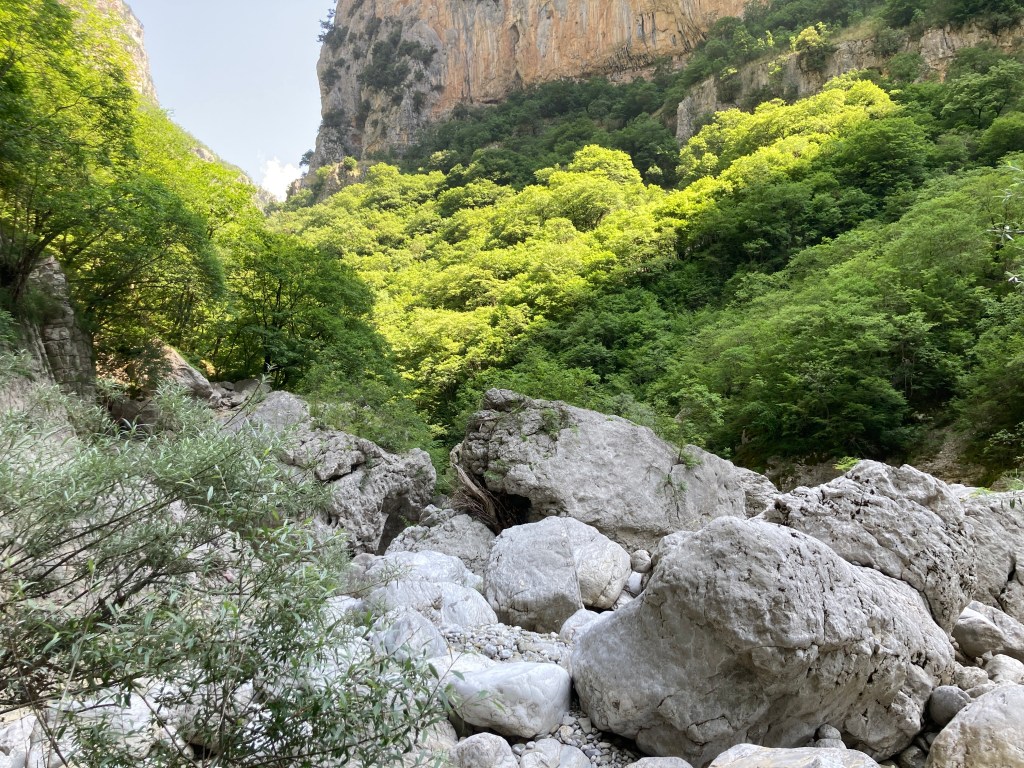
We started from the little church mentioned above, and descended for about 300 metres. So far, so good. The path at the bottom of the gorge varies from a scramble over large boulders to a saunter through idyllic meadows that could have been in the Wye Valley. At one time the gorge was grazed by goats. Nowadays it is part of a national park and the vegetation has largely taken over. Butterflies and birdsong are everywhere. A black woodpecker squawked as it flew past.
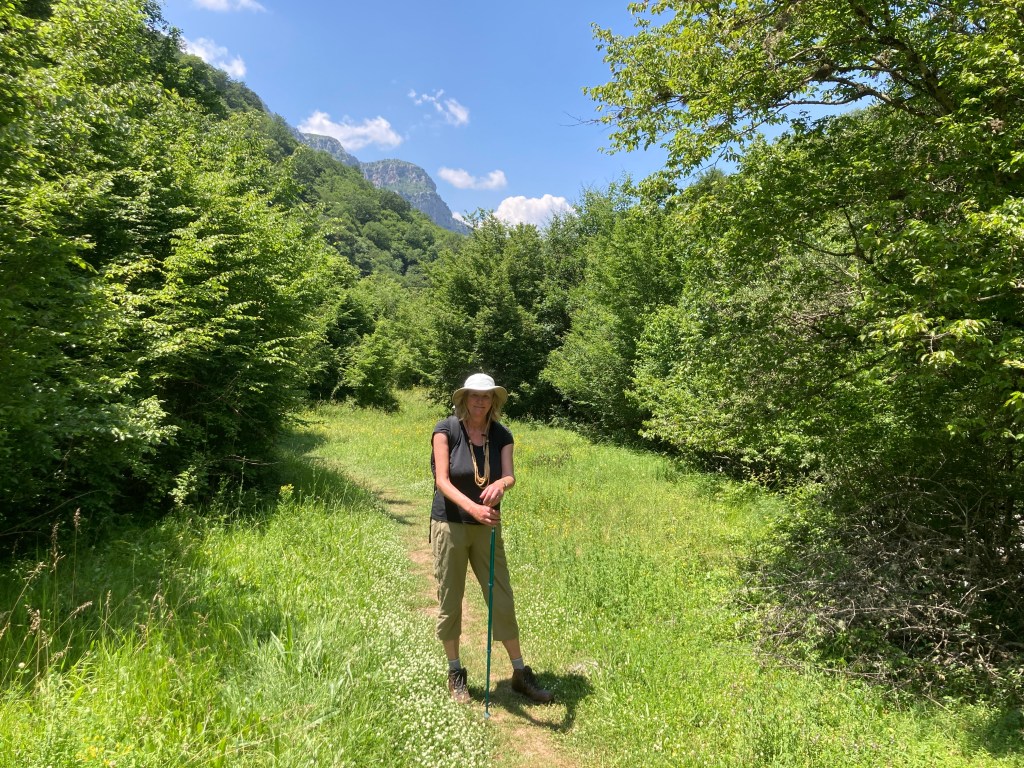
Halfway along this demanding 12-kilometre trek you can stop at a spring from the Voidomatis river to fill your water bottle and gather your strength for the coming ascent.
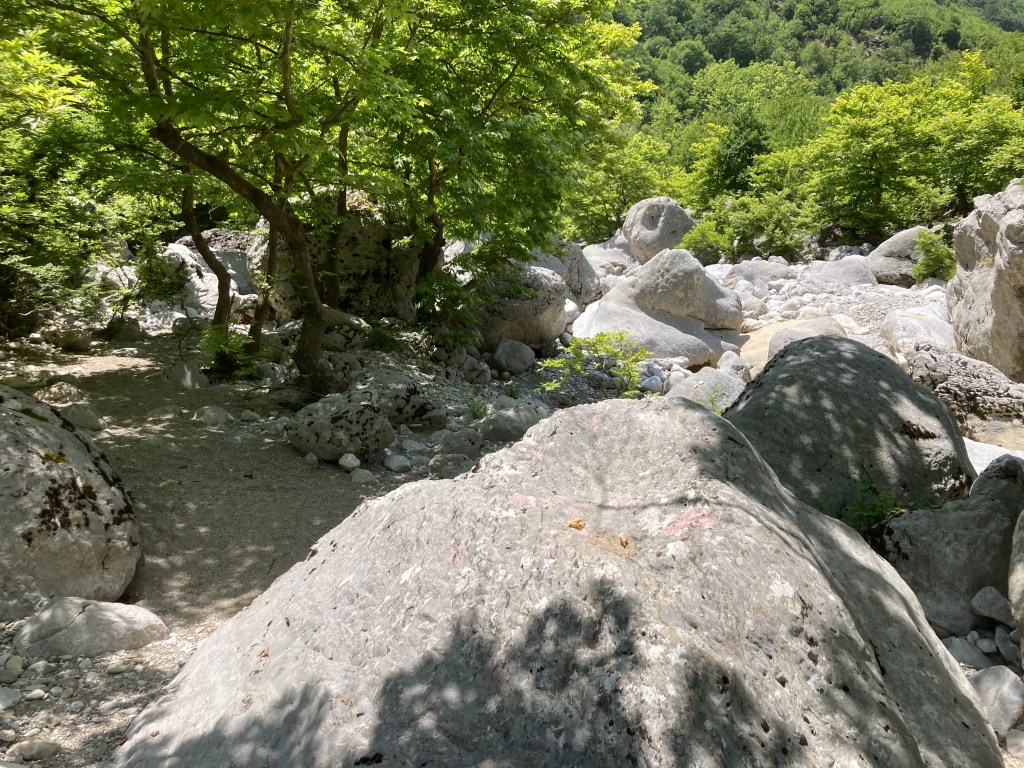
The rocks and earth were dry, but we still had to be careful. The weather can change very quickly.
A twisted ankle would have been bad news
I confess that I was getting tired when we eventually started the ascent in full sun towards the village of Vikos. The stone steps are high, and soon I was gasping and pouring with sweat. I had to stop to rest on several occasions, and I quickly emptied my water bottle. My thoughts turned to Ice Cold in Alex.
Back in Monodendri (after a taxi ride) the first beer went down without touching the sides. I ordered a second half-litre bottle, and an hour later still had no need to visit the toilet. The walk had taken us more than seven hours, yet we were not the slowest. As it started to rain heavily and the restaurants closed up, a group of walkers whom we had passed early on turned up. All men of about my age, they must have taken more than 10 hours. I felt like a hero. It was a thing to boast about having done, but not necessarily repeat.
***
The following day, continuing our return to the coast, we paused at the Acheron springs, another beautiful spot; but owing to inadequate navigation and a lack of will decided not to follow bold Ulysses into the underworld. It is here that Hermes handed over the souls of the dead to Charon. We paddled and enjoyed a cold drink.
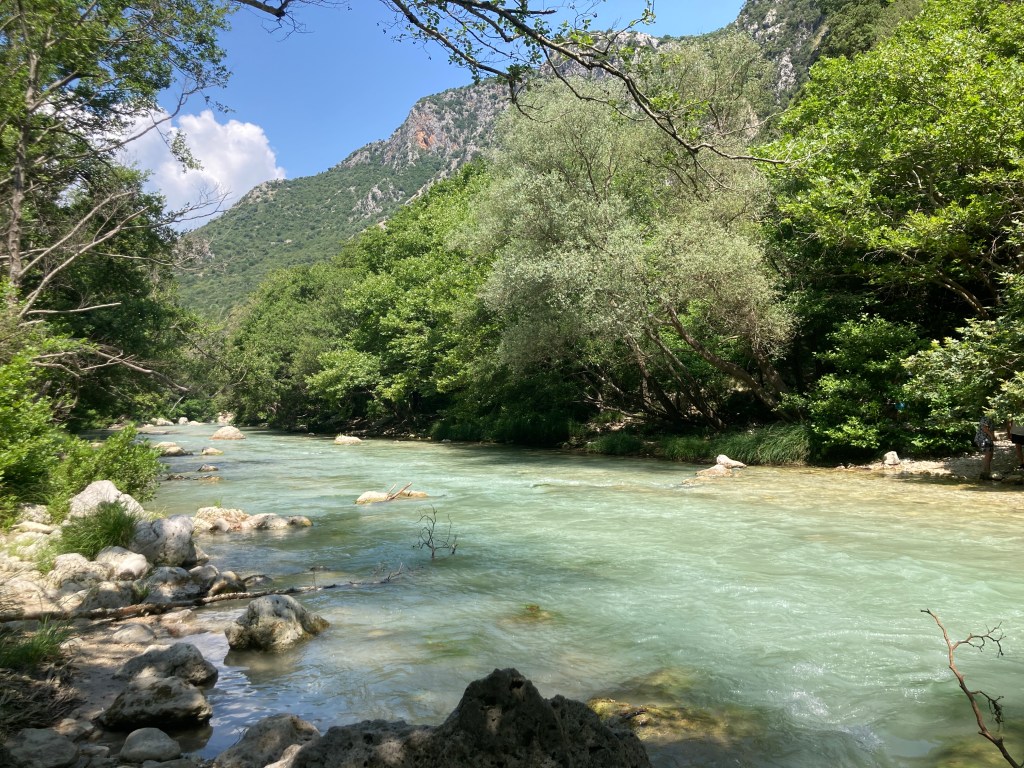
Enough of Greek mythology and culture. We drove on to Parga and dumped the Panda.
Time to revisit the seaside

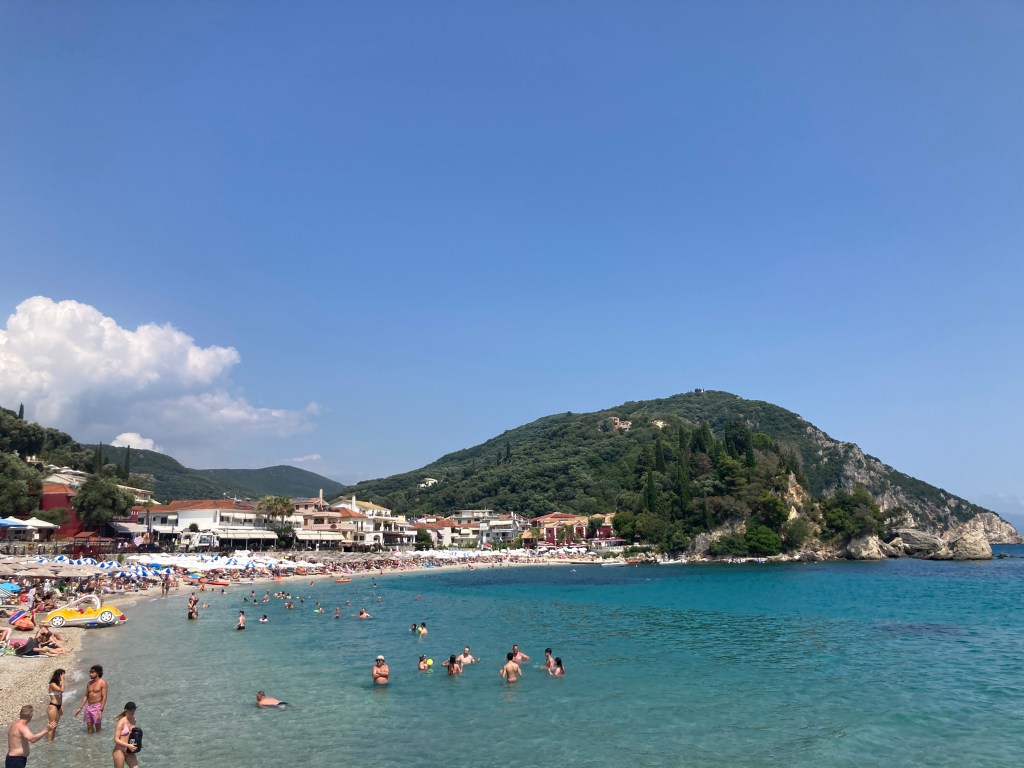
Parga is a small, but growing, resort town on the Ionian sea, south of Corfu and opposite Paxos. In early July it was busy, but tolerable. I would not contemplate coming in August.
We stayed in a well-appointed apartment in the hilly old town. As usual, the proprietors were kind and helpful. A tiring walk through the narrow souk-like streets up to the kastro rewards you with views of and access to a couple of long beaches to the north.
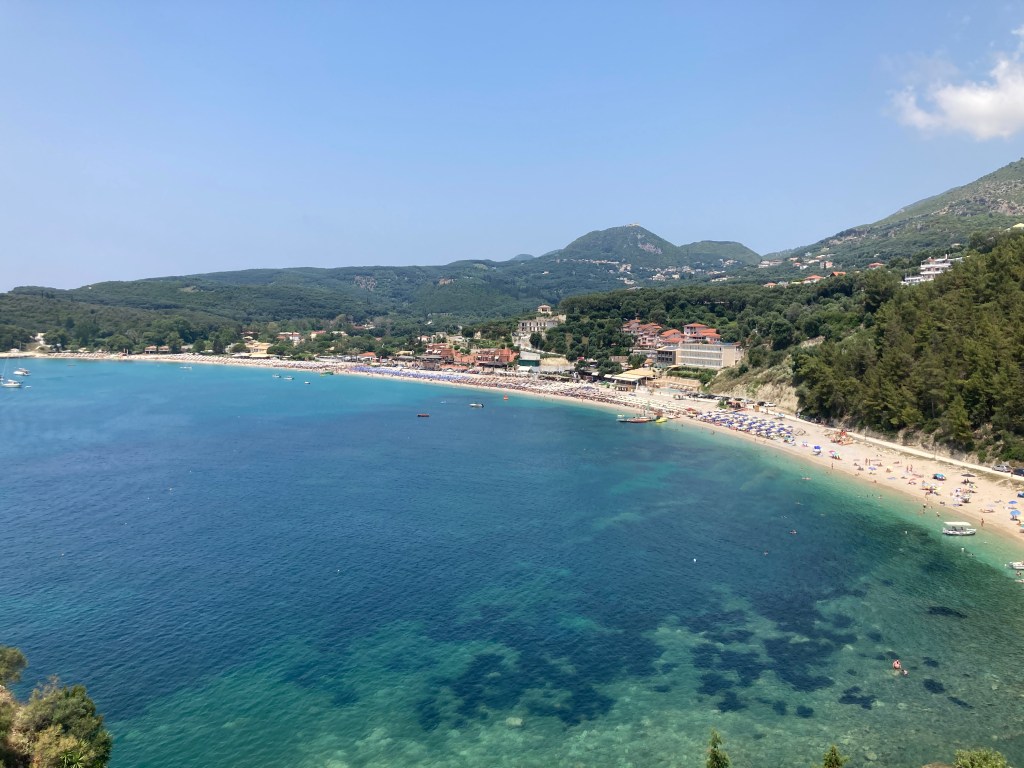
But even the town beach to the south is clean and enjoyable.
There are several excellent restaurants, including the Shanghai, which offers a suspiciously wide range of Asian dishes.
A nice change after all the feta and moussaka
And, just because we could, we took an all-day cruise to Paxos. A lovely island, though I have never liked to spend a whole week in the same place.
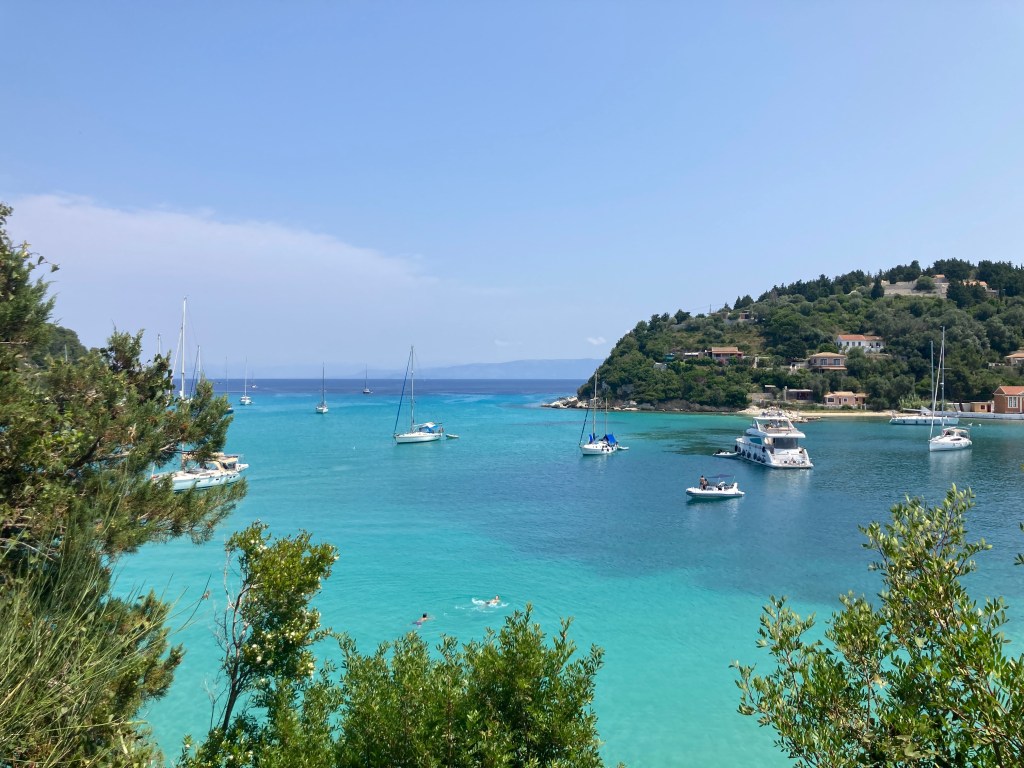
Finally, the bus back to Preveza where we had arrived a fortnight earlier, for a final swim and a night out before taking the plane to jolly old Stansted.
***
It was only three months ago but it seems longer as memories start to fade. As ever, Greece was a joy: the food, the sea, the landscapes and, above all, the welcoming and friendly people.
 The Wight Stuff
You have sold me the Gorge hike, Colin. Another destination added to a long list. Please stay at home next year!
LikeLike