Unlike Hungary, Croatia is a country we had already visited: in 2013 to the Istrian peninsula (Pula, Rovinj, Montovun, Beram, Poreč etc.), and in 1989, before the start of the Yugoslav Wars, to Dalmatia (Dubrovnik, Korčula and Split). Of course a sizeable chunk of Croatia’s population has no memory of life in “Yugoslavia”.
Another thing to make you feel old
Saturday 8 June
Arriving in hot and sunny Zagreb after four hours on the Flixbus from Budapest, I wasn’t sure what to expect. It is not a large city for a capital, and it doesn’t have the attractions of the coast. But we needed to break our journey from Budapest to Split.

We took a tram from the bus station to our spacious but inexpensive apartment in a 19th-century block on Ulica Nikole Tesle (Tesla was born in what is now Croatia though, despite his statue and other tributes, not in Zagreb).
After a settling-in beer and a spot of leg-flexing, we had an early dinner at Namaste (as recommended by an Indian gent on the tram). I made the mistake of ordering “duck vindaloo”. It was bland and generally unpleasant, and came with a selection of boiled veg: in short, as un-Indian as can be imagined. Anne’s biriani looked more authentic, though not much. Our mood improved when we came across a kiosk selling slivovica in shot-sized bottles, which we dispatched later on the wonky second-floor terrace we shared with our Maltese-Scottish neighbours. An early night.
Sunday 9 June
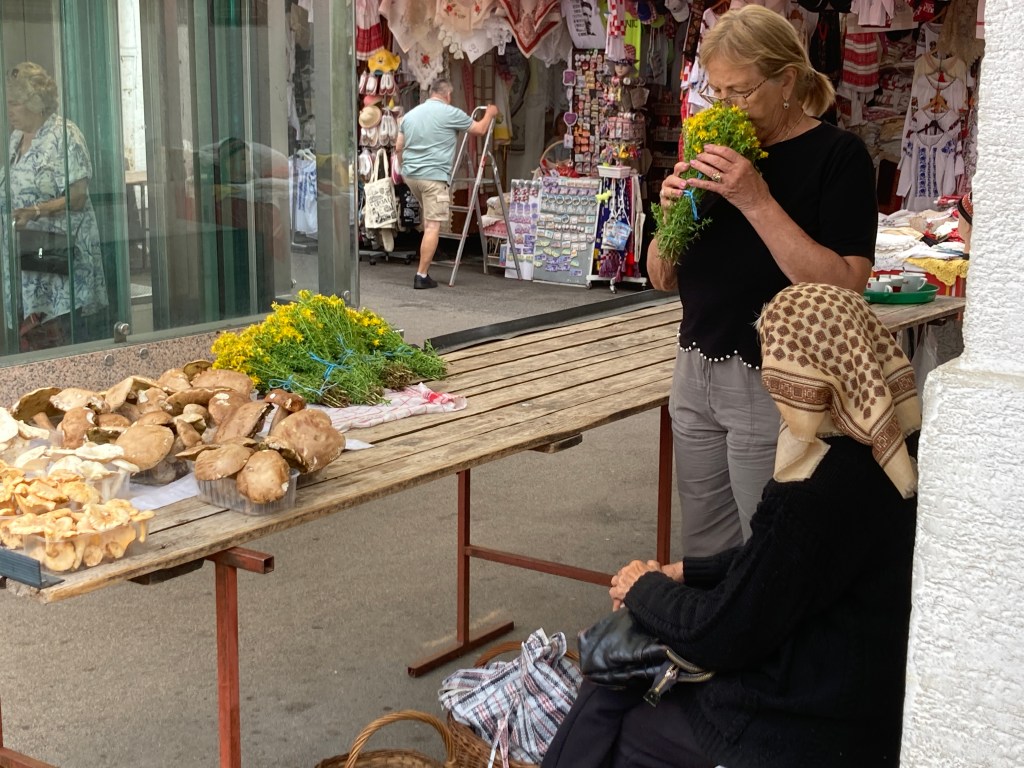
Time to see the sights. We explored the upper town, stopping at the flower and food market to buy bread, cheese, ham – and more slivovica.
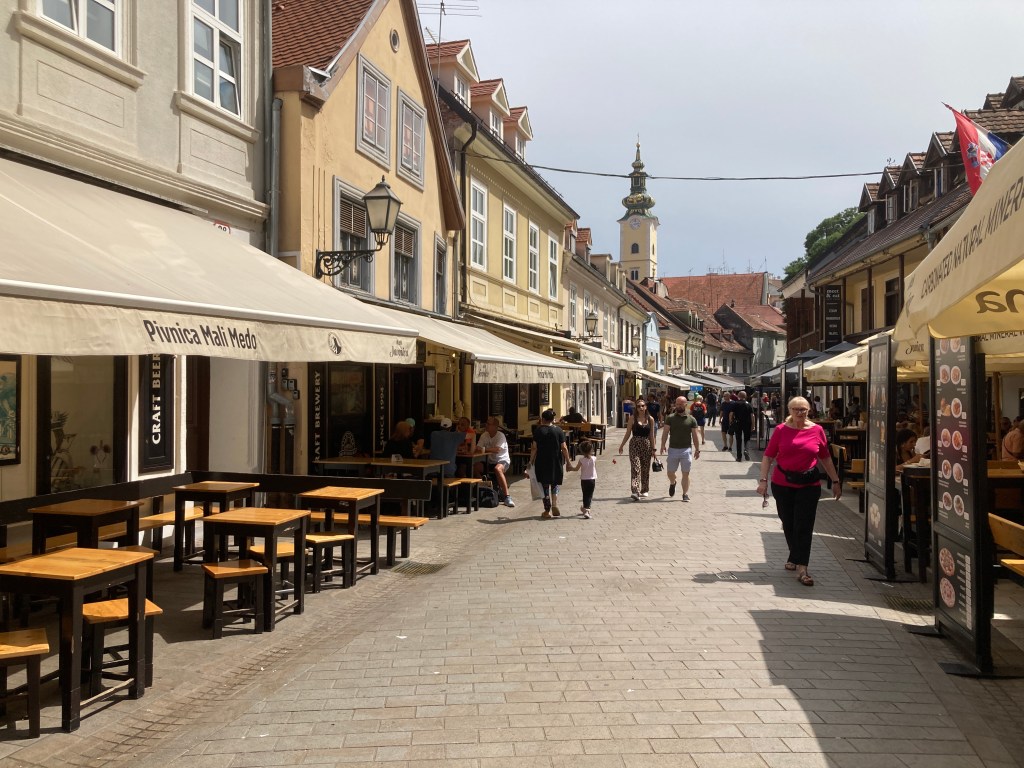
After a breakfast cappuccino we continued uphill to Ulica Tkalčićeva, a street famed for its brash and garish nightlife. A knees-up was in full swing at 11am with a rock band playing American and British classics. Over 100 happy, energetic people of all ages were dancing in the sunshine.
How about that in London?
The beer was already flowing, and it seemed rude not to join in.
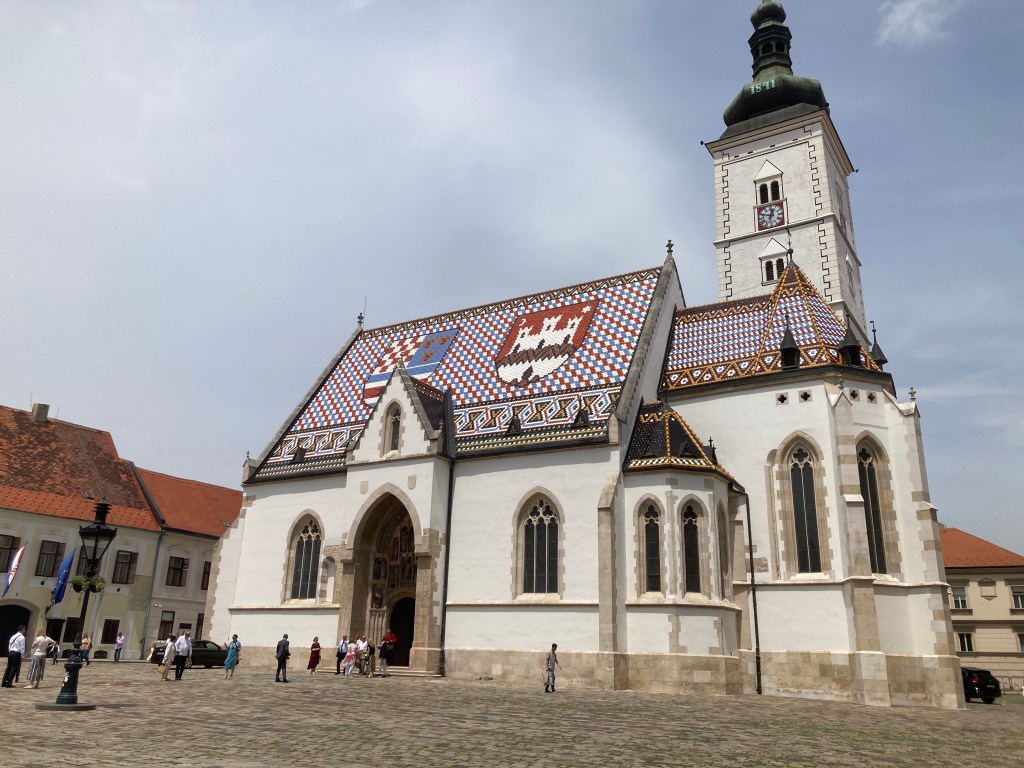
We tore ourselves away to continue our route through the town, admiring fine houses of the Austro-Hungarian era and Gothic churches (which all seemed to be closed, even on a Sunday). By the time we got to the stone gate with its shrine we had worked up an appetite for a substantial sushi lunch.
At the next table were a couple of American teachers, dangerous liberals, who expressed confidence that the constitution and institutions of the USA would protect their country from any future Trumpian dictatorship. Hopefully the raving lunatic will stay out of the White House anyway.
***
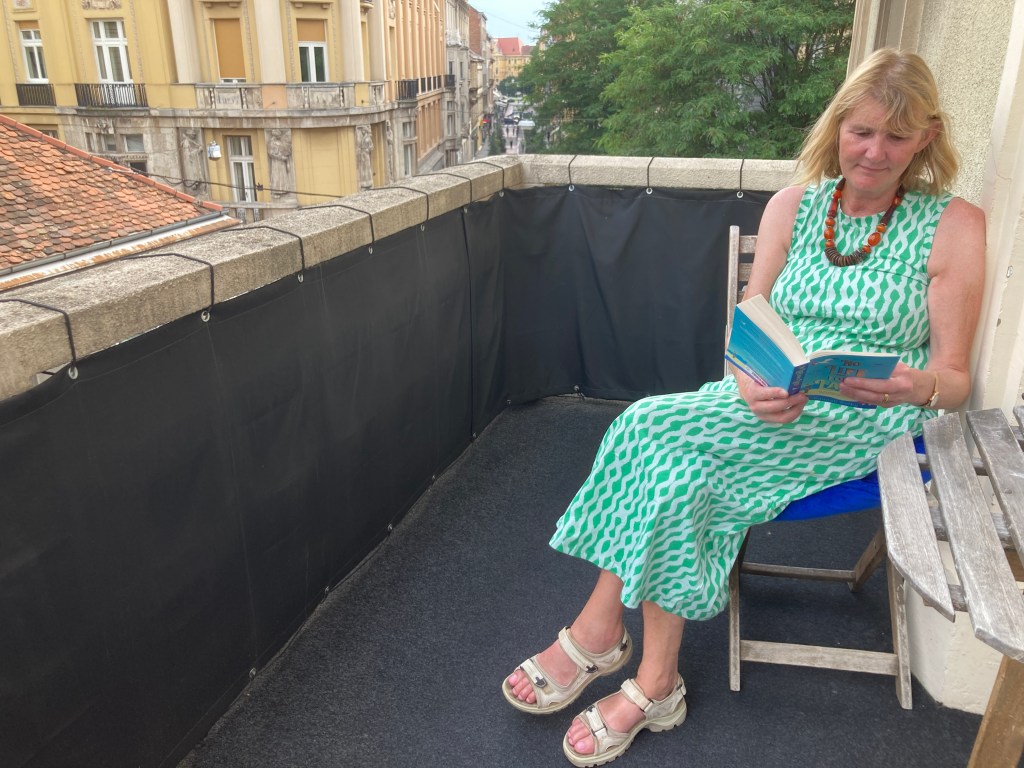
It was a good afternoon for washing socks and reading on our wonky terrace.
Monday 10 June
We set off for one of Zagreb’s more unusual attractions, the Museum of Broken Relationships. What had originally been intended to be a temporary art installation has become a thought-provoking permanent collection of items donated by people from all over the world. One example: a toaster confiscated by a woman from her ex-partner “so that he could never enjoy toast again”. But some of the captions told tragic stories.
I recommend a visit
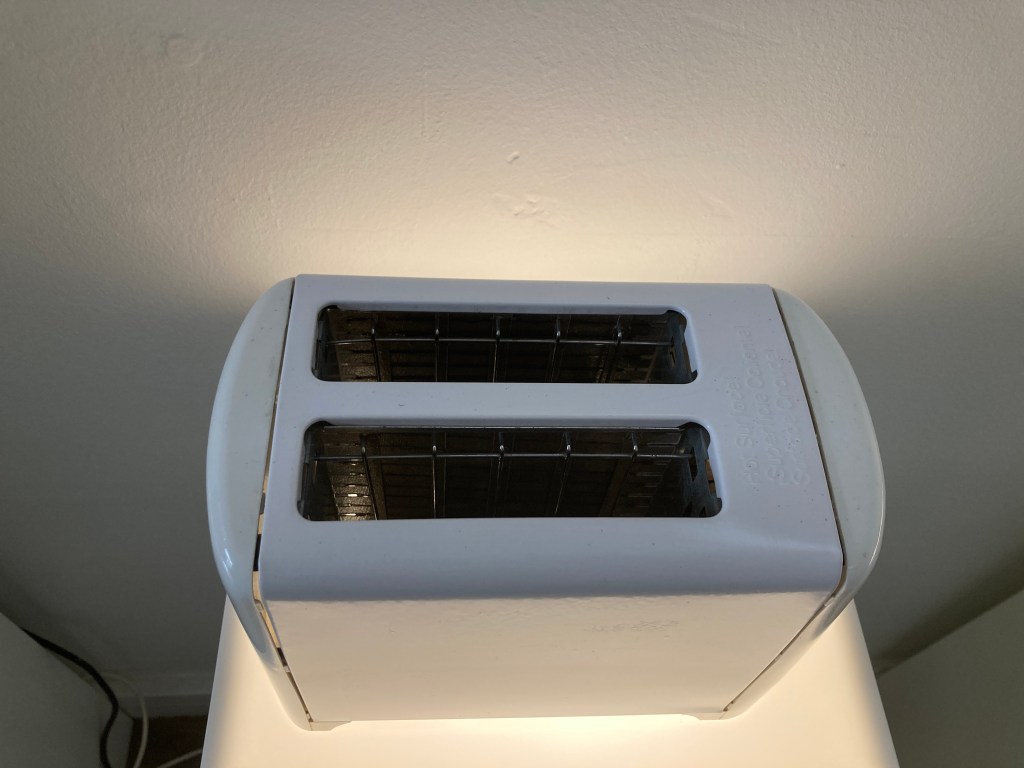
Then it was back to the lower town by the shortest funicular railway I’ve ever paid to travel on, and a refresher at the Hotel Jägerhorn.
We ordered our beers, and a few minutes later there was a loud, terrifying bang. No one else showed the slightest interest. We discovered that the noontide explosion was a daily occurrence. You have now been warned about the Grič cannon.
***
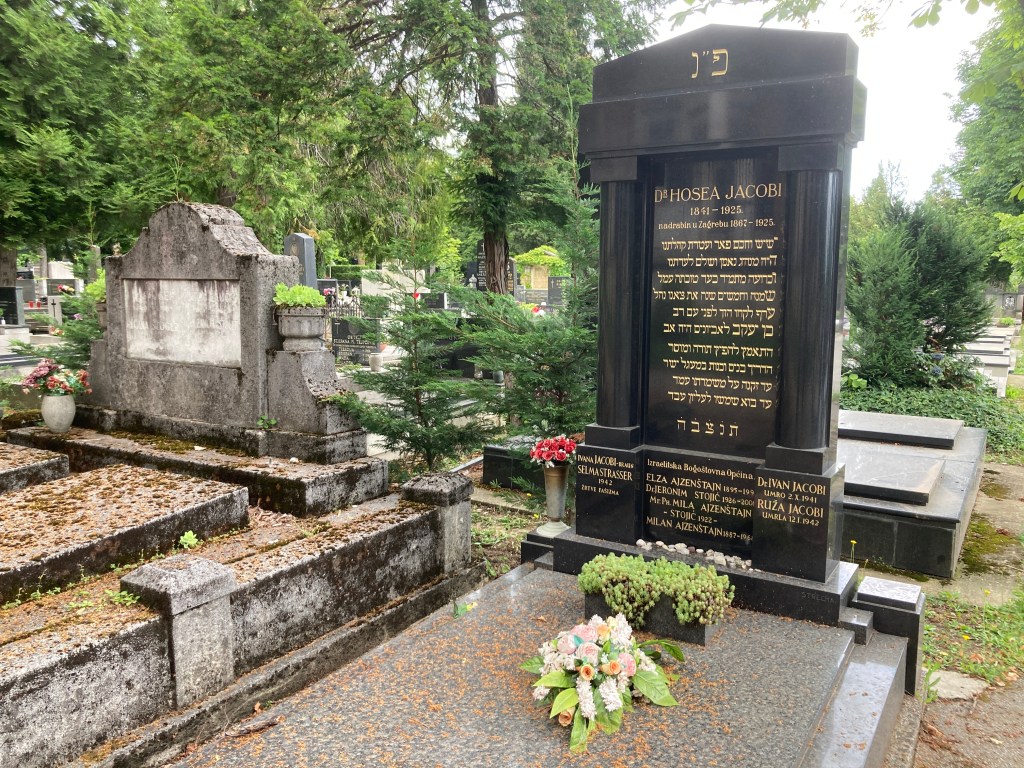
In the afternoon we took a tram out to the Mirogoj Cemetery. Famous Croats (though few names were known to me) of all religious faiths and none are buried there, and it makes an interesting excursion. As so often in this part of the world, the ghosts of fascism and the Holocaust are inescapable.
We had reserved a table at Vinodol next to our apartment… but I am allergic to boom-de-boom muzak so we escaped to Carpaccio next door, which was just what we fancied:. classic Italian trattoria dishes, and so tasty. Negronis, again. The best tomatoes ever.
Finally, slivovica on our terrace, again.
Tuesday 11 June
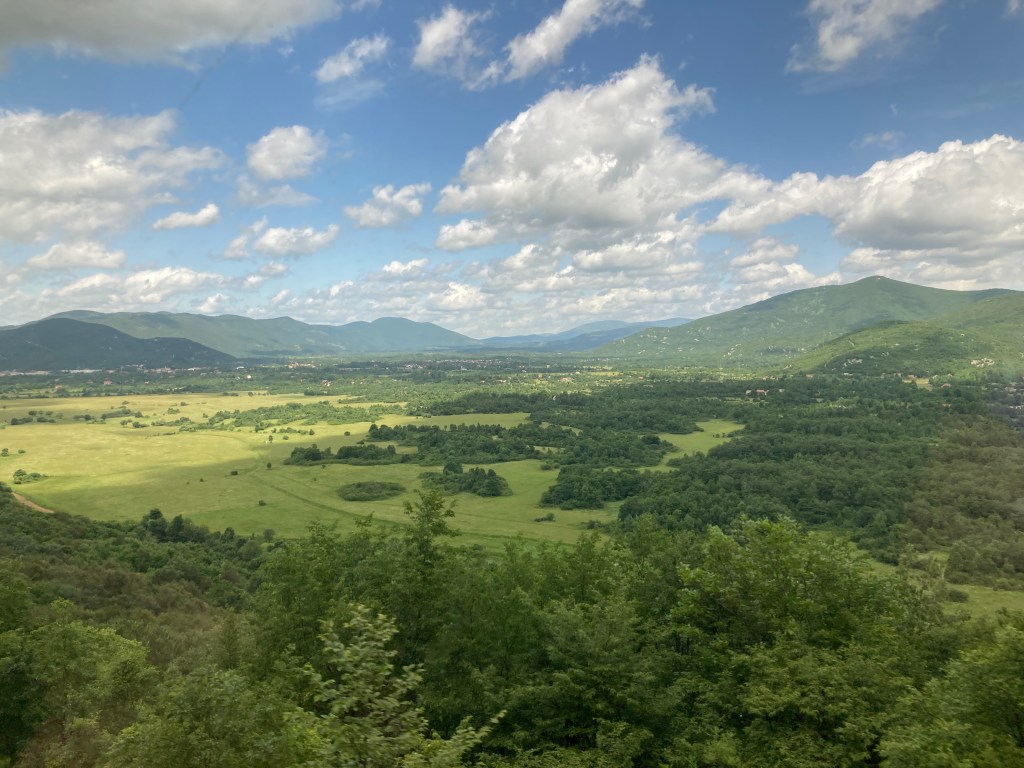
Up before 6am to catch our train to Split, and of course it was raining as we walked to the station. We had reservations in a coach that turned out not to exist but nevertheless we managed to bag a six-seater compartment to ourselves. The river alongside the tracks was flowing fast and high, but it stopped raining after Gospić as we climbed slowly through verdant countryside with enticing views of meadows and mountains .
It was early afternoon when we finally arrived at Split’s run-down, graffiti-infested station. Judging by what I saw, Croatia, unlike Hungary, has not invested in its railways.
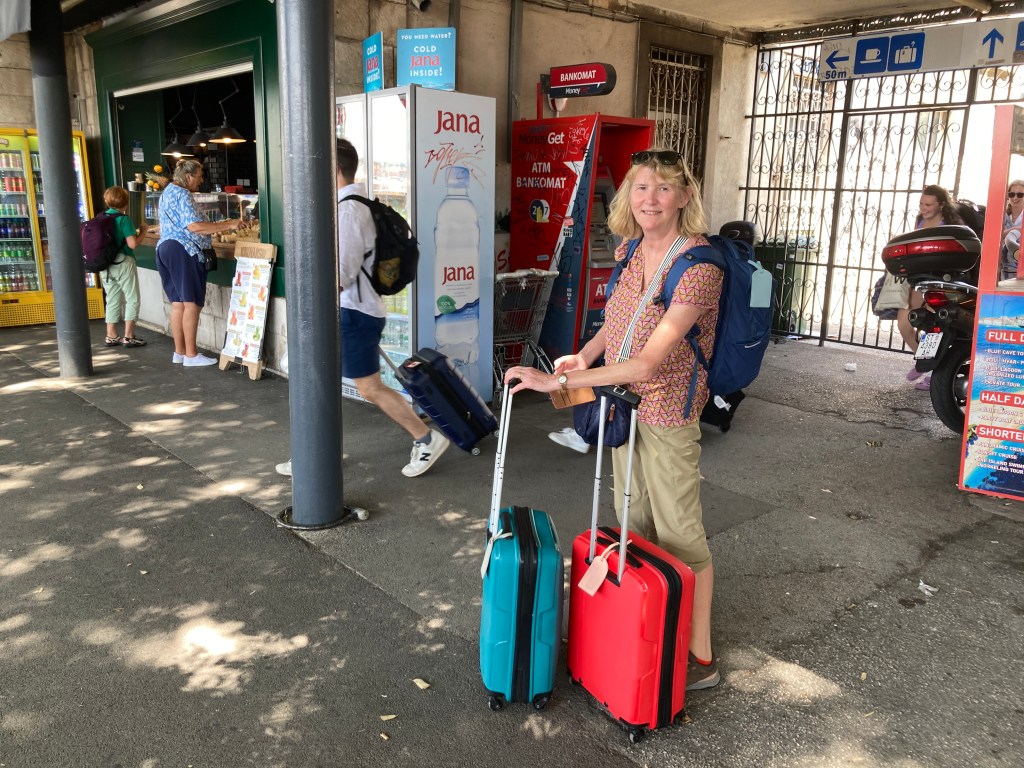
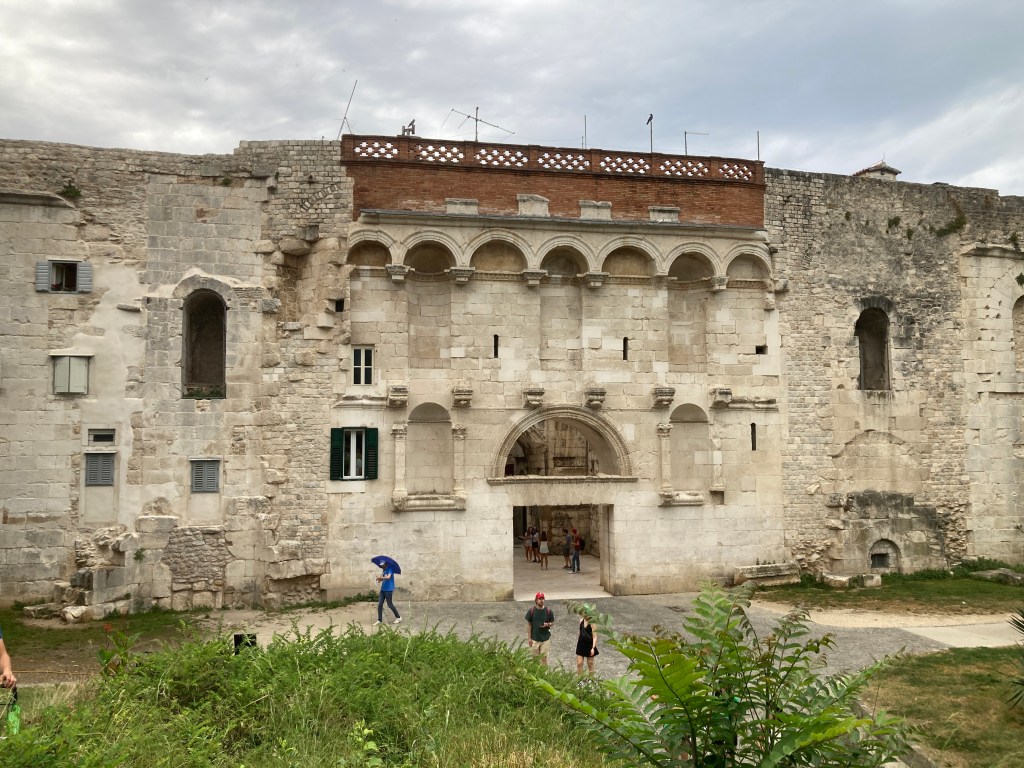
We passed through the eastern gate of Diocletian’s Palace into the old town and along to our tiny, neat room in Carrarina Poljana.
Heading out again, it was immediately apparent that the place was heaving with tourists, many in organised groups from China. Adding to the jollity were two eejits dressed as Roman soldiers. Although the churches and museum are just worth the entrance fees, it is the town itself that is the attraction. It’s unique, because it sits within the still-standing structure of a Roman fort-cum-palace.
***
What can it be like in August? When we first visited Split, back in the last days of Yugoslavia, only the most enterprising foreign tourists found their way here. We took the ferry from Korčula (I remember that it rained the whole way), and found a small hotel where we managed to make ourselves understood in Italian.
Split is no longer a secret, credit cards are welcome, and everyone speaks good English. Like Venice, it can barely cope with today’s numbers and you wonder how the locals retain their sanity, even as they make a fortune.
We retreated to our terrace for a few hours’ rest before heading down to the Riva for a cocktail, and finally to a pizzeria 10 metres from our apartment.
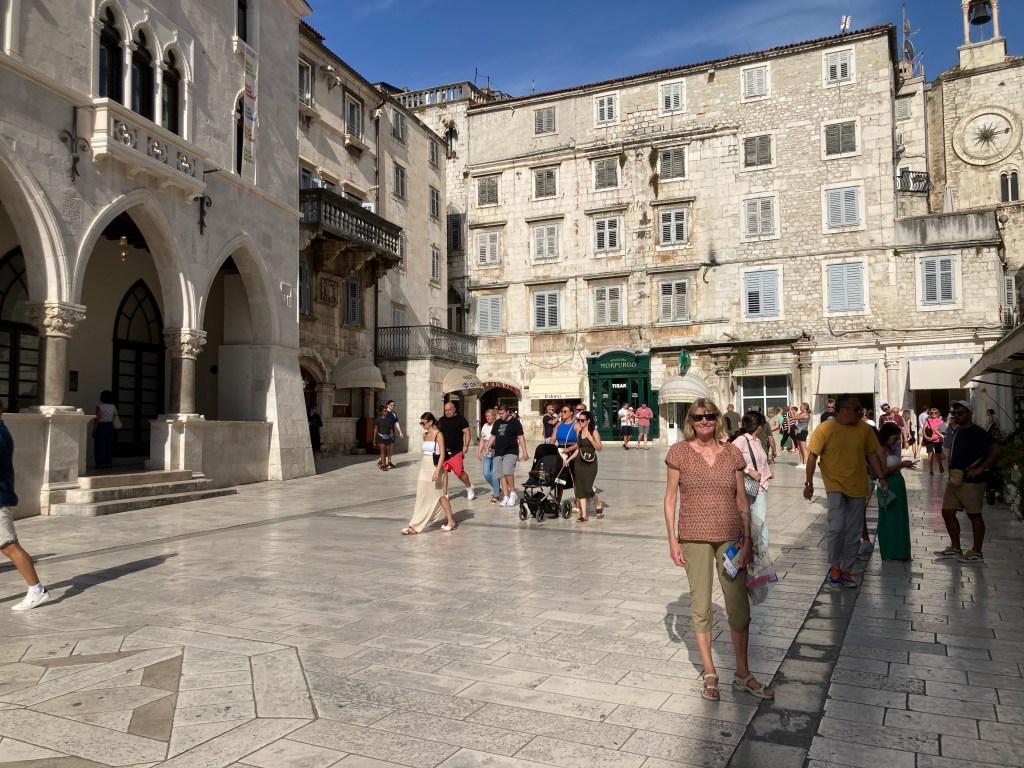
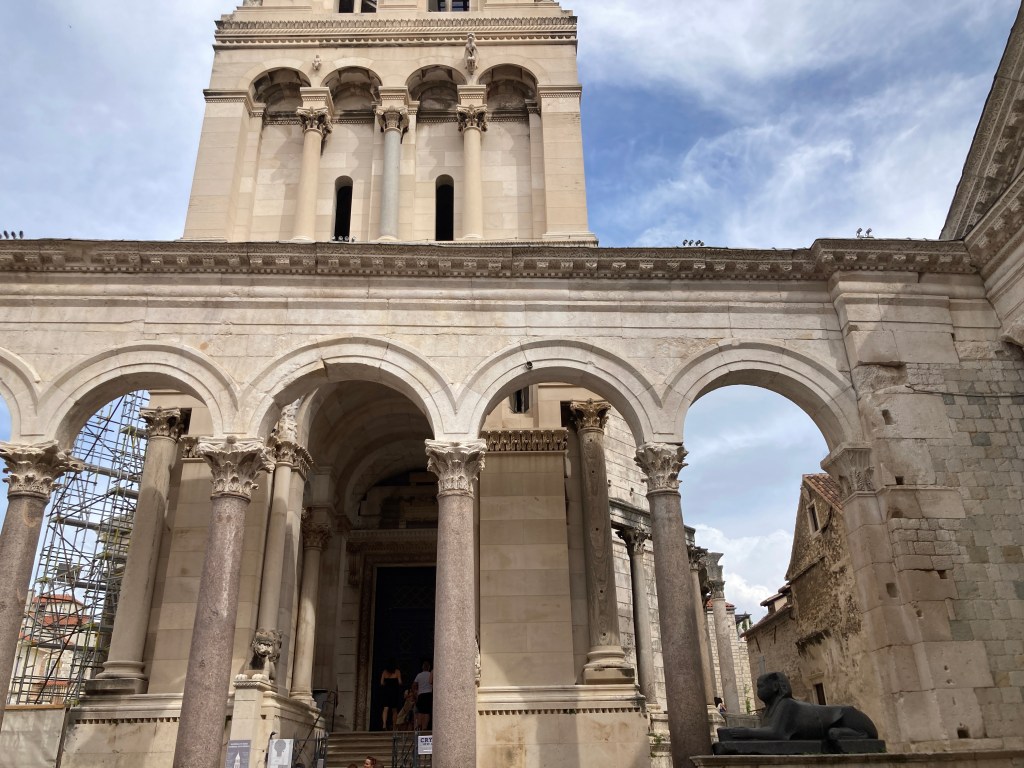

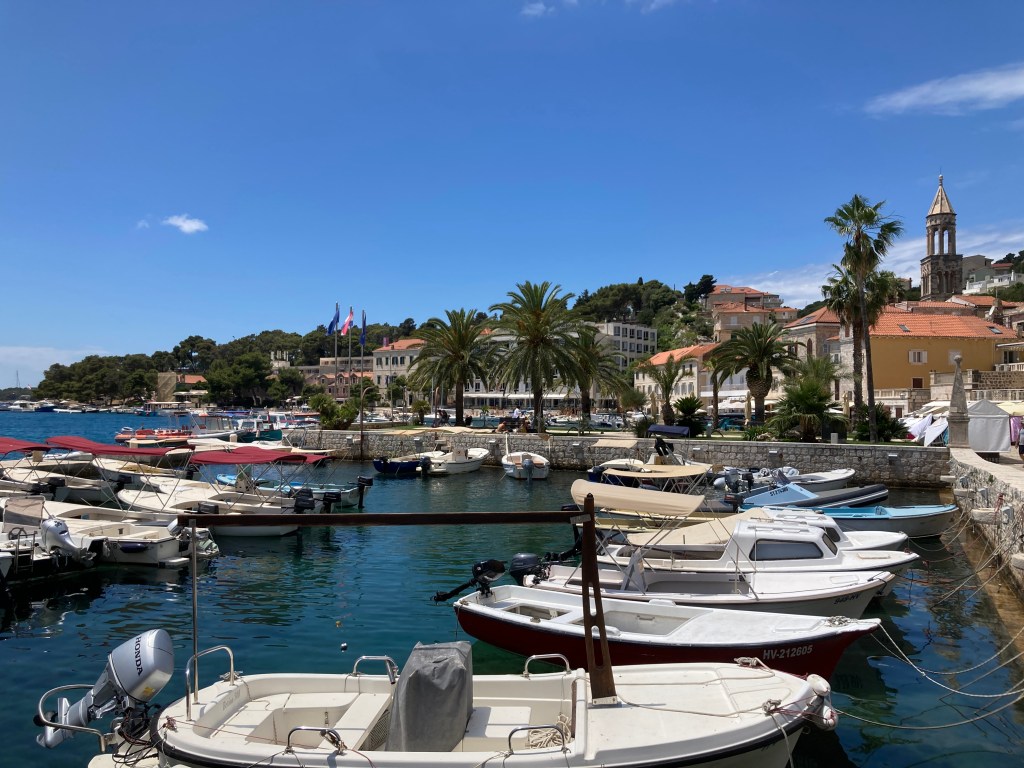
But again, as with Venice, if you rise early you can see the old town without being trampled by the crowds or pestered by the Roman eejits. It was lovely, until a torrential thunderstorm forced us into a café for a good half hour. Avoiding the worst of it but still half-soaked, we made it to the harbour in time for the mid-morning catamaran to the island of Hvar.
Hvar did not disappoint
More about Croatia and Slovenia in the next instalment.
 The Wight Stuff
Hi Colin
I am really enjoying your European travels. Thank you for sharing them in such a lively way.
Just a thought, I am the Events person for Dulwich and District u3a (FOOL that I am!) and wondered if you would feel inclined to put together a powerpoint talk for us for sometime next year? About 45 minutes plus questions? Do let me know if you could.
Best wishes as always
Sheila
LikeLike
Thank you for asking me, Sheila. I will get back to you.
Colin
LikeLike
Loving the travelogue – what happened next in Split? Looking forward to the next leg.
LikeLiked by 1 person
Next episode will be more Croatia then Slovenia
LikeLike