It was hot – well over 30c – when the Arta Line catamaran from Split docked at Hvar (the trip takes exactly an hour).
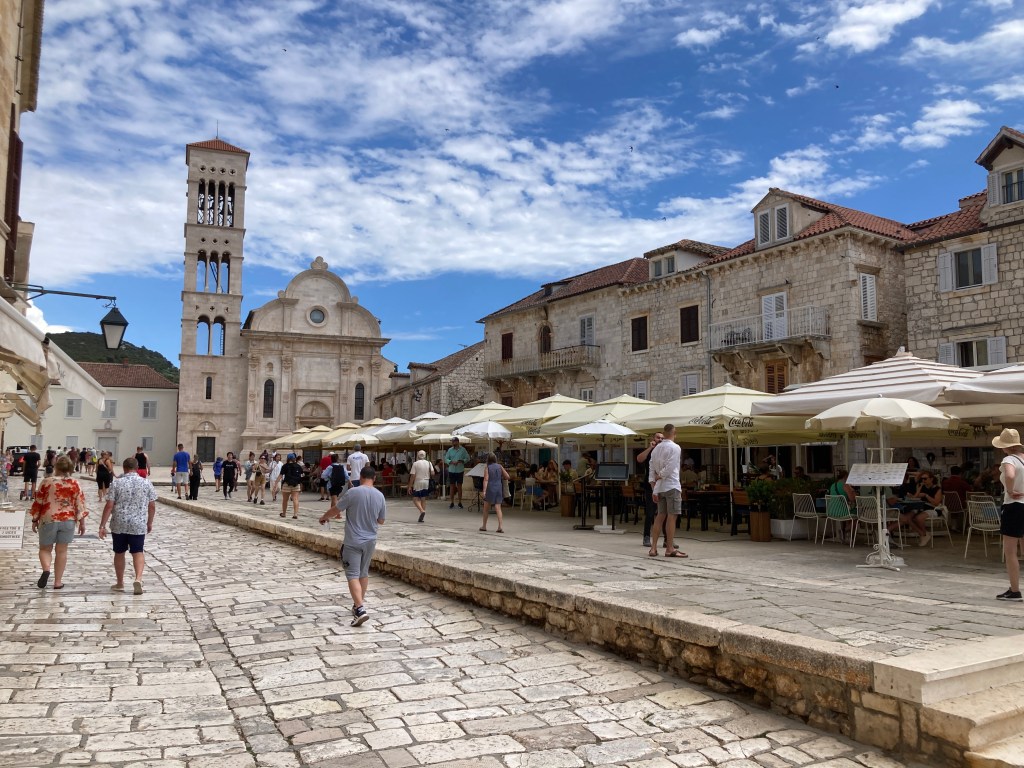
The Pjaca, or Trg, one of the largest squares in Croatia, is surrounded by fine Venetian buildings and the Cathedral of Saint Stephen. There were plenty of souvenir shops and restaurants but only one mini-market – which was doing a roaring trade, mostly in booze and snacks. As we would be self-catering for the next four days, we joined the queue.
We plumped for a decent-looking place on the edge of the square for lunch, then headed out to the taxi rank.
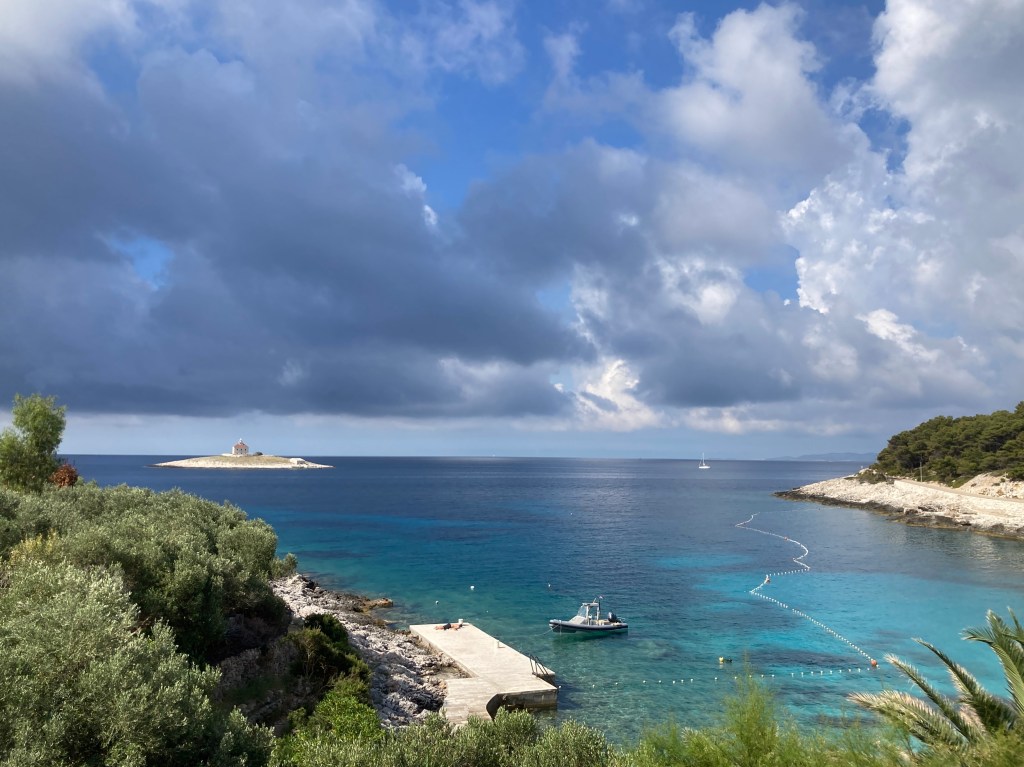
It was only a short drive along the coast to our apartment at Mustačo, above a pebble and sand beach opposite the islet of Pokonji Dol. It seemed idyllic, and after checking in we looked forward to the first saltwater swim of our holiday.
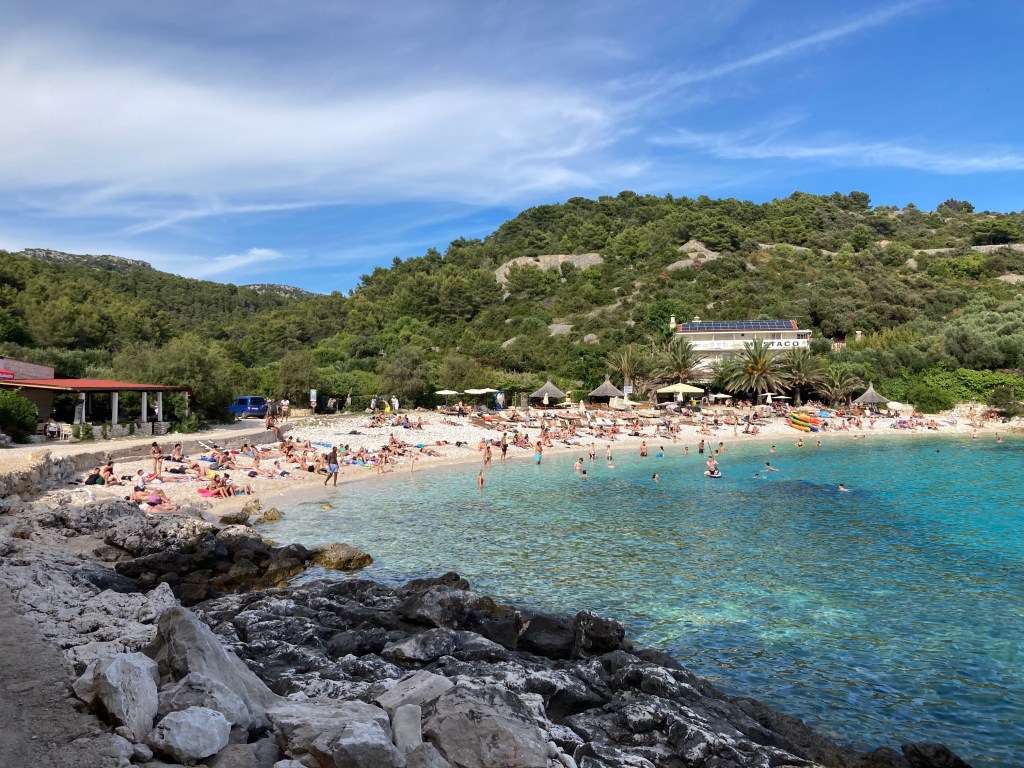
The only drawback was the thumping music coming from the bar directly under our balcony. I knew I would be unable to bear it for another hour let alone four days. I pleaded with them to turn down the volume and, to my surprise, they did. Not only that, but it stayed down during the rest of our stay. Always worth asking.
The water was warm and clear
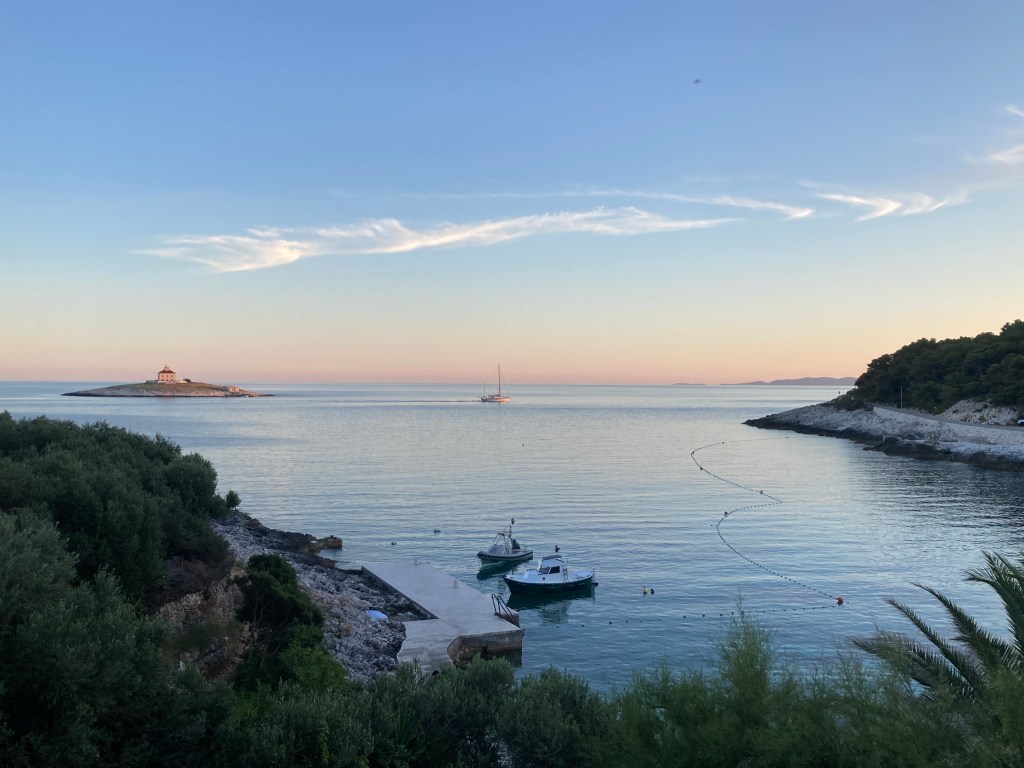
As evening fell, the bar shut and the last of the day-trippers drove or walked the 3 km back to town. We enjoyed a salad and a bottle of local wine on our balcony, with a view out to sea and the islet with its lighthouse: just what we needed after all the urban traipsing of the previous two weeks.
Thursday 14 June
The following morning we bravely climbed over the hill into town, then knocked off the main sights, which include a little public theatre built in 1612. After a cooling beer, we found a restaurant with a view and a breeze.
Back at Mustačo that afternoon, the long-threatened thunderstorm finally arrived, cancelling our planned swim. When the sun reappeared we walked out along the quiet, rocky coast, enjoying the refreshing scent of pine trees. Unexpectedly, we happened across Pachamama, as chilled a bar as one could wish for, run by an Italian hippy assisted by younger staff of various nationalities and differing levels of competence. We were the only customers. We sipped our bargain, happy-hour margaritas while listening to the lush and lachrymose tones of Florencia Vicenta de Casillas-Martínez Cardona, AKA Vikki Carr.
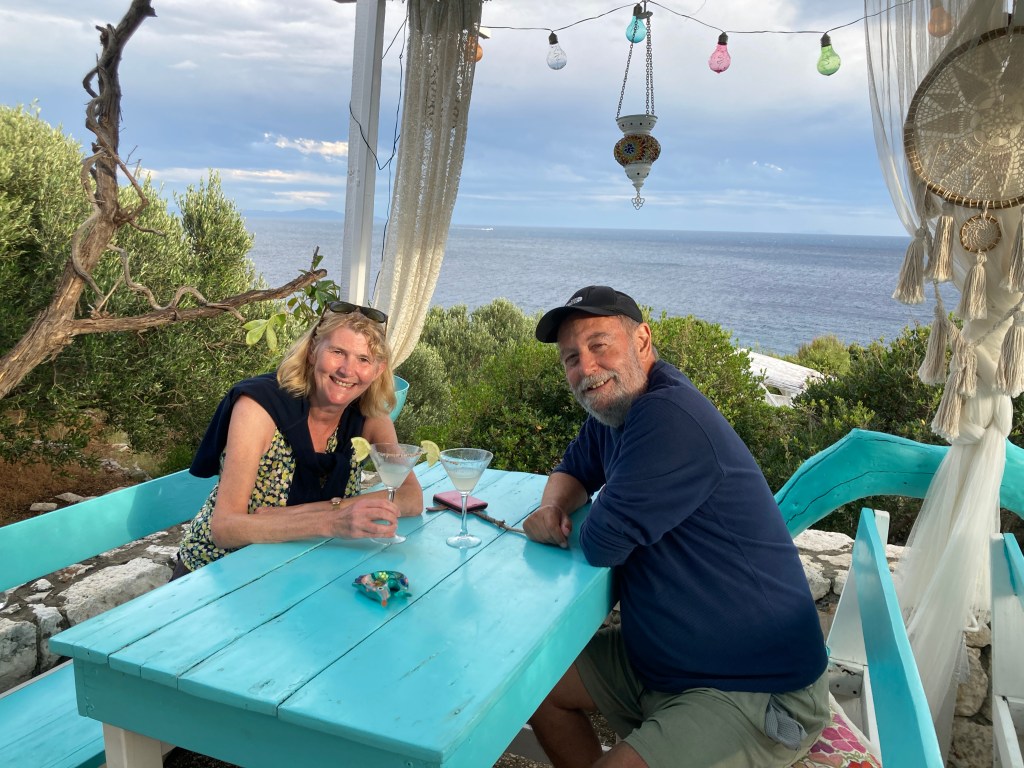
Quite a find!
The evening brought another rain shower followed by a classic sunset.
Friday 15 June
We started the day with a coffee and a swim before the day-trippers showed up.
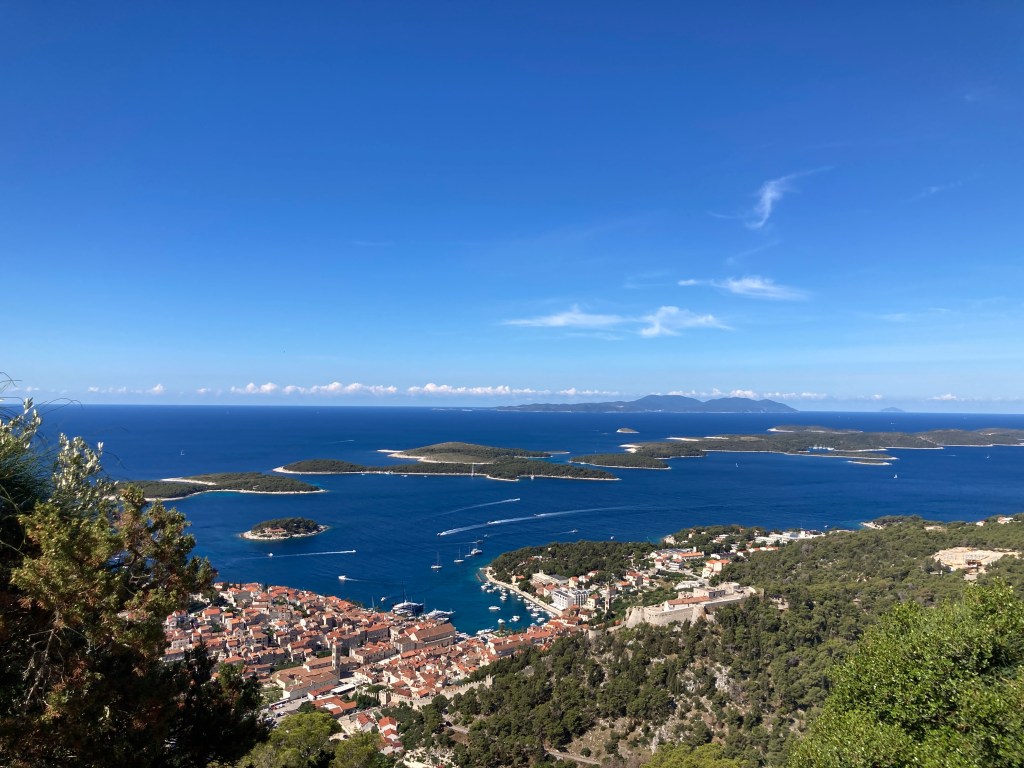
Having exchanged friendly words across the balcony with our Czech neighbours, in an awkward combination of German and English, the previous evening, we enjoyed the luxury of a trip across the island by car. High above the town is a medieval castle known as Fotica Španjola (the Spanish fortress). There were clear views of the tiny Pakleni islands, as well as Brač and Korčula.
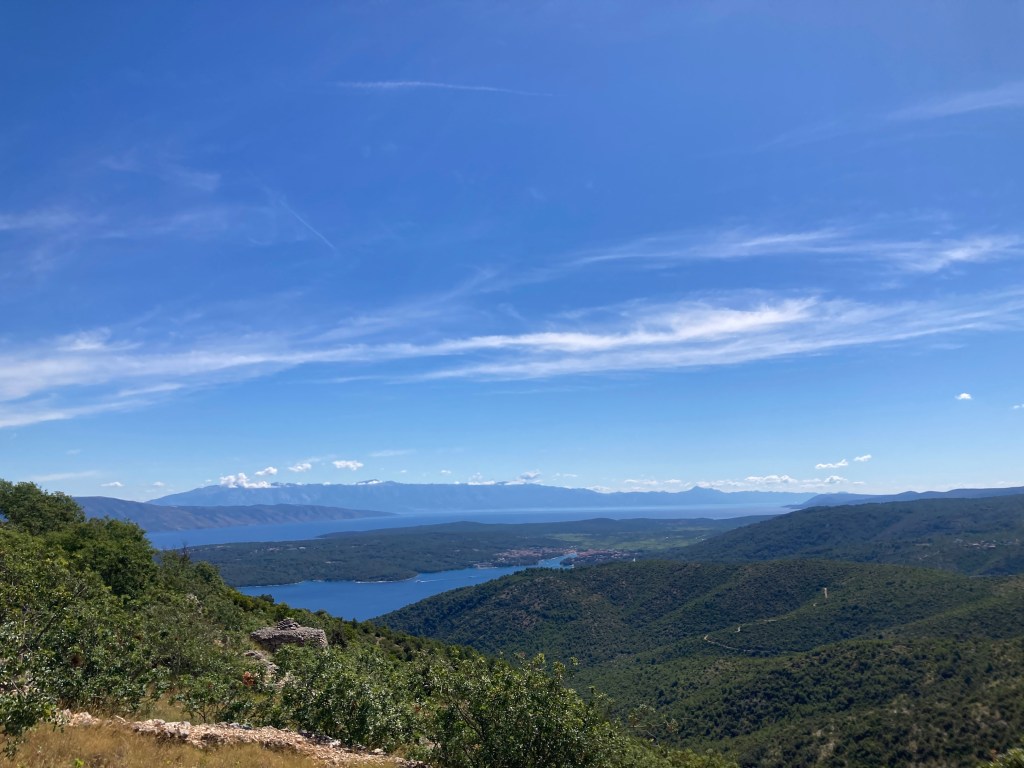
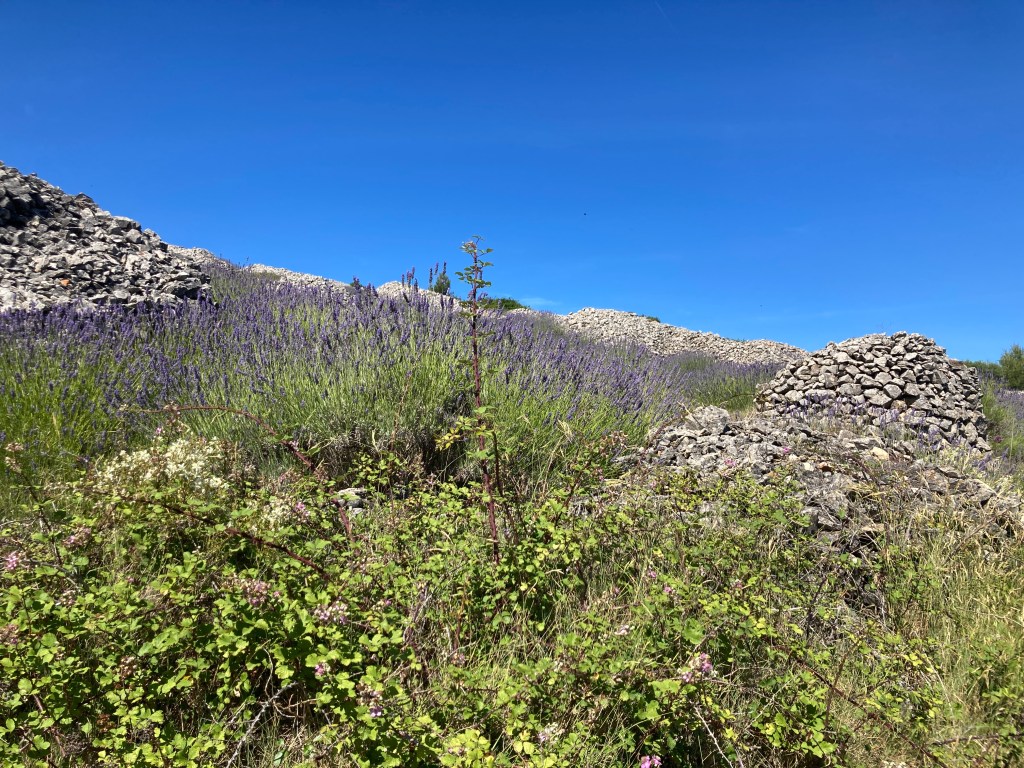
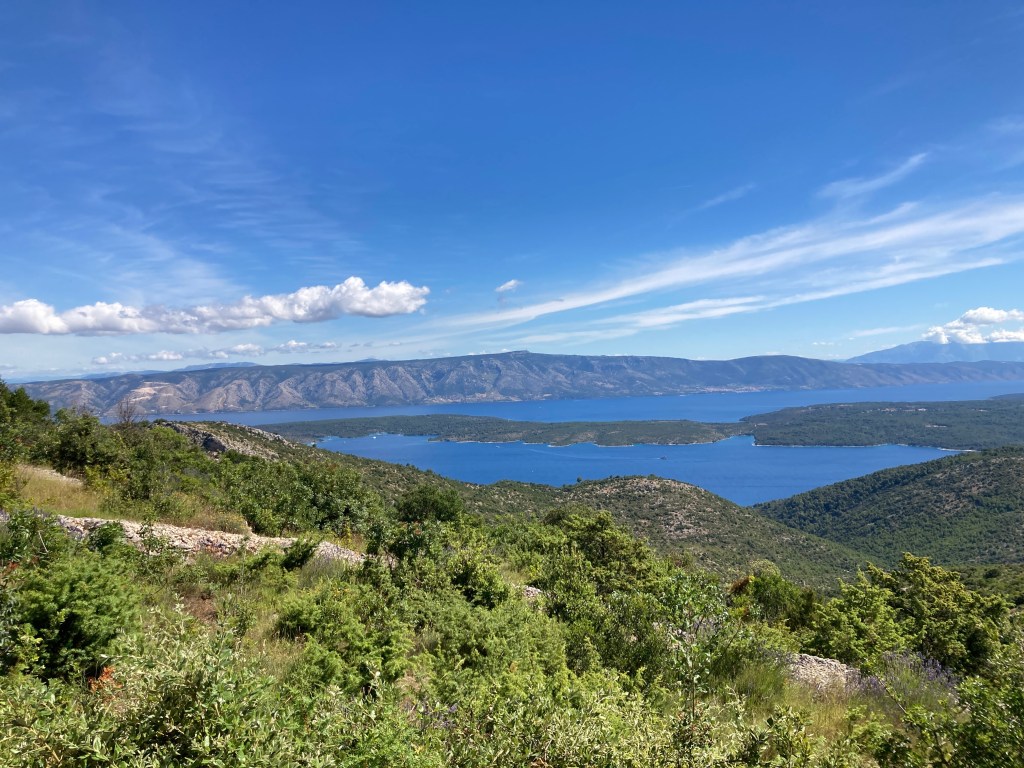
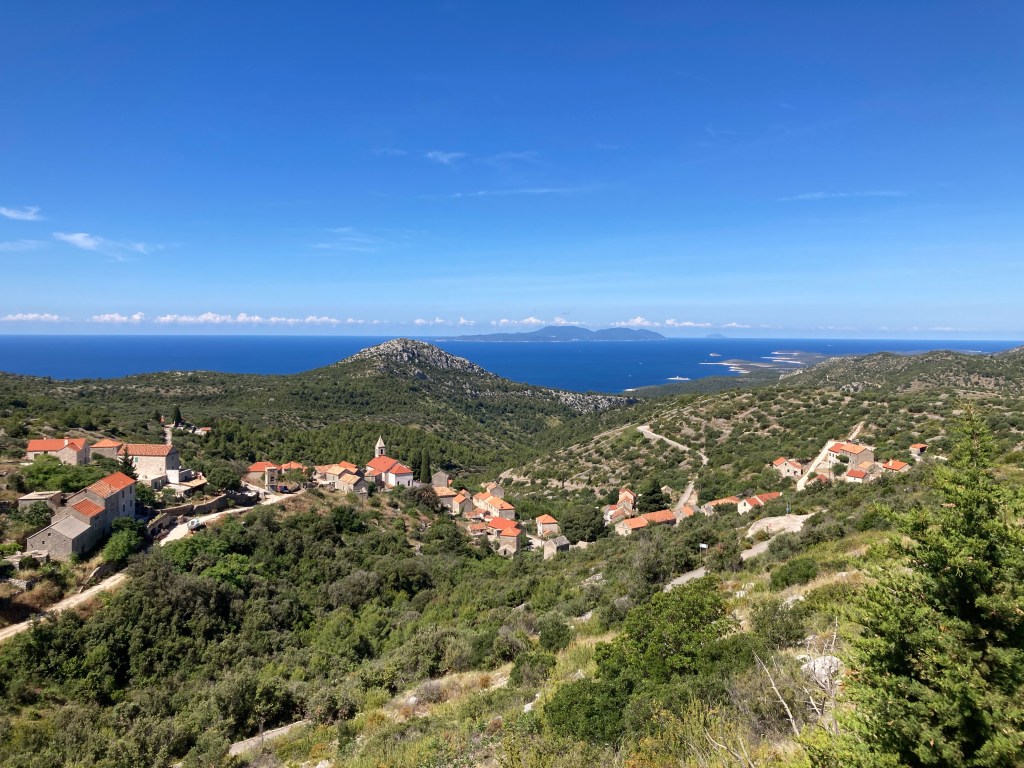
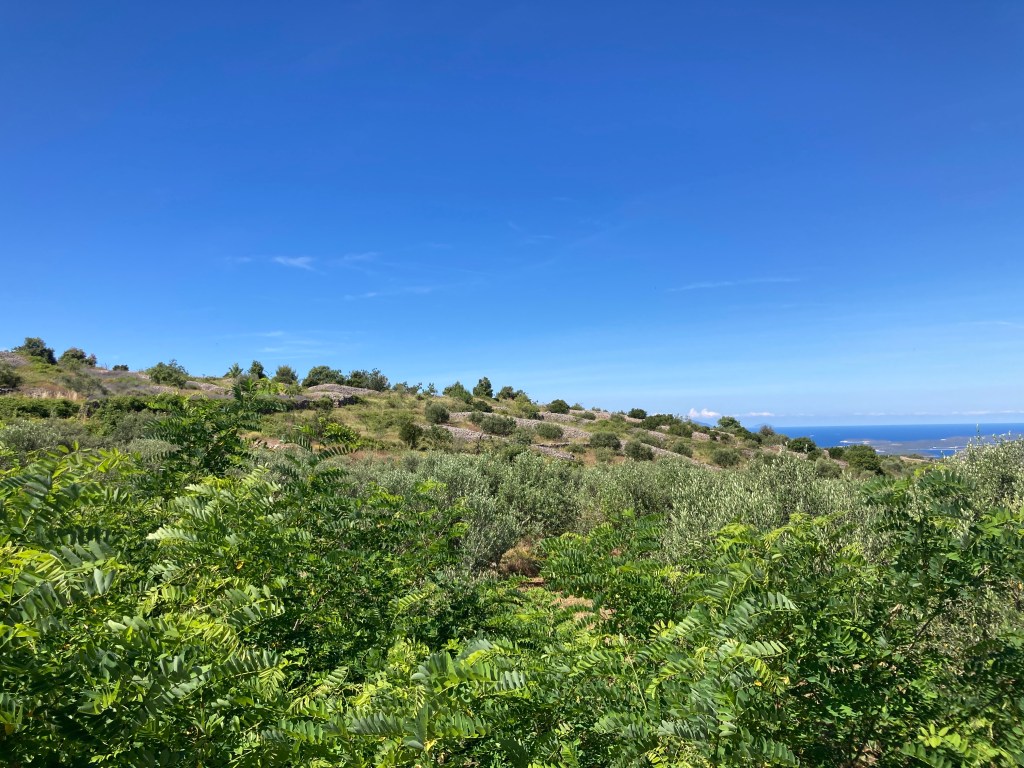
The slopes are covered in pine trees, vineyards, olive groves and orchards. There was a heady scent of wild lavender, and gathering it is still an industry here.
We were now half-way through our holiday and we took our only opportunity to wash our clothes and dry them on the balcony. Later we walked into town via the coast road and dined at Dalmatino, where the food was interesting, the service fussy, and the prices steep.
***
Back in our apartment we watched the opening match of Euro 2024: Germany (the hosts) vs Scotland. Predictably, Scotland were torn to shreds and lost 5-1. Would England fare any better?
Saturday 16 June
After our morning dip we retraced our route to Pachamama, walking on for another 15 minutes to Robinson’s Bay – with some of the cleanest, clearest water I have ever had the pleasure to swim in.
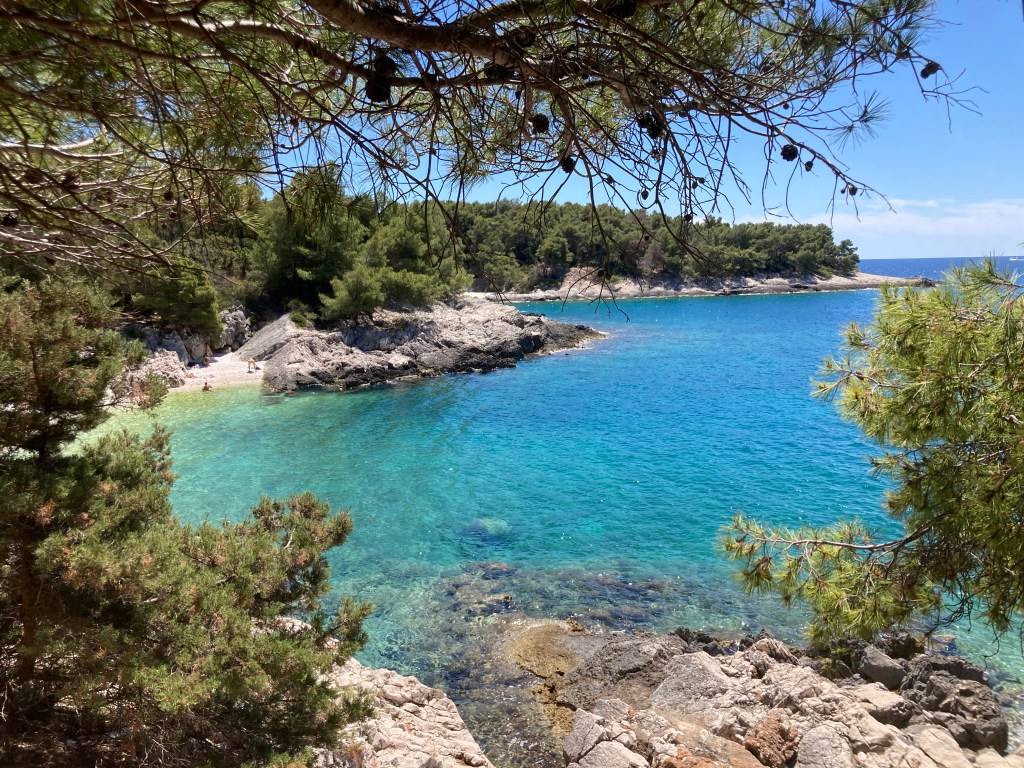
From the modest beach bar we ordered fish stew, washed down with truly awful wine from a jug. And there was no music, not even Vikki Carr.
Sunday 16 June
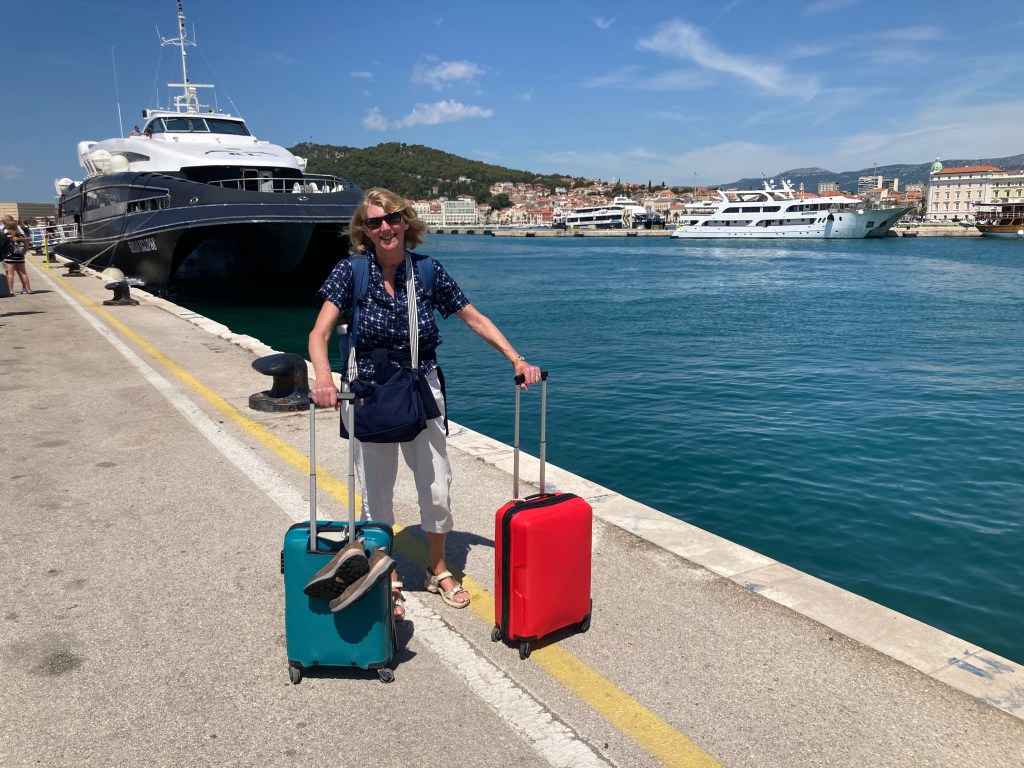
Hvar certainly did not disappoint but it was time to move on, starting with the catamaran back to Split. Then we caught the Flixbus north-west to the little city of Zadar.
***
It was a hot and sleepy Sunday lunchtime when we arrived at our second-floor apartment on Trg tri bunara (Three Wells Square), two minutes from the main street of the old town and not much further to the sea front in the other direction.
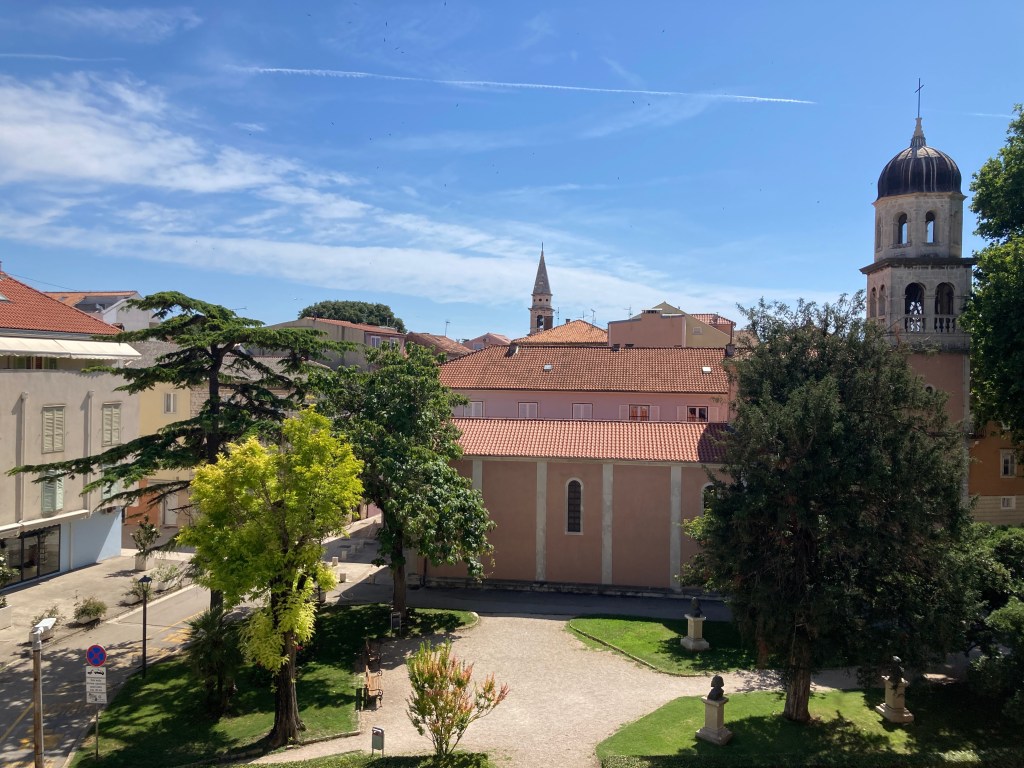
In typical Mediterranean fashion, the place came alive in the evening. Culturally, Zadar is much more Italian than Slavic and this is reflected in most restaurant offerings. But I love pasta, especially with a good veal ragù.
After dinner we found an outdoor bar to watch the footy on a big screen. England started brilliantly against Serbia then fell away, managing to hang on for a 1-0 victory. It was a sign of the pattern to come.
At dusk we joined the throng at the Greeting to the Sun. This spectacular art installation by architect Nikola Bašić is solar-powered and lights up after dark, with random patterns and colours.
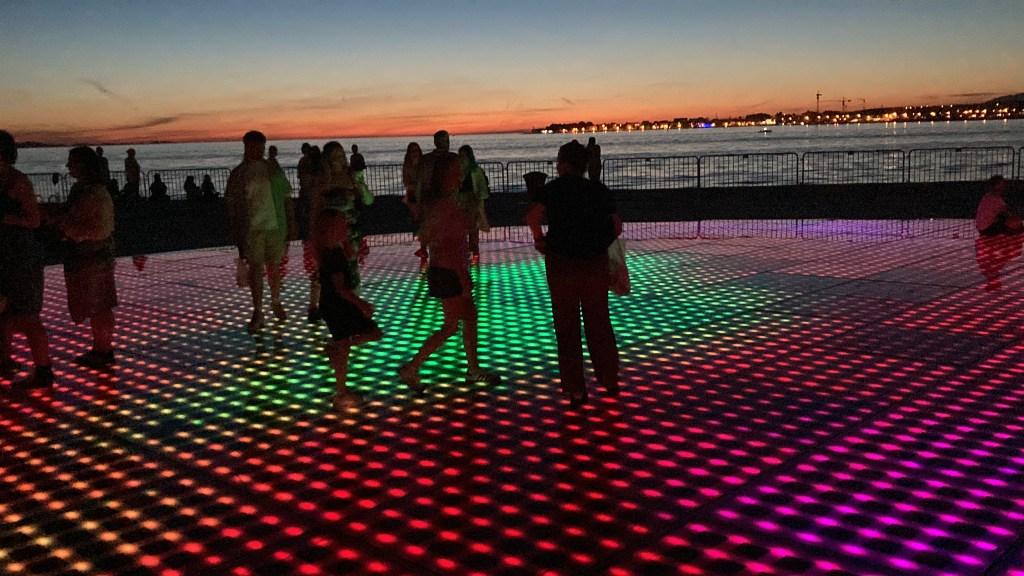
Nearby, and also by Bašić, is the Sea Organ. Pipes under the seafront are activated by the lapping of the waves to produce musical sounds which can be hypnotic. These two interactive and imaginative artworks have been a resounding success with tourists and locals alike, our nearest equivalents being the installations of Antony Gormley. But I’d love to see something like them is UK cities.
Liverpool could have a Sea Organ
Monday 17 June
A day devoted to sightseeing. One of the town’s principal attractions is the Roman forum, on the edge of which is the ninth-century church of Saint Donatus.
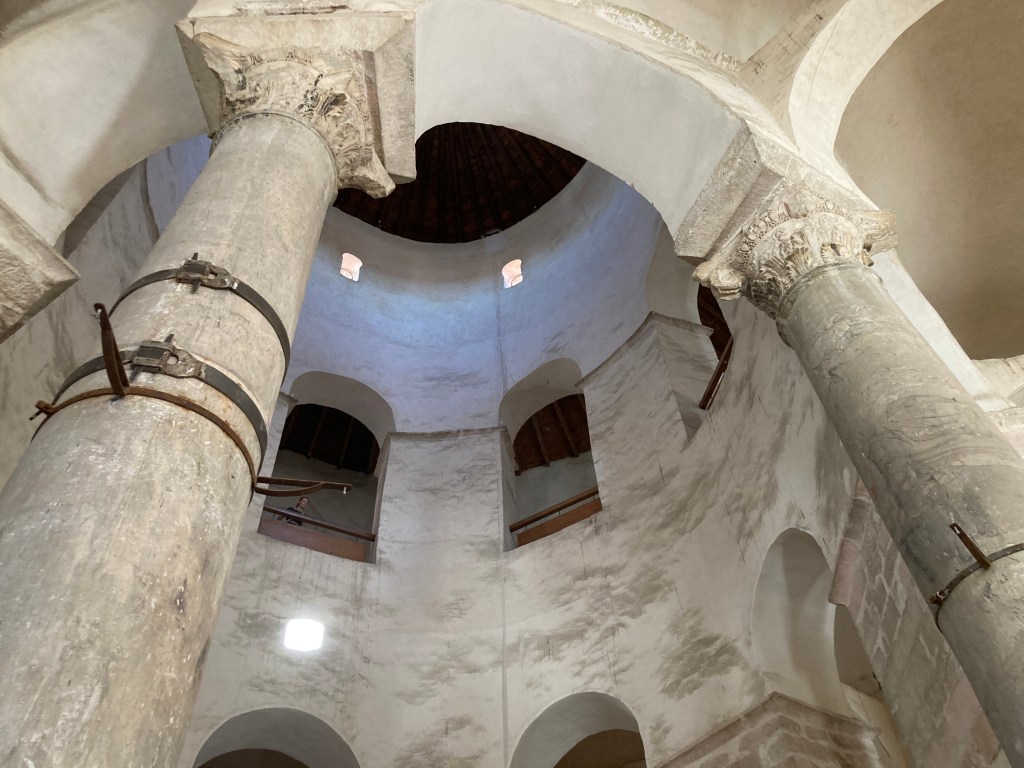
There are two other important churches to see, as well as the Museum of Ancient Glass. As always, I was amazed at the skill and imagination of ancient craftspeople.
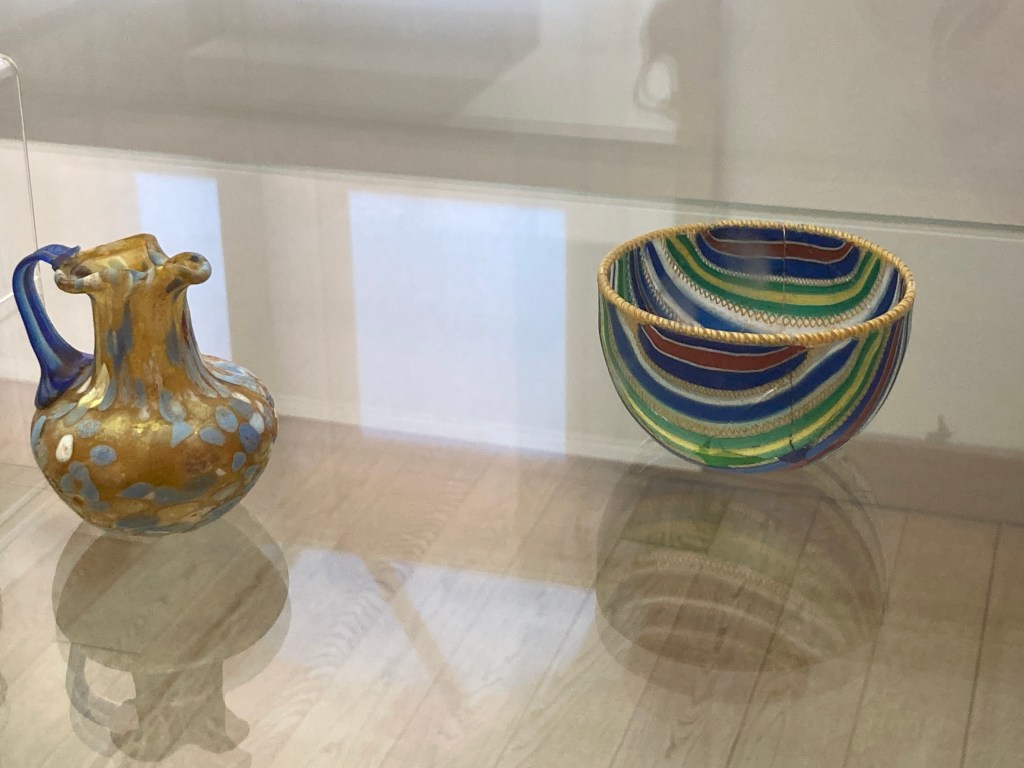
How have these exquisite objects survived the centuries?
Zadar is well worth a stopover
We enjoyed exploring the streets and squares of the old town. But it becomes obvious that much of Zadar has been reconstructed, in some cases carefully, in other cases not, following the Second World War. It has been estimated that 80% of its buildings were destroyed by Allied bombing: the Dresden of the Adriatic.
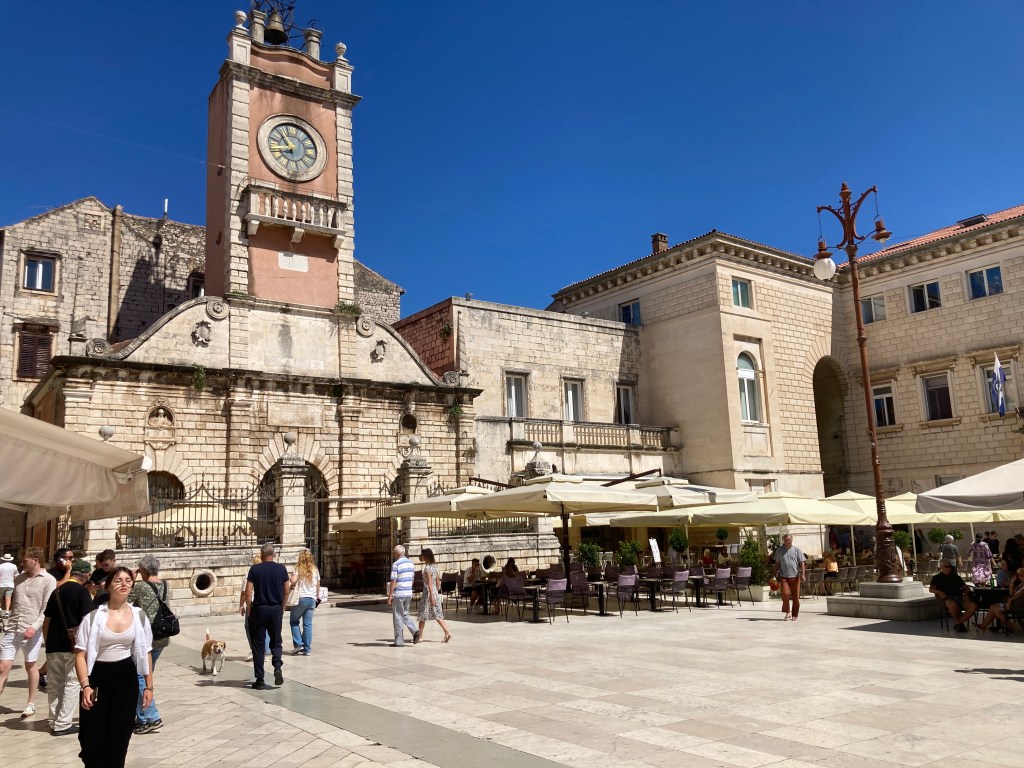
After a cheap, salty and over-generous lunch of salty cevapi and chips, we walked through the park then headed to the town beach for a dip. A few hours later we had sufficient appetite for a more sophisticated dinner at Groppo. Anne had beef carpaccio and I had monkfish in truffle sauce with polenta. A lot of it.
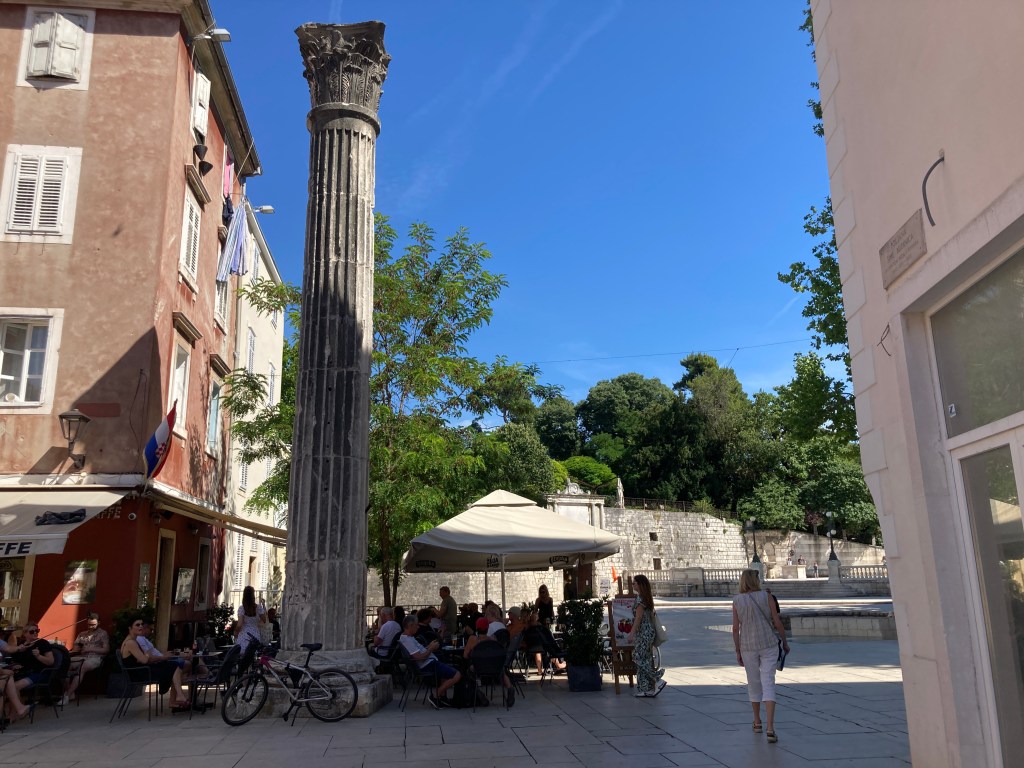
I am a people watcher
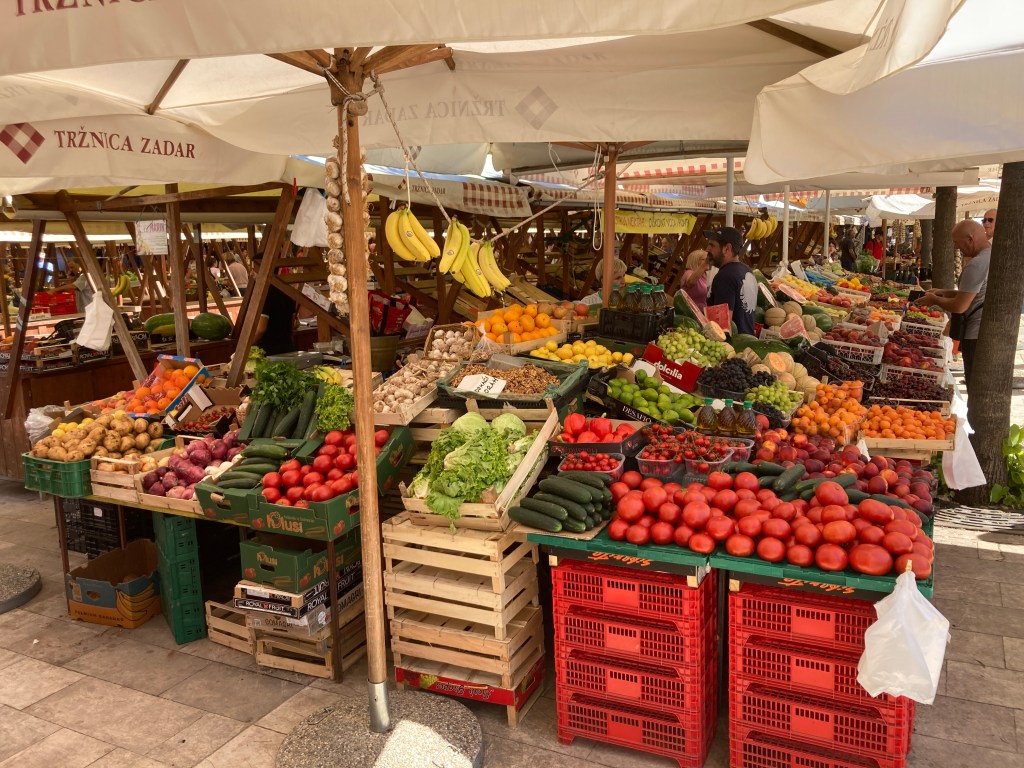
I couldn’t help but notice that young Croatian women were invariably very slim and smartly (if not expensively) dressed. And not just in Zadar, where many people were on holiday, but in Zagreb. In fact I saw hardly any obese locals at all, neither men nor women, young, middle-aged or older. I could not help but compare my impressions with what I see in England, especially the North.
I’m sorry if this sounds offensive but it’s all too obvious that our nation’s physical – and mental – health is poor, and items to be getting worse. We are witnessing the normalisation of obesity and of poor health in general. If everyone around you is overweight and drinking six pints a night, then you have nothing to be ashamed of
I am far from being a perfect physical specimen myself – though I am making an effort to lose weight and increase my fitness and I am starting to see results. I know that it is important.
I may come back another time to consider the reasons for this decline in public health, but the UK’s economic slide is not the only factor. It alone cannot explain why so many Brits look scruffy, overweight and unhealthy. I’d draw your attention to the fact that the UK, closely followed by Ireland, consumes the most ultra-processed food of any country in Europe (and three times as much as Croatia, Italy or Greece).
But when the big cruise ships disgorge their passengers you can be confident that the average American tourist, who is not short of a few dollars, will look even worse than the Brits. The Croats – and southern Europeans in general – have got it right and long may they continue to enjoy happy, healthy lives.


wow!! 61Europe from Z to Z, part VI
LikeLike