And so ended the Italian section of our holiday – which was in fact most of it.
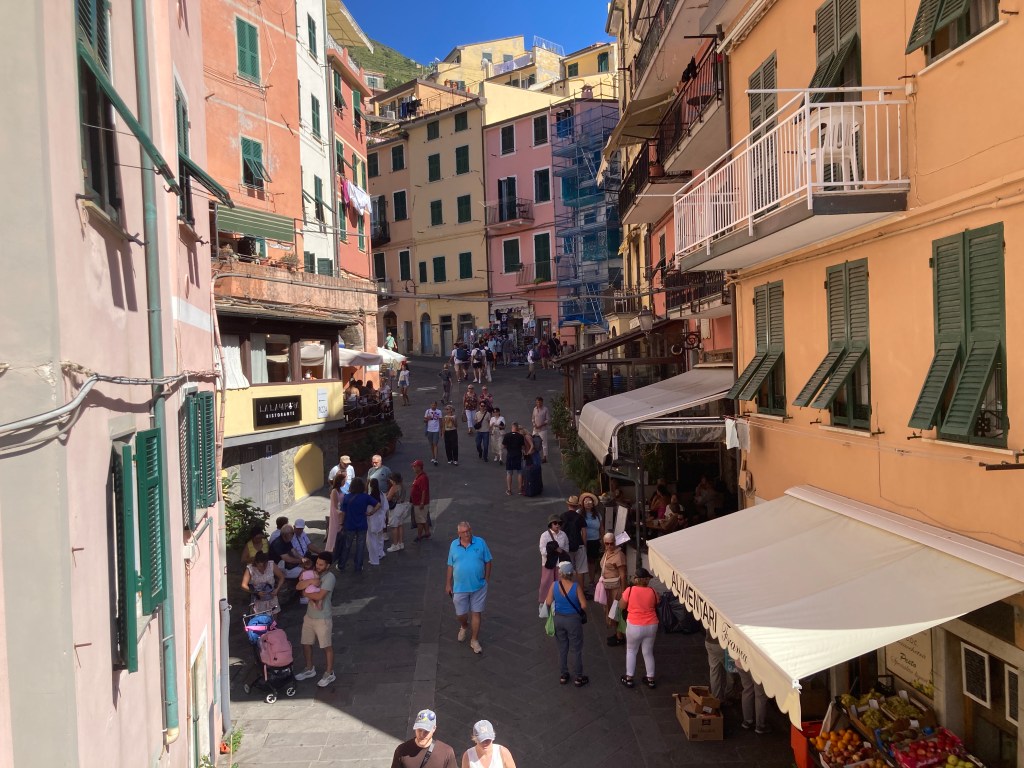
Less than 24 hours exploring the Cinque Terre sounds a bit mad. It was an afterthought really, a stop on the way from Siena to the Côte d’Azur on the only route that made sense. Riomaggiore was very pretty but also very busy, and presumably packed in the height of summer. I can’t imagine what it’s like living in a place that is overrun with tourists … except that I can, and it’s called London. But I can easily avoid the centre of town if I choose, and no-one comes south to explore Herne Hill or even Dulwich.
Where do you escape to if you live in the Cinque Terre? I would imagine they’d rather not have tourists permanently clogging up their narrow streets, but how else are they to make a living?
***
When I started travelling in Europe in the 1970s it was possible to get a room in Venice or Florence in August by turning up at the tourist information office and asking for a brochure of hotels and pensions. With a shortlist of those you could afford, and a handful of coins or gettoni, you started making calls, hoping that your Italian would be good enough for them to understand what you wanted. I travelled all over Sicily, Spain and Portugal doing just that and rarely had a problem.
But you would be very brave to do it now. Reserving a room over the internet has become the norm, and spontaneous decisions on where to go and to stay have become trickier.
Saturday 20 September
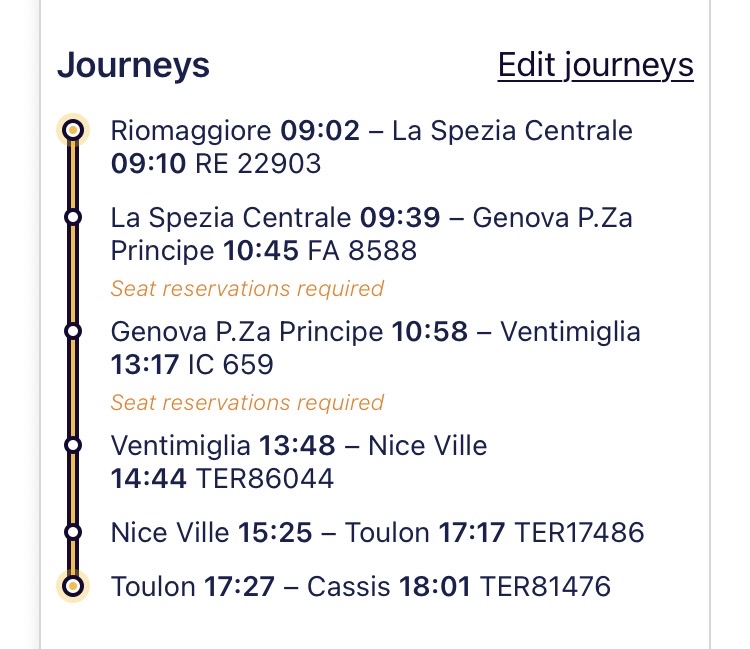
We rose at 07:45 for a laborious day of many trains, beginning with the local service to La Spezia, followed by the Frecciargento to Genoa. Some of the connections were tight, but we made them all.
There were gorgeous views of the Ligurian Riviera whenever the train was not passing through a tunnel (and there were many tunnels). The Genoa to Ventimiglia service stopped frequently, with an enticing beach next to each station.
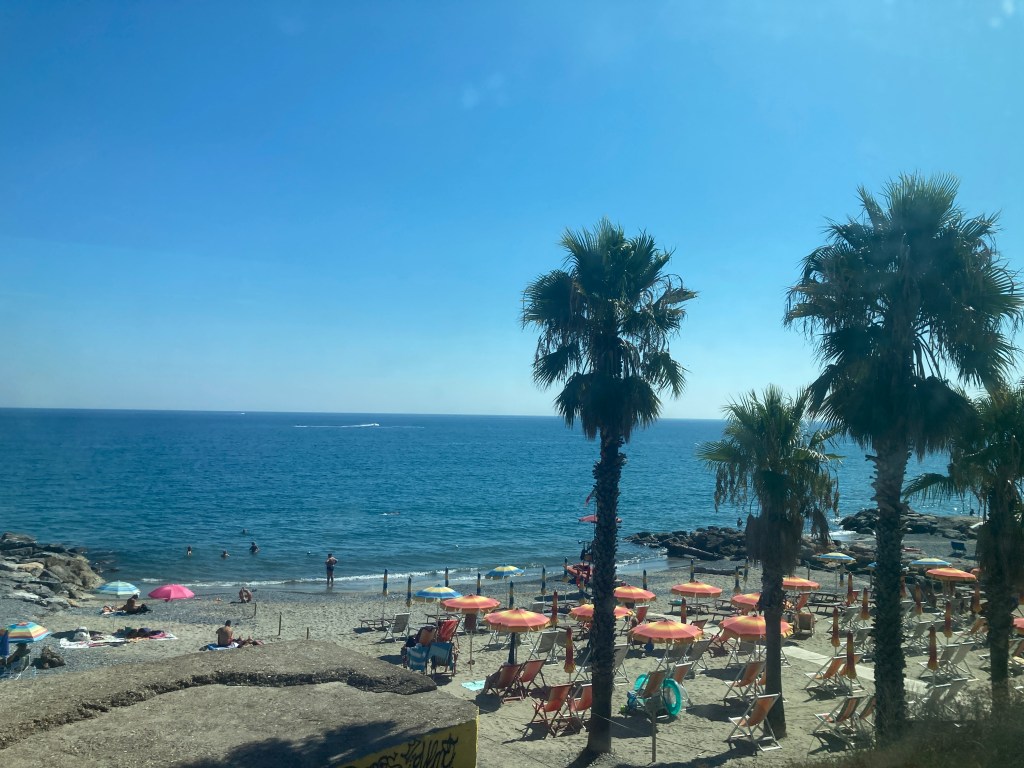
We could have stopped for a dip
But we didn’t. We passed through Alassio (where Elgar was inspired to write a concert overture in 1904) and Diano Marina. I recall that they both featured in the brochures I used to write in the late ’70 when I worked for the Travel Club of Upminster. Do Brits still go to the Riviera on holiday? And if not, why not?
There was a quick change at Ventimiglia for the train to Nice, and we reached the French border where we halted for passport checks at exactly 14:00. We stretched our legs at Nice, purchasing the ubiquitous French ham-and-cheese sandwich without great enthusiasm.
Green hills and blue sea
Then from Nice to Toulon, and the final leg to Cassis. The Med looked at its most alluring: the proverbial playground of the rich. We’d taken six trains and travelled for nine hours and were well and truly knackered. Fortunately there was a shuttle bus from the station to the Cassis Hostel, our base for the final three nights.
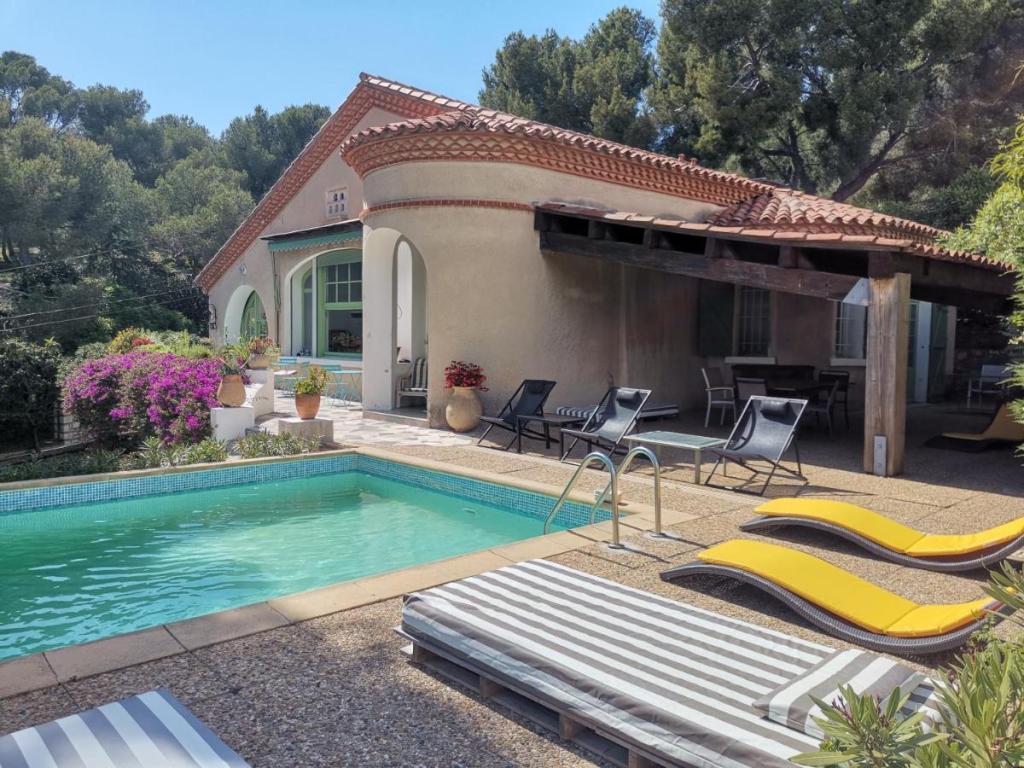
The hostel is a converted villa with a pool and shared kitchen (and toilet), though we did have a private shower room. It was in a quiet area and overlooked the town and the château. The other guests were at least 40 years younger than me and looked very fit. It turned out that they were all rock-climbers.
We just had enough energy to go down the hill to the busy harbour for a well-deserved dinner of grilled razor clams, gilt-head bream and swordfish carpaccio at Brasserie Le Canaille. It was more than we would have paid in Italy, but it was very good.
Sunday 21 September
Only our second wet day
Luckily we had already planned to take a train to Marseille, as it was hardly likely to be much fun at the seaside. At the station to meet us were Mireille and Daniel, who live near the Stade Velodrome.
Mireille and Anne go back a long way; they were briefly exchange school students but had not seen each other for 45 years! Anne tracked her down on the internet and Mireille replied immediately.
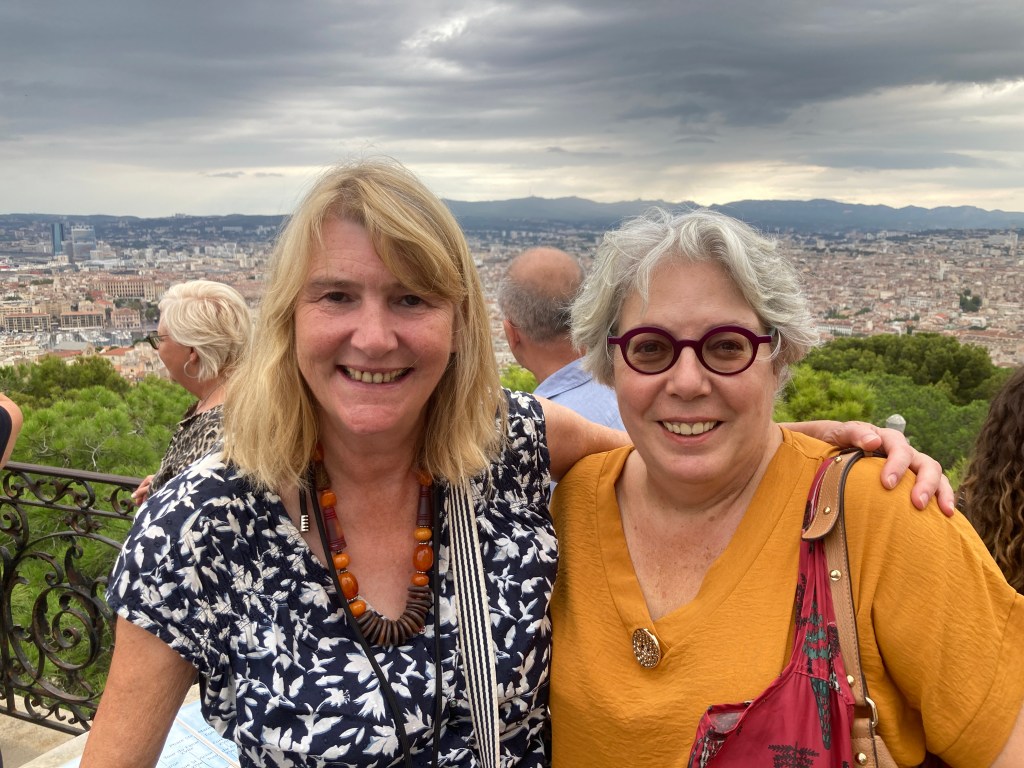
She was carrying a bag of rather good souvenirs, and generously paid for our lunch at the Basilica of Notre-Dame de la Garde.
It was a happy reunion
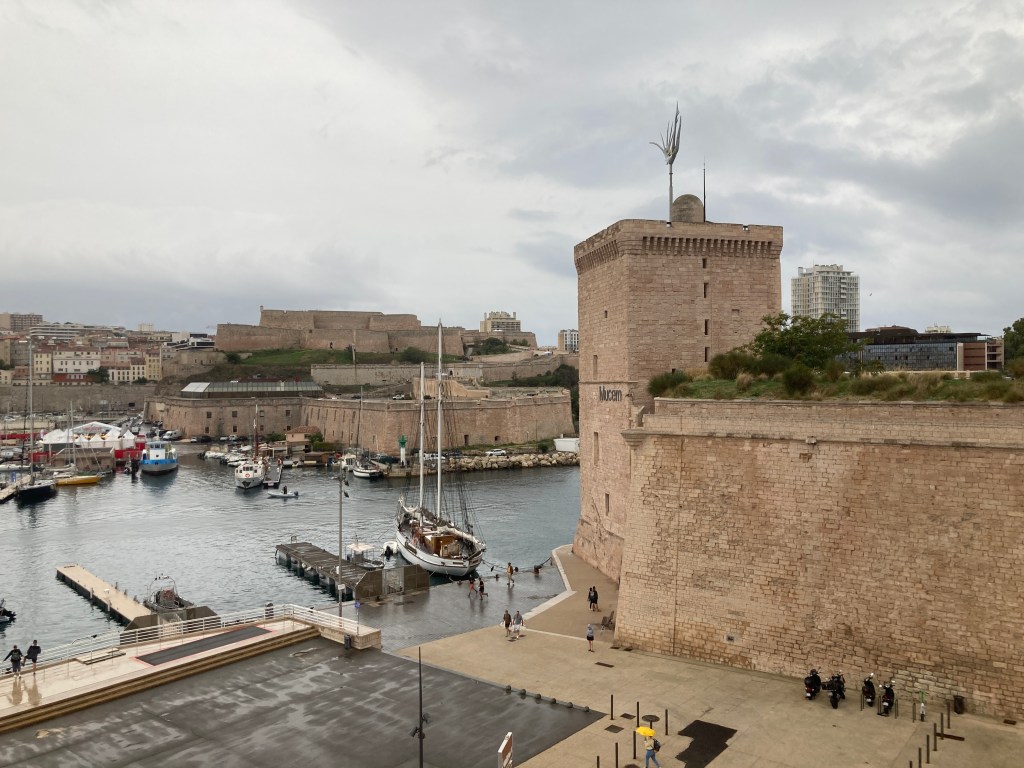
In the afternoon she showed us the sights, apologising for the drizzle (though we had not taken it personally). After lunch we pounded the streets, dodging the worst of the rain and visiting La Vieille Charité and its museum of antiquities. Never having visited Marseille before I was happy to see as much as possible in half a day.
Mireille declared herself to be an Anglophile, and had kept up her English with weekly classes.
***
That evening the drizzle turned to proper rain. We sat outside the hostel for as long as we could, but it became obvious that it wasn’t going to ease off. We took cover inside just before a tremendous thunderstorm broke. The streets became rivers and the lights went out… we never got a chance to use that pool. Down at the port, restaurants abandoned service as tables were blown into the sea.
Monday 22 September
We awoke to clear blue skies and cool air. We walked down to the port, then south-west along the coast to the peninsula, with its towering limestone cliffs, yacht harbour and glitzy hotel.
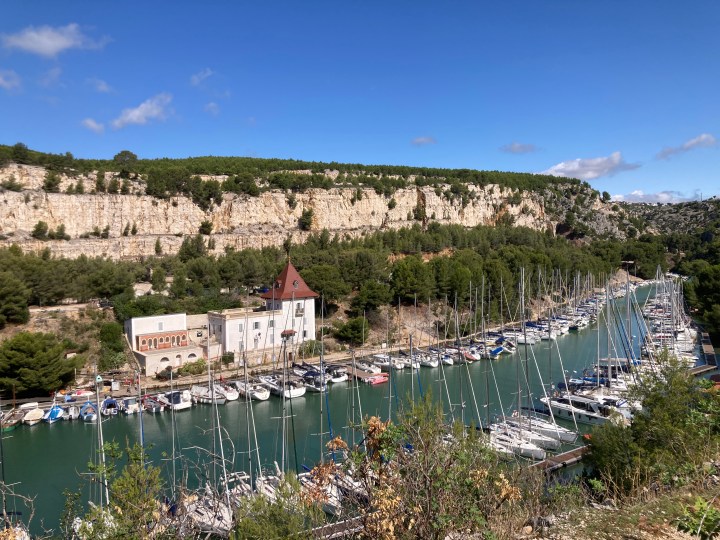
It was the perfect day to visit the famous calanques: nine dramatic fjord-like inlets, with limestone cliffs and caves set in sparkling blue water.
As we arrived at the port, a tourist boat was just about to set off.
We do like a boat trip
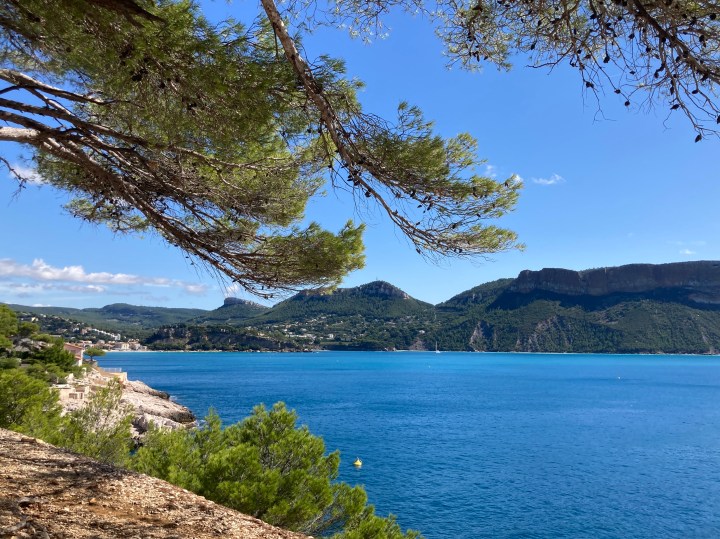
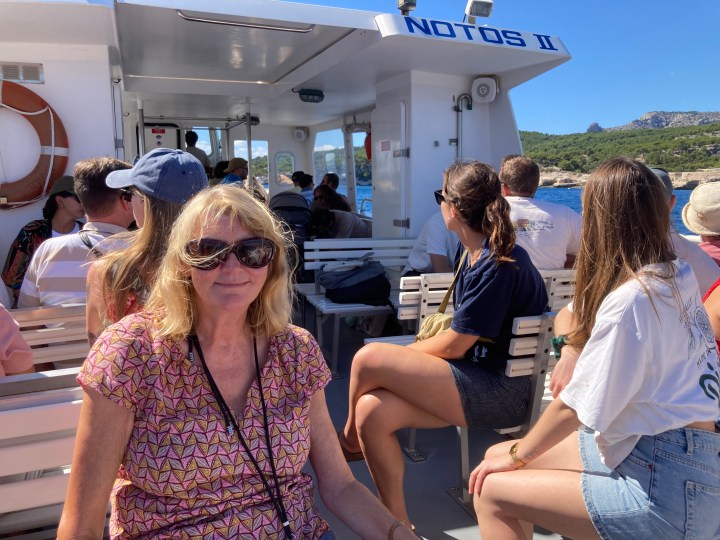
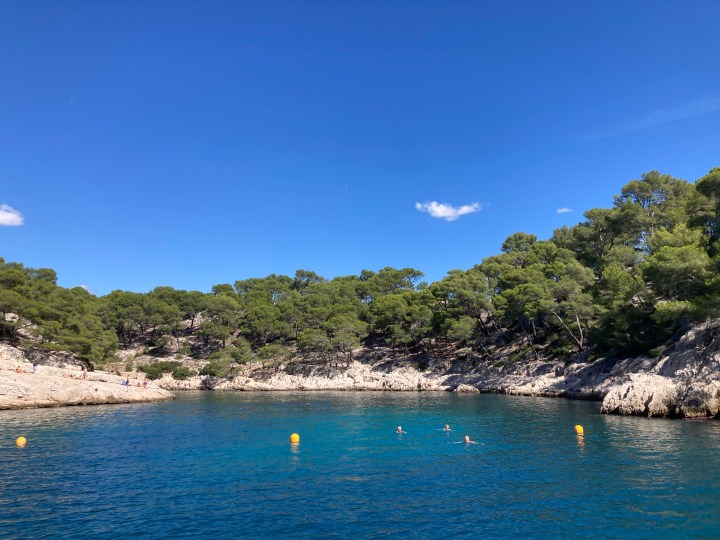

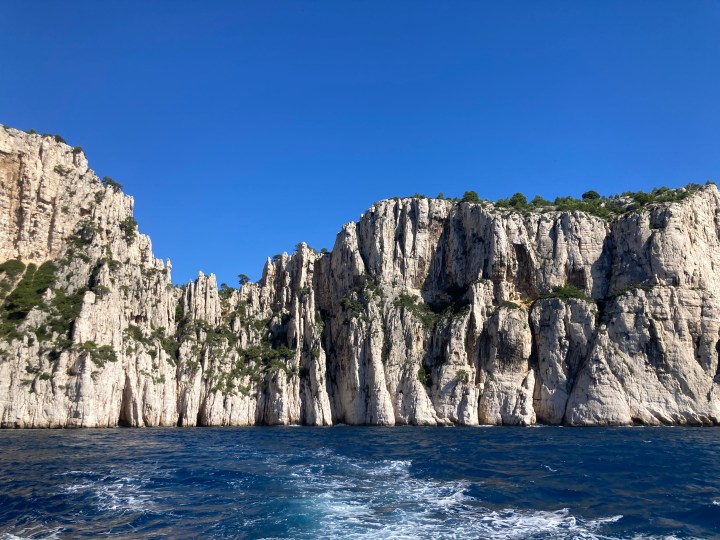
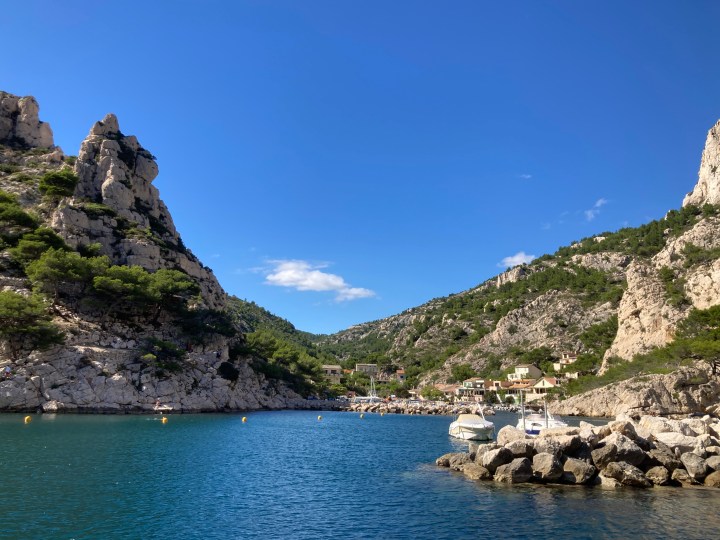
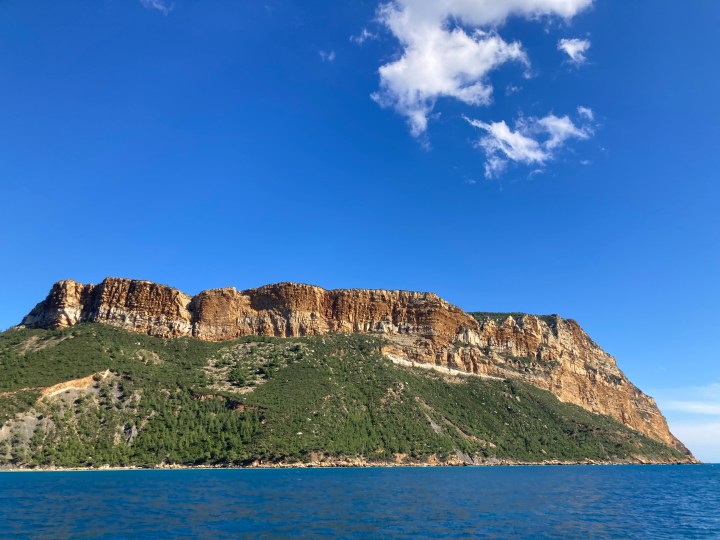
The previous night’s thunderstorm had done us a favour: the sea was calm and the sun not too hot. Some of the calanques looked only accessible to climbers, whilst another had a fishing village and a restaurant. A few lucky people were swimming in the bays.
We returned to the port of Cassis in time to fit in a last swim at the Plage de la Grande Mer.
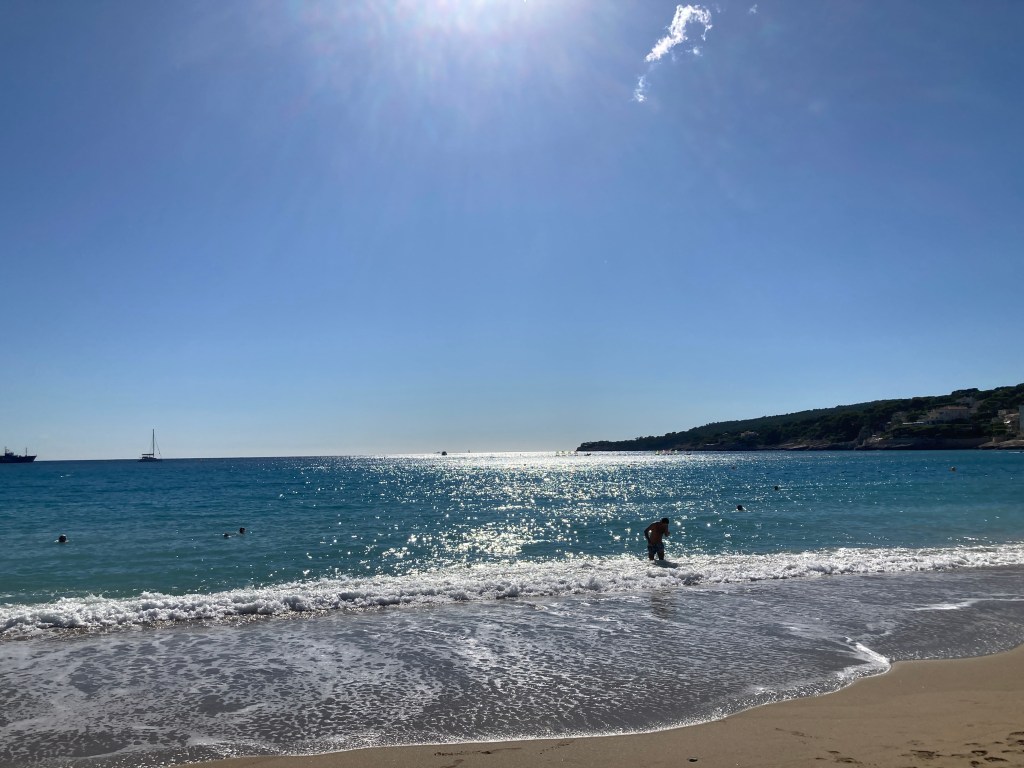
Afterwards, we trudged uphill to the hostel to change and enjoy a cheeky bottle of prosecco before heading out for negronis on the harbour, followed by a hearty dinner at La Vieille Auberge. I wolfed down a generous portion of home-made fish soup, followed by daube provençale. Both tasted exceptional, and the staff were friendly and efficient. Highly recommended.
Another brilliant day
As we left for the hostel I could not help noticing that the town reeked of aioli.
Tuesday 23 September
A long day, and our last one. Up early again to get a taxi to meet the 08:04 from Cassis to Marseille Saint-Charles. We had an hour for coffee and croissants before joining the TGV to Paris Gare de Lyon.
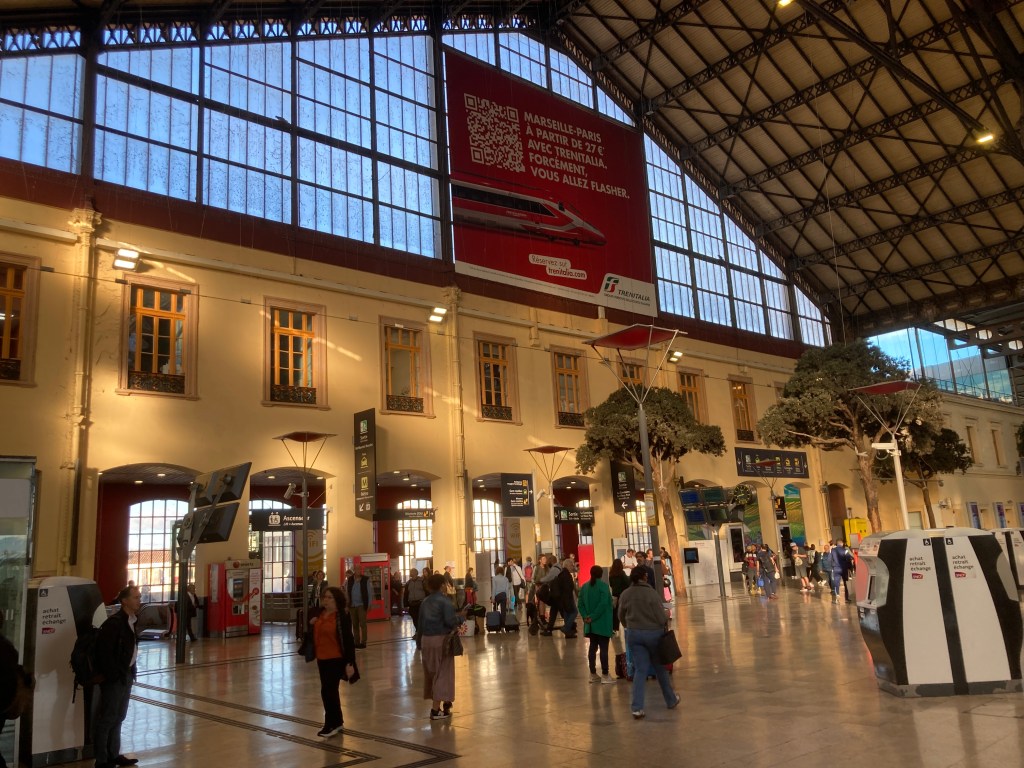
Stopping only at Aix and Avignon, we sped through beautiful Provence and past Mont-Sainte-Victoire, immediately recognisable from Cézanne’s paintings. Then we were enjoying the very different farming landscapes of Burgundy.
***
The TGV to Paris takes just three hours and 20 minutes; a long commute, but I imagine some do it, if not every day of the week. Then it was just two stops on RER Line D to Gare du Nord – although we were right to allow 45 minutes to be sure of making the 13:14 TGV to Lille Flandres. It takes just over an hour.
Paris was grey and chilly, and for the first time it felt autumnal.
Lunch in Lille
We’d selected and booked a restaurant, Chez Simone, that seemed to offer authentic Flemish cooking. But when we arrived it was empty and seemed about to shut, so we went to Les Trois Brasseurs around the corner. It was Wetherspoonish, but it offered home-brewed beer and the pub grub was acceptable.
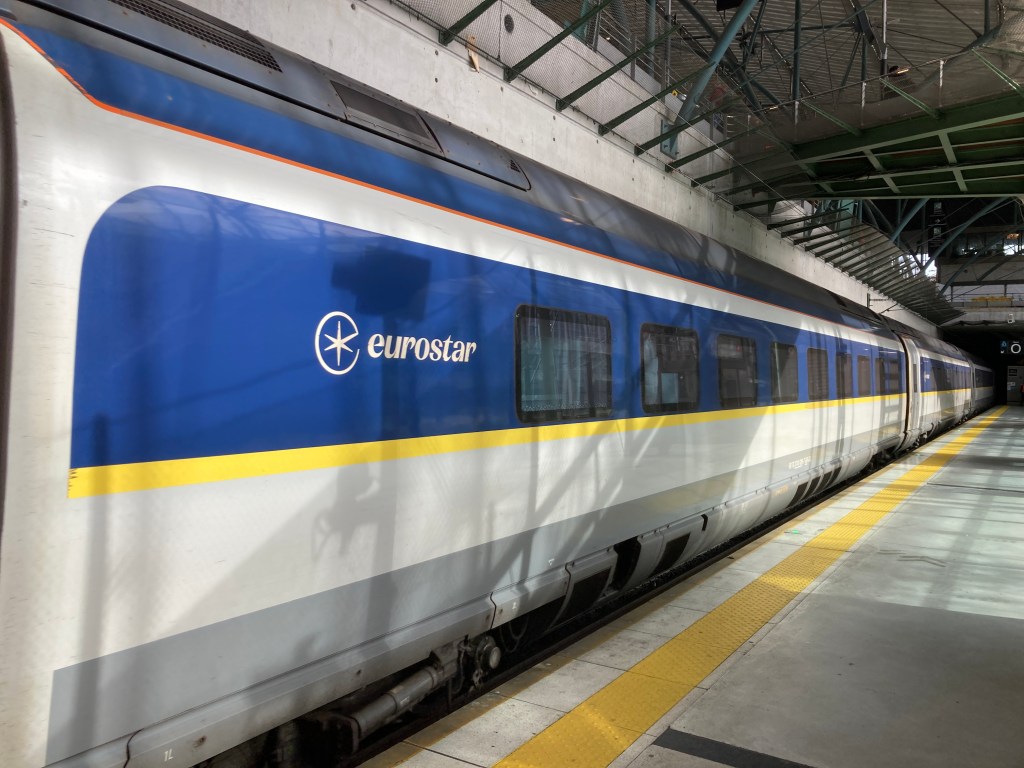
Lille Europe, the station for Eurostar, is only a few hundred metres along the main road from Lille Flandres. We arrived so early for the 17:31 that we asked to change our booking to the 16:31. We should have paid for the privilege, but Anne fluttered her eyelashes and we got the earlier train at no extra charge. I doubt that we would have had such good luck at Gare du Nord.
It’s worth asking
We arrived at London St Pancras on time and were back home 40 minutes later; with the one hour time change we had our feet up and the kettle on before 18:00.
5 countries
29 trains
4 boats
2 taxis
1 long-distance bus
3 friends visited
5000+ kilometres
Too many highlights to mention here (but see earlier blog posts on Strasbourg, Innsbruck, Venice, Monopoli, Rome and Siena). We’re already planning another trip for 2026.


Thanks Colin, it’s been a great read.
Best wishes
Sheila
LikeLike