We are back in dear old Blighty, and what a trip it was! Nearly four weeks on our third annual Interrailing jaunt, visiting seven countries – plus two solely to change trains.
Itinerary as follows:
- Eurostar to Paris
- Lucerne/Luzern (train, 2 nights)
- Innsbruck (train, 1 night)
- Graz (train, 2 nights)
- Bratislava (train, 1 night)
- Timișoara (train, 2 nights)
- Sibiu (bus, 4 nights)
- Bucharest (bus, 1 night)
- Veliko Tarnovo (bus, 2 nights)
- Plovdiv (train, 2 nights)
- Istanbul (bus, 4 nights)
- Kavala (bus, 1 night)
- Thassos (ferry, 4 nights)
- Thessaloniki (ferry and bus, 1 night)
- British Airways to London
These “holidays of a lifetime” are coming thick and fast
If you think you might be interested in Pensioner Interrailing, have a look at this page from our first trip in 2024 for ideas and further links.
Wednesday 26 August
It had rained (an increasingly rare phenomenon) during the night, but stopped before we left home for Herne Hill station, each with a cabin-sized suitcase and a small rucksack. Some Thameslink trains were cancelled, but luckily not the 07:44 to St Pancras.
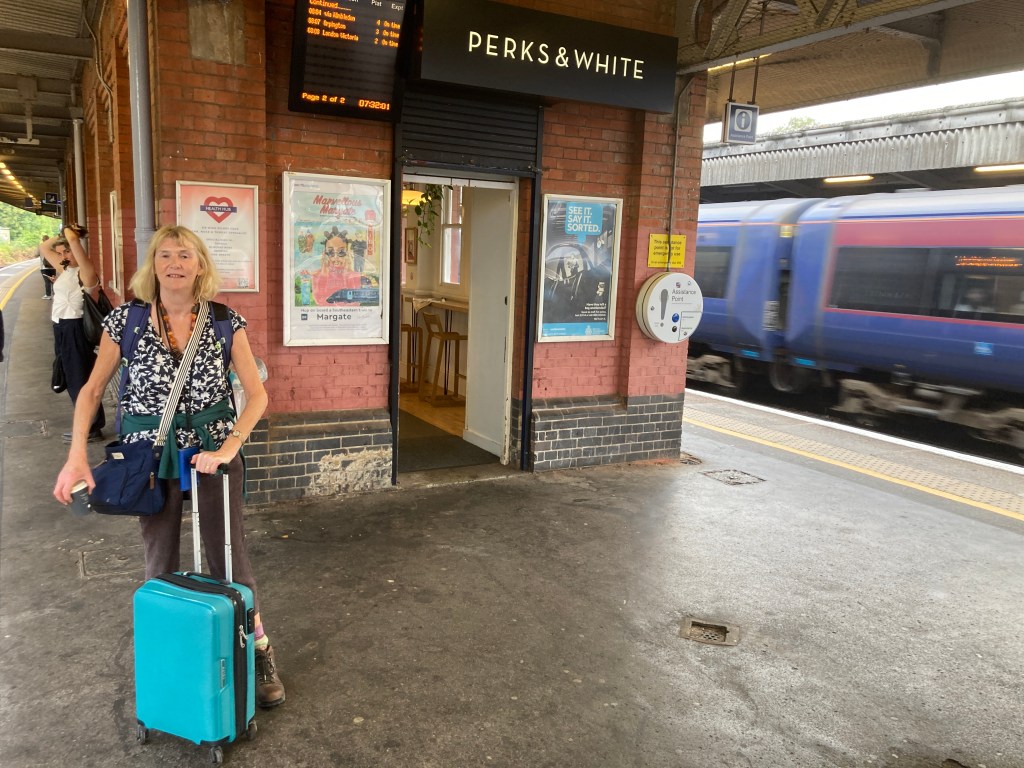
As usual there were very few free seats in the busy Eurostar terminal. We boarded the 09:31 to Paris Gare du Nord, excited to be on our way after so many months of planning.
We walked the 10 minutes to Gare de l’Est in warm sunshine, with enough time to pick up something to guzzle on the 13:52 TGV to Strasbourg. It departed 10 minutes late and never made up the lost time, so we missed our connection to Basel by a minute. We waited 29 minutes for the 16:21 to Basel, a superannuated French regional train (e.g. no water for the WC basin). Our fifth train of the day, the 18:04 SBB from Basel to Luzern, was from another world: loads of space, super comfortable, clear announcements in four languages… but, as usual on Swiss trains, no WiFi.
***
An hour later we arrived in Lucerne. Anne had picked out a hostel called Backpackers, a 15-minute walk from the station. Whilst our spacious room was not en suite we were definitely not roughing it, and we had the bonus of a private terrace. The building is located in a quiet suburban street with student flats above.
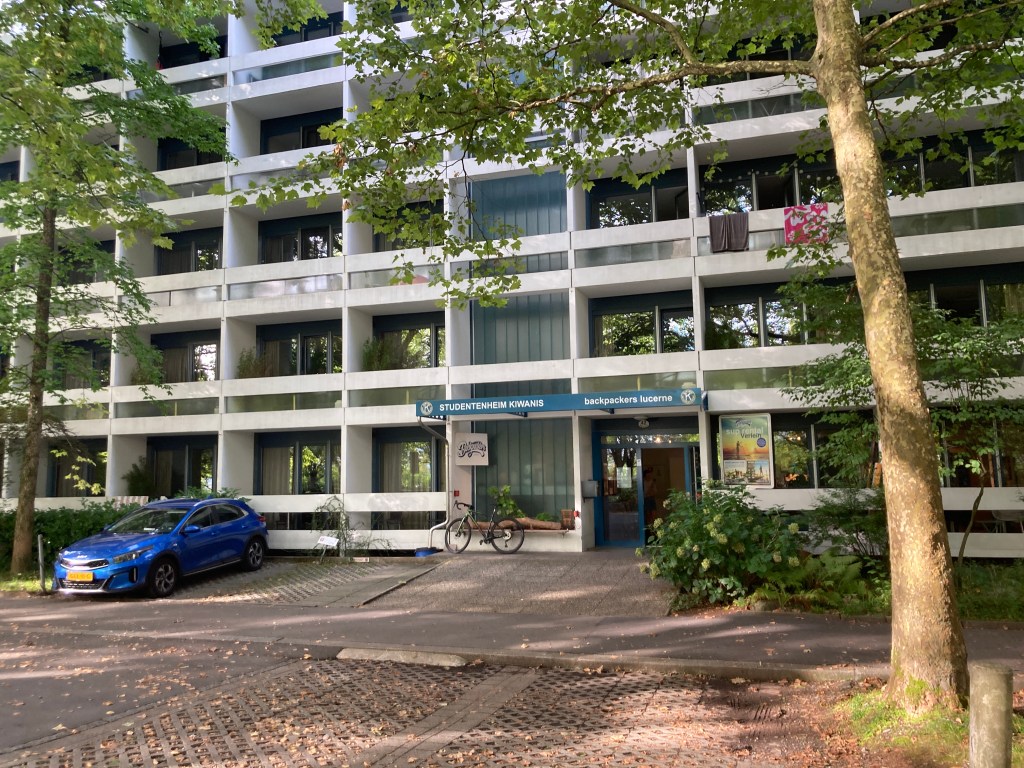
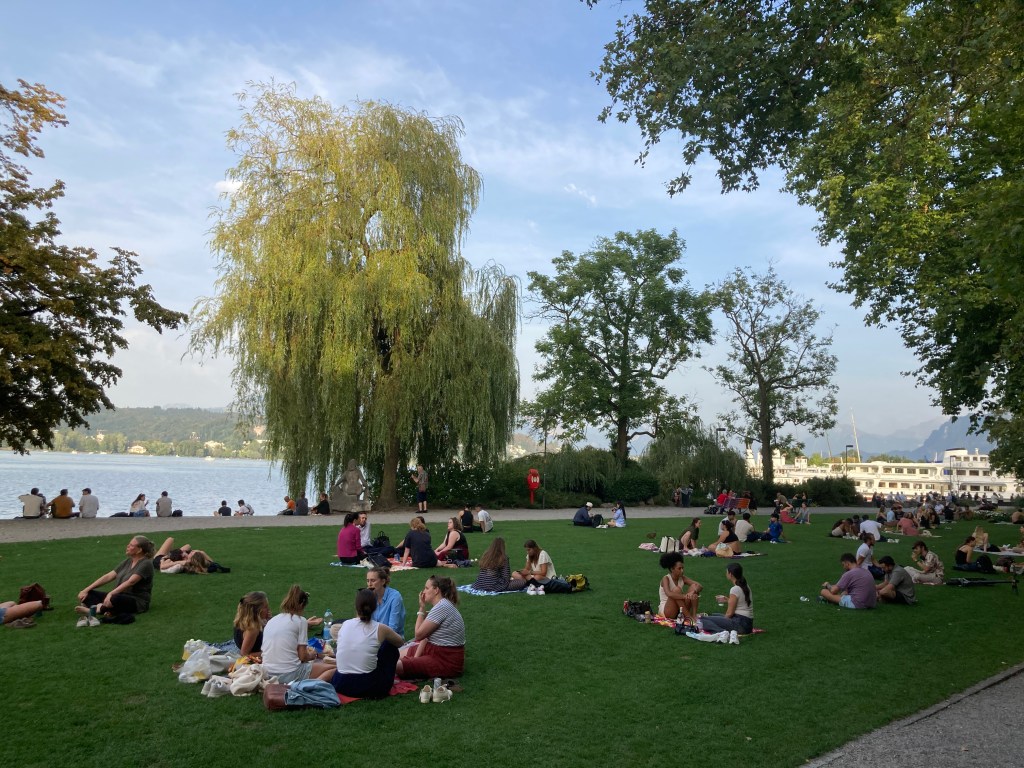
And the swimming area of the lake was just a couple of minutes away across a footbridge.
It had been a long day, but we were determined to take a dip
Then to our favourite burger chain, the wittily-named Burgermeister. Welcome to Switzerland: a 10-minute wait and 50 quid for two burgers, one portion of fries and two small lagers. As we munched away on a lakeside bench, well turned-out people were arriving at the concert hall to hear the Berliner Philharmoniker. We had not realised that the Lucerne Festival was on, or else we would have taken in one or two of the fringe events.
Thursday 27 August
Our only full day in Lucerne was sunny and warm, if a bit breezy.
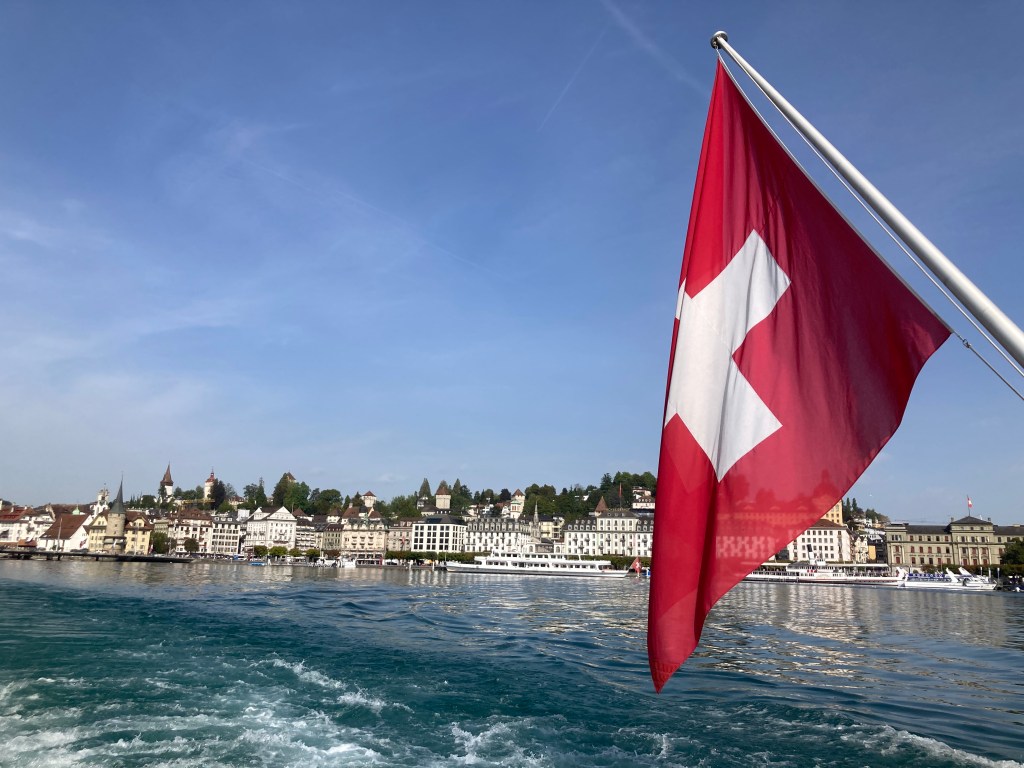
It was a perfect day to take the train up the Rigi, the mountain painted many times by Turner. But first, a boat across the lake to Vitznau.
The Vitznau-Rigi Bahn is an ancient, standard-gauge cog railway that takes you right to the summit (1,800 metres). On a clear day you can make out the peaks of alps as high as 2,900 metres as well as having superb views of the lake and the city far below.
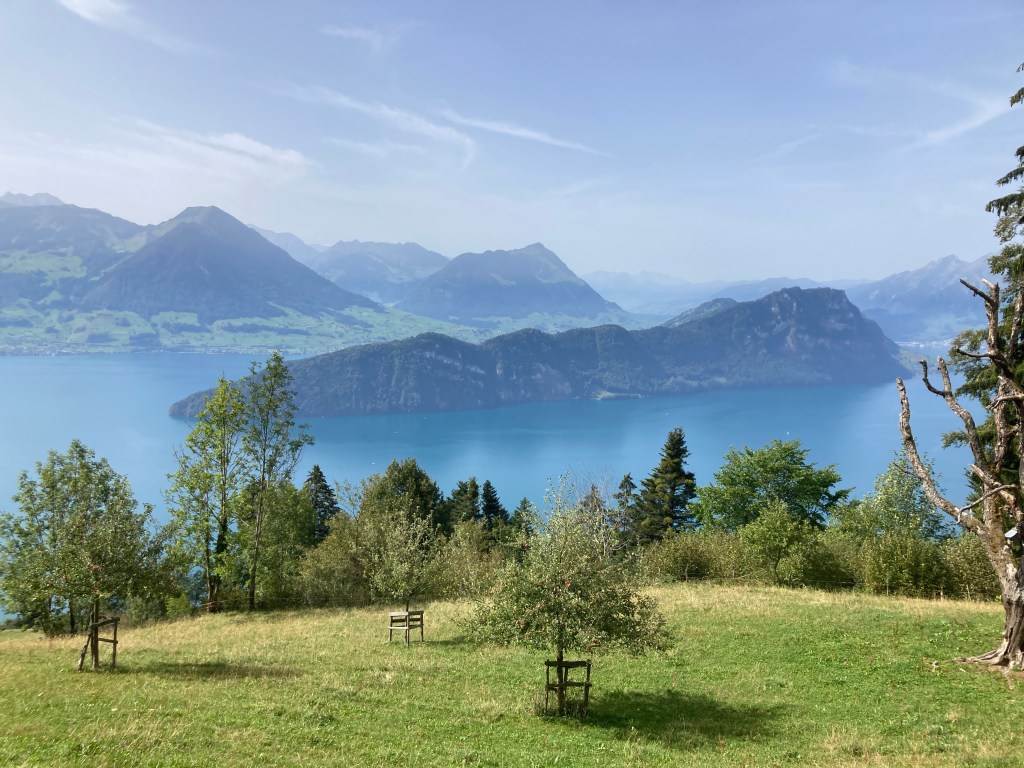
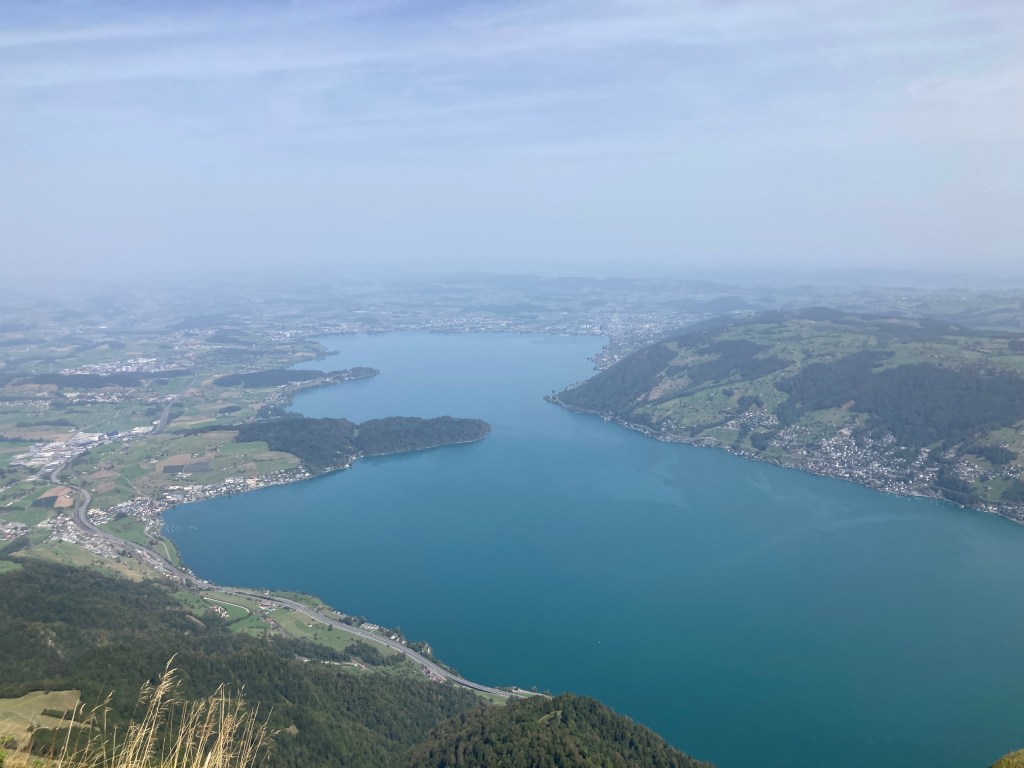
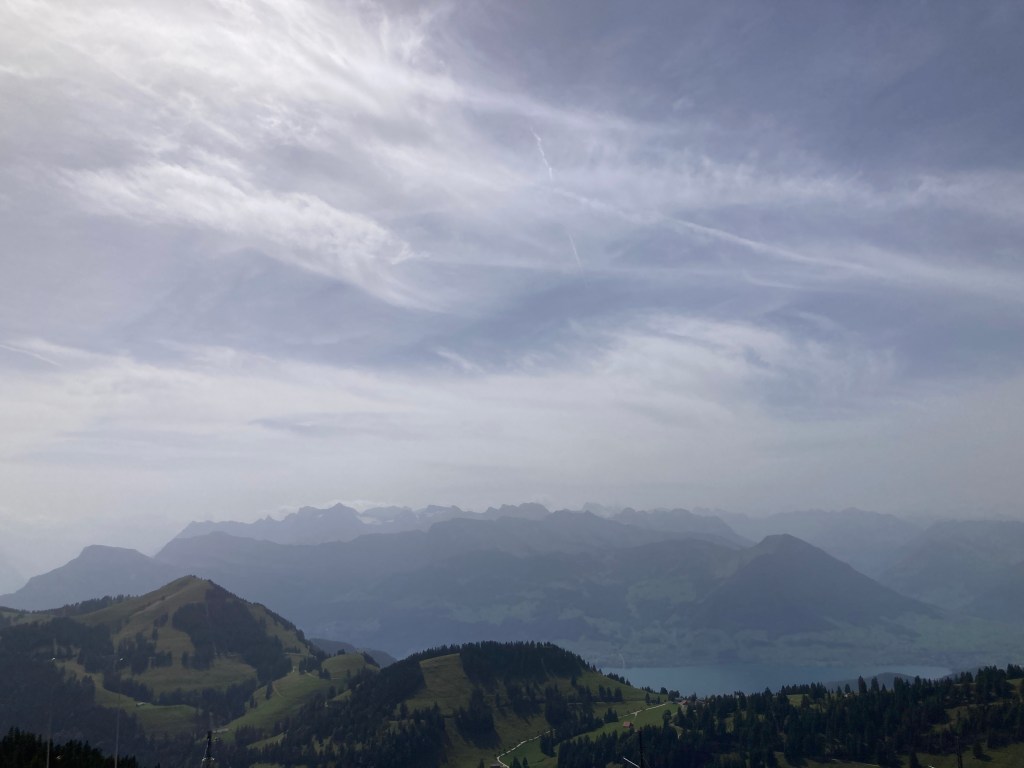
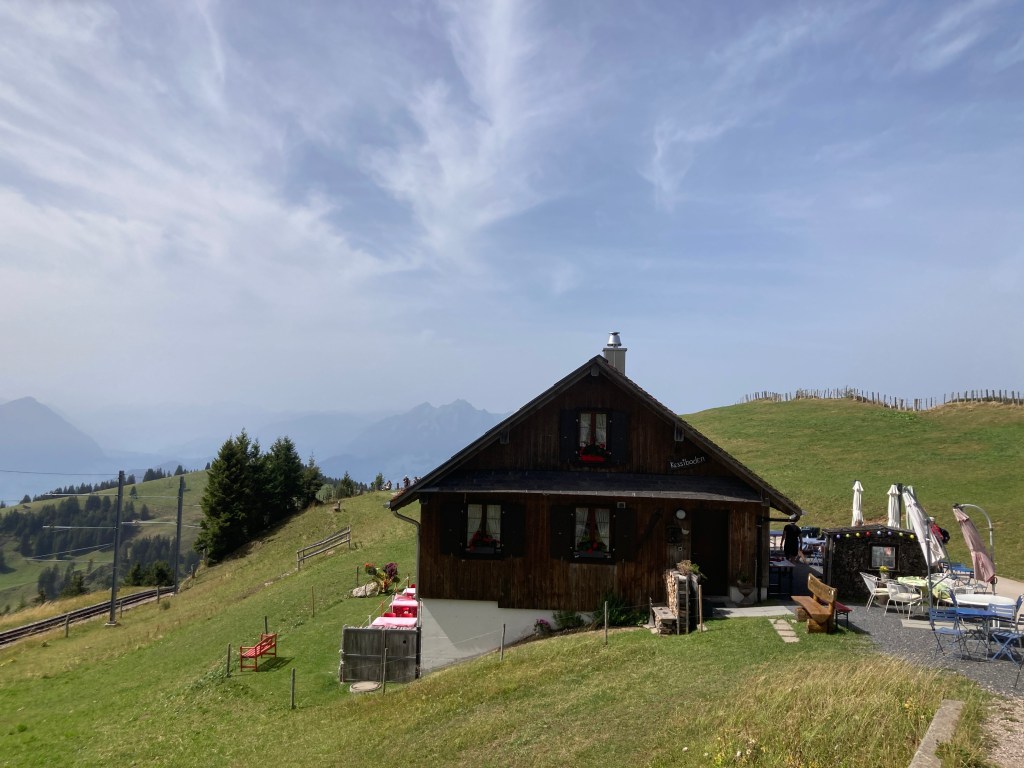
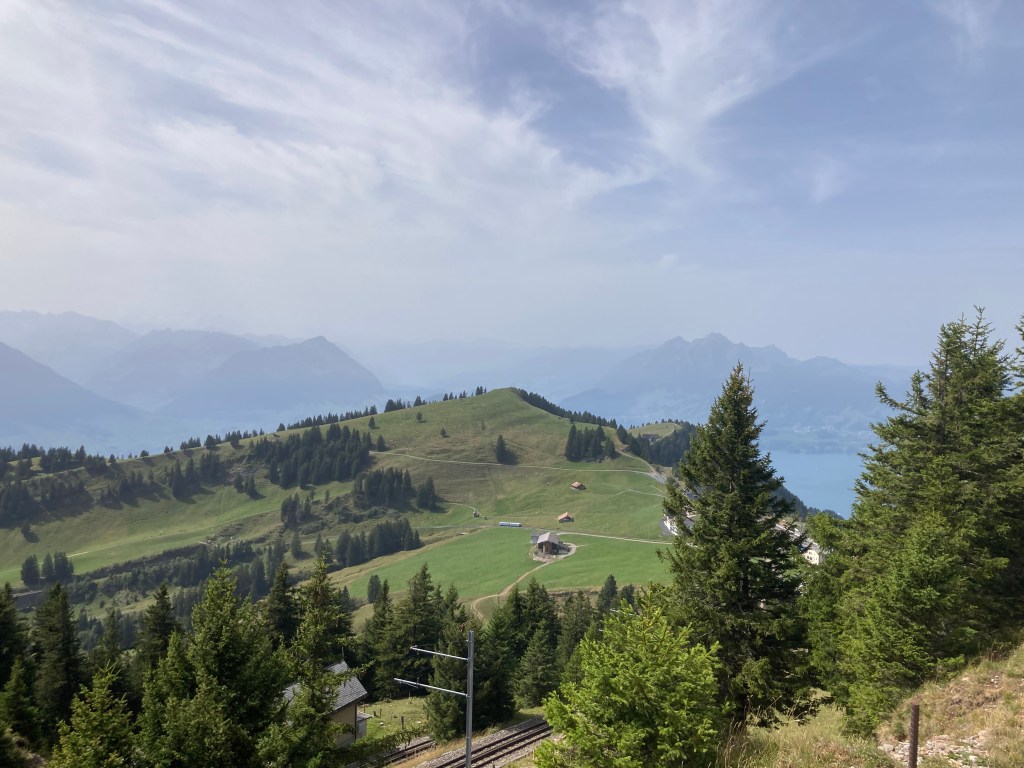
We lunched at a rustic stubli. It was not the best meal I’ve ever had,: a sort of burnt and rather solid version of a Welsh rarebit. No doubt it would have been welcome on a freezing Winter’s day.
The local beer was good though
We had intended to take the cable car part of the way down and walk to the shore, but it proved to be too windy for it to run. So we returned by the same route, boarding the 1906 Schiller paddle steamer at Vitznau. It was now very hot, reaching 32c. A stop at the Rathaus brewery in the Altstadt was followed by a second cooling dip and a good sushi takeaway.
Friday 28 August
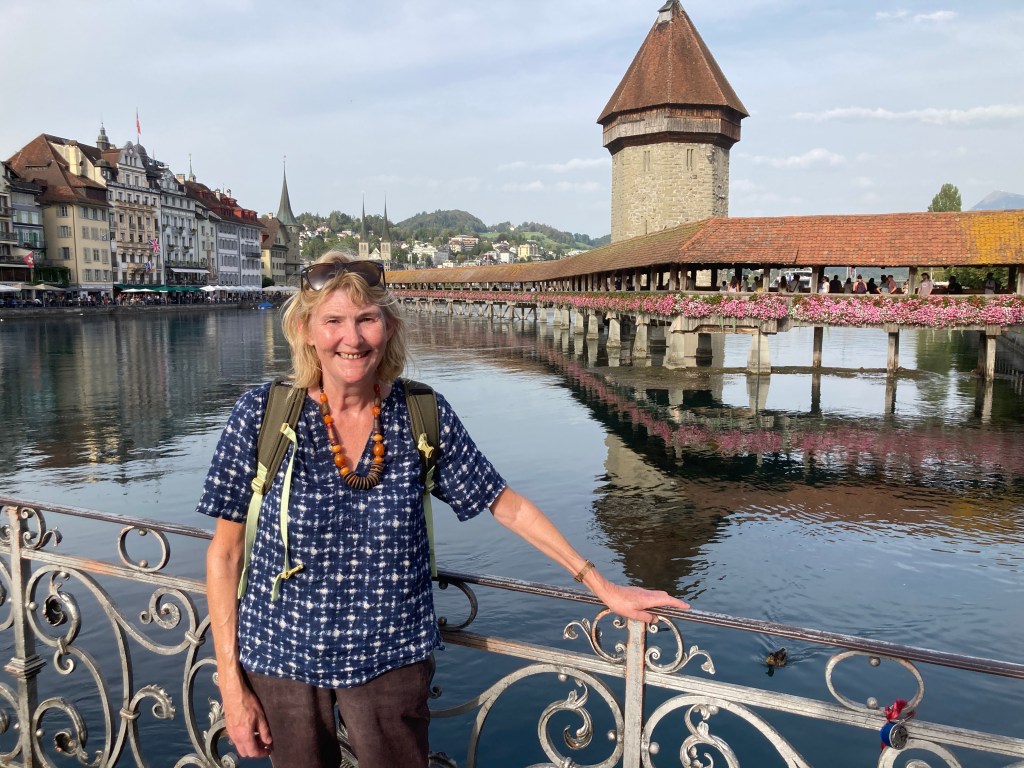
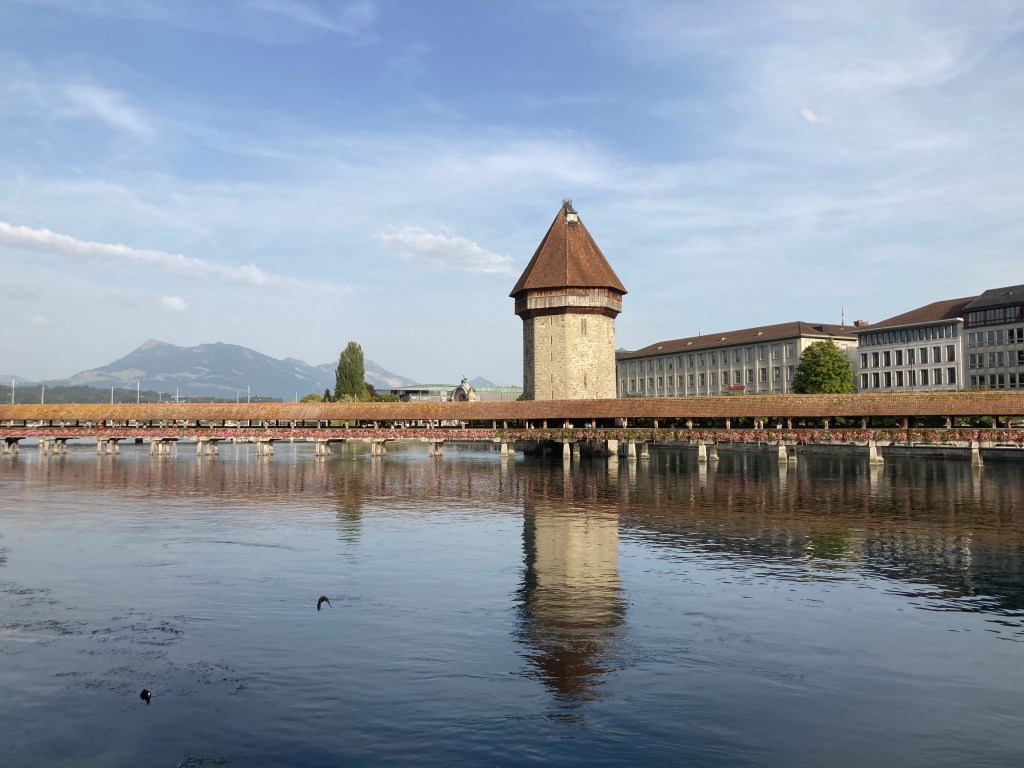
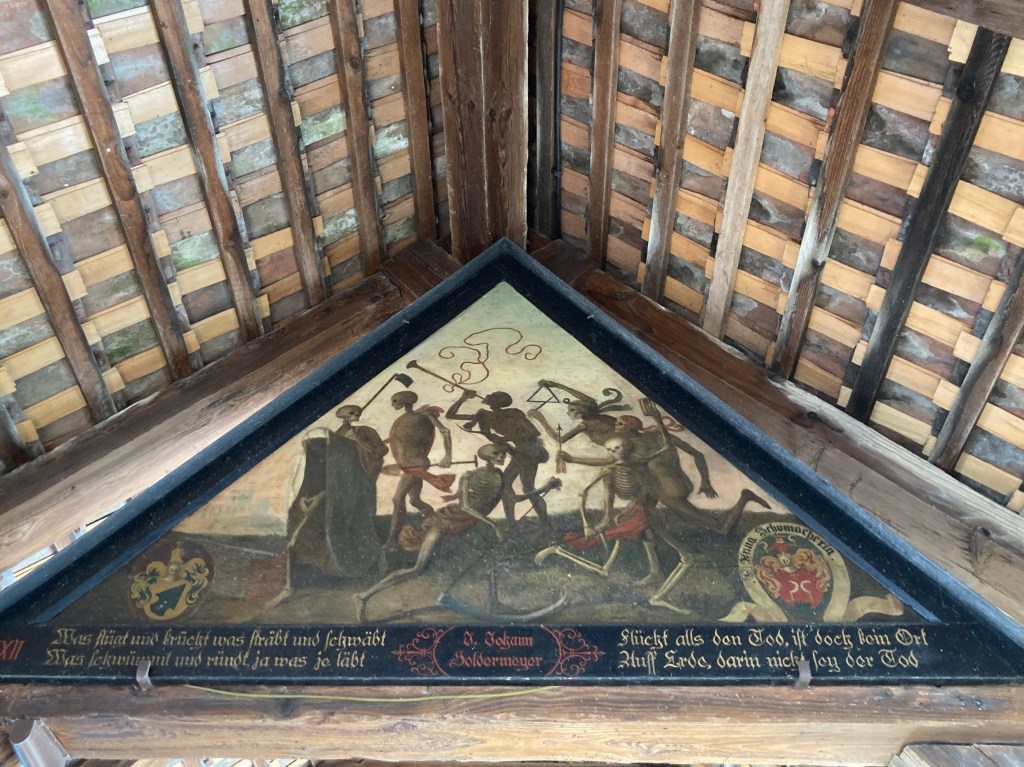
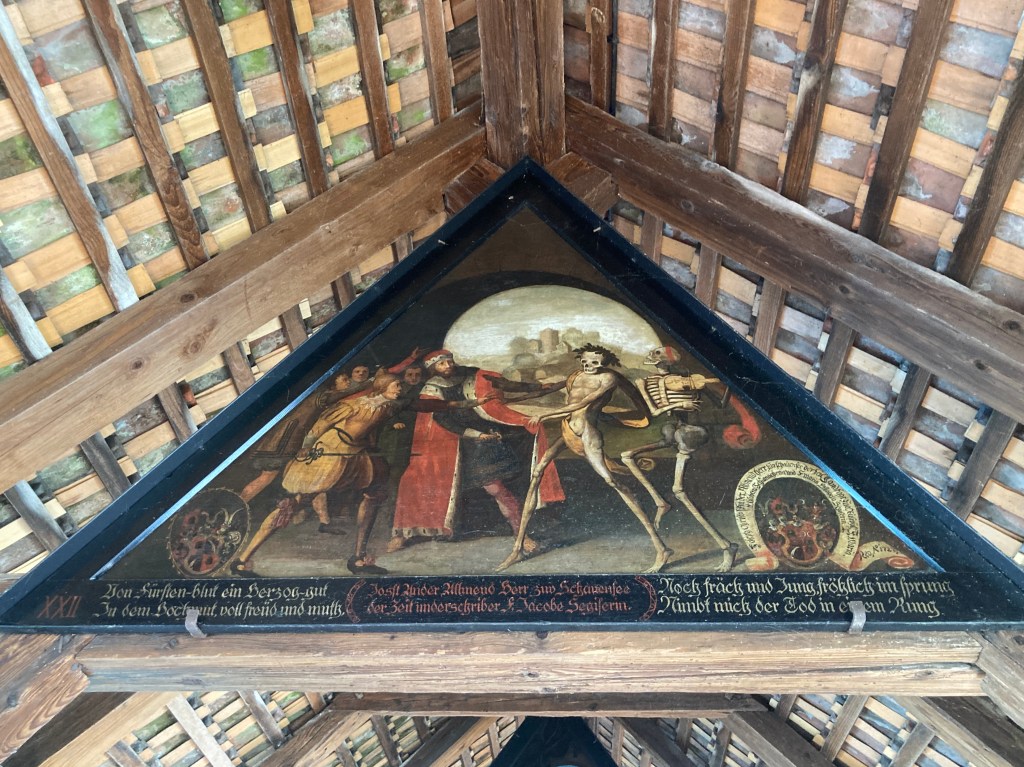
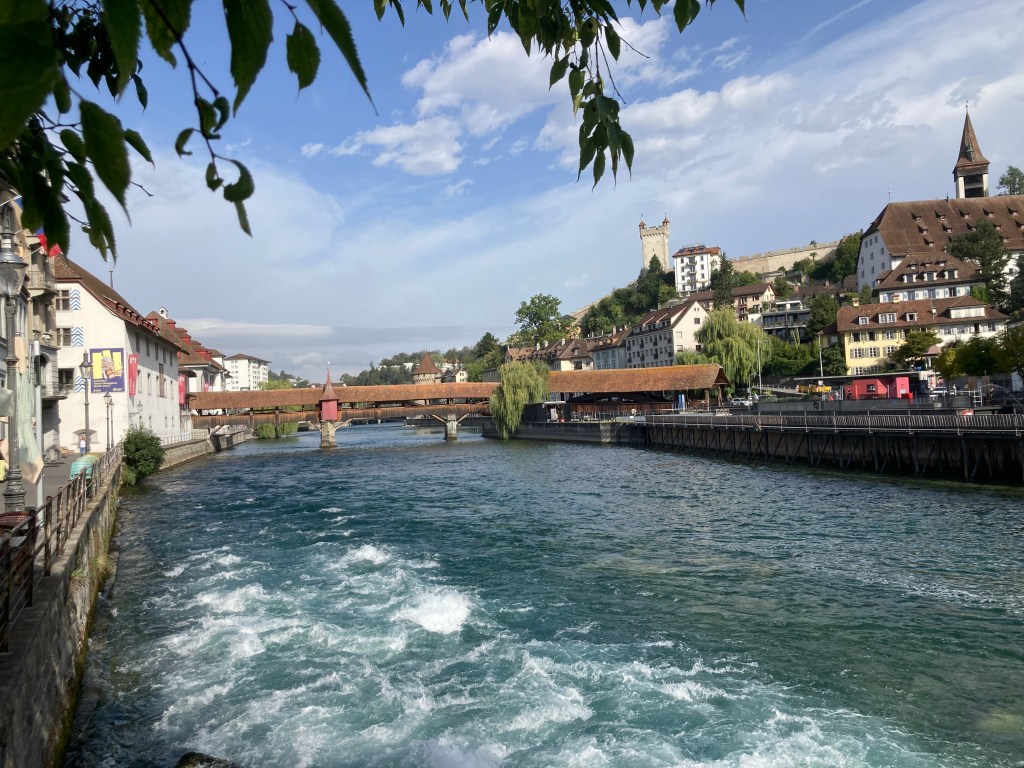
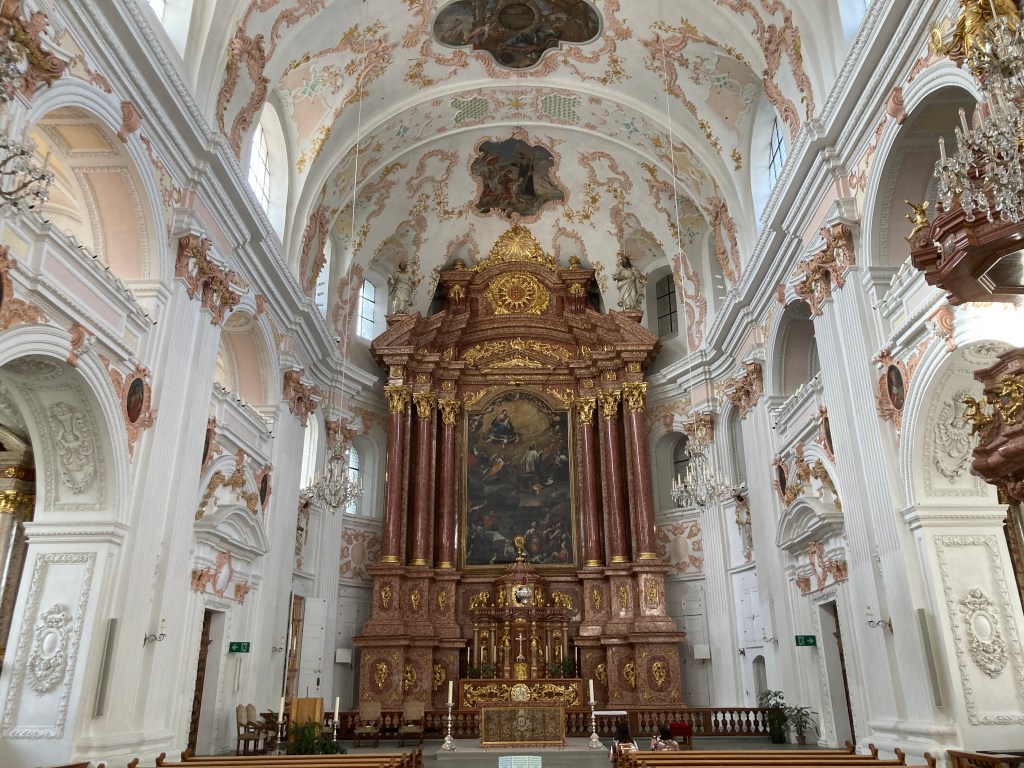
We left our luggage in a locker at the station while we saw more of the city, starting with the huge Jesuit church then walked across the Kapellbrücke, which is embellished by 17th-century paintings of historical scenes (though there was a very serious fire in 1993). The other surviving wooden bridge, the Spreuerbrücke, shows cheerful scenes of the Dance of Death.
Time to get on our way again
We took the 11:35 to Zürich, stopping for a substantial lunch at Brasserie Federal, before boarding the 14:32 RailJet to Innsbruck. The journey through the Arlberg Pass (Bludenz to Innsbruck) was a bit wet but not as bad as two years earlier, when it poured down the whole way. It was drizzling when we got to Innsbruck but soon dried up. We spent the night at Motel One next to the station – not the cheapest place, but very convenient as we were only staying one night.
We really should have made the effort to go on to the Altstadt but settled for pizza and pasta at the family-run Leonardo da Vinci.
Saturday 29 August
By 9am, the cloud over the mountains was burning away. Wedding parties were gathering by the Golden Roof, gleaming in the sunshine. We bought sandwiches for our next train journey.
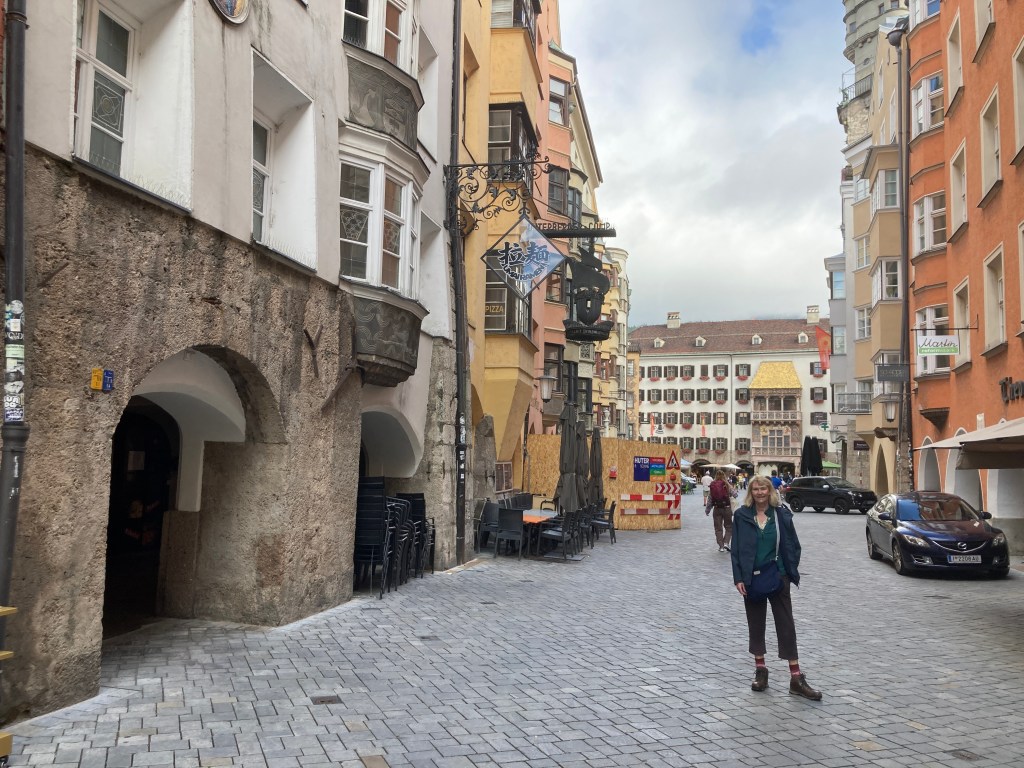
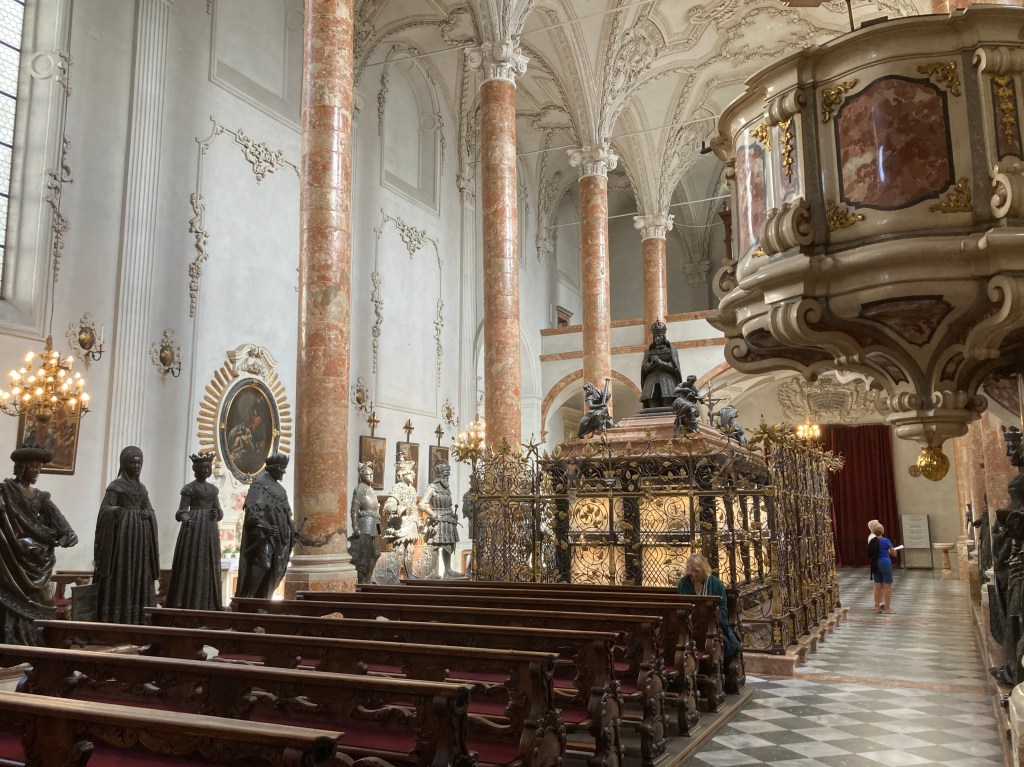
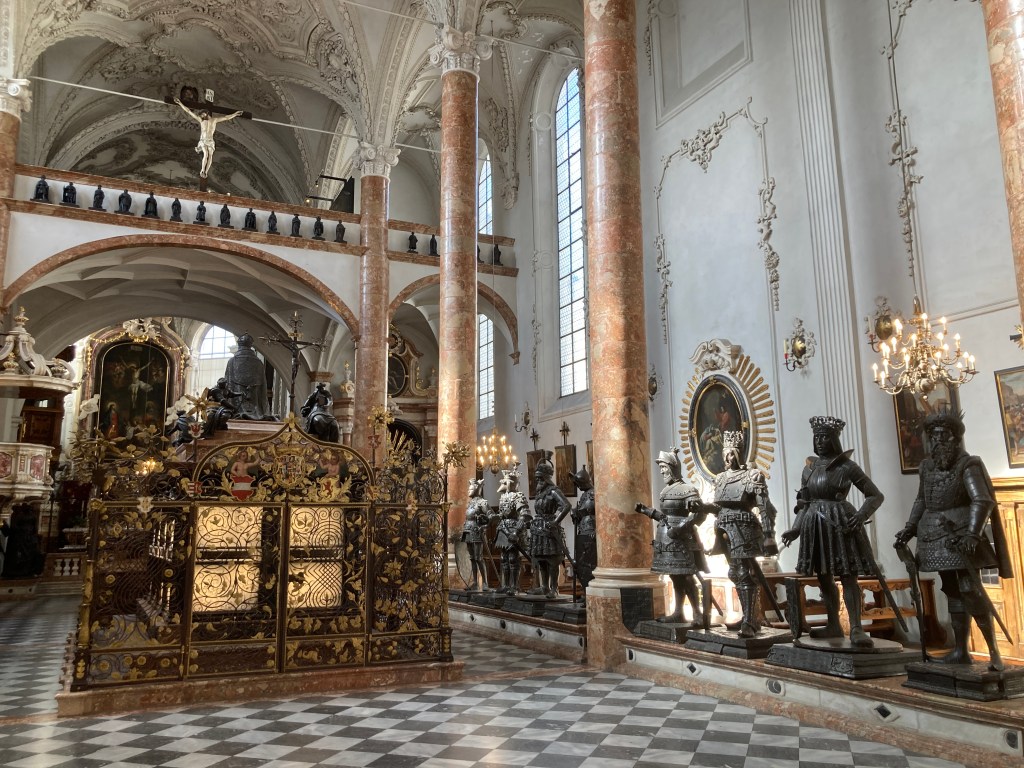
We had been to Innsbruck before but there was one important thing that we had not yet seen, so after morning coffee we headed to the court chapel.
The Hofkirche is a Late Gothic masterpiece
lt contains the mausoleum of Emperor Maximilian I (although he was buried elsewhere, as it happens) but even more impressive are the 28 oversized 16th-century bronze statues of the Habsburgs and their ancestors plus King Arthur of the Britons!). Albrecht Dürer was amongst the artists commissioned to make these mind-boggling works of art.
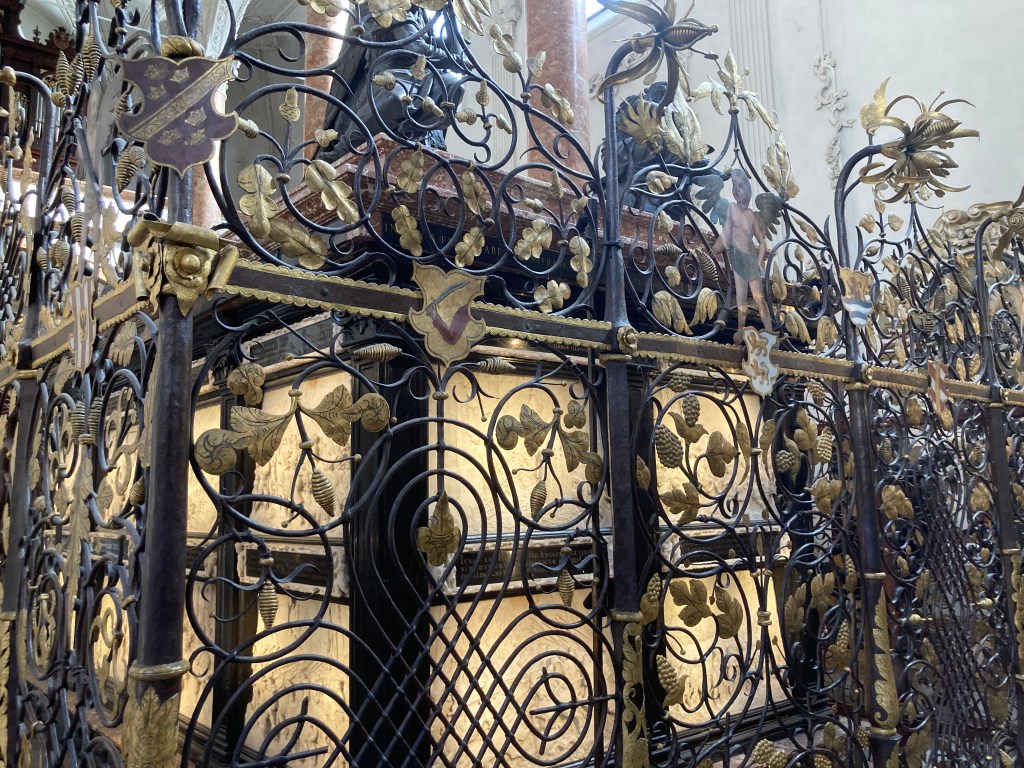
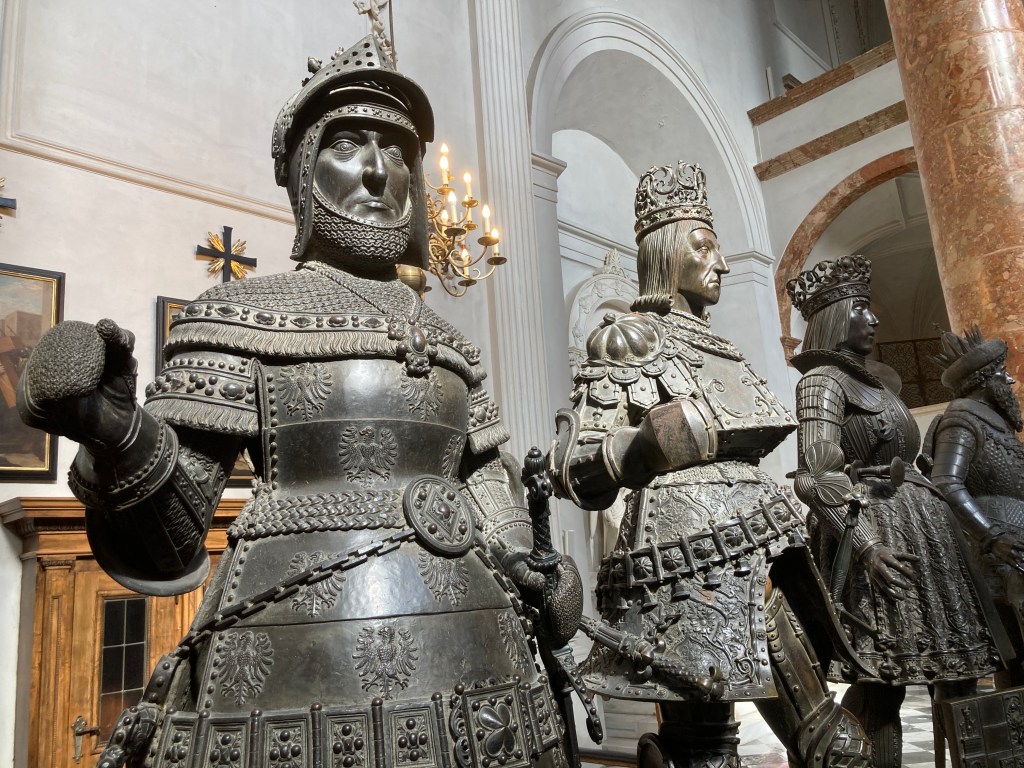
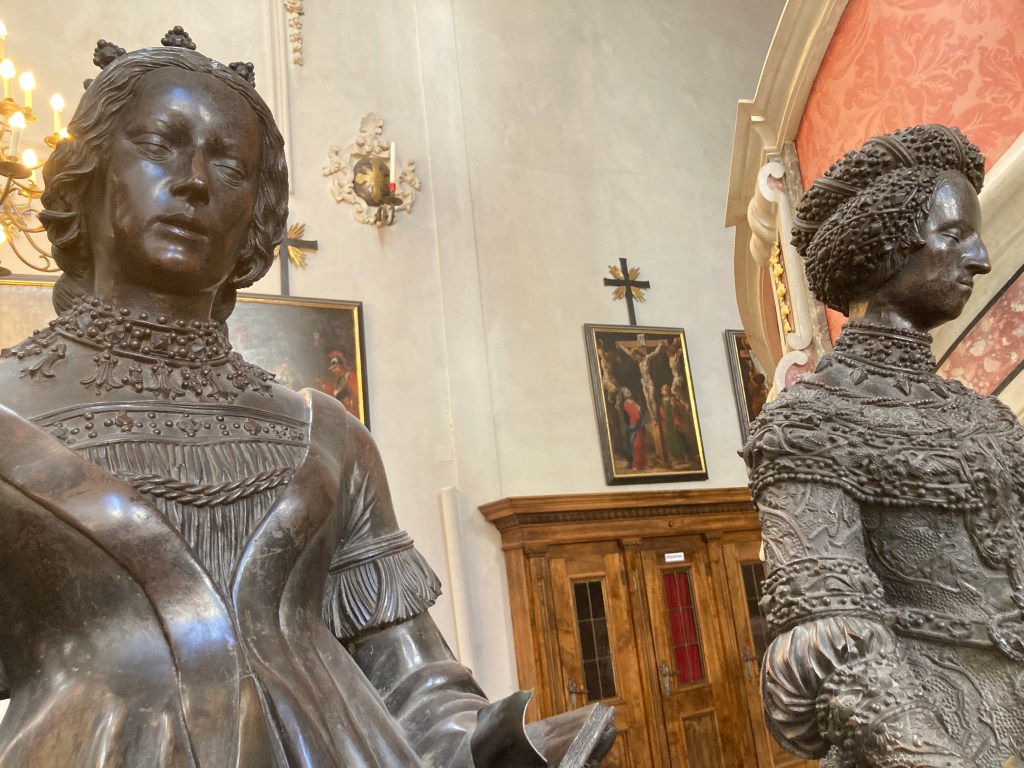
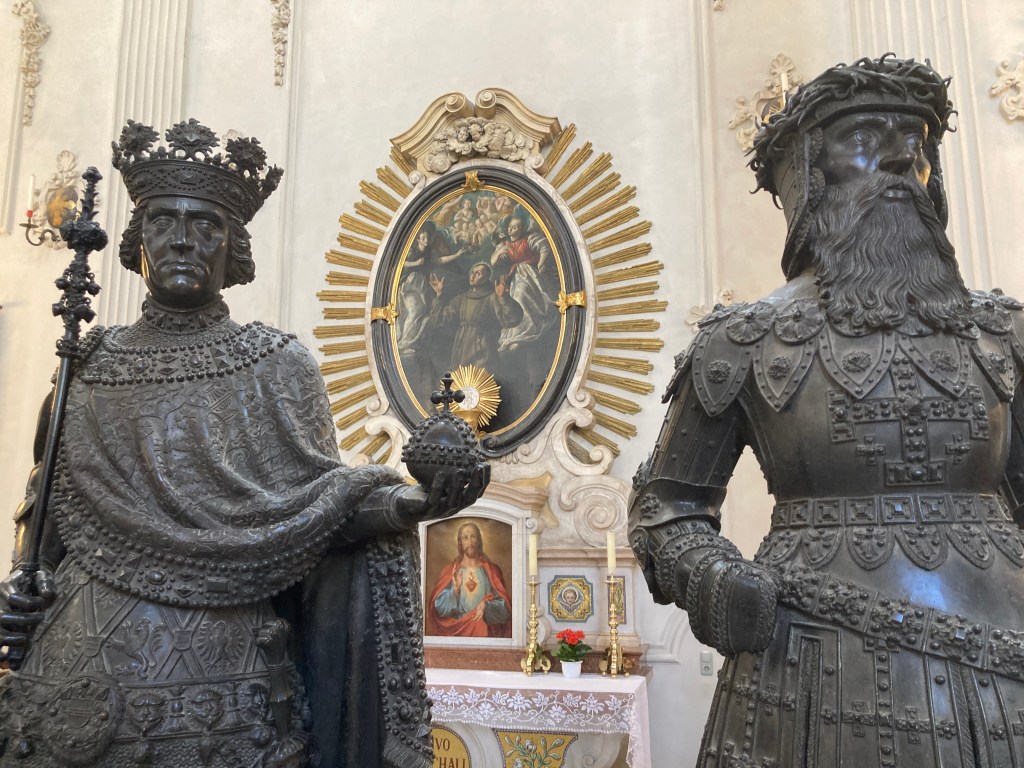
We took the 12:20 train to Graz, having taken care to book the panoramic coach. There was white cloud, then blue skies as we snaked through the Tyrol. On the way we passed the resort of Zell Am See, which looked very enticing. Perhaps another time…
The journey took nearly six hours. At the Hauptbahnhof we bought 24-hour city travel passes (seven euros each) before discovering that there was a free tram leaving from basement level. But first we obtained provisions from the busy Spar knowing from experience that Austrian shops are shut on Saturday afternoon and all Sunday.
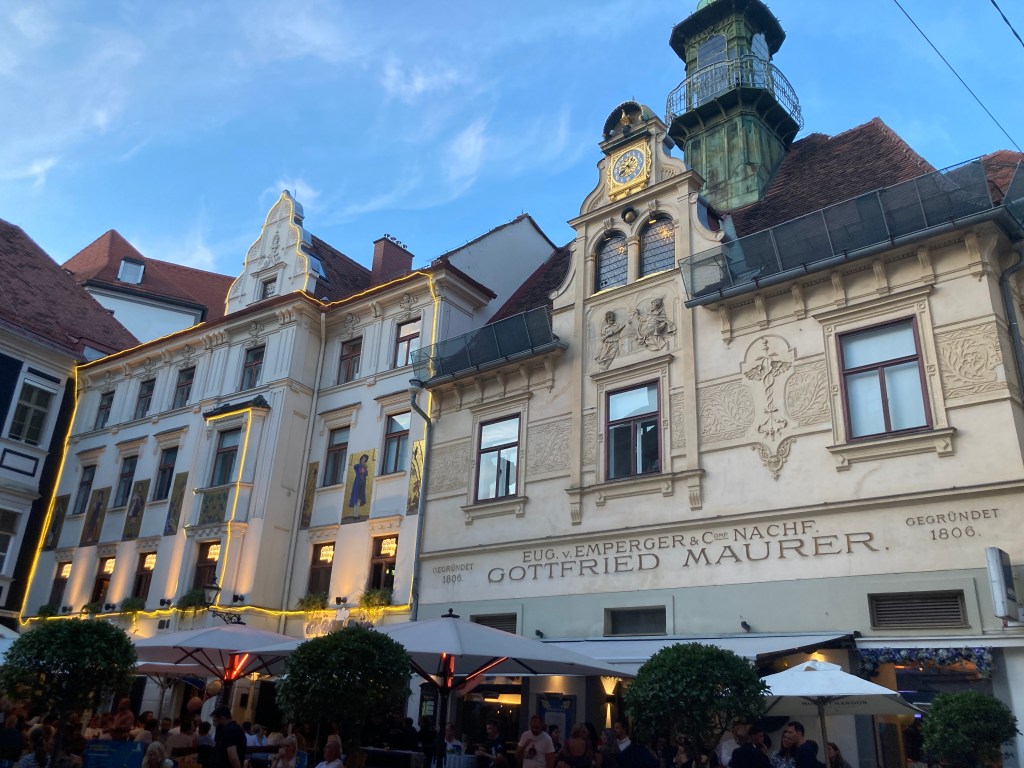
Our apartment was in Trautmansdorffgasse, a historic little street in the oldest part of town. Next door was a sad and empty Oirish pub.
Graz is in Styria and has a Balkan feel to it
Zagreb and Ljubljana lie just to the south, and the great majority of people I saw had dark hair. Almost everyone was tall and very few young people were overweight. But almost everyone seemed to smoke.
We dutifully observed cocktail hour, then went for a good Thai dinner at Cafe Mitte.
Sunday 30 August
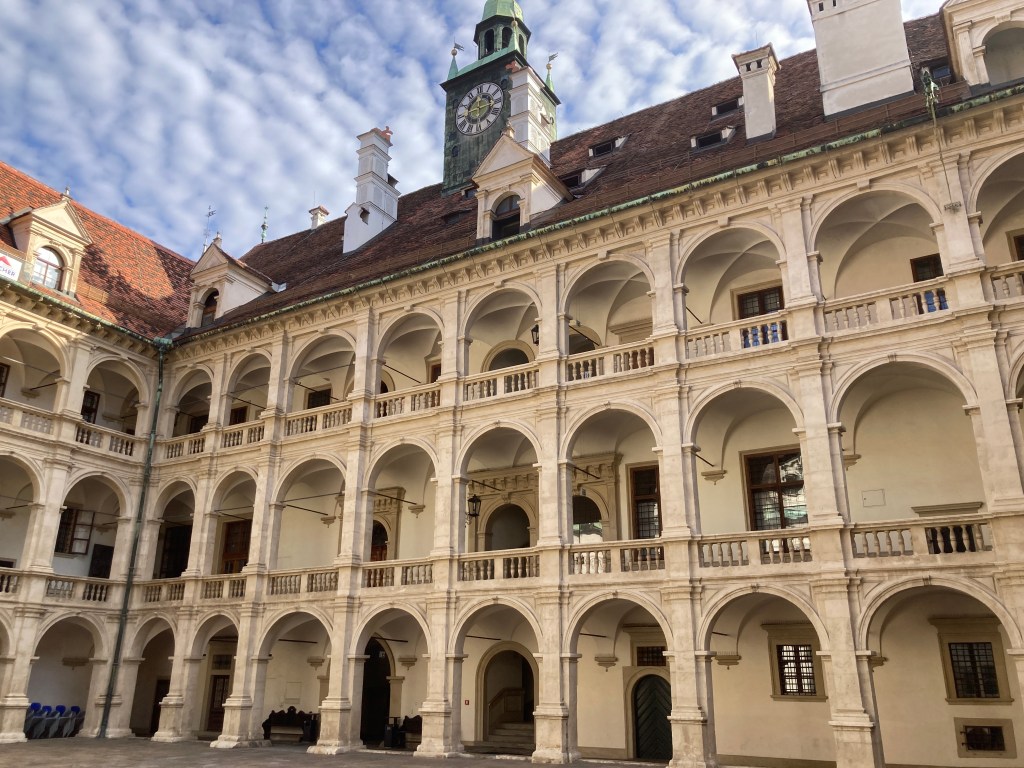
We woke early and headed to Hauptplatz for coffee and croissants, passing through the impressive Landhaus before taking the funicular up to the Schlossberg.
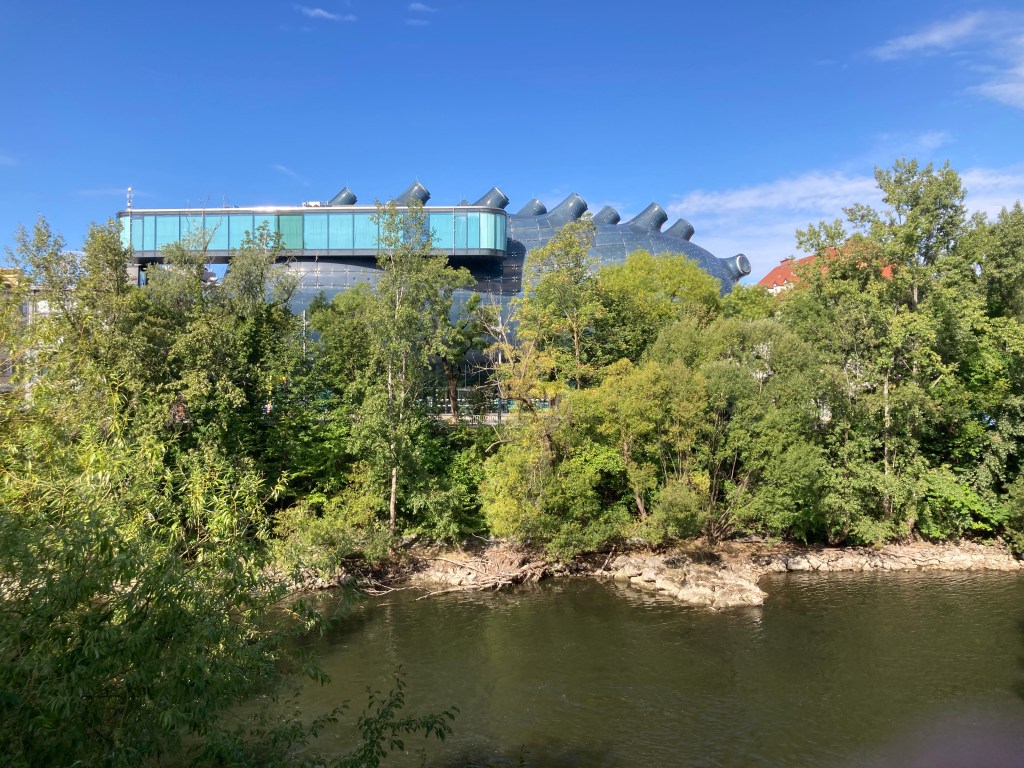
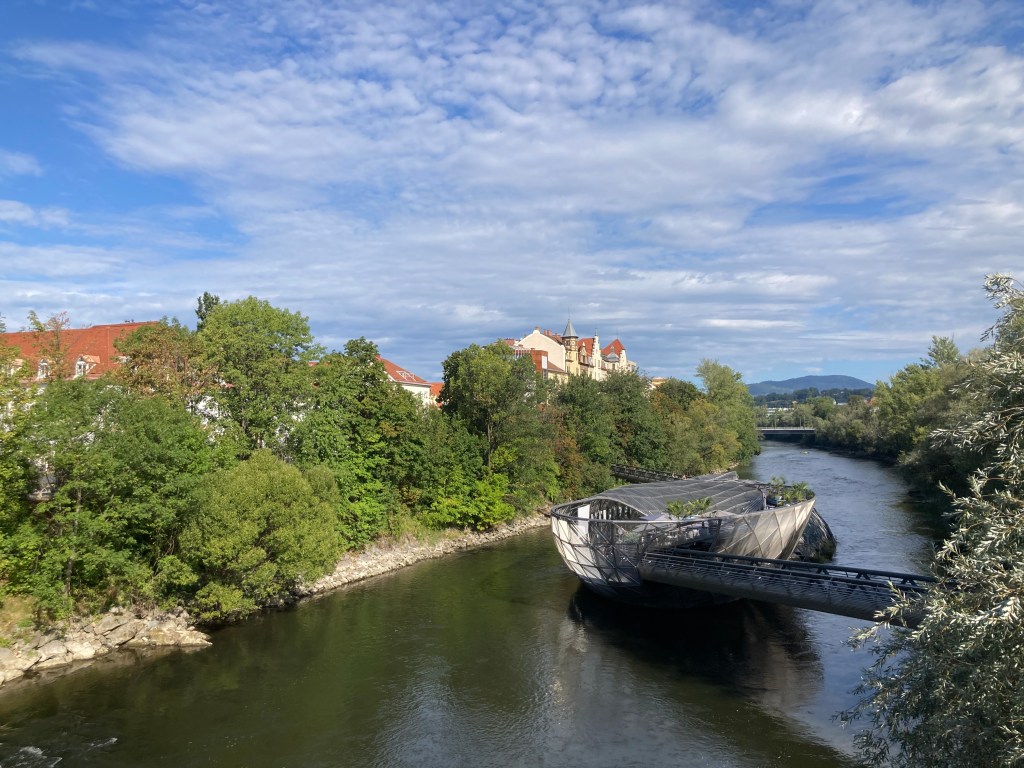
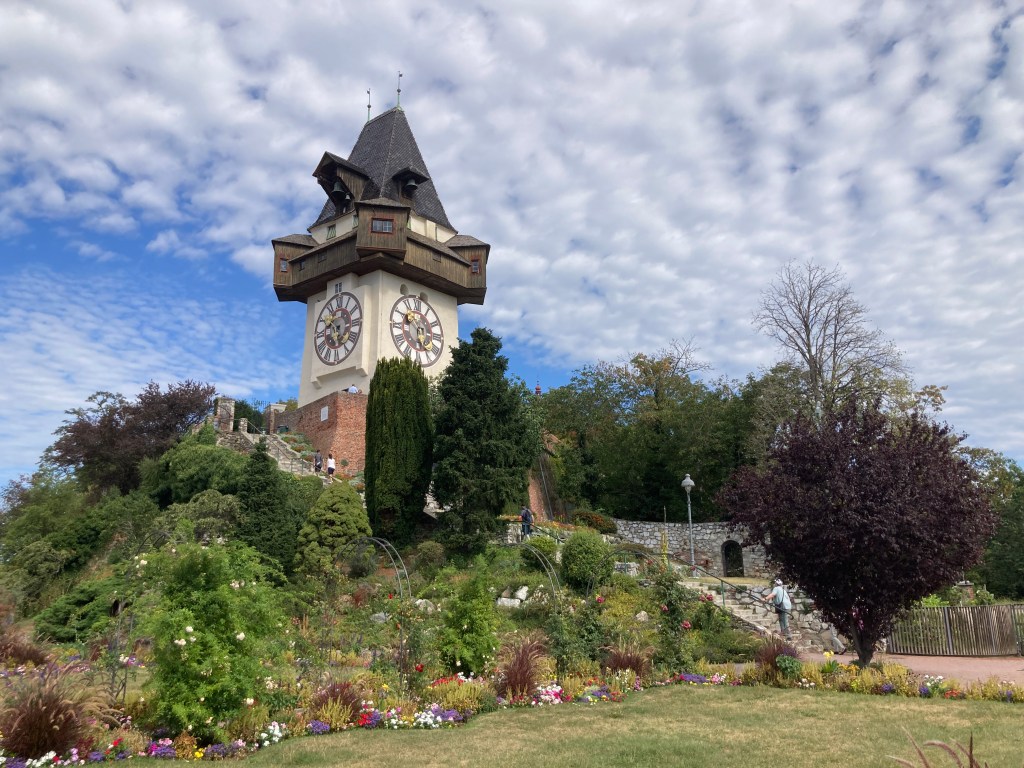
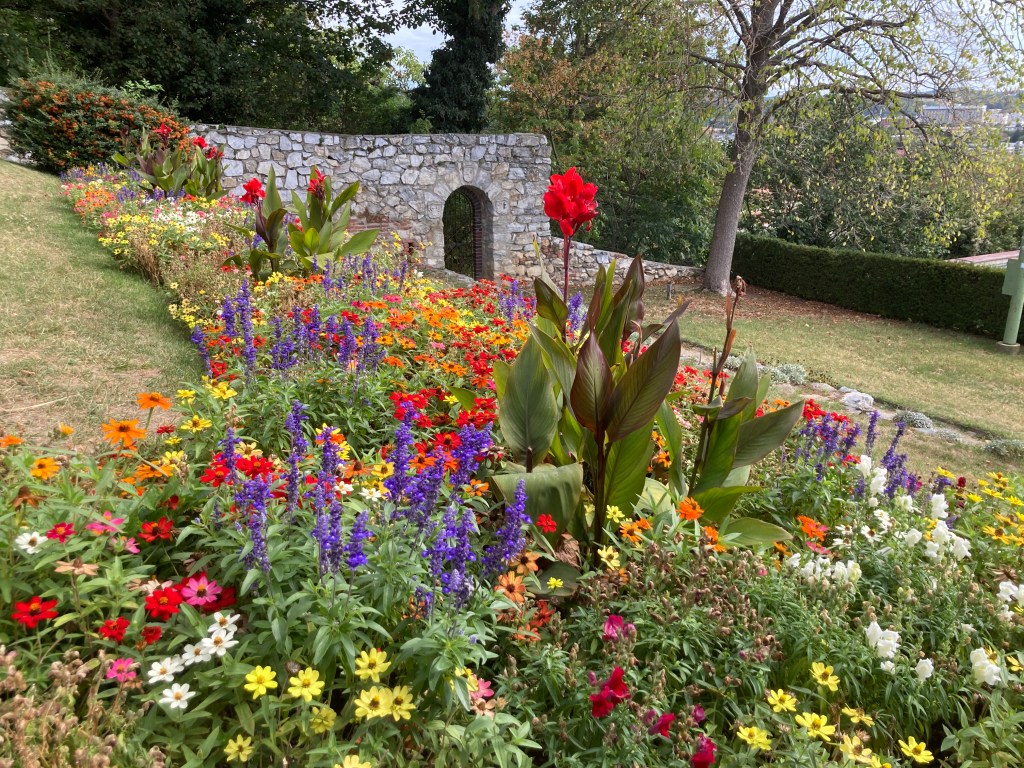
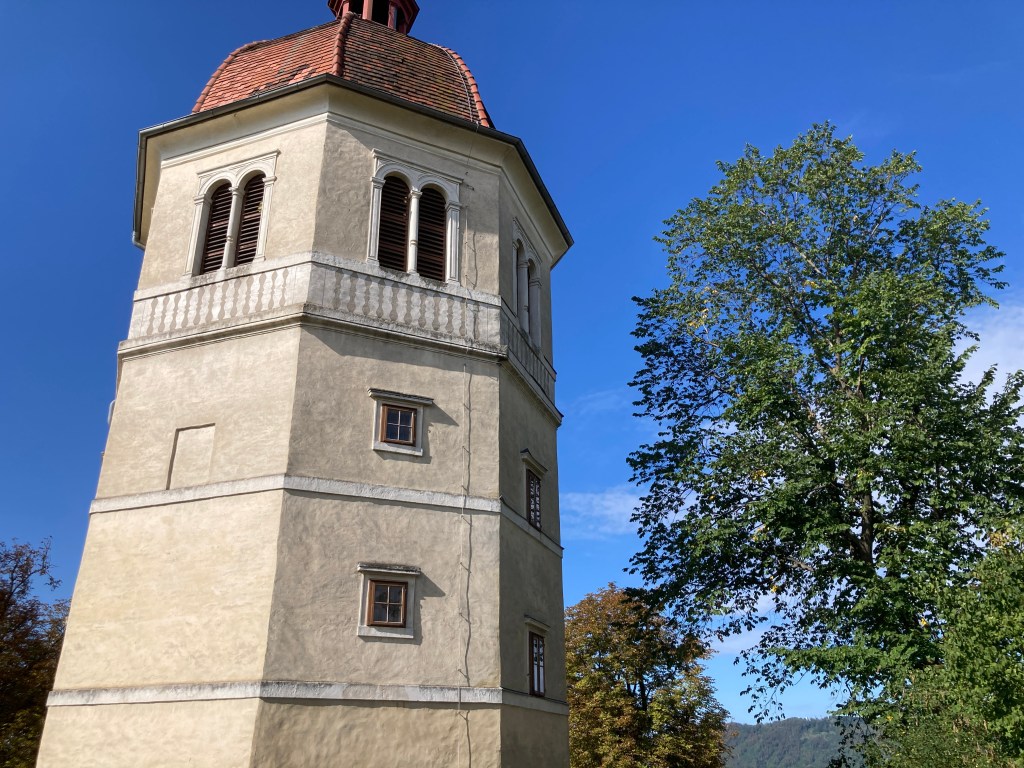
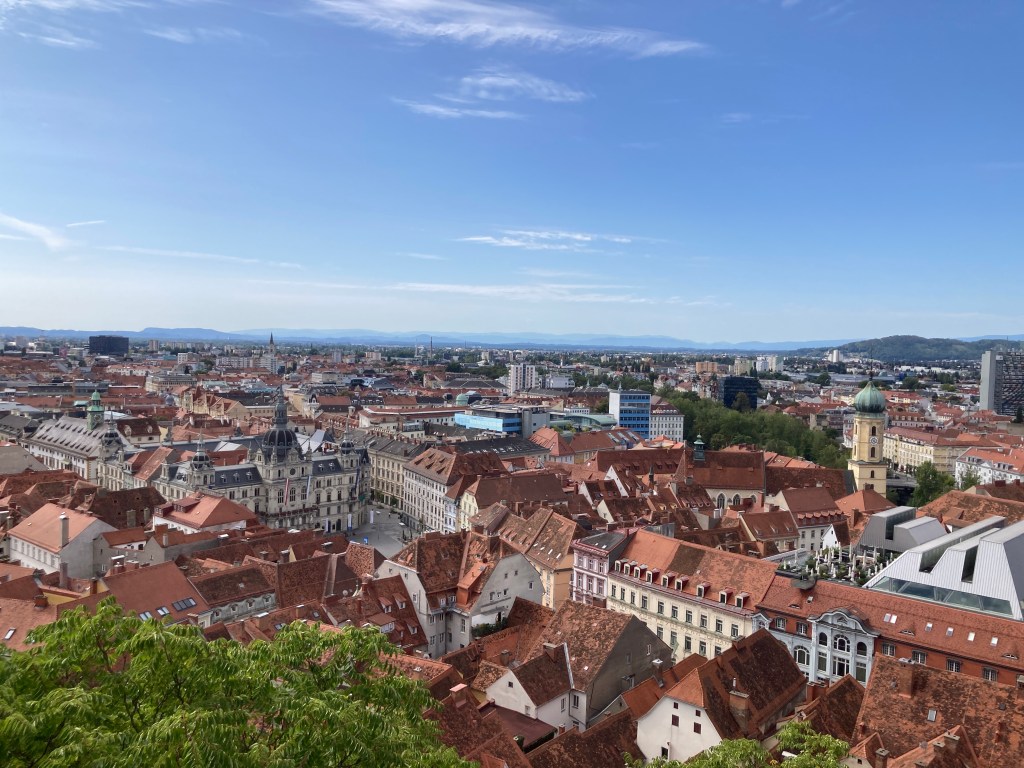
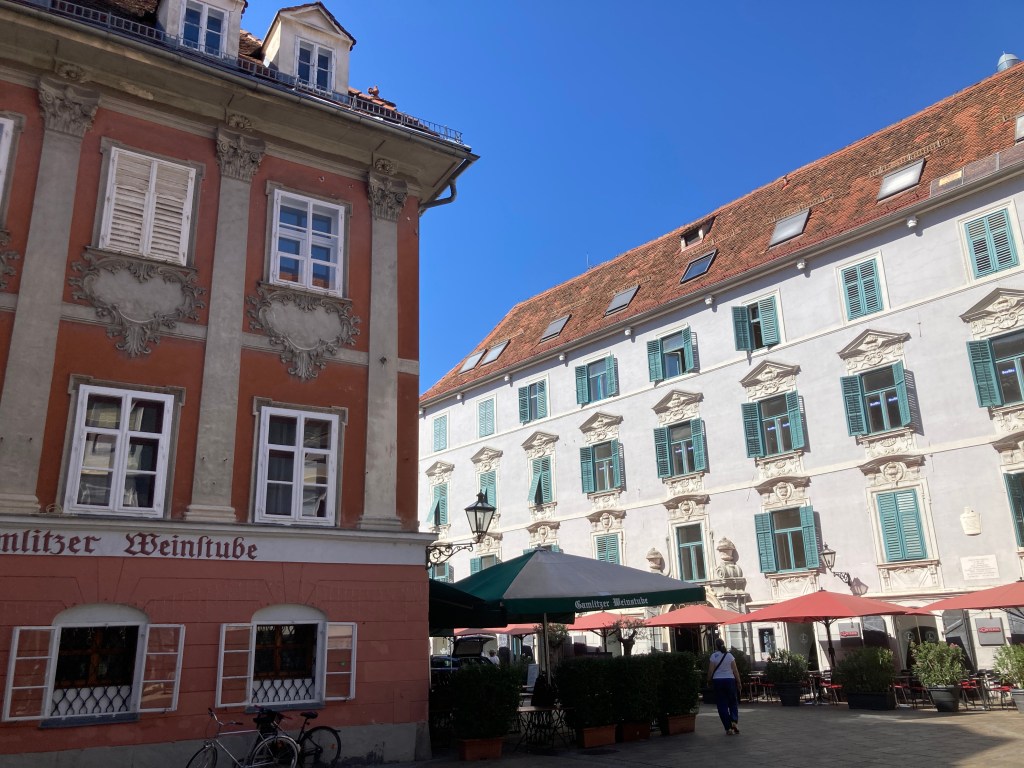
The castle is set in a beautiful park, with a gentle stroll taking you down to the riverside, with its ultra-modern architecture. Then to the Dom to see the exterior 15th-century frescoes (Gottesplagenbild) and the Baroque mausoleum of Ferdinand II.
***
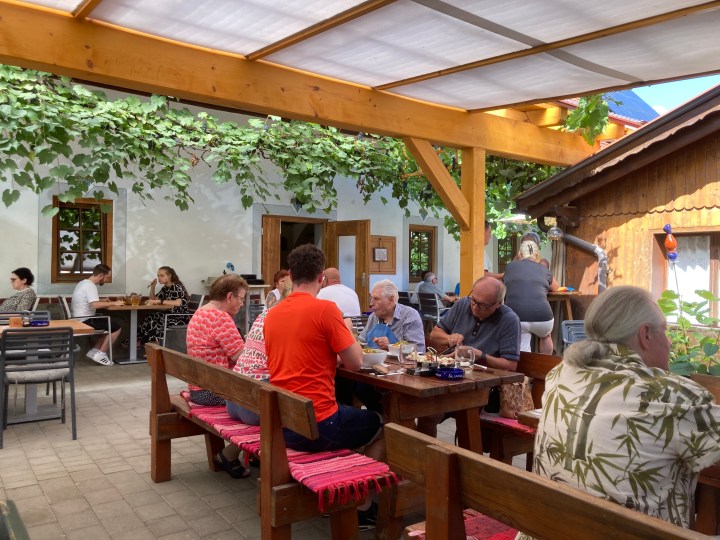
We decided to repeat the experience we had enjoyed in Vienna two years before and eat at a country tavern/vineyard, a heuriger. We caught bus 510 to Grambach, arriving at Buschenschank Bucherlhof precisely as it opened at 2pm.
It was rammed and we were lucky to get in
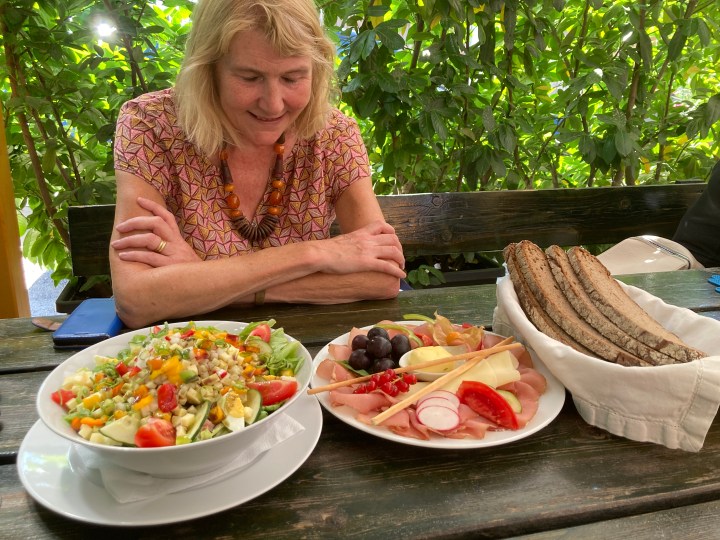
Why was I surprised that the menu was entirely in German? It is then that we discovered that we did not know as much German as we thought. I eventually worked out that sauer means salad, as in sauerkraut. Mine host resembled a peasant from a Bruegel painting, fat with bandy legs. He brought us fizzy young white wine, a cold plate of smoked ham, brown bread and a huge salad (chopped ham and cheese). It had been hot and sunny all day. Still thirsty, we ordered red wine, which was good.
Not surprisingly we didn’t want much in the way of dinner, making do with a cold samosa.
Monday 31 August
It was another hot, sunny day from the start. We had time to get provisions for our next journey, the 09:41 to Vienna, before visiting the ÖBB lounge at Graz Hauptbahnhof to scrounge coffee and fruit (a perk of holding a First Class pass).
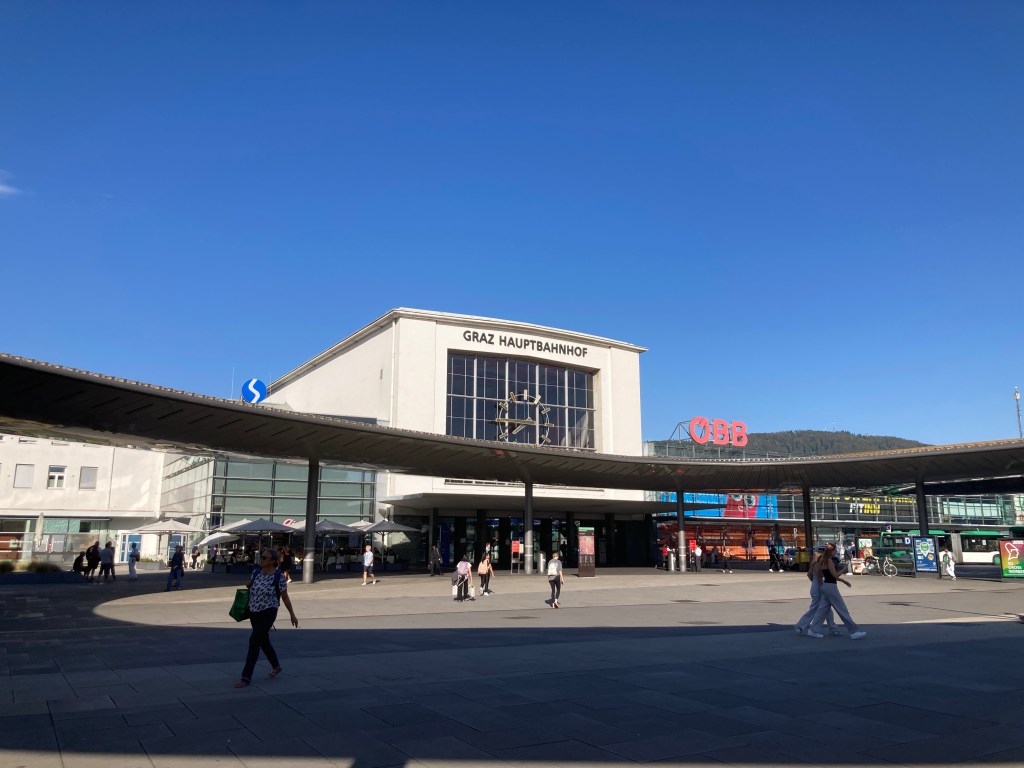
We travelled past attractive wooded hills and mountains, villages, churches and castles.
***
Despite having only seven minutes to change trains (down and up the stairs) we made the 12:14 to Bratislava, crossing the border at Marchegg on the River Morava. The landscape became flat and tedious, with huge fields of crops and parched maize.
Arriving at Slovakia from Austria is like going back 50 years
You certainly don’t see the best of the country on the walk from the rundown railway station to the old town.
The Hostel Folks boasted nylon sheets and Communist-era aircon that made a terrific racket. On the plus side, it was centrally-located and very cheap. In the afternoon we took a two-and-a half-hour guided walk. Our guide was born in Calcutta, but was locked down in Bratislava during Covid-19 and decided to stay. He was knowledgeable and witty when delivering his anecdotes.
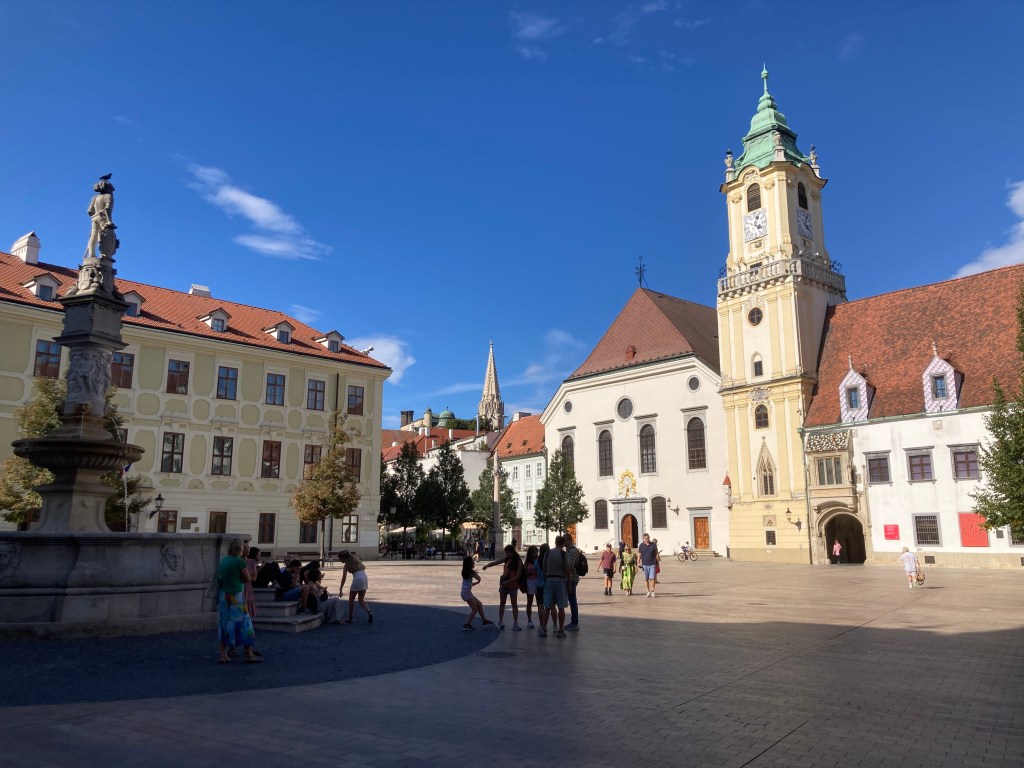
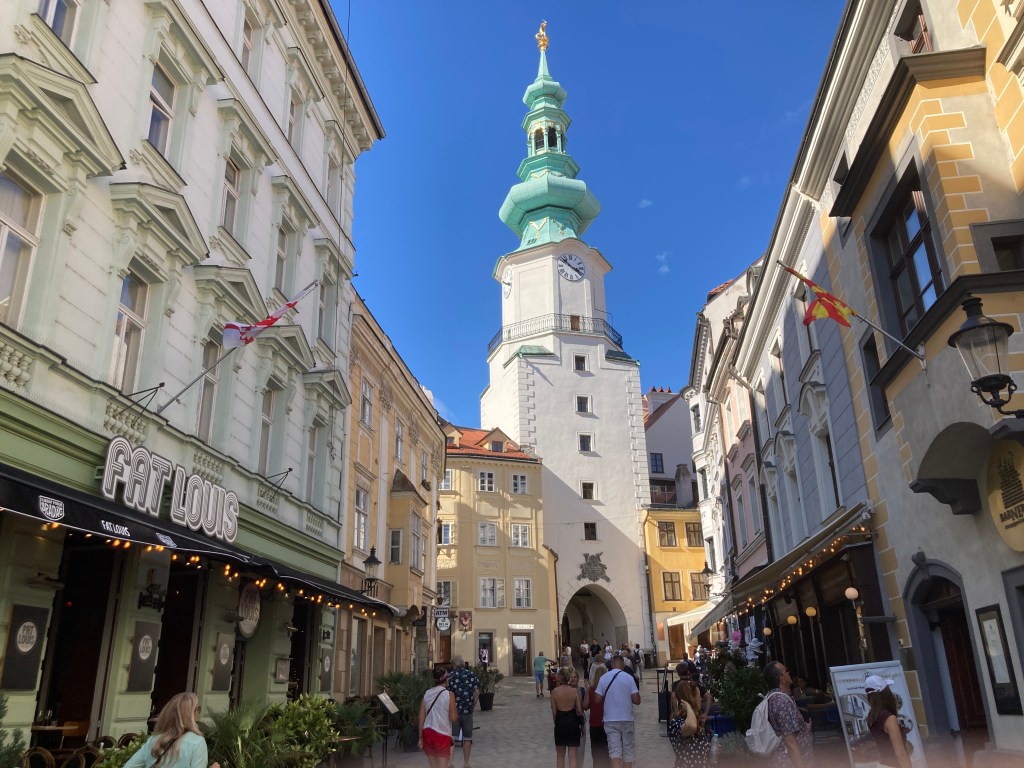
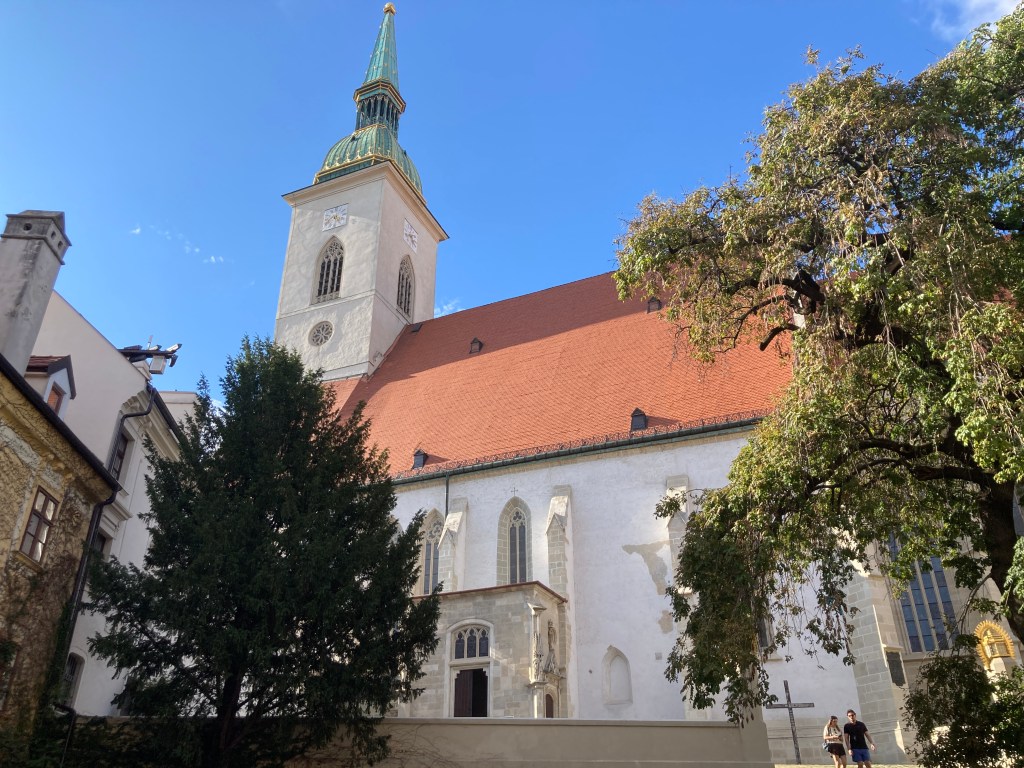
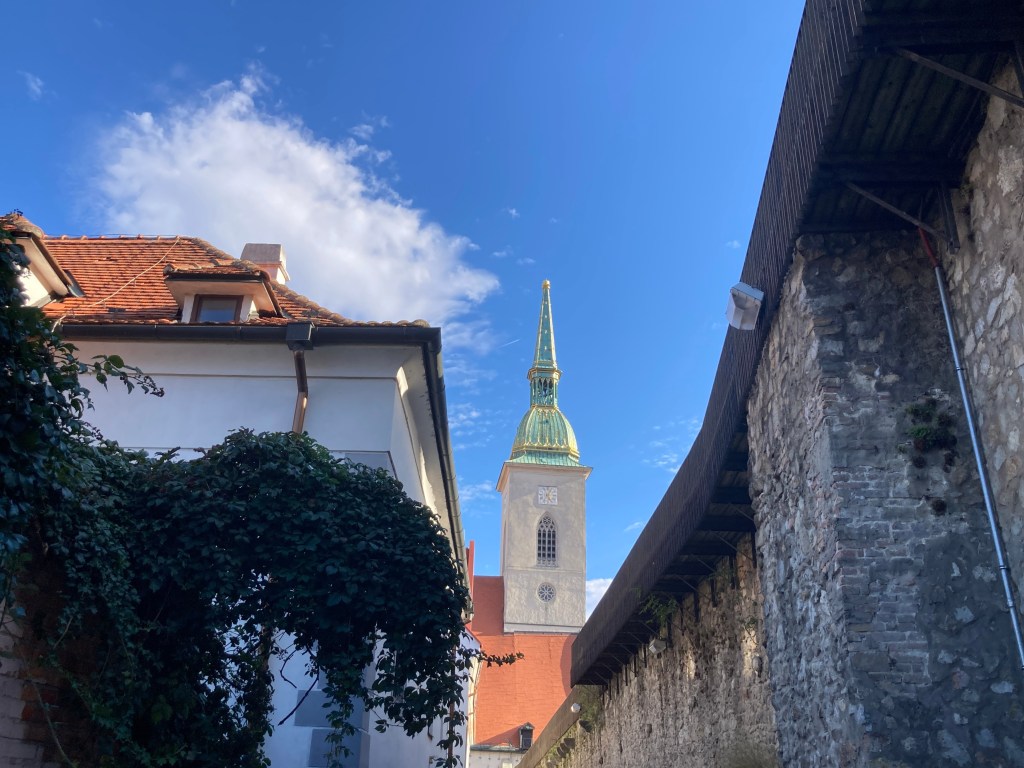
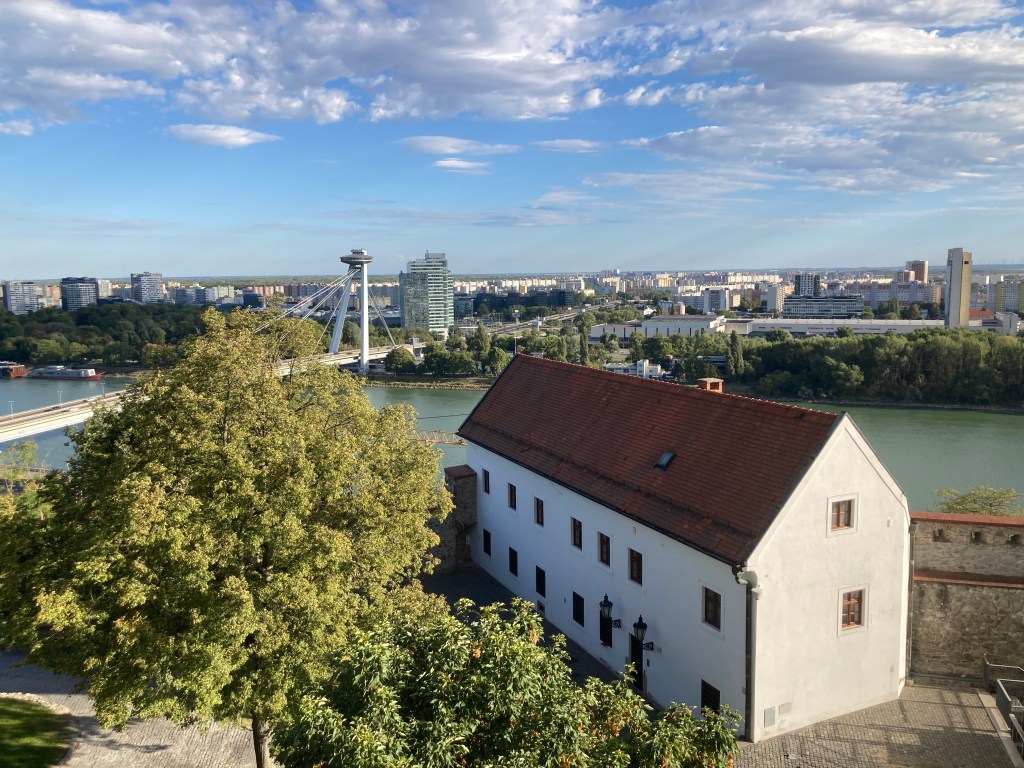
At Viecha u Sedliaka we ate heartily (e.g. garlic cream soup followed by goulash and the infamous “dumpling”) for not a lot. With good wine for 10 euros a litre.
Whilst the Staré Mesto has its attractions, we weren’t hugely impressed by Bratislava. I am not sure why, but it seemed to lack charm – and a bit lightweight in comparison with Vienna, Prague or Ljubljana. The castle, in a country full of castles, is a fake. Too much of a reputation for cheap booze (see above)? In fairness we were only there for less than 24 hours and neither of us can manage more than a few words of the Slavonic languages. I’m sure Slovakia has much more to offer the visitor.

