With a few hours to kill before getting the bus to Istanbul, we took a last stroll through the centre of Plovdiv. stopped for a coffee and fitted in an art exhibition. A 20-minute walk through the Tsar Simeon Gardens took us down to the bus station, diagonally opposite the railway station.
The FlixBus 11.15 service is operated by Kamil Koç. It takes four hours to get to the Turkish border at Kapıkule, near Edirne. Crossing is a long process. Everyone has to get off the bus; then it takes over an hour to go through both checkpoints, having your passport and luggage inspected. We were also fingerprinted at the Bulgarian side (leaving Schengen) – the first time that had happened since our last trip to India.
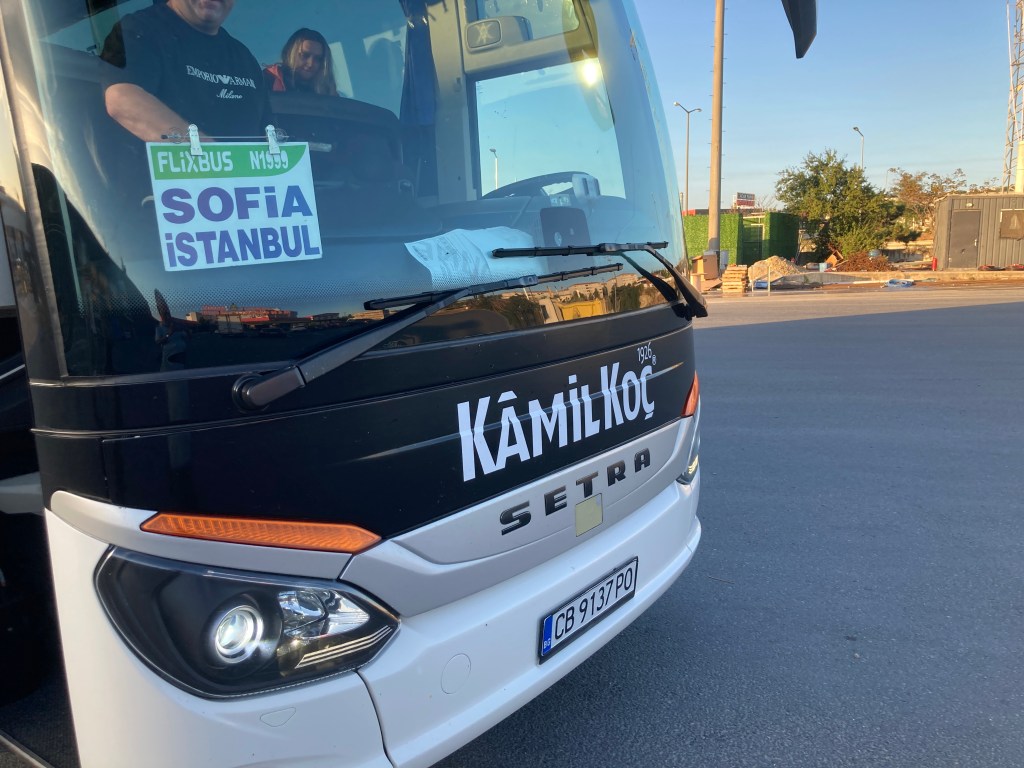
The Turkish motorway was good, the driving furious
The only stops were comfort breaks at service stations. Despite a traffic jam on the approach to Istanbul, we arrived at Otogar at 19:40, only slightly late. It is the biggest bus station I have ever seen, and it can take a while to find the metro.
The cheapest way to move around the city (by bus, metro, tram or ferry) is to get an Istanbulkart and load it with credit at the ticket machines. It’s straightforward once you get the hang of it, and someone will probably help you (beware of scams). But if you just want to get on your way you can also touch in with a bank card, as in London.
***
It was a very warm Saturday evening. When we finally exited Beyoğlu metro the main shopping street was heaving with people. We dragged our luggage over the cobbles and up and down the hilly side streets before finding our apartment at Casa di Bava, by the historic Çukurcuma hamam. By then I needed a shower.
It was getting on for 10pm when we came across the family-run Tom Tom kebap joint and enjoyed a very decent adama kebab, just before they closed. We moved on to the Flekk cocktail bar, where we were fortunate to find a table. Contact payments were welcome at both venues, as everywhere in the city.
Turks know how to enjoy a Saturday night
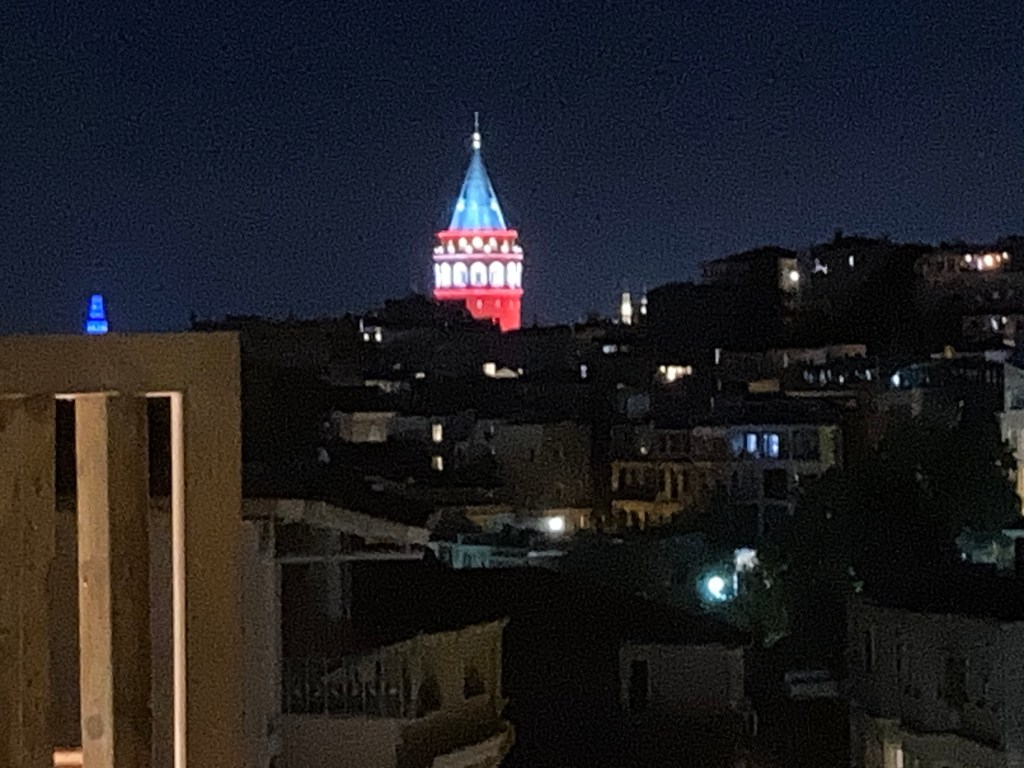
Back on our balcony we had a view of the Galata Tower, garishly illuminated.
Sunday 13 September
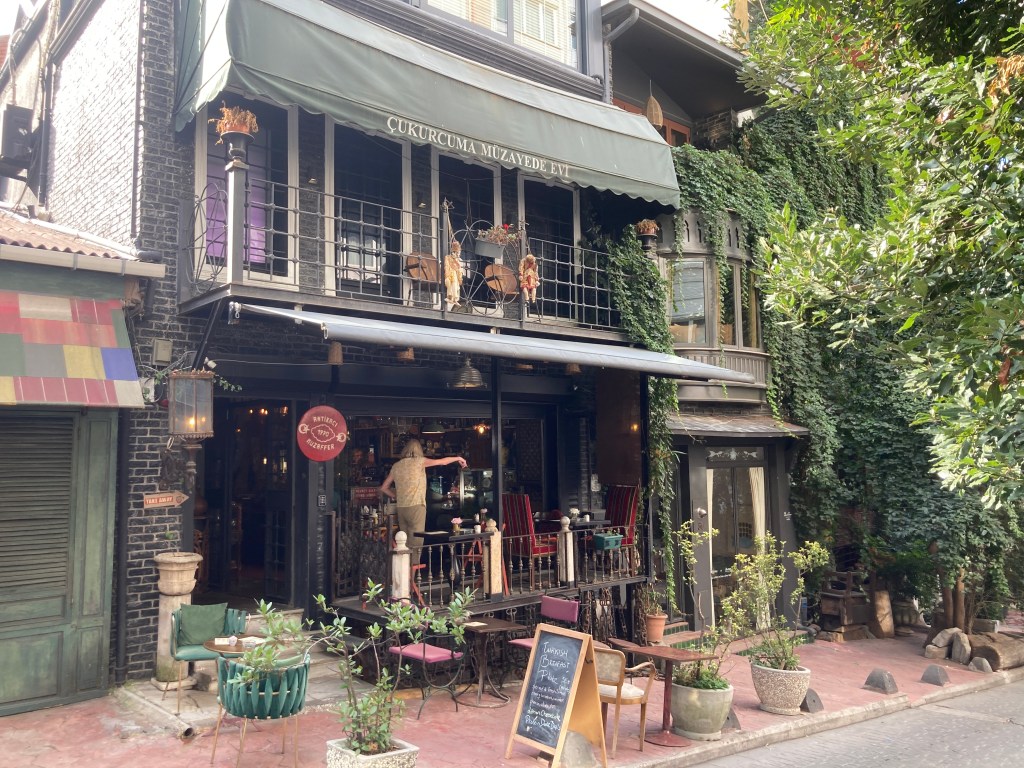
We awoke to a sunny morning (as ever), though we were pleased to see that maximum temperatures were falling to the comfortable mid 20s. We found an antique shop-cum-café for an excellent and glacially slow breakfast, then walked on to get a closer look at the Galata Tower before taking tram T1 towards our next hotel at Sultanahmet – the centre of old Constantinople.
But there was a problem
There was a bike race through the area that morning so our tram ground to a halt short of its destination, leaving us with over a mile’s walk to the Empress Zoe hotel, once again up a steep hill. We were delighted with our beautiful, if small, bedroom, which had a private terrace with views down to the Bosphorus. But be advised: access to the upper floors is by a spiral staircase.
***
This was my first time in Istanbul. Anne had been many years before, when it was considerably cheaper! It is not cheap now, though I am sure non-tourists, as always, can get better value. My only experience of Turkey is from a package holiday in Bodrum, 40 years earlier. But I do know a few words of Turkish, which has the advantage of being written in Roman script. So at least you can pronounce words even if you don’t know what they mean! Turkish has quite a few loan words, notably from French (otogar, gișe, büro, büfe, restoran, otel) and of course lots of people speak English these days. Not the case when I visited Bodrum back in 1986.
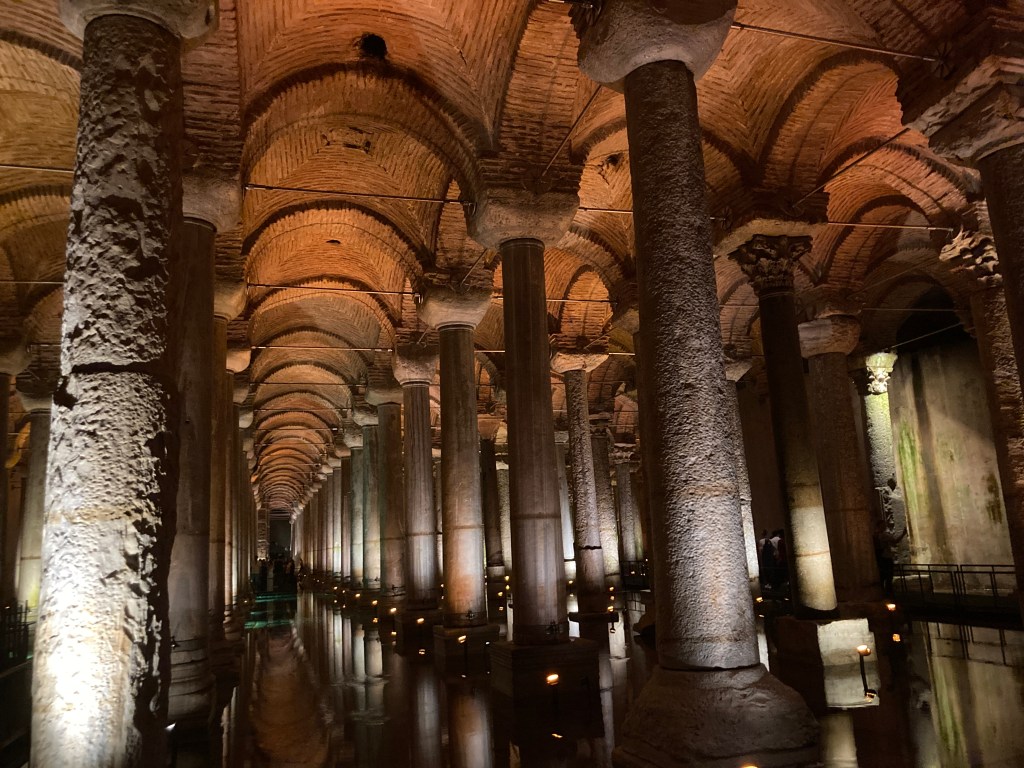
Our sightseeing began at the Basilica Cistern, a huge underground space and an amazing Byzantine survival.
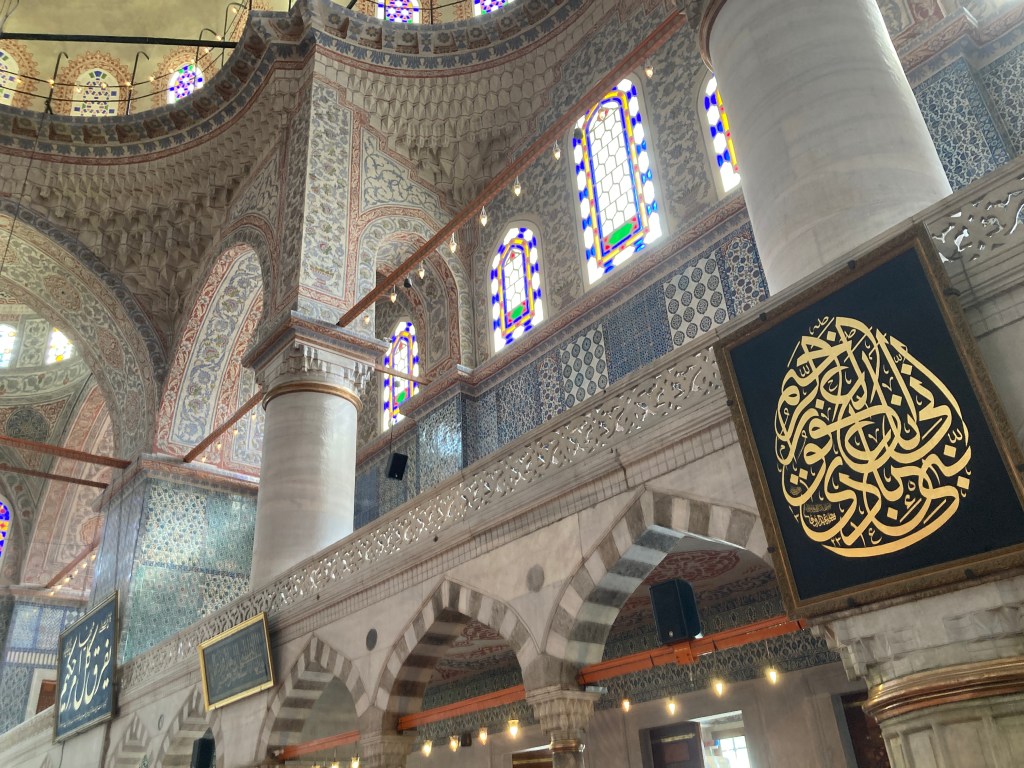
It was one of the highlights of our stay in Istanbul… and so it should have been, with an entry price of 30 quid! Fortunately our next visit, to the famous Blue Mosque, was free.
***
By co-incidence, friends of ours who now live in Canada, Joanne and Hamdi, happened to be in Istanbul at the same time, so we joined them for dinner at Karaköy Gümrük, back near the Galata Tower.
Monday 14 September
After a very good buffet breakfast in the garden of the Empress Zoe we headed to Topkapi Palace, just a short walk away, where we met our friends. The queues at 10am were not too bad. Again, the entry price is exorbitant (£43), although it is a very good experience; you have to put aside half a day to get round it. Women must wear a headscarf in the museum, as in the mosques. Amongst its many treasures is “The Prophet’s Cardigan”.
An interesting survival
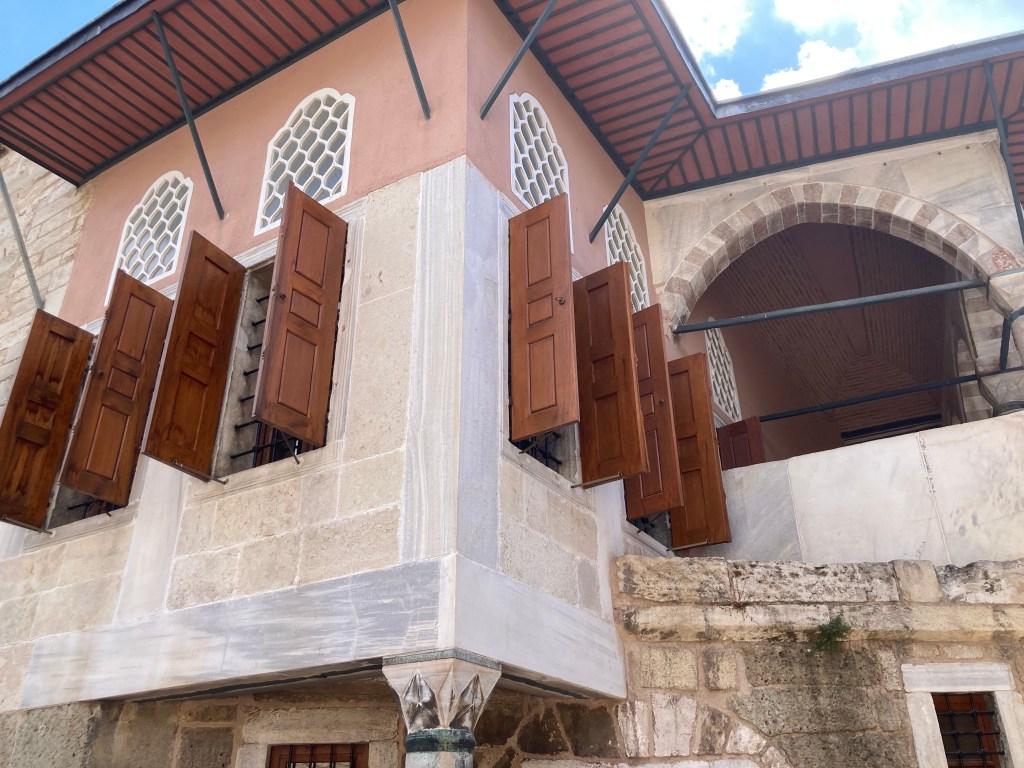
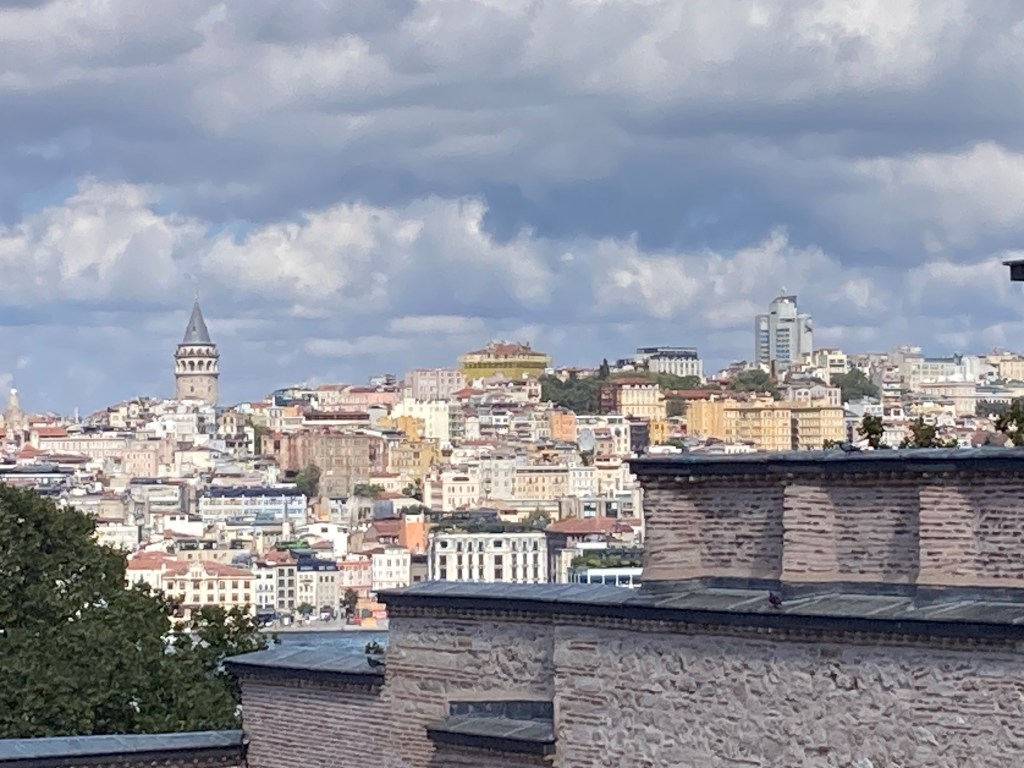
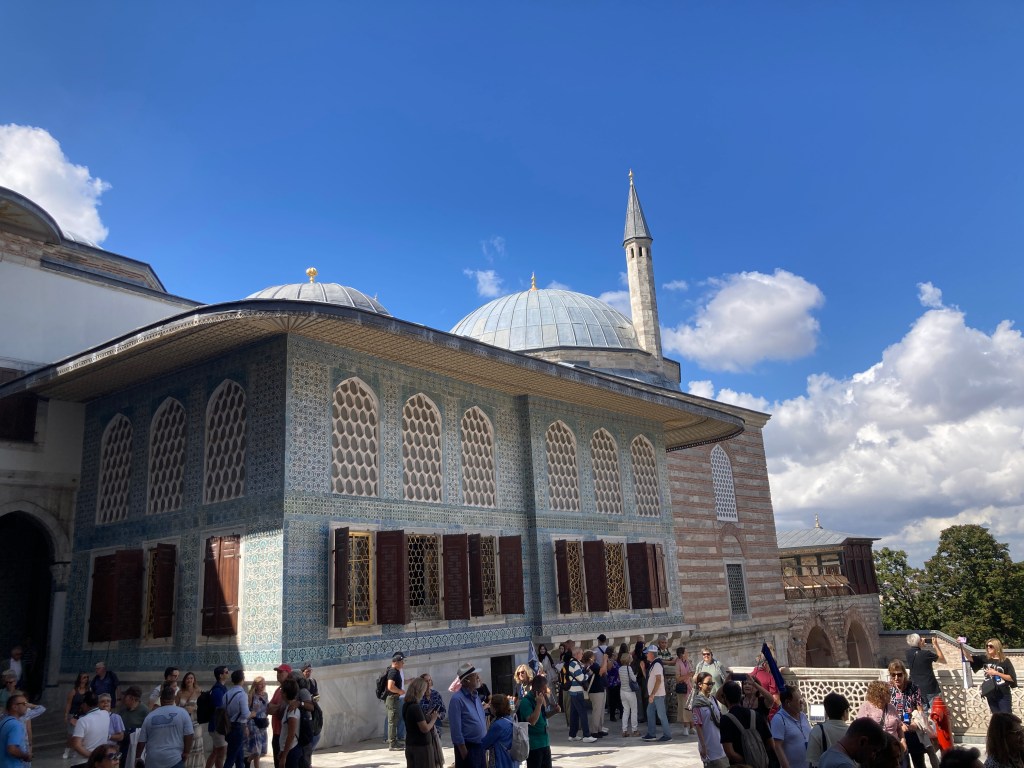
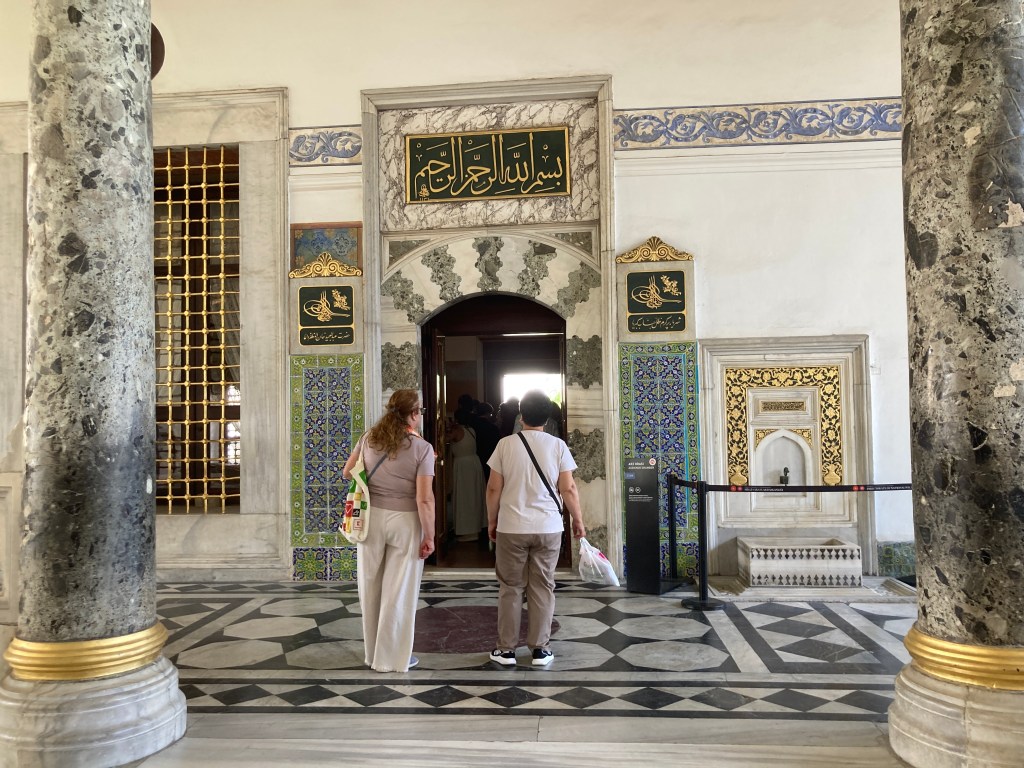
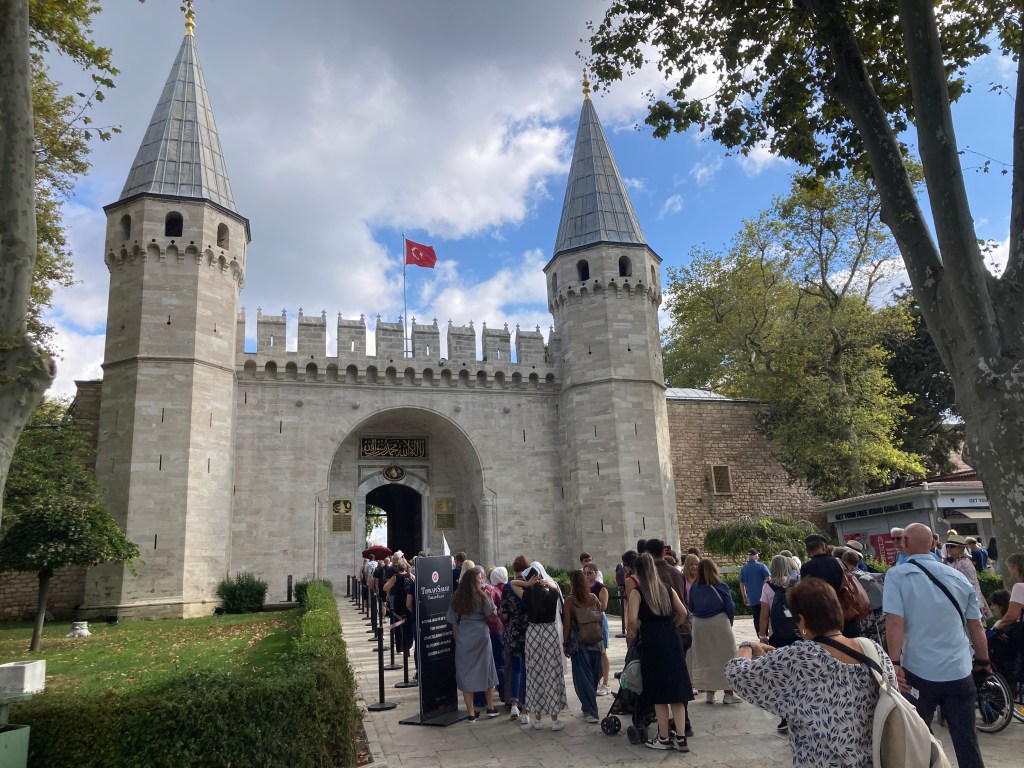
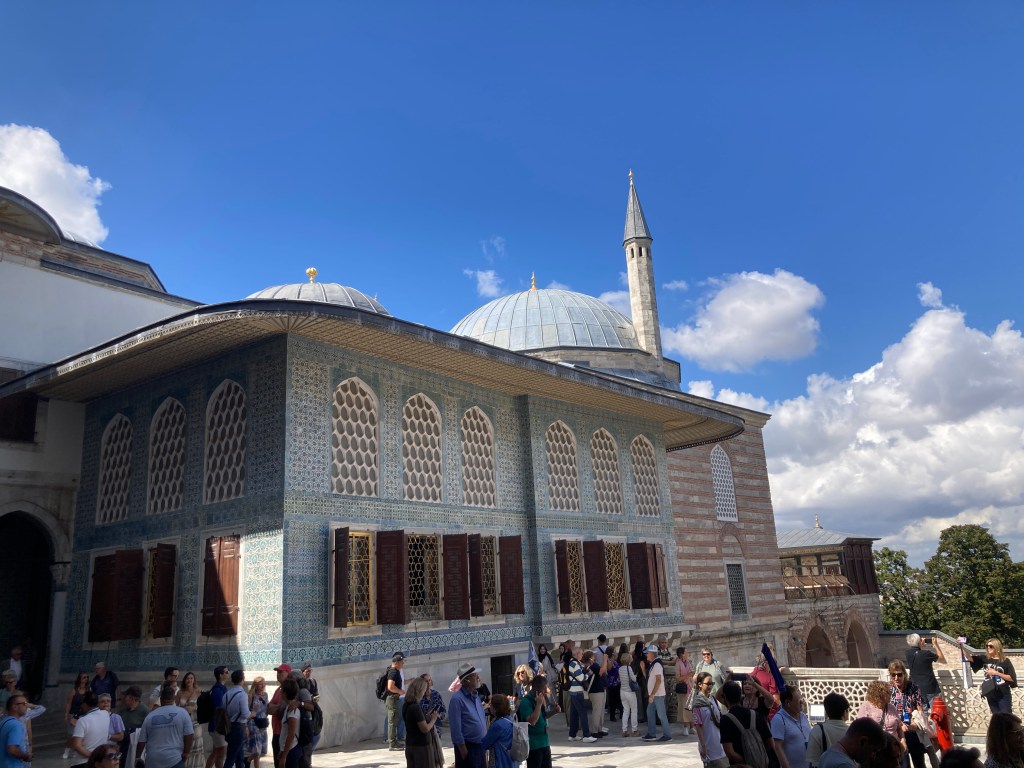
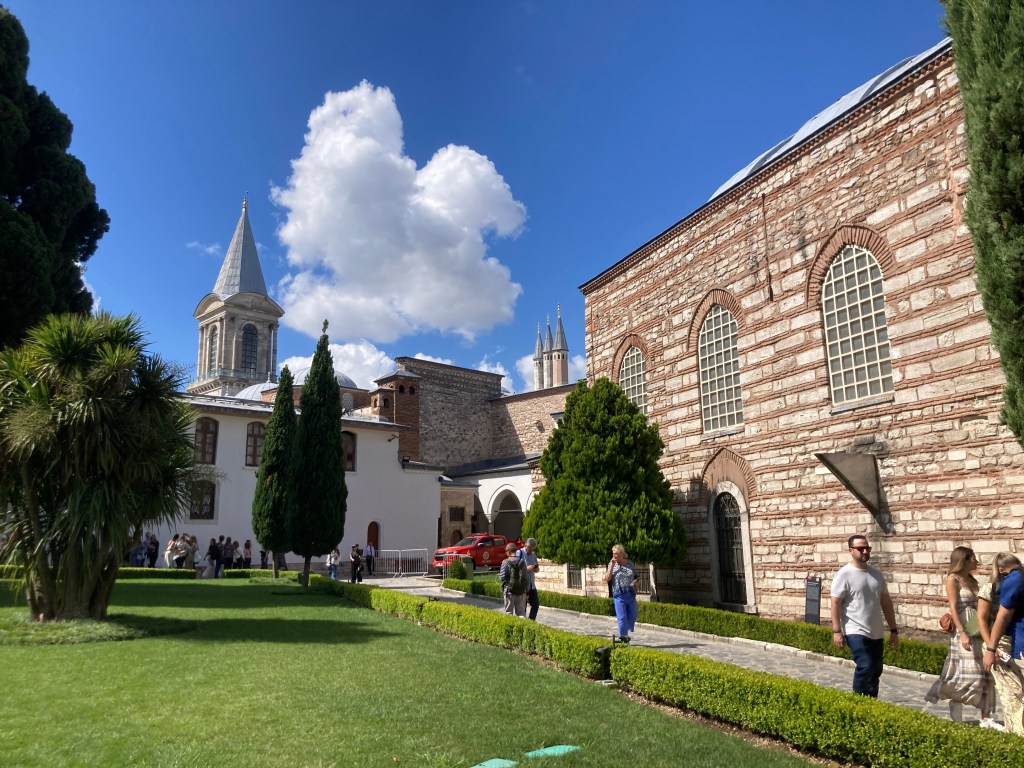
After a much-needed sit-down and cold drink we walked to the famous Grand Bazaar – picturesque though not particularly cheap – then to the 16-century Süleymaniye Mosque, the most beautiful building we visited during out stay. Unlike the Blue Mosque, it was not busy.
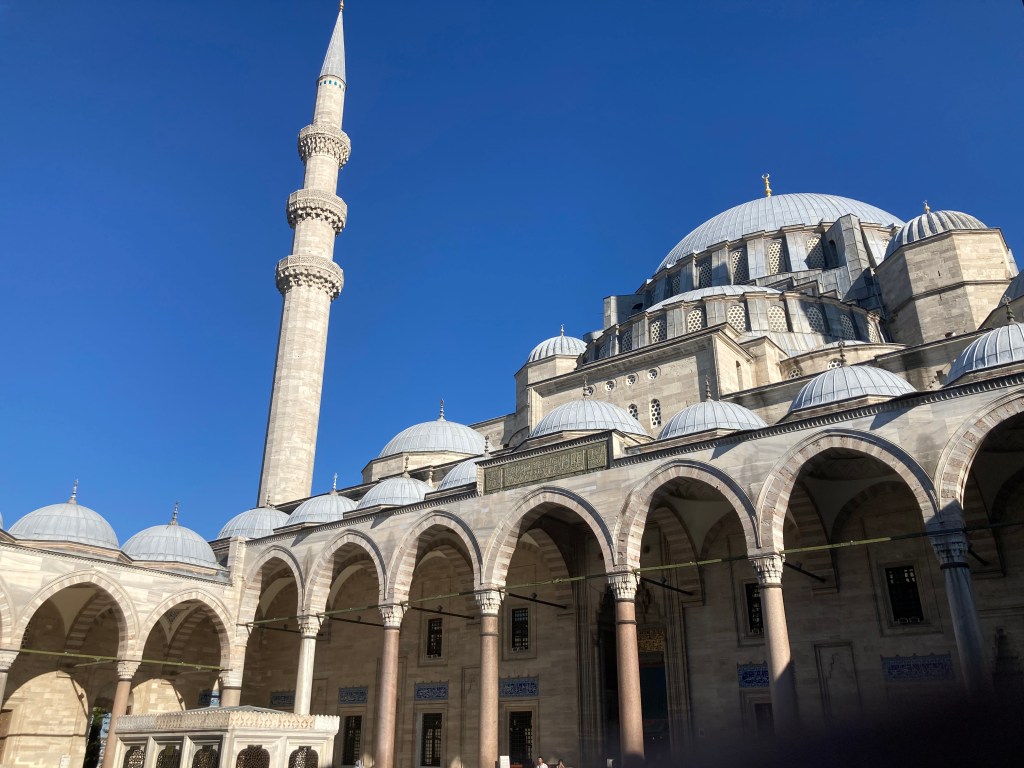
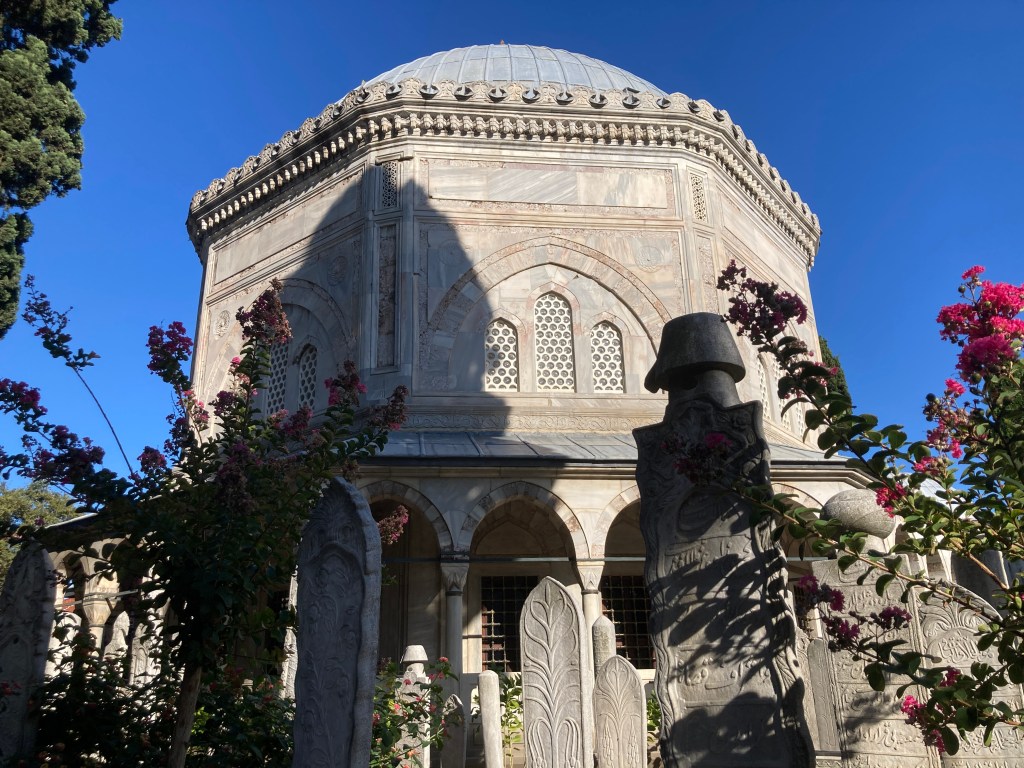
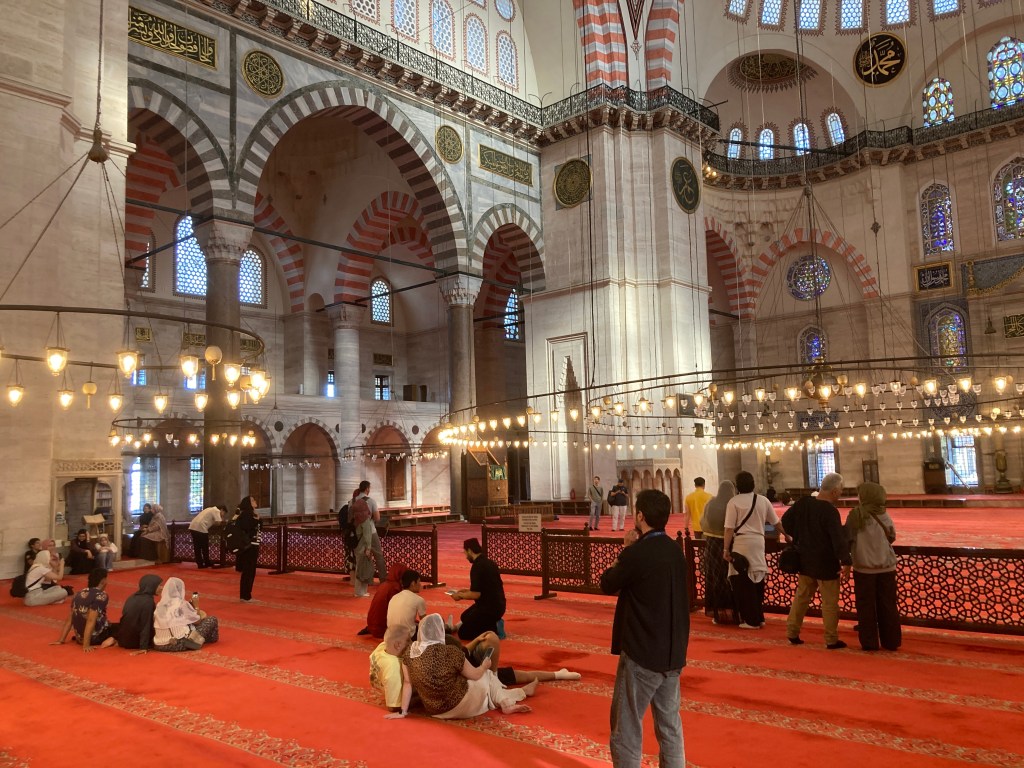
Our feet were killing us by the time we’d seen the Spice Bazaar and walked back to Sultanahmed for dinner at the aptly-named Vista Roof Lounge.
Tuesday 15 September
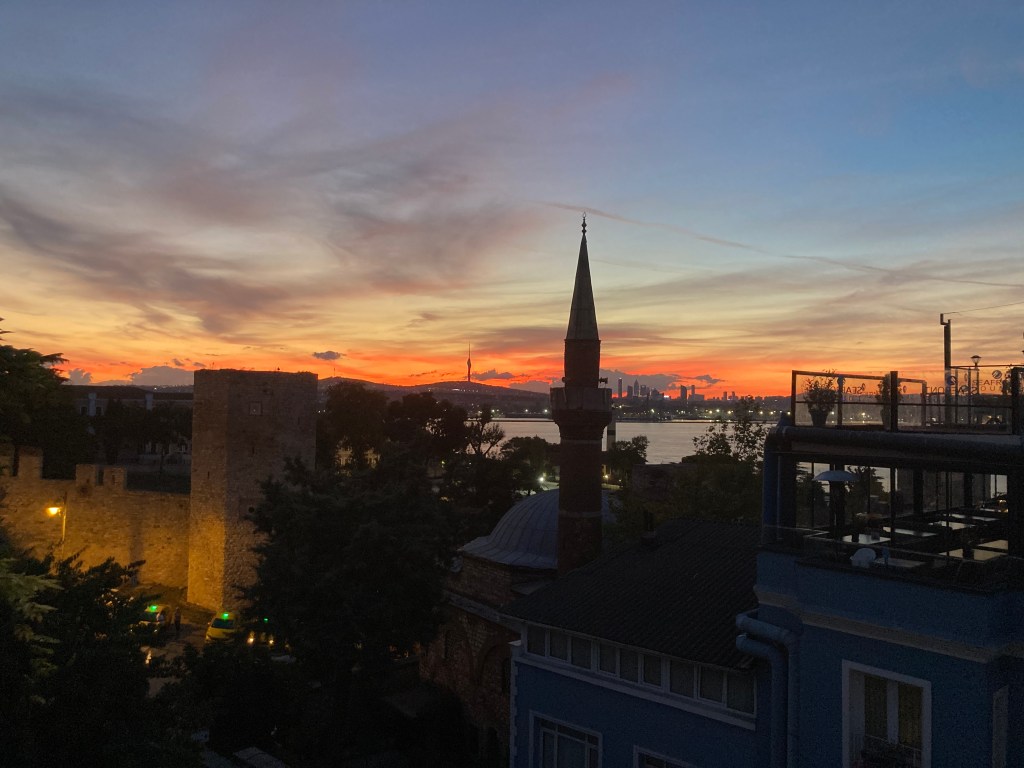
We woke early to catch the sunrise then walked the few minutes to Hagia Sophia (entry 25 euros). Is it worth it? Yes, of course, because of its fame and antiquity, but it is a somewhat frustrating experience because of all the scaffolding inside and out, and the fact that non-Moslems can now only visit the upper level.
We then took a tram to the Chora Church (officially known as Kariye Mosque) south of the Golden Horn, which has magnificent Byzantine mosaics and frescoes.
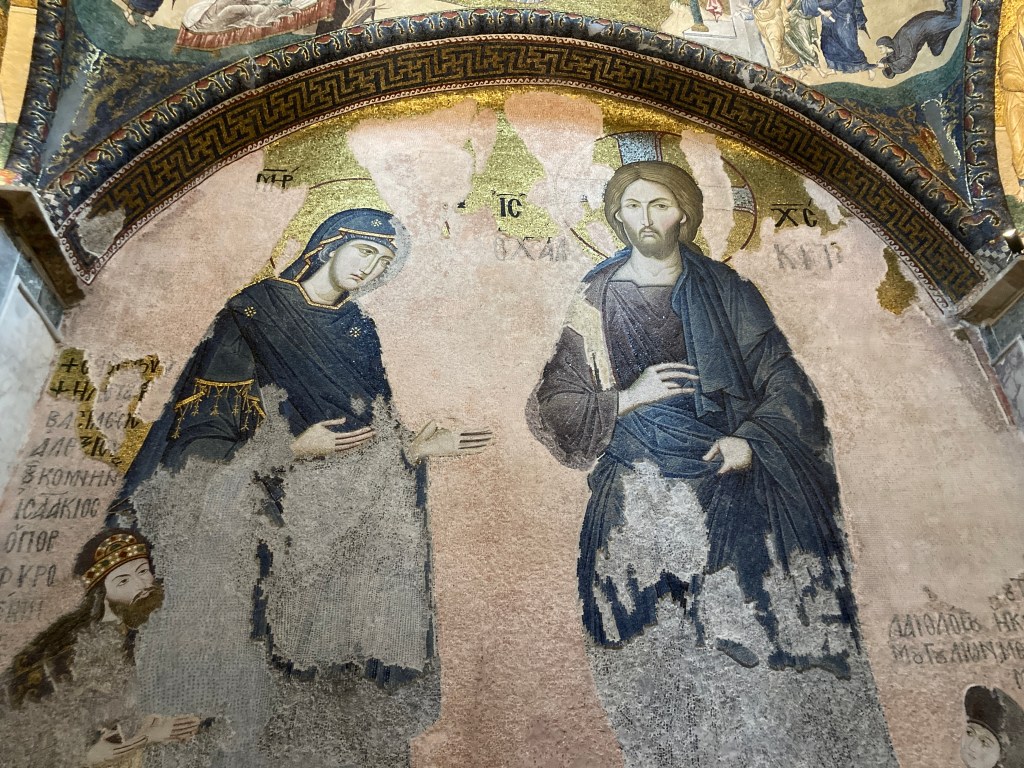
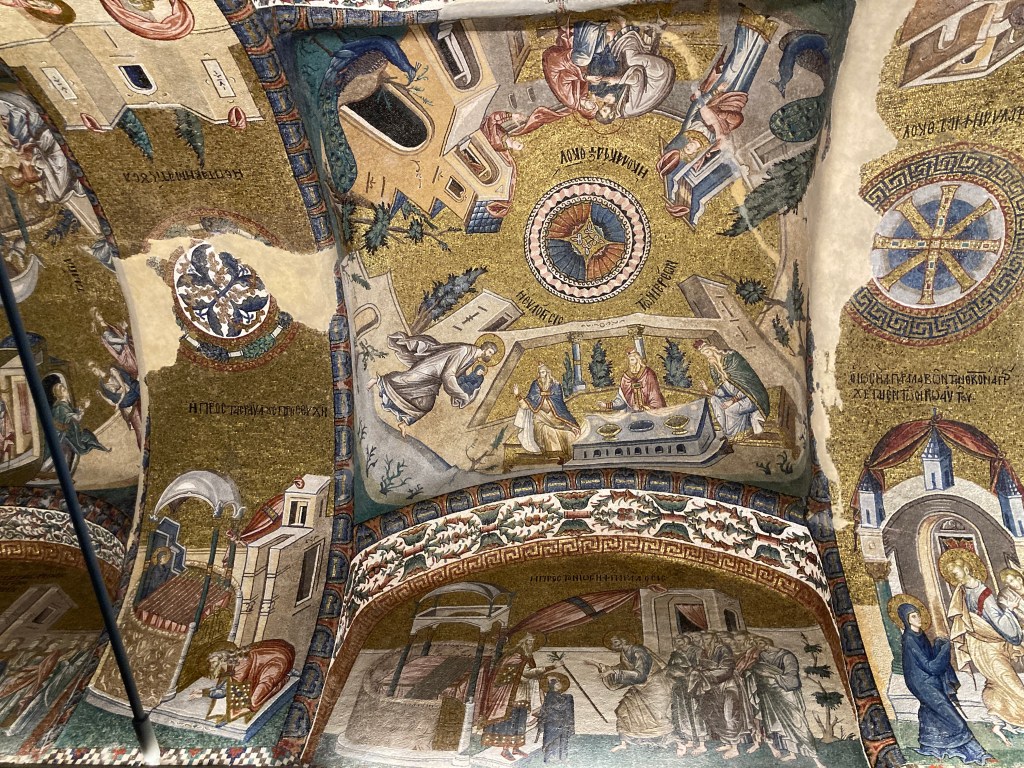
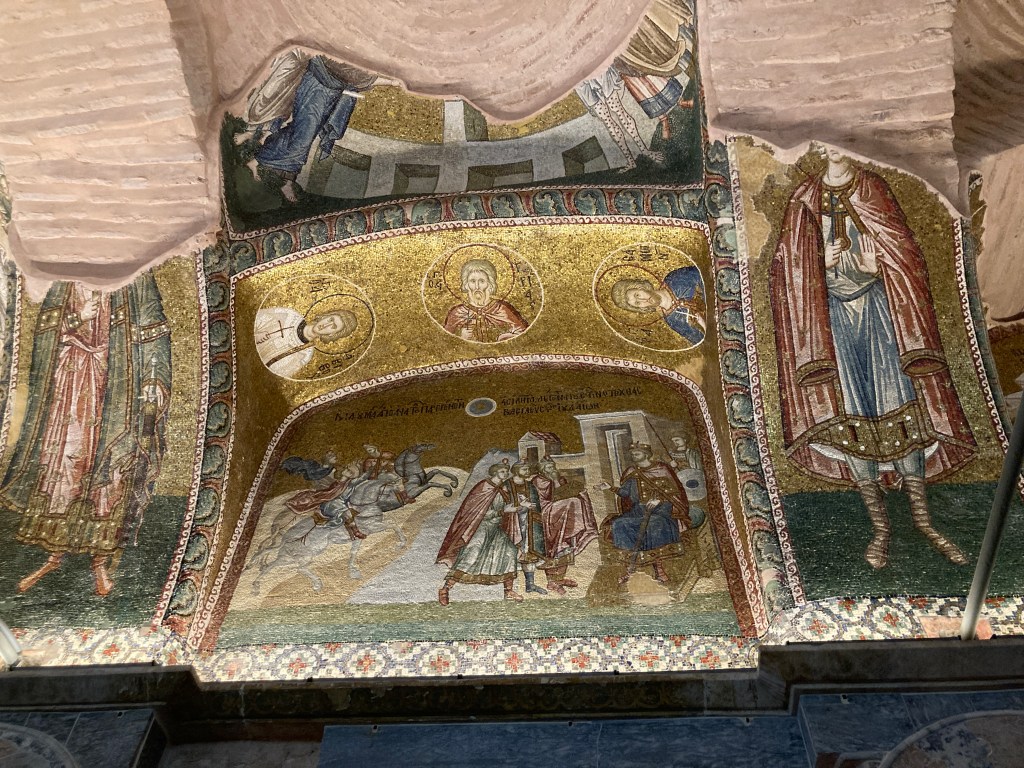
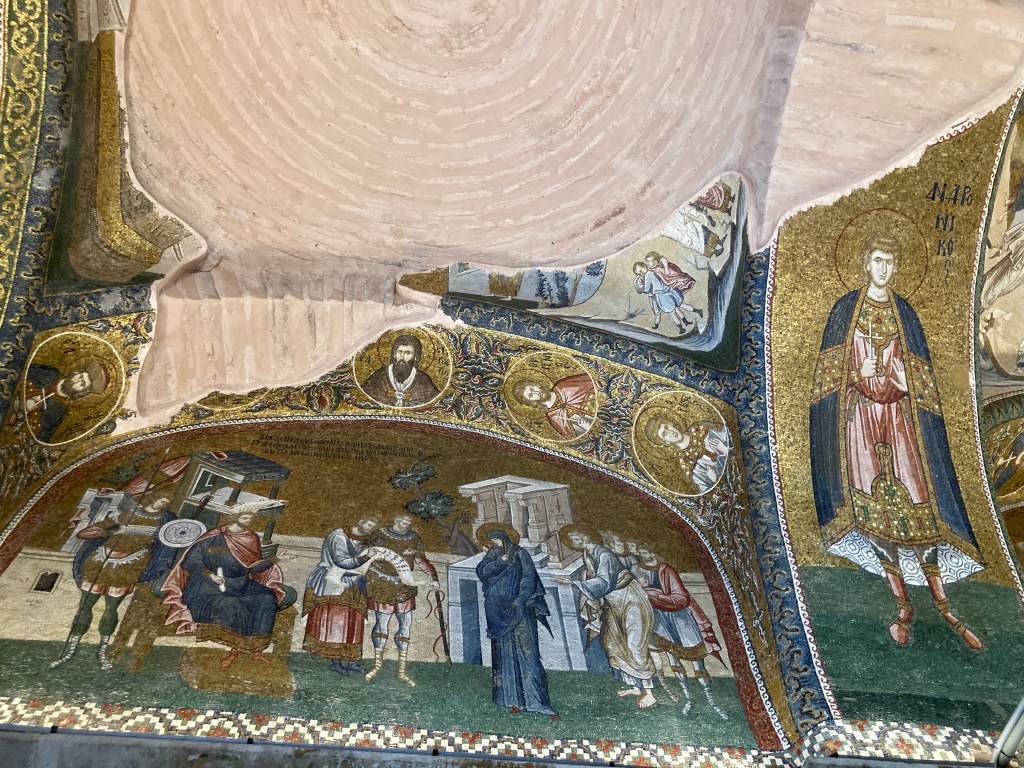
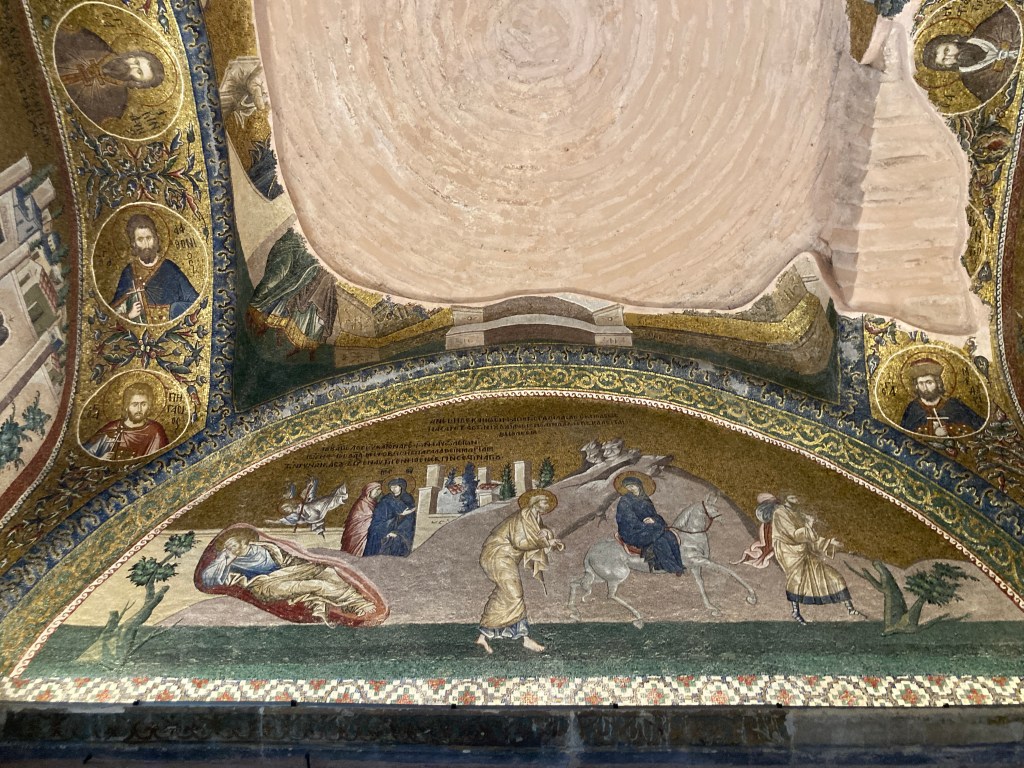
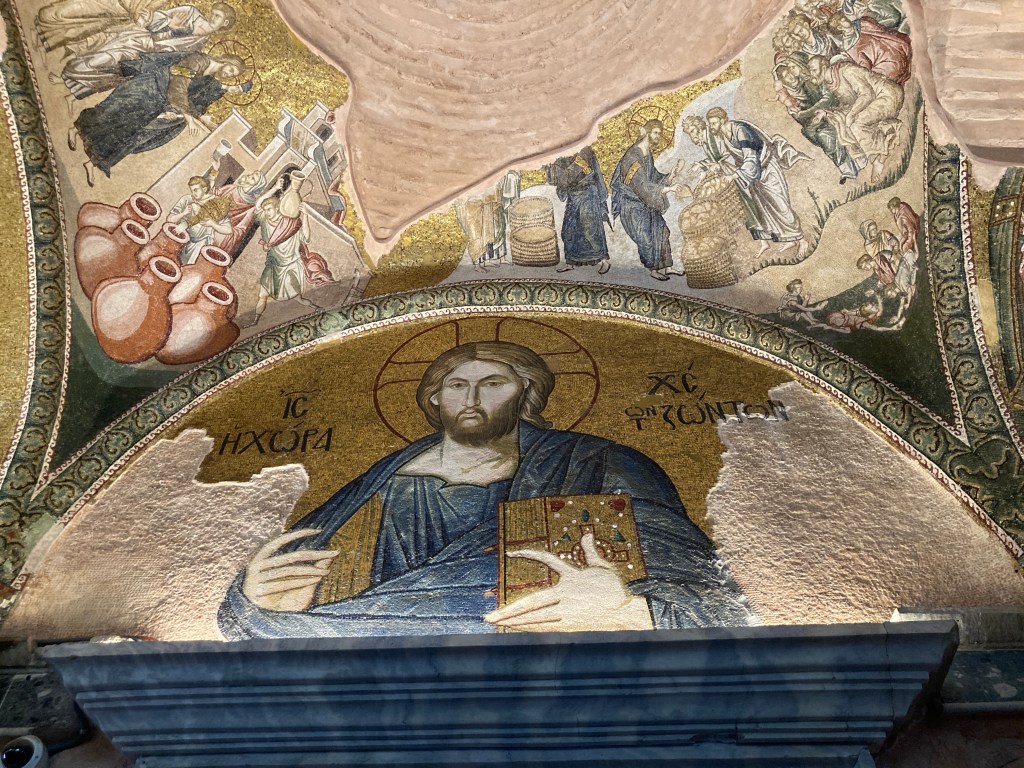
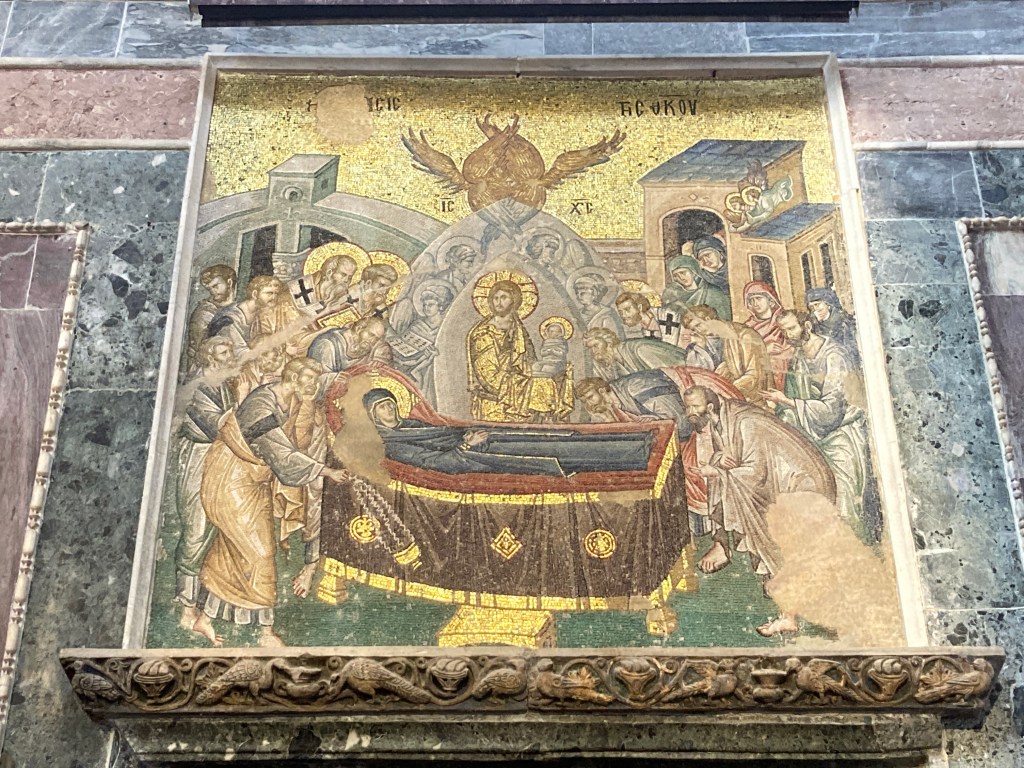
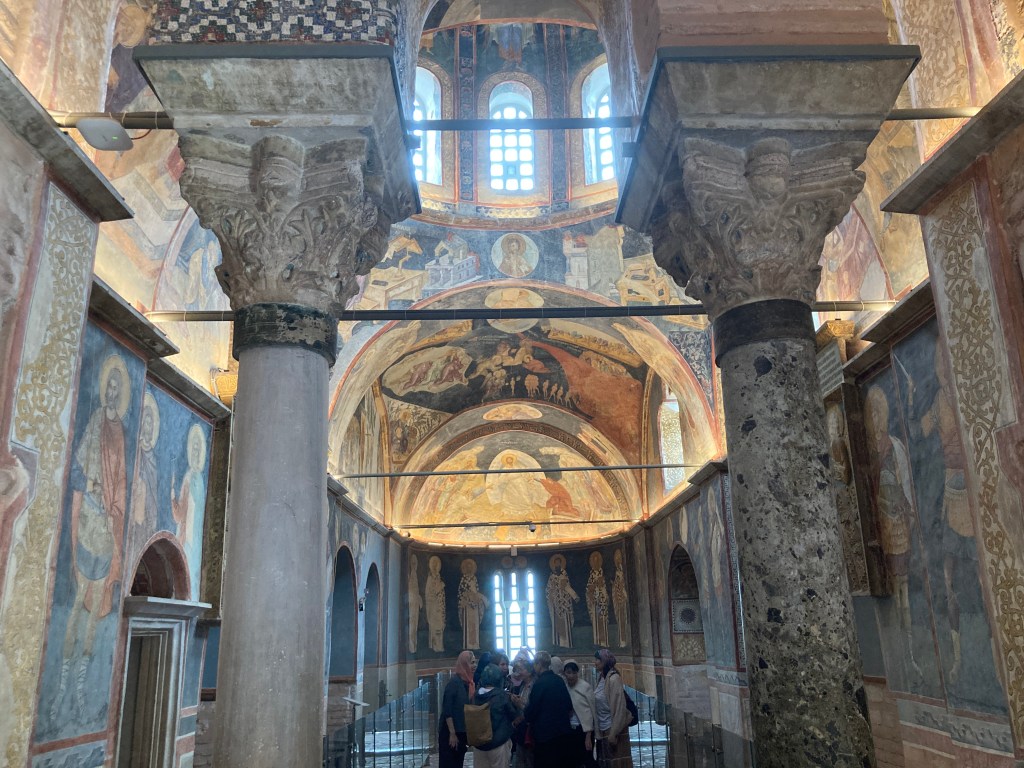
Downhill towards the water you pass through the multicultural Balat quarter with its Greek and Armenian churches and former synagogue, which becomes ever trendier as you approach the shore. From there we went on to Karikoy pier by tram, then caught the ferry across the Bosphorus to Kadıköy (ancient Chalcedon).
We had finally made it to Asia
It looks nothing special when you arrive, but once you cross the busy main road and walk uphill you are in an area which seems different and “authentic”. Men were playing cards and backgammon in shaded alleys. Life seemed less frenetic. We ate at the famous Viktor Levi wine bar (roomy, expensive but not great food); we would have done better at the lively market, where people sat snacking on seafood.
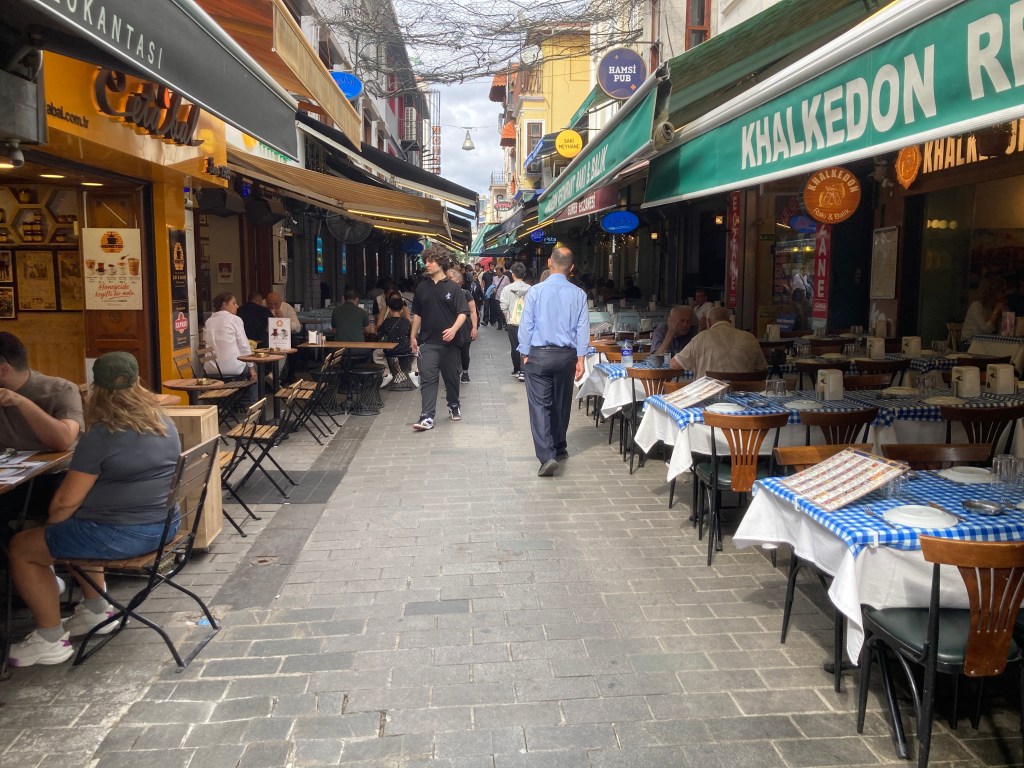
We did our souvenir shopping before returning to the Empress Zoe by ferry and two trams. It had been a long and busy day. The weather had turned quite cool and breezy, to the point that we sat on the terrace with our coats on. Only a few weeks later Istanbul was hit by very heavy flooding.
Wednesday 16 September
We awoke to the sound of rain and left in light drizzle. Tram 1 took us to Akaray, where we changed to metro line 1 for Otogar. We were leaving Turkey for Greece on the Arda Tur 12:00 bus to Kavala. Almost all the other passengers were Turks and almost all of them smokers. desperate for the next toilet break.
Impressions of Istanbul?
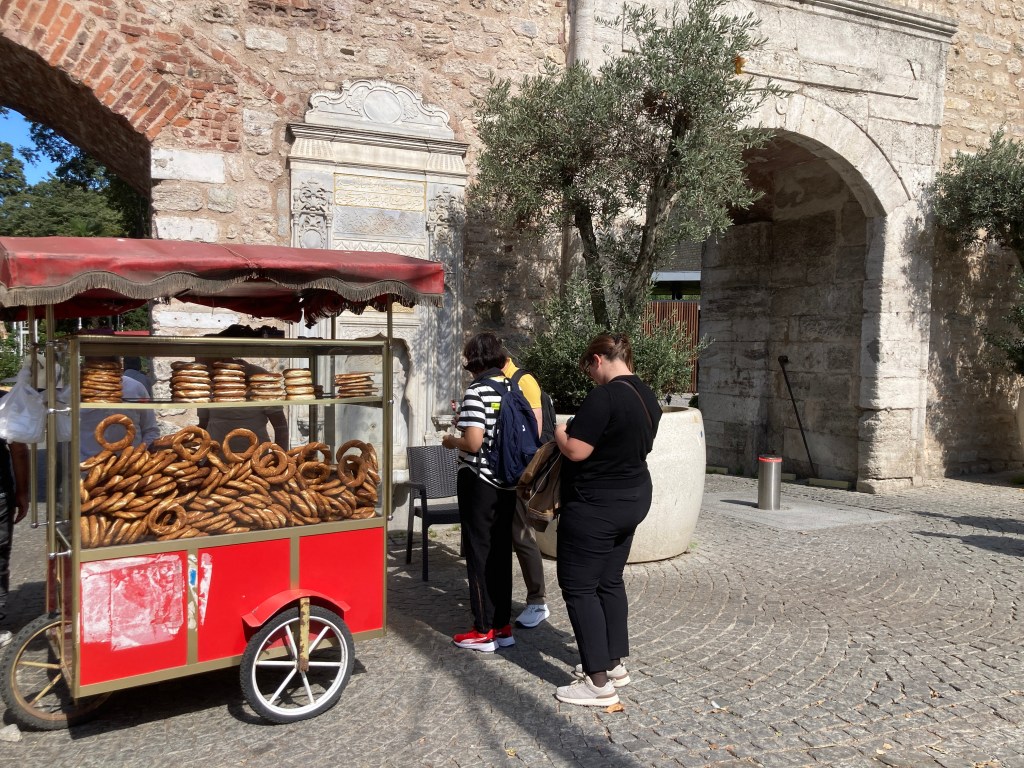
The incredible quantity of stuff on sale in the thousands of shops and stalls. The kindness shown to the city’s legion of cats. The obsession with the simit (a type of bread resembling a bagel). Best of all, the helpfulness of people towards visitors.
Next stop: Kavala and Thassos
We felt in need of a few days by the seaside.

